dailynewsnblog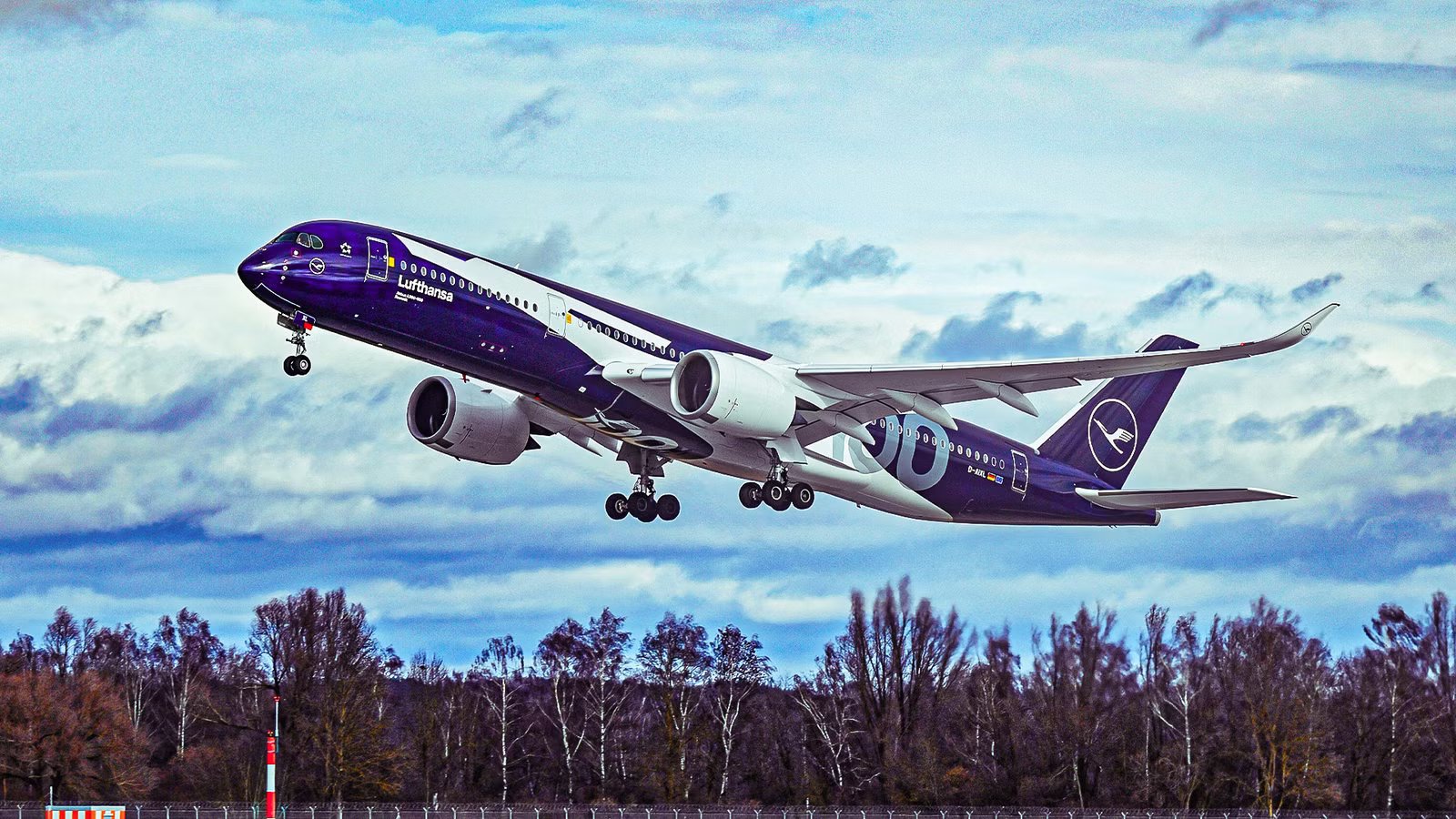
The Airbus A350 has emerged as one of the most important widebody aircraft in modern aviation. Developed to meet growing demand for fuel efficiency, long-range capability, and improved passenger comfort, the A350 represents a generational shift from older aircraft such as the Airbus A340 and earlier Boeing 777 variants. Built primarily from composite materials and powered by Rolls-Royce Trent XWB engines, the aircraft offers lower operating costs and reduced emissions, making it highly attractive to airlines navigating both economic and environmental pressures.
Since entering commercial service in 2015, the A350 program has seen steady global adoption. Airlines across Asia, Europe, and North America have integrated the aircraft into their long-haul fleets, often using them as a replacement for less efficient widebodies. Fleet data shows that a relatively small group of carriers accounts for a large share of total A350 operations. Singapore Airlines leads globally, followed closely by Qatar Airways, with Cathay Pacific, Air France, and Delta Air Lines forming a second tier of major operators, and Lufthansa and Air China continuing to expand their presence. This distribution reflects not only differences in fleet size but also distinct strategic approaches to long-haul network development, fleet modernization, and market positioning.
Singapore Airlines: The Largest A350 Operator

 Singapore Airlines stands as the world’s largest Airbus A350 operator, with a fleet of 65 aircraft in service. Its commitment to the type is both early and comprehensive, having been one of the launch customers that helped define the aircraft’s role in long-haul aviation. The airline operates the A350-900 variant exclusively, but within that category, it has helped develop some sub-configurations, most notably the ultra-long-range Airbus A350-900ULR. These aircraft are specifically designed for flights exceeding 17 hours, enabling nonstop routes such as Singapore to New York and Singapore to Newark (which are the two longest commercial flights in the world). To support the economics of such missions, the airline has configured these jets with a premium-heavy layout, significantly reducing economy class seating in favor of business and premium economy cabins.
This approach aligns with Singapore Airlines’ broader strategy of focusing on high-yield long-haul traffic. The A350 allows the airline to operate some of the longest routes in the world efficiently while maintaining a consistent onboard product. At the same time, standard A350-900 aircraft are deployed across a wide network spanning Europe, Australia, and Asia, demonstrating the aircraft’s flexibility. The fleet is relatively young too, with an average age of 7 years.
By centering its long-haul fleet around the A350, Singapore Airlines benefits from operational commonality, lower maintenance complexity, and improved fuel efficiency. Its position as the largest operator underscores both the aircraft’s capabilities and the airline’s long-term commitment to fleet modernization.
Qatar Airways: Dual Variant Scale

 Qatar Airways operates the second-largest Airbus A350 fleet globally, with 62 aircraft split between the A350-900 and the larger Airbus A350-1000. As a launch customer for both variants, the airline has played a central role in the aircraft’s development and operational deployment. The dual variant strategy is a defining feature of Qatar Airways’ A350 operations. The A350-900 is typically used on medium to long-haul routes with moderate demand, while the A350-1000 is deployed on high-density intercontinental services. This allows the airline to match capacity more precisely to market demand without sacrificing efficiency.
Operating from its hub in Doha, Qatar Airways uses the A350 extensively across Europe, Asia, Africa, and North America. The aircraft’s range and performance enable nonstop connections between secondary cities that might not otherwise support widebody service. This strengthens the airline’s hub and spoke model and enhances its global connectivity.
|
Qatar Airways A350 Fleet Overview |
|
|---|---|
|
Aircraft |
Total in fleet |
|
A350-900 |
34 |
|
A350-1000 |
28 |
|
Source: Planespotters.net |
|
Cabin product is another area where the A350 plays a key role. Qatar Airways has integrated its premium offerings, including its business class suites, into the aircraft, reinforcing its reputation for high quality service. The combination of operational flexibility and passenger experience makes the A350 a cornerstone of the airline’s long-haul strategy.

Why The Airbus A350 Has Such An Ultimate Passenger Experience
Discover why the Airbus A350 offers the ultimate passenger experience — quieter cabins, roomier seats, and comfort praised by flyers worldwide.
Cathay Pacific: Balanced Widebody Deployment

Cathay Pacific operates one of the largest A350 fleets in the Asia Pacific region, and follows third for global fleet size with 48 aircraft across both the A350-900 and A350-1000 variants. The airline has taken a balanced approach, using the aircraft to support both long-haul and regional operations.
From its hub in Hong Kong, Cathay Pacific deploys the A350 on routes to Europe, North America, and key destinations across Asia. The A350-900 typically handles medium to long-haul services, while the A350-1000 is assigned to higher-demand routes where additional capacity is required. This mirrors the dual variant strategy seen at Qatar Airways, though at a slightly smaller scale. The A350 has been central to Cathay Pacific’s fleet renewal efforts, replacing older aircraft and improving overall efficiency. In a market characterized by intense competition and long stage lengths, the aircraft’s fuel burn advantages are particularly valuable.
|
Cathay Pacific A350 Fleet Overview |
|
|---|---|
|
Aircraft |
Total in fleet |
|
A350-900 |
30 |
|
A350-1000 |
18 |
|
Source: Planespotters.net |
|
Beyond economics, the A350 also supports product consistency. Cathay Pacific has introduced modern cabin interiors and updated seating across its fleet, aligning with passenger expectations for long-haul travel. Despite occasional operational challenges, the aircraft remains a key pillar of the airline’s long-term strategy.
Air France And Delta Air Lines: Western Market Leaders

 Air France and
  Delta Air Lines represent the largest A350 operators in Europe and North America respectively, each with fleet totals shy of 40 aircraft. While their network structures differ, both airlines use the A350 primarily as a tool for efficiency-driven fleet renewal.
Air France has standardized on the A350-900, opting not to operate the larger -1000 variant. This simplifies training, maintenance, and scheduling while still providing sufficient capacity for most long-haul routes. Operating from Paris, the airline uses the A350 across a global network that includes North America, Africa, Asia, and the Middle East. The aircraft has enabled the retirement of older Airbus A340 aircraft and some Boeing 777 variants, reducing operating costs and emissions.
Delta Air Lines has taken a similar single variant approach, also focusing on the A350-900, although the airline is expected to receive several -1000 variants in the future. As the first North American airline to introduce the A350, Delta deploys the aircraft on key international routes, particularly across the Pacific and Atlantic. Delta intended to operate the A350 as part of a broader effort to replace older Boeing 747 and 767 aircraft, improving fuel efficiency and reliability.
And to continue the trend, both airlines have also leveraged the A350 to enhance their premium offerings. Updated business class cabins, premium economy seating, and improved onboard environments contribute to higher passenger satisfaction and increased revenue potential.

Why Don’t Any US Airlines Operate The Airbus A350-1000?
The absence will not last much longer.
Lufthansa And Air China: Strategic Expansion And Transition

 Lufthansa and
  Air China represent two different but complementary approaches to A350 adoption, each with fleets of about 30 aircraft. Lufthansa has taken a measured approach, gradually expanding its A350 fleet while phasing out older four-engine aircraft such as the Airbus A340. The A350-900 is primarily based at
  Munich Airport, where it serves as a flagship aircraft for long-haul routes. This strategy allows Lufthansa to modernize its fleet without introducing excessive complexity.
The airline’s focus on efficiency and passenger comfort is evident in its A350 operations. Lower fuel consumption, reduced maintenance requirements, and quieter cabins contribute to both cost savings and an improved travel experience. As Lufthansa continues to retire older aircraft, the A350 is expected to play an increasingly central role.
Air China, by contrast, is using the A350 to support expansion in a rapidly growing aviation market. The aircraft is deployed on both international routes to Europe and North America and on high-demand domestic services within China. This dual role highlights the flexibility of the A350 and its suitability for a wide range of missions. For Air China, the A350 is not just a replacement aircraft but a growth enabler. Its range and efficiency allow the airline to open new routes and increase frequencies while maintaining competitive operating costs. This reflects broader trends in the Chinese aviation sector, where modern widebody aircraft are essential for global expansion.
Takeaways From These Numbers

The Airbus A350 has established itself as a cornerstone of modern long haul aviation, and the airlines with the largest fleets demonstrate its strategic importance across different regions and business models. From Singapore Airlines’ industry leading fleet to Qatar Airways’ dual variant flexibility, the aircraft has proven adaptable to a wide range of operational requirements. Airlines such as Cathay Pacific, Air France, and Delta Air Lines highlight its role in balancing efficiency with network stability, while Lufthansa and Air China demonstrate how it supports both gradual modernization and rapid expansion.
What unites these carriers is a shared recognition that the A350 is more than a replacement for older aircraft. It is a platform for long-term operational efficiency, improved passenger experience, and sustainable growth. As airlines continue to adapt to evolving market conditions and environmental expectations, the Airbus A350 will remain a defining element of global long-haul fleets.