dailynewsnblog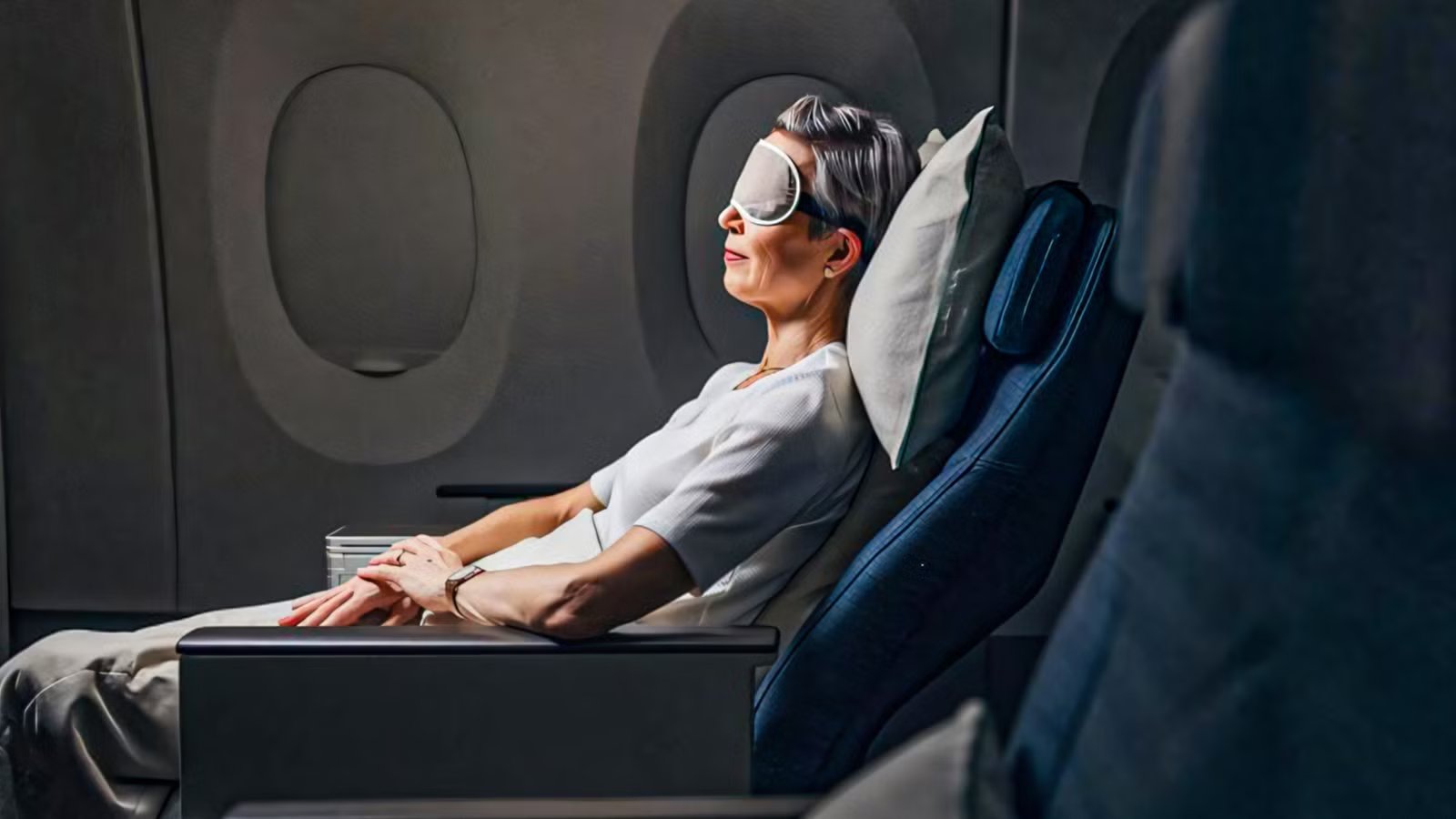
Premium Economy may have been around for a while, but its use by airlines to fill the void between economy and business class has drastically increased in recent years. Where a traditional three-class setting has historically dominated aircraft layouts, airlines have become wise to the huge benefits of adding premium economy sections to maximize the amount of revenue they can generate per square foot.
With this, competition has become heated, and passengers are being graced with more and more options if they want to fly premium economy. So, the pros and cons of what each airline can offer to such passengers are becoming increasingly important, from seat width and pitch to perks like amenity kits and priority check-in. In this case, however, recline will be used specifically to determine which premium economy option is best.
6
Japan Airlines
Airbus A350-1000 (Motorized Fixed-Shell, 42-inch Pitch, Leg rest to 190°)

Japan Airlines ranks among the best in the industry when it comes to premium economy seats. At least, that is the case when flying aboard its recently introduced fleet of Airbus A350-1000s.
The use of fixed-shell seats means that each passenger essentially has their own unimpeded space within the cabin. When reclined, the seat will electronically shift to a 45-degree angle, serving as a middle ground between the flat beds of business class and standard seats in economy. This is aided by a legrest that can sit at 180 degrees relative to the seat. Due to the hard shell, “seats recline without tilting backward,” per Japan Airlines, “preserving your personal space and letting you kick back without bothering the passenger behind you”. That means specifying how far they recline is tough, given the unconventional way seats move forward rather than backward, but the assurance space will not be taken by those in front is a massive bonus.
Japan Airlines’ A350-1000s each feature 24 of these fixed-shell premium economy seats, arranged in a 2-4-2 configuration. When not reclined, the seats boast approximately 18.9 inches (48 centimeters) of width, alongside 42 inches (107 centimeters) of pitch.

5 Of The World’s Widest Premium Economy Seats You Can Book Today
This list details the five top-ranking carriers according to their premium economy seats: Delta, Singapore, Virgin Atlantic, Japan and Emirates
5
Virgin Atlantic
Boeing 787-9 (8-inch Recline, 125-degree Seat Angle, 38-inch Pitch)

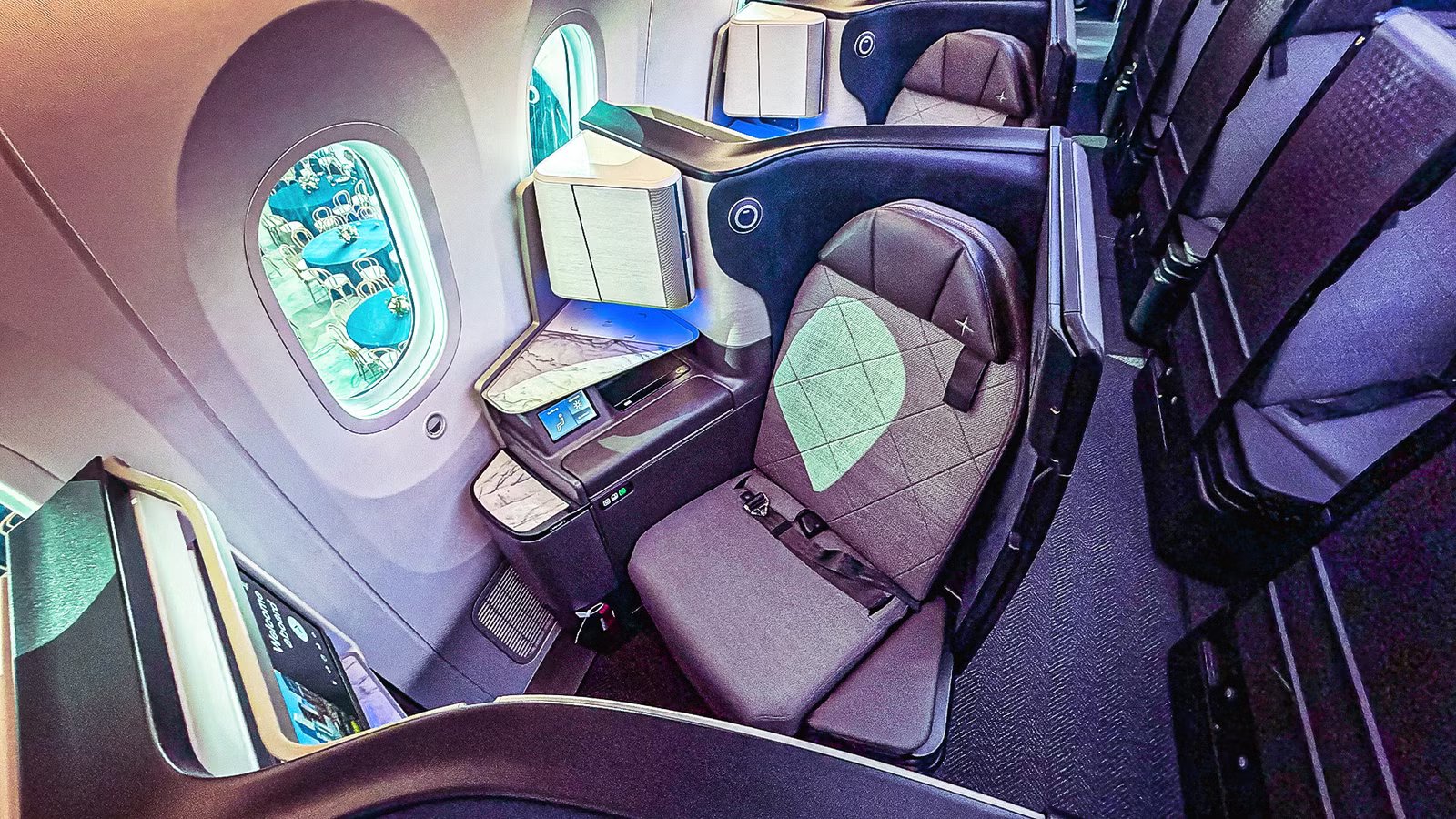
Another impressive offering can be found aboard Virgin Atlantic’s fleet of Boeing 787-9 Dreamliners. Premium economy on these features 35 seats arranged in a 2-3-2 configuration. These themselves recline up to eight inches (20.3 centimeters), boast 38 inches (96.5 centimeters) of pitch, 21 inches (53.5 centimeters) of width, and are complemented by an ergonomic footrest.
In fact, Virgin’s offering is so strong that it helped the airline fetch Skytrax’s World’s Best Premium Economy Class 2025 award. Naturally, though, better options for reclining specifically can be found elsewhere, with the title based on a host of factors such as food and service, alongside the broader travel experience outside just the flight.
Airlines ranked by premium economy seat pitch, from Simple Flying:
|
Rank |
Airline |
Premium economy seat pitch |
Aircraft |
|
1 |
Norse Atlantic |
43-46 inches (103.2-116.8 cm) |
Boeing 787 |
|
2 |
Japan Airlines |
42 inches (106.7 cm) |
Boeing 787 |
|
3 |
Vietnam Airlines |
42 inches (106.7 cm) |
Boeing 787 |
|
4 |
EVA Air |
42 inches (106.7 cm) |
Boeing 787 |
|
5 |
Air New Zealand |
41 inches (104.1 cm) |
Boeing 787 |
|
6 |
Emirates |
40 inches (101.6 cm) |
Airbus A380 |
|
7 |
Cathay Pacific |
40 inches (101.6 cm) |
Airbus A350 |
|
8 |
Air France |
40 inches (101.6 cm) |
Airbus A330 and Boeing 787 |
|
9 |
China Airlines |
39 inches (99.1 cm) |
Airbus A350 |
|
10 |
Lufthansa |
39 inches (99.1 cm) |
Airbus A350 and Boeing 787 |
Unlike with Japan Airlines’ self-contained premium economy seat, Virgin Atlantic passengers run the risk of losing out on space to the person in front. As flagged in a review of the airline’s 787-9 premium economy offering by the Alviator: “If the seat in front is reclined, getting out of your seat isn’t particularly easy.”
4
Emirates
Airbus A380 and Boeing 777 (8-inch Recline, 40-inch Pitch, Six-Way Seat Adjustability)

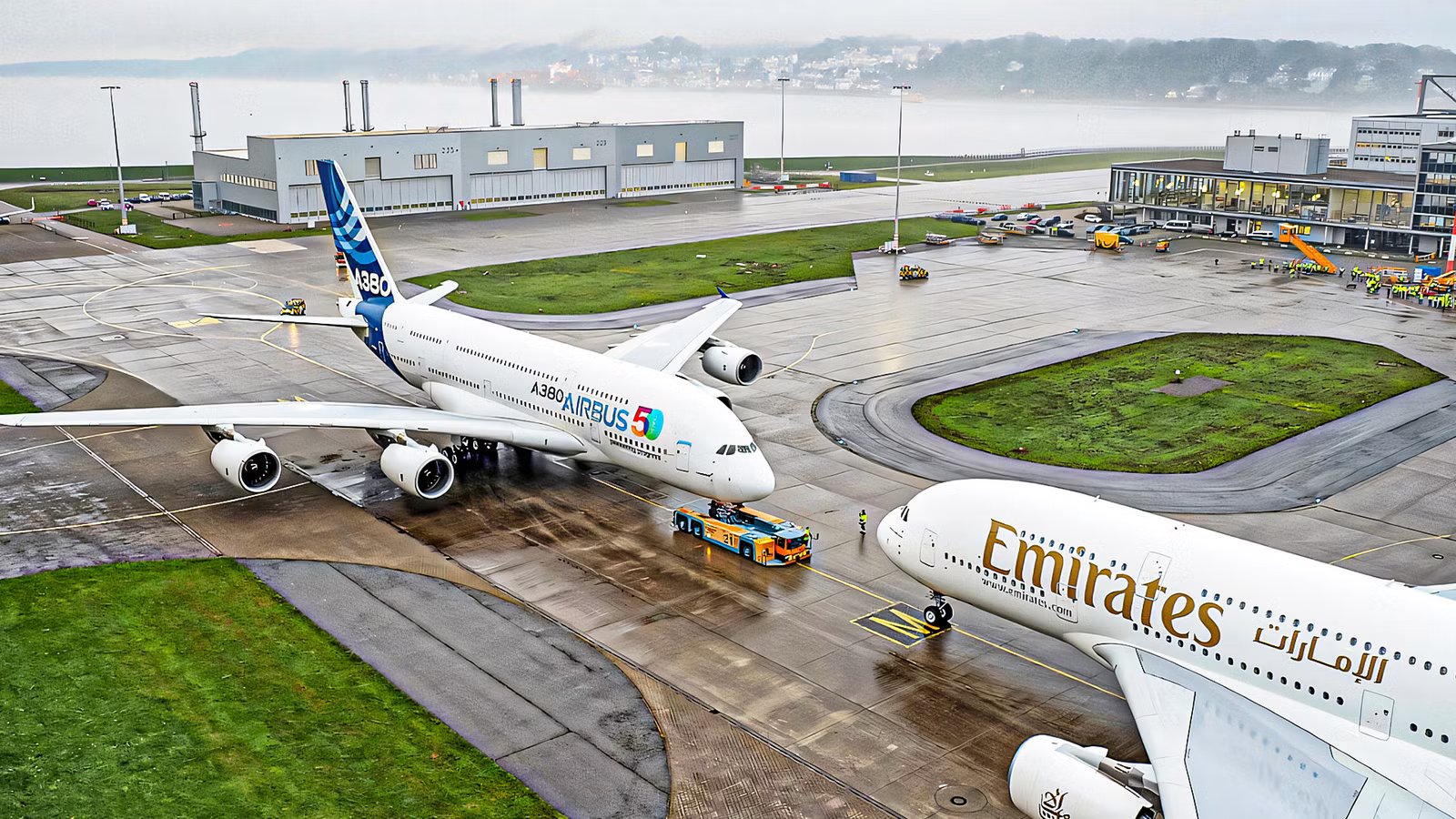
Premium economy passengers opting to fly with  Emirates will benefit from the “largest known fleet retrofit” project, carried out by the airline in recent years. With $5 billion in investment, the airline will completely refurbish 110 and 109 of its Airbus A380s and Boeing 777s, respectively, to house a four-class configuration as standard.
As per the carrier, “the addition of Emirates’ award-winning premium economy cabin sets a new benchmark for an elevated travel experience”. This means a seat capable of reclining eight inches (20.3 centimeters), adjustable in six separate ways, and with 40 inches (101.6 centimeters) of pitch, alongside 19.5 inches (49.5 centimeters) of width in practice.
In the already-refurbished jets, passengers will find a 2-4-2 seating layout in premium economy cabins, with 56 such seats featuring on Emirates’ super jumbos and 24 installed on the 777s. Other perks include calf and foot rests, two tables for drinks and food respectively, as well as in-seat charging ports, to name a few.
3
Air New Zealand
Boeing 787-9 (8-inch Fixed-Shell Recline, 41-inch Pitch)

Another airline to take advantage of the fixed-shell seat design is Air New Zealand. These, once again, feature in the carrier’s premium economy cabins aboard its retrofitted Boeing 787-9 Dreamliners. Having kicked off last year, the refurbishment project will see all 14 of the airline’s existing Dreamliners fitted with new interiors.
Like Japan Airlines’, Air New Zealand’s hard-shell premium economy seat design means reclining pushes the seat down and forwards, rather than simply backward, to prevent the passenger behind losing out on space. Up to eight inches (20.3 centimeters) of recline is offered, but using this means eating into the 41 inches (104.1 centimeters) of pitch, which is the key downside of the hard-shell.
That said, calf and footrests look to mitigate this, with the seat designed to fold into something on the way to resembling a flat-bed. Small wings on the seats’ sides also appear to add an element of privacy, while additional storage and charging ports have also become standard. Within the newly installed 787-9 premium economy cabins, Air New Zealand passengers will find 33 such seats in a 2-3-2 configuration.

The Airlines With The World’s Most Spacious Premium Economy Cabins In 2026
These cabins are incredibly comfortable.
2
Singapore Airlines
Airbus A350, A380, Boeing 777 (8-inch Recline, 38-inch Pitch, Leg rest and Footrest)

 Singapore Airlines’ premium economy offering is incredibly strong across various aircraft types. Featured on the Airbus A350, Airbus A380, and Boeing 777, premium economy cabins aboard Singapore Airlines aircraft are laid out in a 2-4-2 configuration.
These seats themselves recline to around the eight-inch (20.3 centimeters) mark, a common benchmark offered in premium economy by airlines, and measure 19.5 inches (49.5 centimeters) wide. Pitch comes in at 38 inches (96.5 centimeters), while a leg and foot rest are also standard.
Airlines ranked by premium economy seat width, from Pompous Travel figures:
|
Rank |
Airline |
Premium economy seat width |
|
1 |
Virgin Atlantic |
21.0 inches (53.3 cm) |
|
2 |
Qantas |
20.5 inches (52.1 cm) |
|
3 |
TUI UK |
20.5 inches (52.1 cm) |
|
4 |
Air Tahiti Nui |
20.4 inches (52.0 cm) |
|
5 |
Air Belgium |
20.1 inches (51.0 cm) |
|
6 |
Air Canada |
20.0 inches (50.8 cm) |
|
7 |
Air New Zealand |
20.0 inches (50.8 cm) |
|
8 |
Iberia |
20.0 inches (50.8 cm) |
|
9 |
China Airlines |
20.0 inches (50.8 cm) |
|
10 |
Cathay Pacific |
19.5 inches (49.5 cm) |
Passengers might find flying premium economy with Singapore Airlines just as much about the experience around the flight as about the seat itself. Before boarding the aircraft, perks stretch to priority check-in and boarding, alongside access to the carrier’s Book the Cook service, whereby meals on many long-haul flights can be selected in advance. As such, Singapore’s premium economy is more its own class than a simple step up from economy seats.
1
Cathay Pacific
Airbus A350-900 and Boeing 777 (9-inch Recline, 40-inch Pitch)

Cathay Pacific takes the top spot for premium economy seat recline, offering passengers up to nine inches (22.8 centimeters) of room to lean back and a touch more than peers. Some 28 such seats are fitted aboard the airline’s A350-900s. Following a refurbishment program that introduced new premium economy and business class seats, this figure can stretch to as many as 48 of the former on its new 777s since last year. Its newer 777s house far more room for premium economy passengers than any others within Cathay’s fleet, therefore, and it appears the Hong Kong flag carrier has very much jumped on the bandwagon to boost the number of such tickets it can offer.
On each aircraft, premium economy cabins are laid out in a 2-4-2 configuration. Seats themselves include a full-length leg rest, footrests, a retractable and adjustable armrest, alongside a headrest. All told, seat pitch and width are generous too, at around 40 inches (101.6 centimeters) and 19 inches (48.3 centimeters) respectively.
Other perks include complimentary champagne for premium economy passengers, alongside an on-demand meal service. Larger tray tables are designed for easier laptop use and noise-canceling headphones are given out for Cathay’s inflight entertainment system, alongside amenity kits.