dailynewsnblog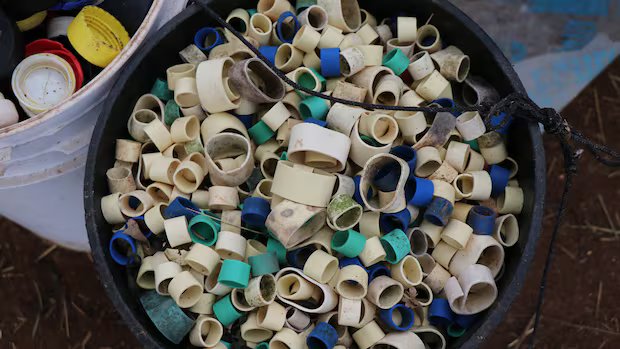

Listen to this article
Estimated 4 minutes
The audio version of this article is generated by AI-based technology. Mispronunciations can occur. We are working with our partners to continually review and improve the results.
A federal fund to assist organizations that carry out marine and beach cleanups is returning but with less money behind it than in past years.
In a statement to CBC News, a Department of Fisheries and Oceans spokesperson said the Ghost Gear Fund relaunch will be worth $15 million over three years. DFO did not specify the fund’s official opening date or potential changes to application requirements.
Angela Riley, founder of Scotian Shores, said her organization has received money from the federal fund in the past and she is happy it is coming back.
“I’m excited because for my group, that could mean a lot,” she said. “But also, I’m like, $15 million for three years, that’s not a lot when you look at the big picture.”
Lost, abandoned or discarded fishing gear, or ghost gear, is a major source of plastic and litter in the ocean, and is a particular concern in Atlantic Canada, given its historical fishing sector.
The Ghost Gear Fund was originally launched in 2020 and granted $58.3 million to 134 retrieval projects in Canada and internationally between 2020 and 2024, but DFO did not allocate any funding in 2025.
Earlier this year, Nova Scotia discontinued its Marine Debris Clean-up Program, so Riley is relieved that at least the federal program will be around to help organizations like hers foot the bill to try to keep Nova Scotian coastal waters free of trash.

While it is hard to estimate how much ghost gear is in provincial waters, thousands of lobster traps, bands and ropes are recovered annually in Nova Scotia cleanup projects.
Scotian Shores has twice been granted funding from the Ghost Gear Fund, first for $75,000 and then for $150,000 after Hurricane Fiona in 2022, according to Riley.
The Fundy North Fishermen’s Association, based in St. George, N.B., also received funding from Ottawa for this kind of work.
Darlene Norman-Brown, assistant director for the association, said the funding makes a big difference because it means her group can afford more in-water retrieval trips.
Without support from the Ghost Gear Fund, they were able to make only 28 in-water trips last year, she said, while they made 137 trips the last time they received money from the fund after Fiona.

The cost of cleaning the ocean
Beach cleanups involve removing litter from the shoreline while in-water cleanups entail going into the water and even scouring the sea floor to retrieve ghost gear.
Norman-Brown said in-water cleanups can be very expensive. Fishermen doing this work with the association receive minimal compensation for daily expenses, fuel and crew time, and rising fuel costs mean current payments barely cover their expenses, she said.
Retrievals can take 12 to 14 hours a day, Norman-Brown said, and because fishermen use their own boats, if they get damaged during cleanups, it affects their livelihoods.
Retrieved materials are sometimes piled up for disposal and often end up in landfills, though some organizations attempt recycling.
“Responsible disposal” is a pillar of the Ghost Gear Fund, but Riley noted funding can be swiftly consumed by recycling efforts.
“That funding could be eaten up pretty quickly,” she said.
The DFO spokesperson said the department is in the midst of developing a “Ghost Gear Action Plan which will be finalized in 2027.”
MORE TOP STORIES