dailynewsnblog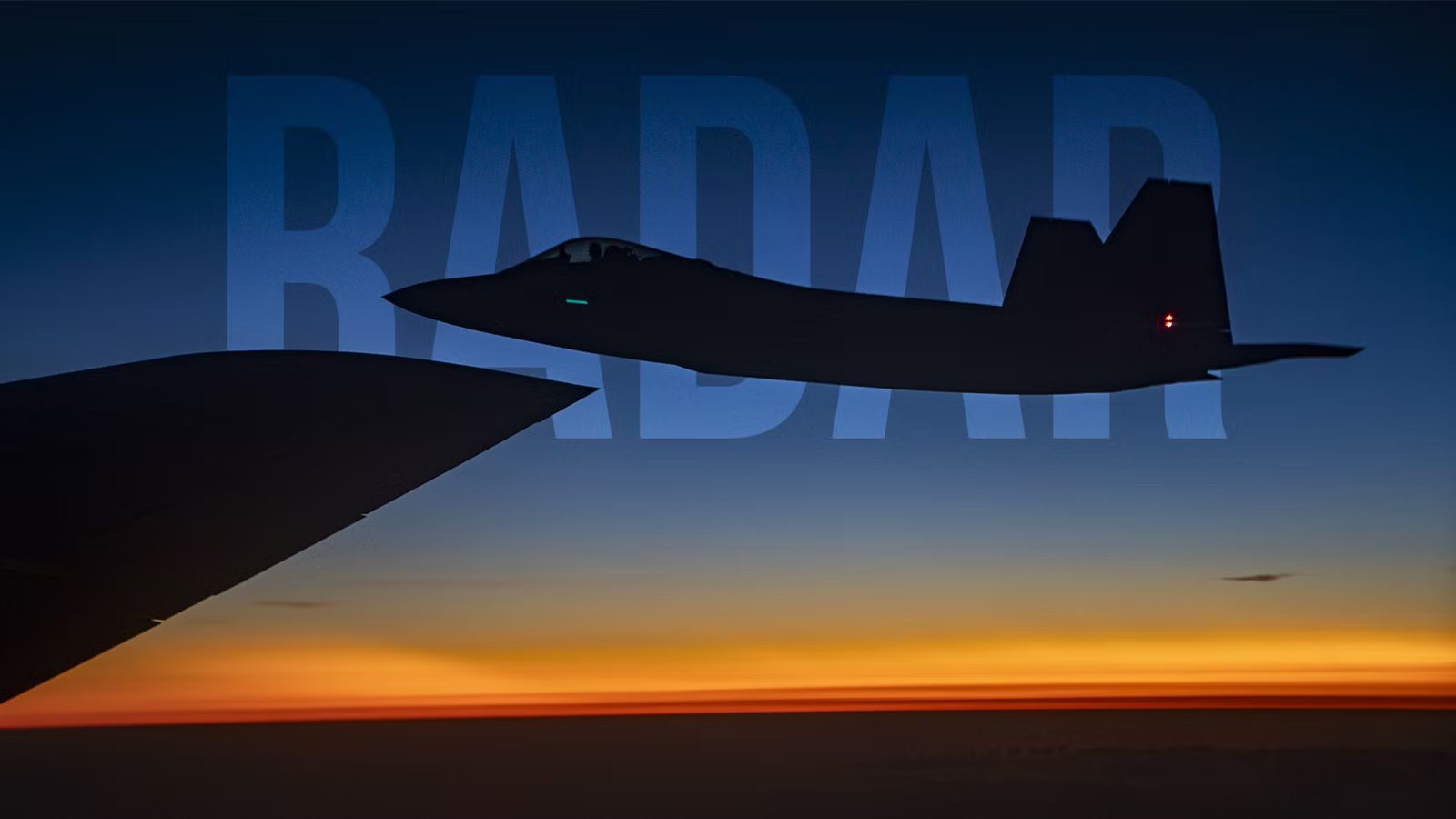
The conversation over air power in 2026 primarily focuses on stealth technology and unmanned aircraft. However, one of the most decisive pieces of equipment carried by any 21st-century warplane is its radar array. The differentiator that sets apart legacy fighter jets and modern aircraft in the air superiority category is whether or not they carry active electronically scanned array, or AESA, radar.
The reason this factor is so decisive is that these radar arrays use digital scanning that is exponentially faster than the mechanically moved radar dishes of previous-generation warplanes. All of the world’s fifth generation jets are equipped with this type of radar; however, so are a number of 4.5-gen fighters that lack the stealth of their newer counterparts but make up for it with performance and weapons capacity.
The United States leads the race for the best fighter jet radar, but that advantage extends to its allies as well as to the current champion, the Lockheed Martin F-35 Joint Strike Fighter. The growing global fleet of more than 1,300 airframes includes operators from 20 nations, with yet more still to join the program. Meanwhile, near-peer adversaries like Russia and China have capable systems of their own but fielded in diminutive numbers by comparison.
5
Sukhoi Su-57 Felon
N036 Byelka Multifunction X-band AESA Radar

Russia’s one and only stealth fighter, the Su-57, has only been produced in a very limited number, which is estimated to be 75 or fewer; however, it does have impressive performance and weapons specifications. Its radar is one of the most unique features of the aircraft as it does not use a single array but rather an integrated complex system of six antennas that are forward, side, and even rear-looking.
The Felon uses an expanded array like the other 5th-gen fighters in the world, but it has a unique 360-degree field of view that none of the others have. While the actual number of sensors in the nose is believed to be lower than in other stealth fighters, the wing leading edge extensions of its radar compensate by scanning at different frequencies at the same time. Russia claims that this makes it an anti-stealth radar because it simultaneously transmits X and L-band wavelengths.
The purpose of the L-band antennas is to detect aircraft coded in radar-absorbent material because these signals have greater resilience against the effects of RAM. Combined with the high-speed returns of X-band signals, the two are a powerful means of searching for low-observable (stealth) targets. This potentially gives the Felon the power to strike from beyond visual range (BVR), undetected, even against stealthy foes.
The unique 360-degree scan field also allows Felon crews to perform different maneuvers that other fighter pilots cannot. The Su-57 can fly much more aggressive maneuvers around and away from its target while maintaining a lock on to not only evade or position for attack against an adversary but also optimize the aircraft’s stealth profile against adversary radar positions. This allows the crew to simultaneously optimize their own targeting solution while making themselves much more difficult to track.
4
Dassault Rafale
RBE2-AA AESA

As France’s flagship fighter jet, the Rafale continues to be iteratively upgraded and evolve to meet emerging threats despite the fact that it will never be a true 5th-Gen or stealth fighter. The latest RBE2 AA radar has not only enhanced the baseline power with greater detection range but also integrated numerous ‘smart’ features. Integration with other sensors and electronic warfare has evolved the Rafale to be cutting-edge 4.5-Gen fighter technology.
The new radar is capable of handling a large number of multiple targets at the same time, as well as integrating sensor data from the EW suite. The upgraded digital backbone can integrate infrared search data and everything being fed into the display into a single ‘sensor fused’ picture that simplifies the pilot’s workload. The RBE2 AA not only raises the power of the jets’ sensor capabilities but acts as a force multiplier by empowering the pilot to devote more energy and concentration to tactical decision-making, and not system operation.
The system scans several radar modes simultaneously, including all-aspect look-down/look-up detection of multiple air targets, real-time generation of three-dimensional maps for terrain-following, and high-resolution ground maps for navigation and targeting. It also supports low-observable target detection and full use of new weapon systems such as the Meteor air-to-air missile.
The SPECTRA EW Suite is also an integral part of the upgrade program to the latest Rafale variant. The highly sophisticated system allows the jet to not only detect enemy sensors and potential anti-air threats but also proactively defend itself against them. Phased array jammers can concentrate on specific signals to reduce the detectability of the Rafale to enemy sensors. Thus, while the aircraft will never have a significantly smaller radar cross section, a powerful integrated electronic attack capability helps dramatically improve the jet’s survivability in the modern battle space.

The World’s Most Superior Carrier-Based Aircraft
Engineering excellence and modern technology meld in the world’s best fighters found on the decks of aircraft carriers around the world.
3
Eurofighter Typhoon
ECRS Mk.2 AESA

The Typhoon has recently moved up the ranking thanks to a major upgrade program. In 2023, Leonardo delivered the first ECRS Mk2 prototype to BAE Systems at Warton, United Kingdom, equipped on a test Typhoon aircraft. The CAPTOR-E radar upgrade demonstrated impressive capabilities to simultaneously track targets and perform electronic attack in 2024.
In addition to the integrated EW capability and impressive multi-target tracking capacity, the CAPTOR-E has more range and a much wider field of view. The newest Tranche Five models will have as much as 50% wider scan area compared to legacy jets. This is possible because the Mk.2 AESA sensor is on a movable plate. It also allows the jet to maneuver away from targets while maintaining tracking and target lock.
The CAPTOR-E will complement the new Meteor long-range air-to-air missiles. The Mk.2’s multi-target tracking power, combined with the new weapons, will give the Typhoon a new level of BVR lethality. The UK Ministry of Defence confirmed a £204.6 million investment in June 2025 for the production and integration of the radar, with initial production radars due from 2028. The Tranche Five Typhoon is so capable that many European air forces are forgoing orders of American stealth fighters and investing in improving their Typhoon fleets.

6 Military Aircraft With The Most Complex Avionics
The flying supercomputers of 2026.
2
Lockheed Martin F-35 Lightning II
APG-81 Multirole, Synthetic Aperture AESA Radar

The radar of the F-35 may be less powerful in terms of range and scan radius than some peers, but it has a unique synthetic aperture function that can pinpoint ground targets with extreme fidelity. Not only does this make it incredibly capable as a close air support platform, but it also allows it to perform functions that no other fighter jet in the world can do, such as take over the targeting of a cruise missile in midair and guide it into the final strike.
The F-35 also combines EW, camera, data link, and other sensors to not only give its own pilot the highest level of situation awareness possible flying over the front line but to pass on the same data to other platforms that cannot do it themselves, such as the F-15 or F-22. Although the Raptor may be superior in aerial combat, the F-35 is the unparalleled champion of air-to-ground, which makes it the backbone of America and 19 allies’ air forces today.
The F-35, or Fat Amy as it is endearingly nicknamed, is well known to have a number of performance, weapons, and stealth compromises in its design. Yet, the Joint Strike Fighter is the gold standard of fighter jets in 2026. The reason for this extends far beyond the capabilities of a single airframe. Rather, it relies on the force enhancement that every single JSF benefits from, thanks to the aircraft’s enormous scale of production and interoperability with thousands of other units and systems around the world.
The F-35 is inferior to many of its predecessors when compared in terms of performance, weapons capacity, and even radar cross-section (stealthiness). At the same time, it is the only 5th-gen fighter jet to be produced on an enormous scale. On top of that, Fat Amy has a lot of other tricks up her sleeve because the bloated airframe, from which its moniker stems, houses numerous other advanced systems to give it an unprecedented ‘God’s eye view’ of the battlefield.

How The Boeing F/A-18 Super Hornet Stacks Up Against The F-35C In 2026
The US Navy’s strike fighters go head-to-head.
1
Lockheed Martin F-22 Raptor
APG-77 Stealth X-band AESA Radar

The F-22 radar is not considered the newest system anymore, but in many regards, it is still considered a superior system to those equipped in its successor, the F-35. The F-22 is an uncompromising project built during the Cold War arms race to completely dominate the Soviet Union, and thus, no expense was spared, and no corners were cut when crafting the Raptor to be the ultimate fighter jet.
However, in 2026, this doctrine has been replaced, and thus the newer generation is less powerful but considered ‘smarter.’ This is because of the integration of a number of innovative new, digital-first technologies focused on data link and networking. The F-35 is not a pure air superiority fighter like the F-22; the Raptor is still the apex predator of the sky.
One of the main reasons why the Raptor’s radar is superior in air-to-air combat is that it has a lower radar profile than any other comparable system in terms of detectability to enemy EW sensors. Similarly to how the Su-57 attempts to defeat enemy radar while simultaneously targeting using maneuverability, the APG-77 was designed to have a lower signature to evade enemy detection on the EW spectrum.
The Raptor is still the ultimate hunter-killer of the US Air Force. No fighter jet comes close to it, and its true specifications and capabilities are widely believed to be deeply classified to this day. Although the F-22 may be inferior as a stealth quarterback on a combined arms battlefield, it is still the superior platform to penetrate enemy territory and destroy an adversary air force in its own backyard while emerging unscathed to fight another day again.