dailynewsnblog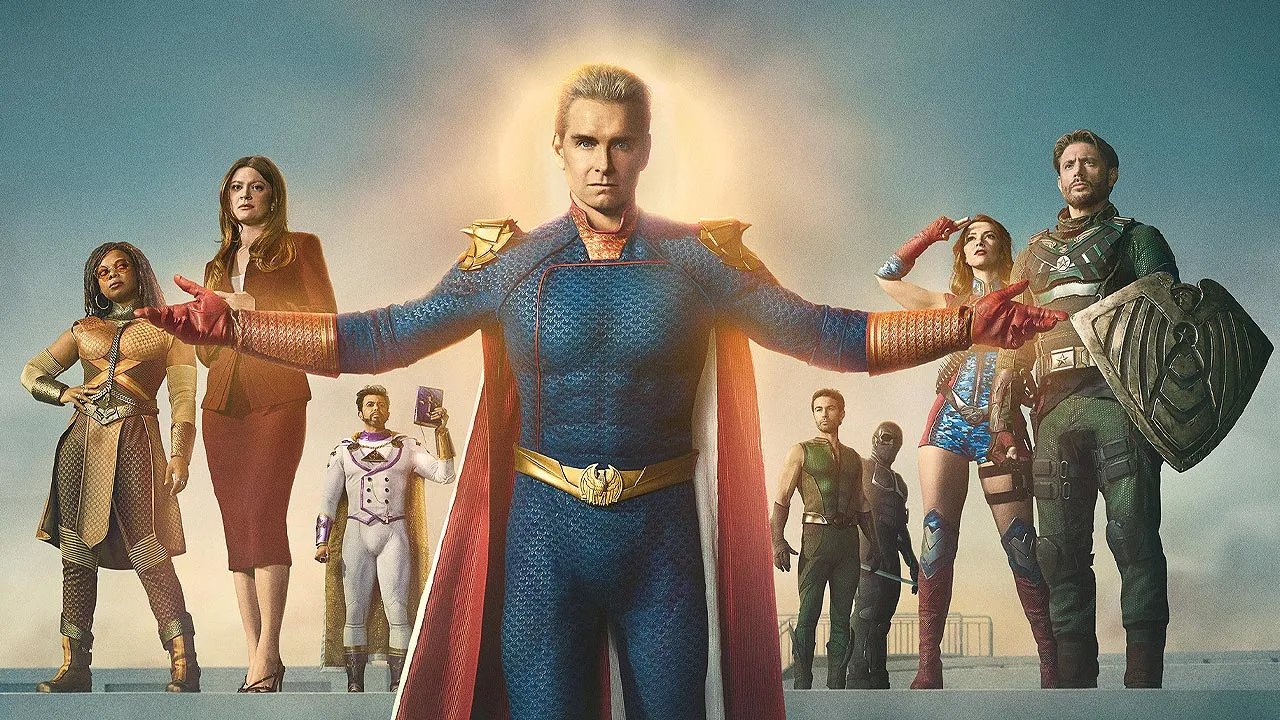
This is a spoiler-free review for the first seven episodes of The Boys Season 5. The first two episodes of the eight-episode season premiere on Prime Video on Wednesday, April 8.
At this point, The Boys is struggling with the same problem as South Park before it. How exactly does a series satirize the completely ridiculous political climate in which we find ourselves? How do you parody that which has already moved beyond parody? For The Boys, the answer is the same as it’s always been – a combination of righteous fury, gross-out humor, excessive violence, and an even deeper dive with some of the most sociopathic A-holes to ever call themselves superheroes. It’s a combination that continues to serve the series well, even if it suffers from some major pacing problems in the fifth and final season.
The ending to The Boys Season 4 introduced a very dark and dangerous new status quo for the series, as Hughie (Jack Quaid), Mother’s Milk (Laz Alonso), Kimiko (Karen Fukuhara), and Frenchie (Tomer Capone) found themselves locked away in one of Vought’s new patented “Freedom Camps” and Starlight (Erin Moriarty) went on the run to spearhead a desperate resistance. That ending promised a very different status quo for Season 5. But not unlike The Boys’ sister series, Gen V, it doesn’t waste a lot of time before walking that upheaval back to some extent.
That’s easily the biggest point of frustration with Season 5 – that rather than commit to this new status quo, it quickly sets about restoring a more traditional setup wherein Billy Butcher (Karl Urban) is leading his ragtag band in a desperate effort to topple the mighty Homelander (Antony Starr). The series quickly begins to feel like business as usual in a way that really doesn’t suit the idea of this being the endgame for The Boys universe.
Worse, it takes a surprisingly long time for Season 5 to pull itself out of that rut and begin rebuilding a palpable sense of dread leading into the finale. If anything, the series feels as though it’s spinning its wheels for several episodes. The first couple of chapters establish the basic stakes of the game – Homelander is enjoying his newfound absolute power over the country, but Butcher and his team have their deadly supe virus – and the series seems to drag things out and search for ways to draw out the final confrontation. Again, it does eventually start picking up steam, but not nearly quickly enough.
For the most part, the characters overshadow the dragging plot in Season 5. There’s no shortage of standout moments on both sides of the conflict. When it comes to The Boys themselves, Season 5 focuses on a very poignant theme – the struggle to maintain hope and optimism in a very hopeless time. We see the characters struggling with that burden in various ways. Some are ready to crumble under the overwhelming weight of *gestures at everything*, while others show a surprising strength and resilience. Obviously, the series is very heavily inspired by current events, tackling everything from the rise of internment camps to the crumbling wall between church and state, but here is where it feels most relevant and vital.
Season 5 also hinges on some strong, character-driven scenes, many of which deal directly with the fact that not all of these characters are expecting to make it out of this war alive. The very existence of the supe virus puts a target on the backs of characters like Starlight, Kimiko, and A-Train (Jesse T. Usher). Are they prepared to sacrifice themselves if it means killing Homelander and the rest of the Vought superhuman industrial complex? There’s a healthy dose of memento mori to Season 5 that colors many of the interactions between our heroes.
Of the main cast, Alonso tends to be the one who shines most during these scenes, as he has easily the most dramatically meaty material to work with. On the surface, MM is free and unencumbered in a way he hasn’t been on the show before. Separated from his family, there’s nothing tying him down or distracting him any longer. But beneath that, the character’s psychology is far more complex and fragile, and Alonso always manages to thread that needle in his performance.
On the other end of the spectrum, Season 5 often shines brightest when it focuses on how Homelander and his underlings are responding to this new world order. It’s no spoiler at all to say that Homelander himself is incapable of feeling anything resembling joy and contentment, so instead his every move is geared toward filling that void within and ushering in his final ascension. Starr is predictably excellent throughout, painting a convincing portrait of an all-powerful man constantly on the verge of losing it, no matter how much life goes his way. You understand completely why everyone in his orbit either fears him or pities him (often both at the same time). Starr’s haunting performance continues to be the foundation around which everything else moves.
As for the rest of The Seven, one of the advantages of the slow ramp-up to the climax of Season 5 is that the series finds ample time to further flesh out characters like Firecracker (Valorie Curry), The Deep (Chace Crawford), Oh Father (Daveed Diggs), and even Black Noir II (Nathan Mitchell). Episode 5, for example, does very little to advance the series’ overall narrative, but it does provide a series of fascinating vignettes exploring these characters as they go about their daily lives. Firecracker in particular comes across as a whole new character thanks to that episode. Not any less despicable, mind you, but a whole lot more tragic and believable.
If Hughie and the gang are struggling with the need to maintain hope in these bleakest of times, then the show’s focus with these “villain” characters is more about exploring how evil is constantly enabled and empowered by cowardice. Few, if any of these characters, are actually, genuinely thrilled with the prospect of Homelander becoming an infallible dictator, but do any of them have the courage to speak out? Are there more A-Trains waiting in the wings, or is self-preservation the name of the game from top to bottom?
Unfortunately, not every character receives the attention they deserve in these seven episodes. This is most keenly felt with Sister Sage (Susan Heyward), a character who had been riding all the more high thanks to her surprise guest role in Gen V Season 2. This season tends to mostly gloss over Sage and obscure her motivations until the character finally steps into the spotlight late in the game, at which point it’s a bit of a “too little, too late” scenario. There are a handful of other characters who drop in and out of the plot so abruptly that it’s enough to wonder why they were included at all.
Speaking of Gen V, The Boys also struggles to make good on the open-ended Season 2 finale, where we saw Starlight and A-Train recruit Marie Moreau (Jaz Sinclair) and her friends into the resistance. Marie and the others are name-dropped sporadically, but don’t expect much in the way of big scenes featuring the characters. I’m sure the fear was that not everyone watched that spinoff, and focusing too much attention on outside characters would get in the way of the show’s core conflict. But still, why set up such a major alliance if you’re going to do so little with it in the end?
If there’s one character who receives too much attention in Season 5, it’s Soldier Boy (Jensen Ackles). It’s not that Ackles isn’t thoroughly entertaining as this gruff, sex- and drug-addicted riff on Captain America, but he tends to be a fairly one-note character. The series tries to make a real meal out of the strained father/son bond between Soldier Boy and Homelander, but it never quite pulls that off. That, in turn, works against the series in one of the more pivotal moments in these episodes.
Season 5 does make great use of Ackles’ Supernatural co-star Jared Padalecki. I won’t spoil Padalecki’s role here, but suffice it to say that the series seizes on their well-honed chemistry together and uses it to produce some of the funniest material in Season 5.
Humor in general tends to be one of Season 5’s stronger suits. The idea being that sometimes the best thing to do when confronted with looming fascism is to simply laugh in its face. There’s plenty of cause for laughter here, whether it’s the fraying bromance between the Deep and Black Noir, the fact that Kimiko actually talks now (and is every bit as foul-mouthed as her colleagues), or the endless jabs at Hollywood and our own superhero-obsessed culture. The real MVP on the comedy front, though, is definitely Colby Minifie’s Ashley Barrett. Ashley’s life takes an even stranger turn in Season 5, and one particular plot twist allows Minifie the opportunity to unleash some terrific physical comedy.
And in case there were any doubts, Season 5 doesn’t fail to deliver on the gore and violence front. The plot may stall at times, but there’s rarely a shortage of bloodshed, usually of the wettest and goopiest variety imaginable. I shudder to think what the production spent on fake blood for Starr alone.