dailynewsnblog
It’s been quite a year already in the world of travel, as the war in Iran and other global conflicts have forced airspace to close across the Middle East and sent jet fuel prices (and airline ticket prices) surging. There was also a brief outbreak of cartel violence in Mexico that scrambled vacation plans for thousands of Americans. A partial government shutdown stretching into months, causing hourslong lines at some airport checkpoints, didn’t help.
Despite all that, Americans’ passion for travel hasn’t yet been severely affected — but there are signs that may be changing.
According to new polling from The Points Guy and YouGov, nearly a quarter of Americans (24%) have reconsidered travel plans due to recent global events.
Here’s what our latest survey found.
Growing concern over international travel
While the latest YouGov survey commissioned by TPG didn’t show any collapse in international travel planning, global conflict and other issues are on Americans’ minds.
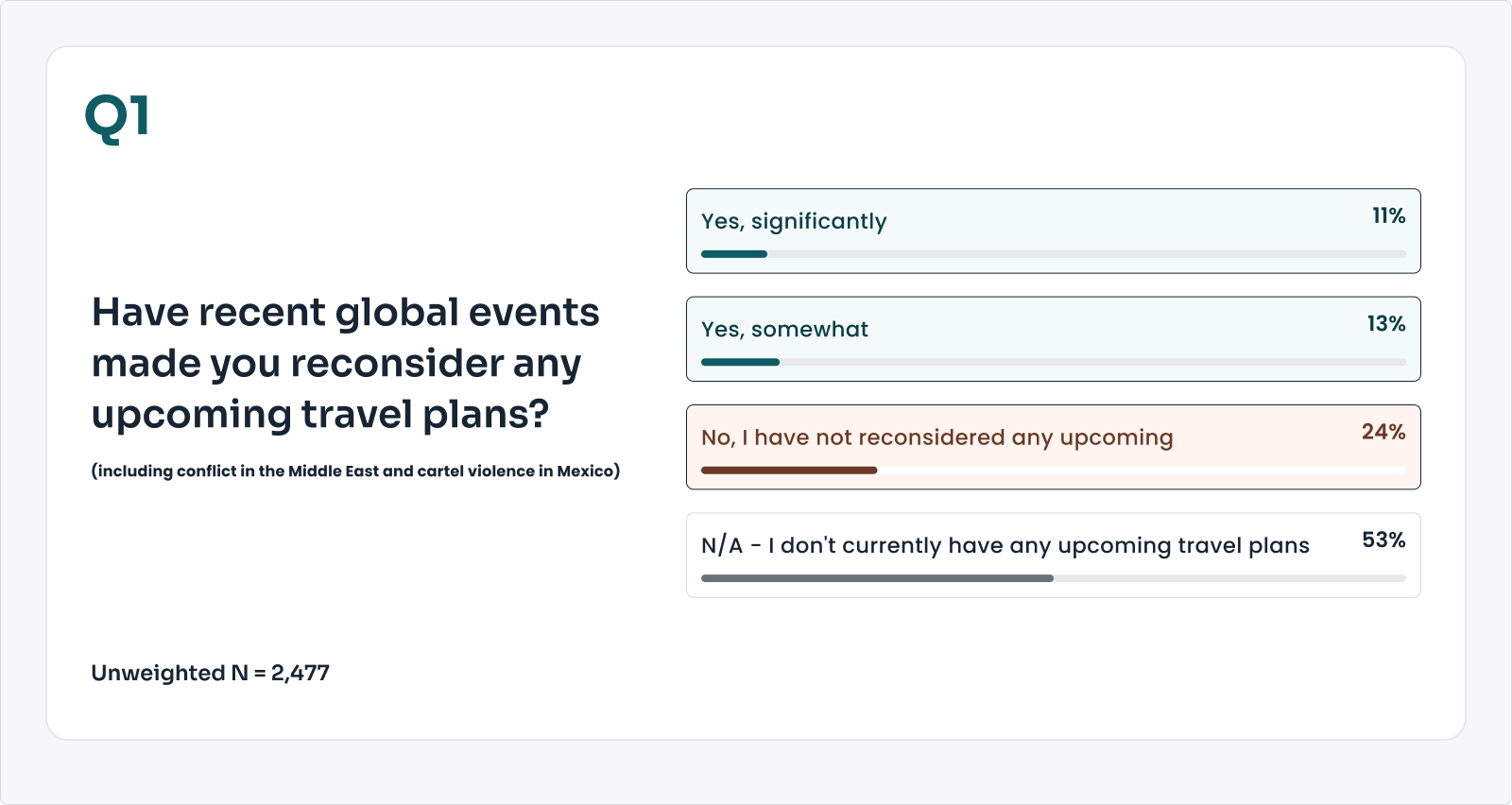
Twenty-four percent of Americans surveyed have reconsidered their upcoming travel plans somewhat (13%) or significantly (11%) due to recent global events. Meanwhile, another 24% said they hadn’t reconsidered upcoming travel plans.
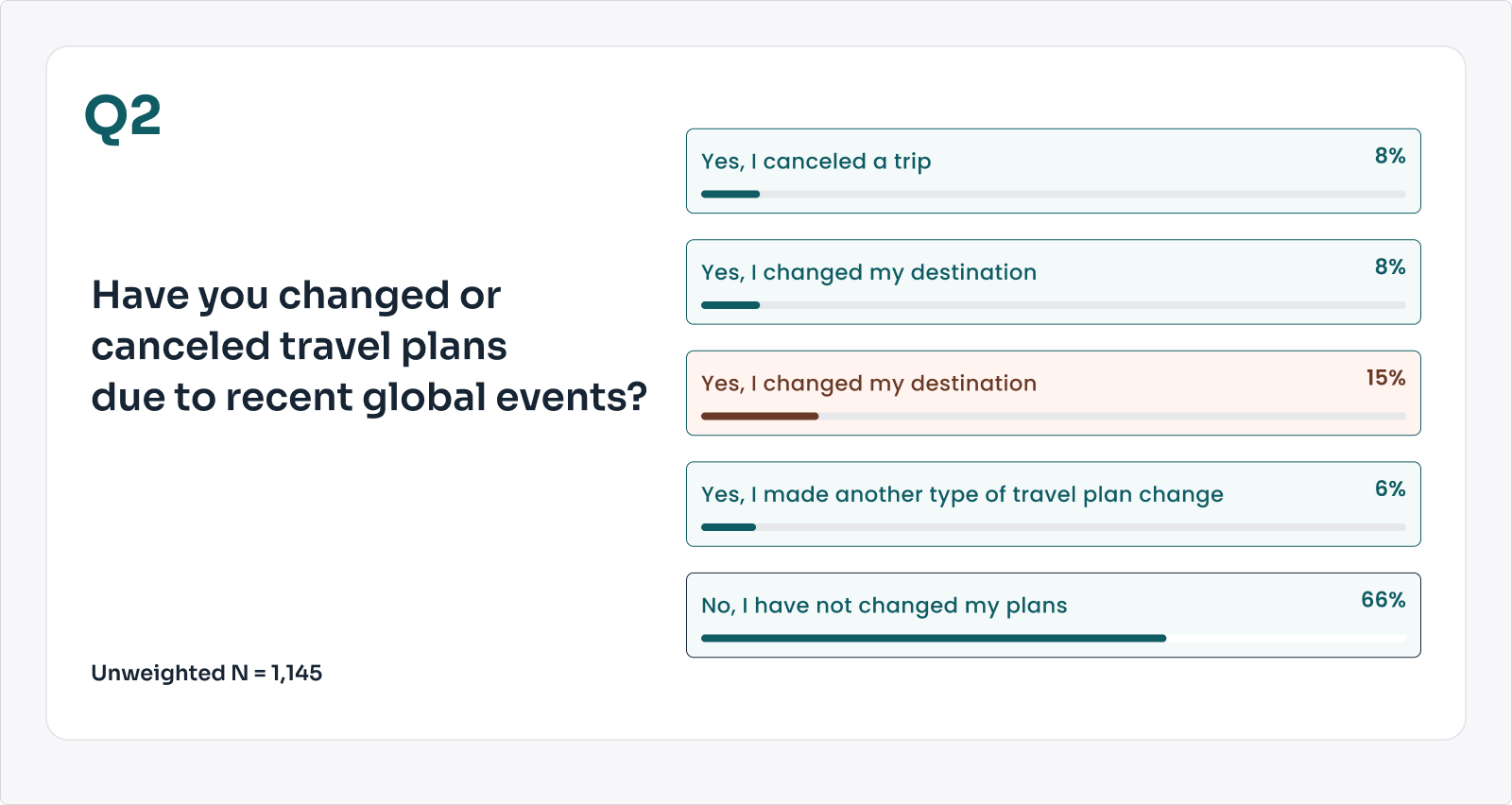
We also asked U.S. travelers with upcoming travel plans if they had changed or canceled travel plans due to recent international developments. Eight percent of respondents said they had canceled a trip, and another 8% said they had changed their destination. Fifteen percent said they postponed travel.
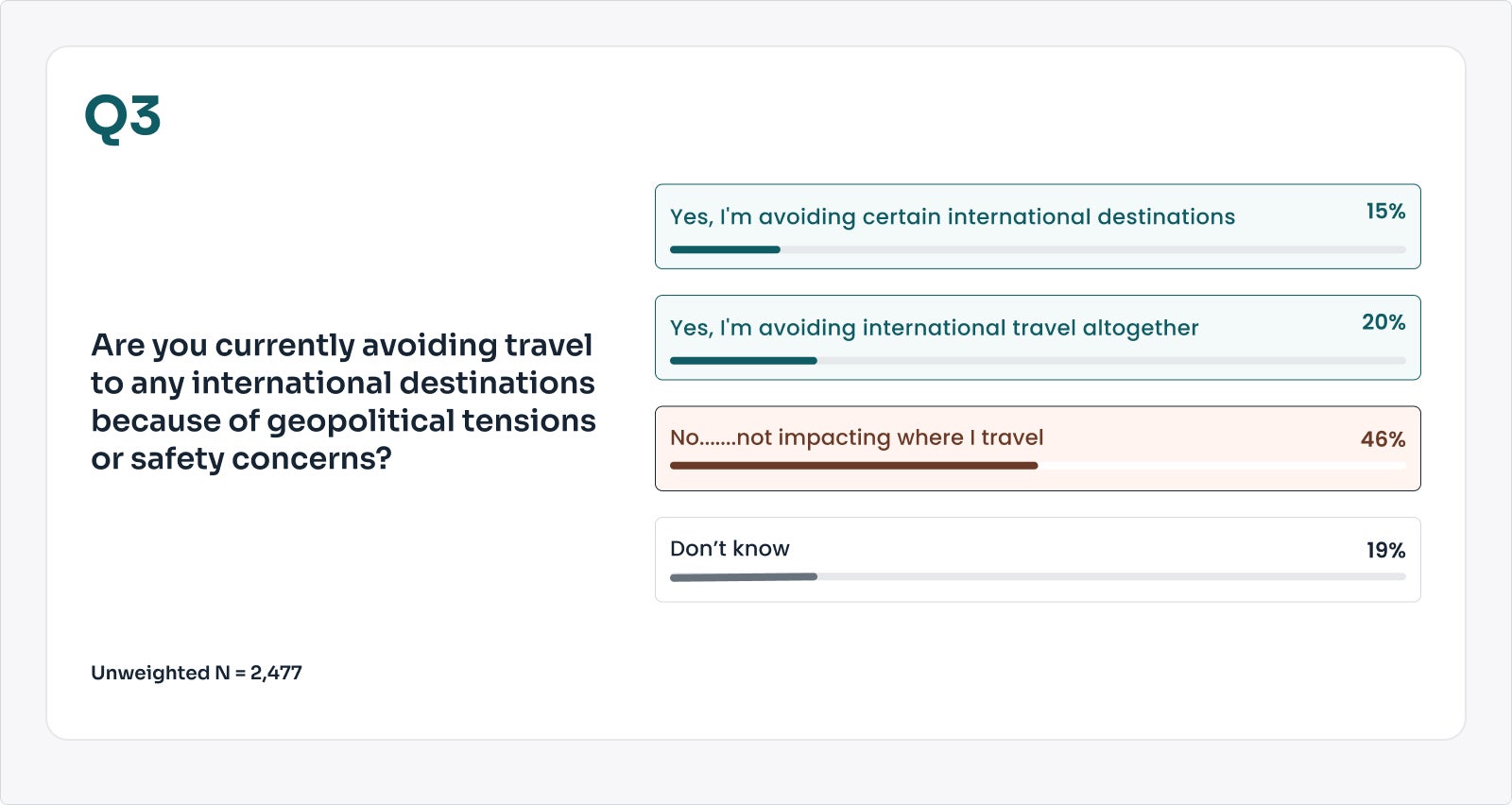
Digging further, we asked whether respondents were avoiding travel to any international destinations due to geopolitical tensions or safety concerns. Fifteen percent said they were avoiding some destinations, and another 20% said they were avoiding international travel altogether. Still, 46% said it wasn’t affecting where they travel.
Related: Fear of flying: New polling suggests 74% admit to at least some nerves

Reward your inbox with the TPG Daily newsletter
Join over 700,000 readers for breaking news, in-depth guides and exclusive deals from TPG’s experts
Among U.S. travelers avoiding certain regions due to geopolitical or safety concerns, we further asked which regions they were hesitant to travel to.
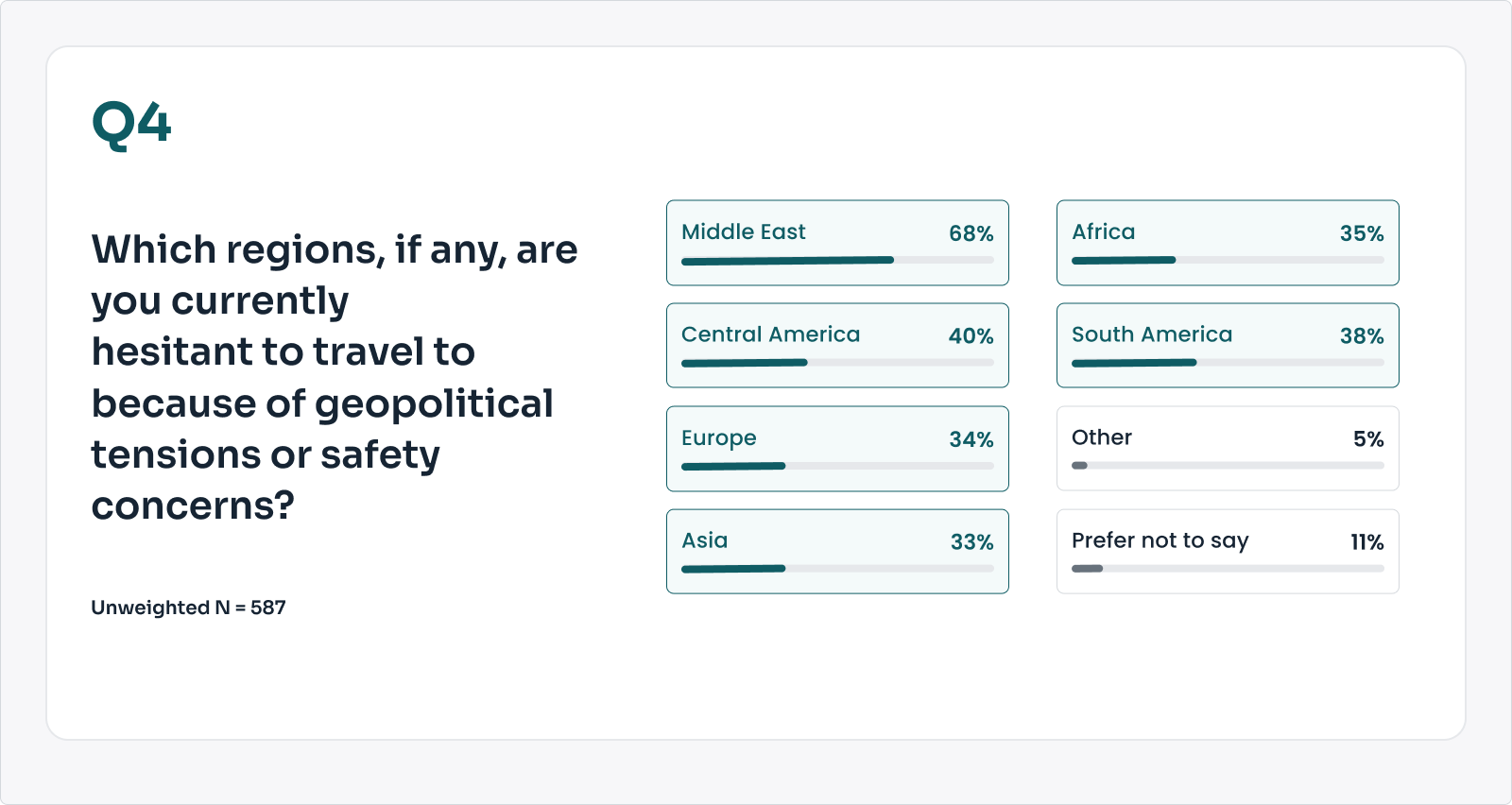
Unsurprisingly, 68% said they were reluctant to travel to the Middle East, and 40% said the same of Central America.
Next, we asked those with upcoming travel plans what they would do if geopolitical tensions or safety concerns continue to rise.
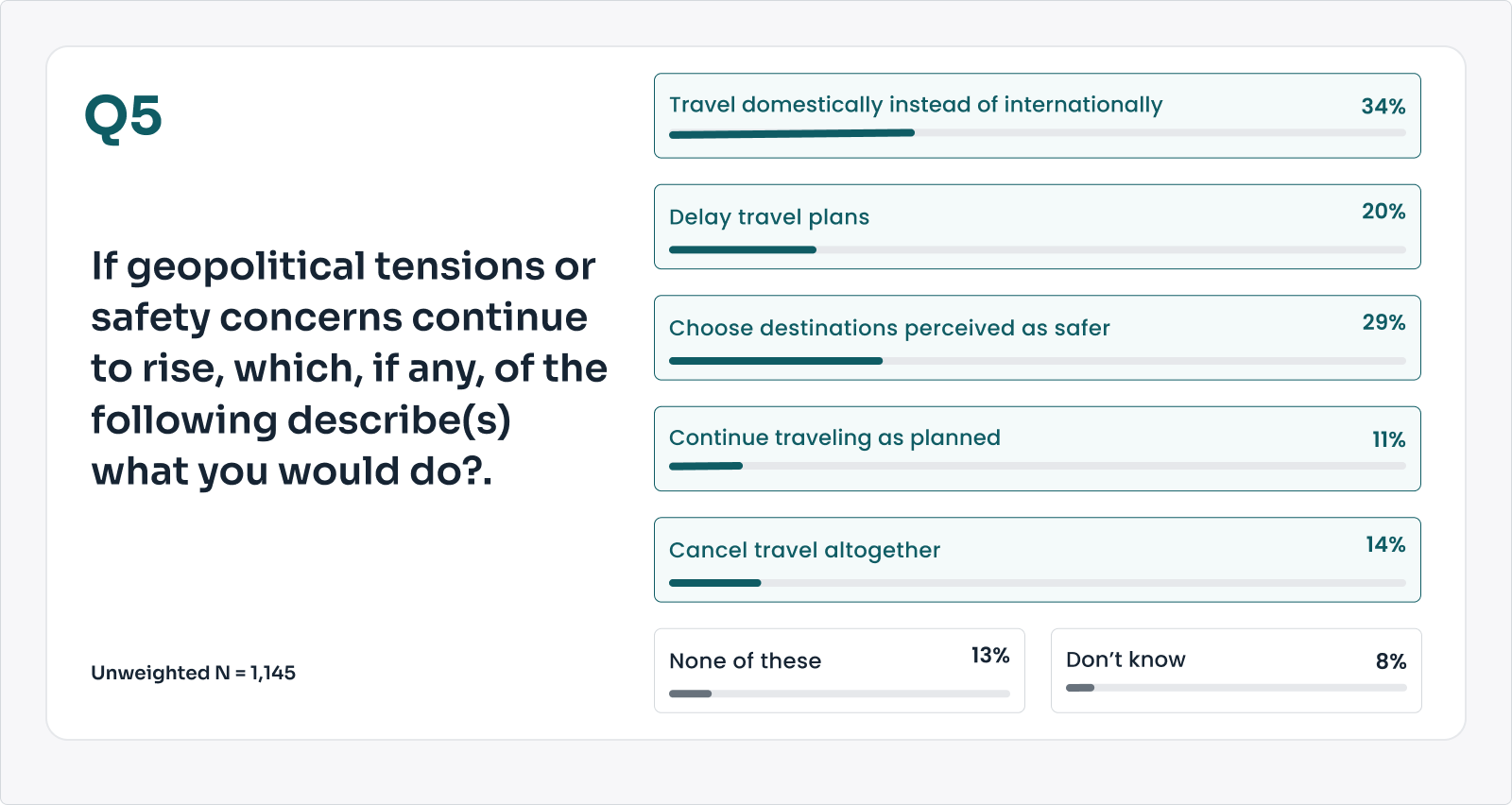
Fourteen percent said they would cancel travel altogether, 29% said they would choose destinations perceived as safer, 20% said they would delay travel plans, and 34% said they would travel domestically instead of internationally. Interestingly, 11% said they would continue to travel as planned. Some people are not afraid!
How Americans are reacting to higher prices when it comes to travel
Rising prices are also affecting travelers. Anecdotally, we’ve seen higher prices across the board at TPG for airline tickets — and the data is backing that up.
United Airlines CEO Scott Kirby warned that higher jet fuel prices would be passed along to consumers, and airlines have done just that. A Deutsche Bank survey found prices for domestic U.S. flights had surged anywhere from 10% to 50%, depending on the route.
Our new survey found that rising airfare and gas prices were significantly affecting travel sentiment. Thirty-three percent of U.S. travelers with upcoming plans said they were traveling less, while 25% said they were choosing cheaper or closer destinations. Another 25% said they were being more strategic with how they book travel.
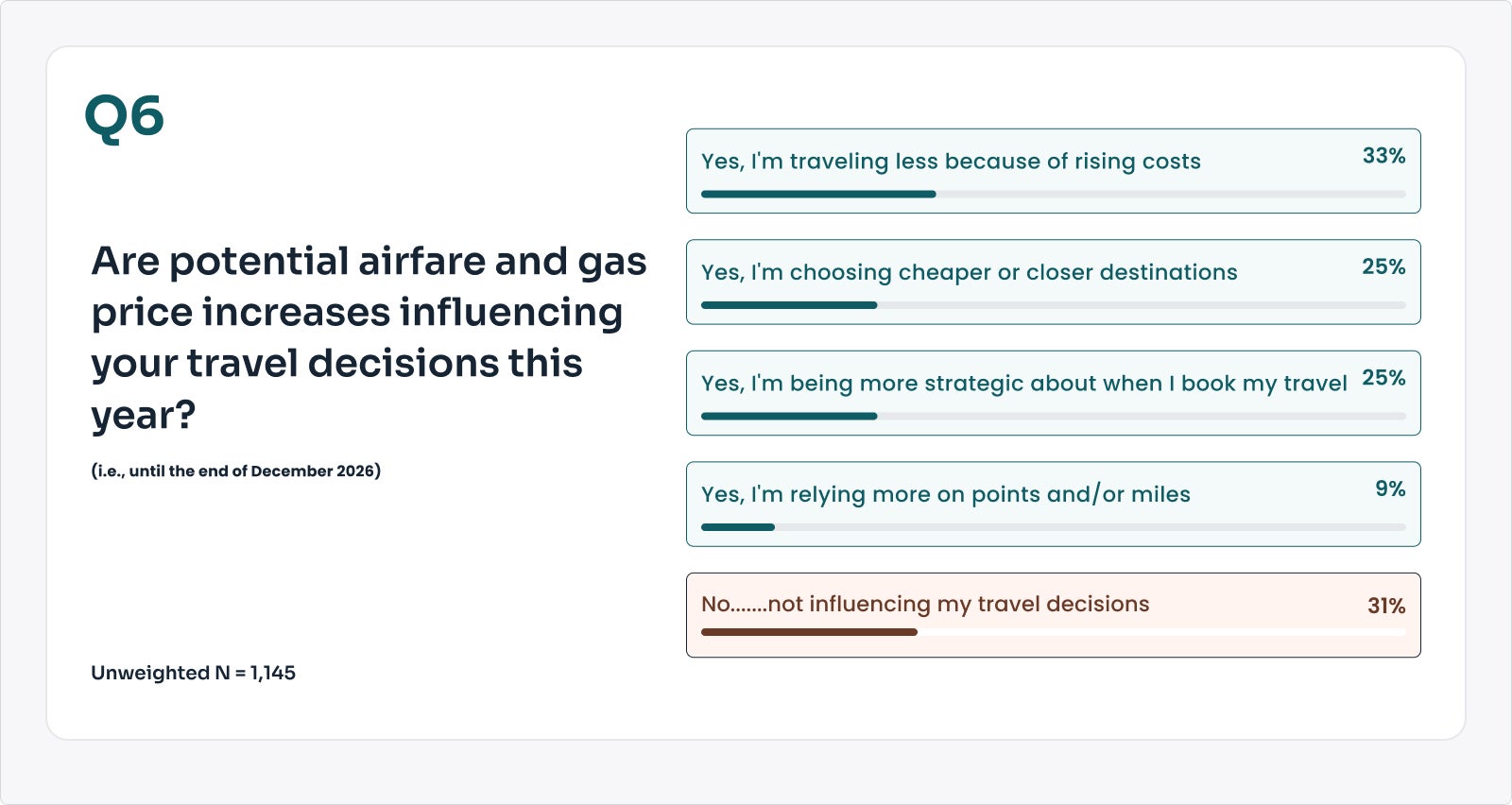
Still, 31% said rising prices weren’t influencing their travel decisions.
When we asked travelers with upcoming travel plans affected by rising airfare and gas prices how they planned to deal with price increases, we received a variety of answers.
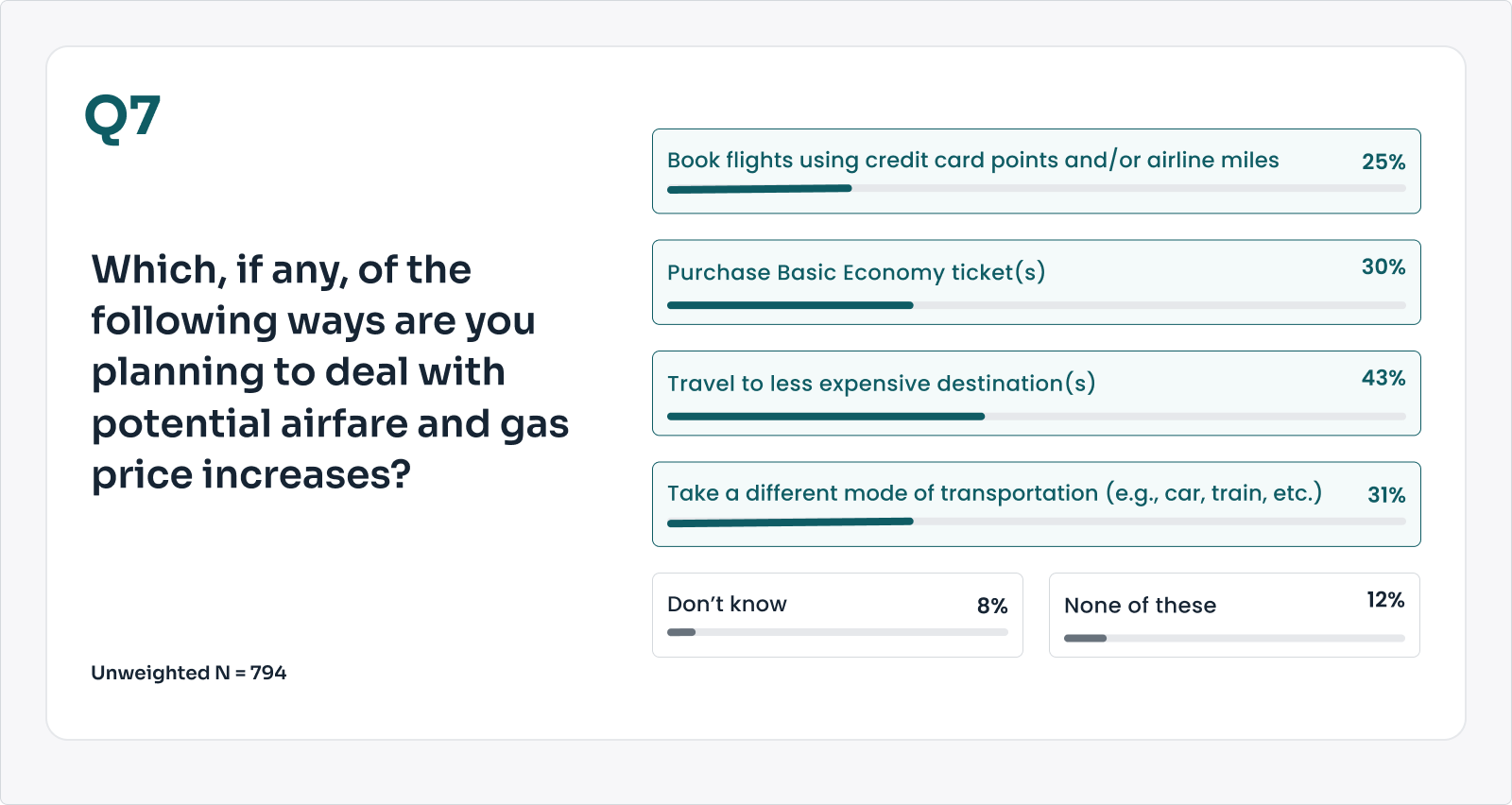
Twenty-five percent planned to book using points or miles, 30% planned to book basic economy tickets, and 43% said they would travel to less expensive destinations.
Read more: TPG’s guide to getting started with points, miles and credit cards
We also asked Americans with upcoming travel plans if they were booking summer flights earlier than usual. (This is the advice we are giving to TPG readers — to book now to get ahead of potential price increases, and then get a trip credit if the price of tickets drops before the trip.)
Nearly a quarter (24%) of those with travel plans said they were booking earlier than usual.
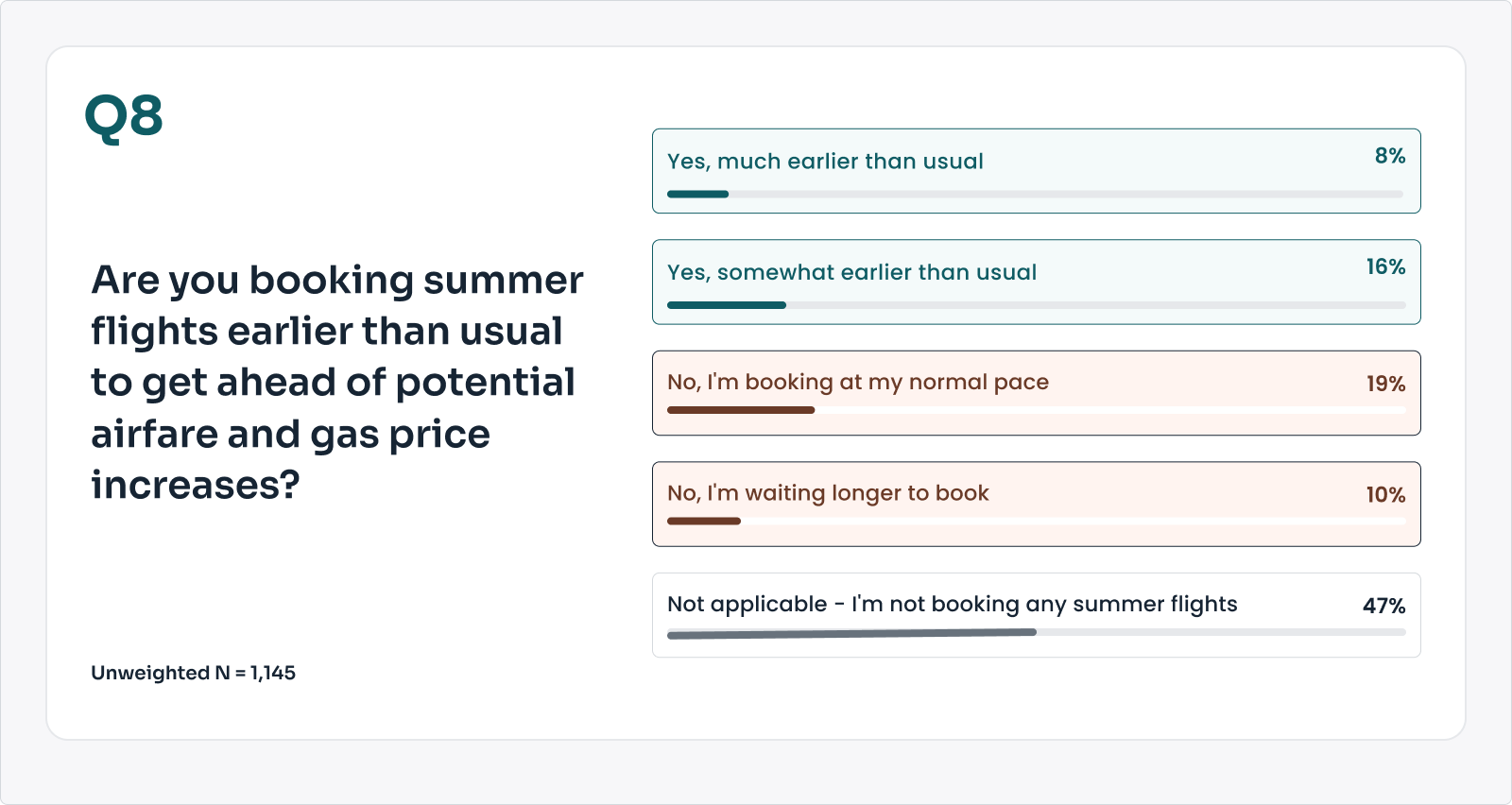
For a full breakdown: 8% said they were booking much earlier than usual, 16% said they were booking somewhat earlier, 19% said they were booking at their normal pace, and 10% are throwing caution to the wind and actually waiting longer to book.
With prices rising fast, at the very least, readers should be setting Google Flights alerts and monitoring prices for all their flights for the remainder of the year to get an idea of trends. If you can afford it, I recommend locking in all flights through the new year now, then monitoring prices. If jet fuel continues to spike, I think fares could go much higher.
As long as you don’t book basic economy, you can get a trip credit for the price difference if we get lucky and prices actually fall before the trip. There are even new tools that will monitor flights you’ve booked for you and automatically get you those trip credits.
Bottom line
The new polling by YouGov and The Points Guy shows some fascinating data as global events continue to reverberate through the travel space.
So far, the war in Iran, rising prices, cartel violence and the government shutdown haven’t severely affected bookings, but a lot can change very quickly these days.
It’s fascinating that 66% of U.S. travelers with upcoming travel plans haven’t changed their plans. About a third (34%) say they will travel domestically rather than internationally if geopolitical tensions or safety concerns continue to rise. You can bet that we’ll be tracking that sentiment closely.
Related reading:
The Points Guy commissioned YouGov Plc to conduct the survey. All figures, unless otherwise stated, are from YouGov Plc. The total sample size was 2,477 U.S. adults, among whom 1,145 are travelers who have upcoming travel plans. Fieldwork was undertaken between March 16 and 17. The survey was carried out online and meets rigorous quality standards. It gathered a nonprobability-based sample and employed demographic quotas and weights to better align the survey sample with the broader U.S. population.