dailynewsnblog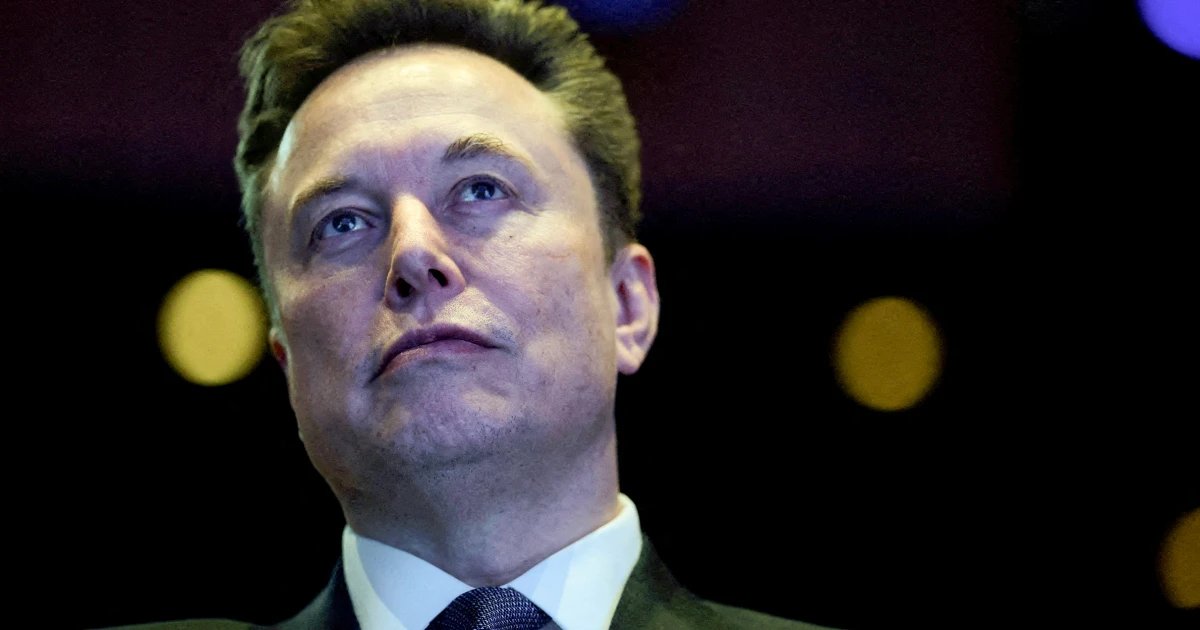
Members of Elon Musk’s private security team were deputized as federal agents last year even though some of the billionaire’s guards lacked the required training and law enforcement experience, according to newly released government emails.
Subscribe to read this story ad-free
Get unlimited access to ad-free articles and exclusive content.

The emails shed new light on how the U.S. Marshals Service responded to Musk’s entourage during his five-month stint in the second Trump administration. The agency in February 2025 approved a request that it said came from the White House to deputize Musk’s bodyguards, a decision that allowed them to carry weapons in some federal buildings and continue protecting him.
Musk, the world’s wealthiest person, was a senior adviser to President Donald Trump and oversaw the Department of Government Efficiency from January of last year until his rocky exit in May.
The Marshals Service released the emails and related documents in response to a request under the Freedom of Information Act filed by Democracy Forward, a progressive advocacy group that has been investigating Musk’s tenure in the Trump administration. The group, which filed a lawsuit last year to get the records, shared them with NBC News.
The Marshals Service first considered deputizing Musk’s security detail during the first week of February, according to the emails, as Musk was immersed in trying to dismantle federal agencies such as the U.S. Agency for International Development.
But there was a potential hiccup: Musk’s security detail did not meet what the Marshals Service considered to be the basic requirements to be deputized as federal law enforcement.
In particular, at least some members of his detail needed waivers because they had not successfully completed a “basic law enforcement training program” or did not possess at least one year of law enforcement experience with an agency that had general arrest authority, according to an email on Feb. 10. The name of the person who sent the email was redacted.
Three days later, Rich Kelly, the Marshals Service’s associate director for operations, authorized the waivers, granting the bodyguards an exception to the usual eligibility requirements. A career official, Kelly was the agency’s third-in-command. He retired in September and did not respond to requests for comment.
The Marshals Service’s use of special deputations was already under scrutiny. Just months earlier, in a September 2024 audit report, the Justice Department’s inspector general found that the service had deputized people who were ineligible and had deputized others for questionable purposes. In response, the service pledged to update its procedures to ensure it was complying with federal rules.
In late February 2025, Musk was asked about his security during an onstage interview at the Conservative Political Action Conference. The interviewer, Newsmax host Rob Schmitt, said Musk appeared to have an “enormous” security detail and that he was a “wanted man.” Musk replied about his security staff: “Maybe it should be bigger.”
“I don’t actually have a death wish, I think,” he said.
It’s not clear when the Marshals Service ended the special deputation of Musk’s security detail or whether it has done so. The documents indicate that the deputation, which was officially granted the second week of February 2025, was scheduled to last two years.
The agency said Thursday it was not immediately able to answer questions about the deputations.
Musk did not respond to requests for comment.
Skye Perryman, president and CEO of Democracy Forward, said the emails are emblematic of Musk’s time in government.
“These documents — uncovered after months of work by our team — underscore the lawlessness with which Elon Musk was allowed to run around Washington, wreaking havoc and abusing government resources,” she said in a statement.
The documents are a window into the behind-the-scenes discussions that occurred as Musk and his staff took over parts of the federal government. In February 2025, Musk was waging a campaign to slash government spending that he disapproved of, including efforts to eliminate agencies wholesale without congressional approval, although DOGE ultimately failed to curtail overall spending levels.
Musk’s tenure was criticized by labor unions, government employees and Democrats for bypassing laws and regulations. Last May, a federal judge ruled that DOGE’s takeover of the U.S. Institute of Peace was unlawful.
DOGE employees turned to the Marshals Service for assistance at other key points early last year, including by threatening to call the federal marshals to gain access to systems at USAID. Federal marshals also escorted DOGE officials into the U.S. African Development Foundation in March 2025, according to The New York Times.
A memo from Feb. 7, 2025, included in the FOIA response says that the Marshals Service planned to deputize Musk’s private security detail “in light of significant and credible threats” against him. Musk is the CEO of Tesla and SpaceX — titles he kept even while working for Trump — and was serving at the time as a “special government employee,” a category of temporary federal worker.
The request was unusual. Although the Marshals Service grants special deputations to thousands of people a year, it says it generally does so to support specific investigations or operations such as when a local police officer joins a temporary federal task force.
It’s not clear what qualifications Musk’s security detail had. Their names and experience are redacted from the emails and other documents released under FOIA.
At the time, the Marshals Service said publicly that it was not giving Musk’s security detail complete freedom to act as law enforcement. The deputized guards’ authority was limited to “personal protection” and did not give them the ability to make arrests, according to the agency.
The memo and other documents referred to Musk multiple times as the head of DOGE, although other parts of the government were asserting that same month that Musk was not the person in charge of the department.
The decision by the Marshals Service to deputize Musk’s security detail prompted immediate scrutiny. After news of the decision broke, a lawyer for Sen. Richard Durbin, D-Ill., emailed the Marshals Service expressing unease and asking “what kind of liability exposure USMS will face if something goes awry?” The lawyer’s email was included in the FOIA response but with their name redacted. The FOIA response does not include a response from the agency to the senator.
Some of the emails obtained by Democracy Forward also deal with the Marshals Service’s preparations for the release of Jan. 6 defendants, and show significant coordination before Trump took office, with meetings taking place in early December 2024.
Individuals linked to Musk were involved in pushing for the release of Jan. 6 defendants. Hours after Trump pardoned about 1,500 Jan. 6 defendants in his first few hours back in office, Musk reposted an X post by conservative activist Charlie Kirk that referred to Jan. 6 defendants as hostages, with Musk telling families of Jan. 6 defendants to “let us know if you encounter any difficulties with release of your loved ones.”
The next day, an official with the Marshals Service circulated an email titled “AWARENESS ITEM: Musk tweets about J6 releases,” which flagged Musk’s post.
“All,” he wrote, “please see the tweet below amplified by a prominent citizen.”