dailynewsnblog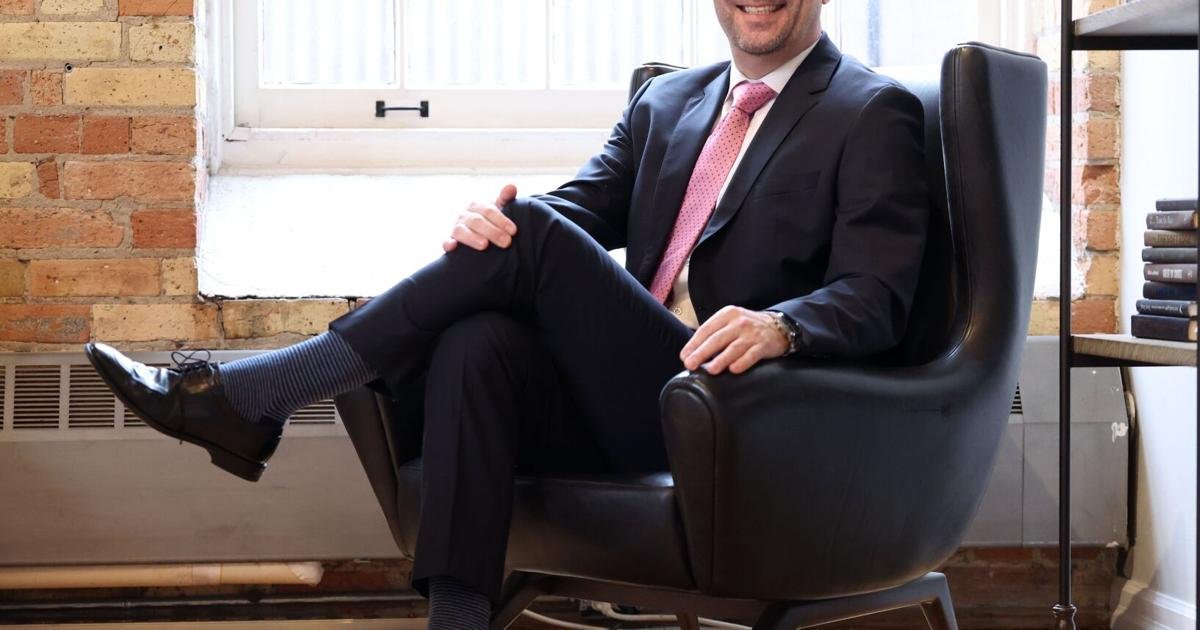
More than a decade after infidelity website Ashley Madison’s massive data breach led to global heartbreak, investigations and lawsuits, chief strategy officer Paul Keable says users are still eager to jump into bed with the company as it pivots to focus on ‘discrete dating.’
The original tag line for the Toronto-based company, founded in 2002, was ‘Life is short. Have an affair.’ Now, the tag is, ‘Where desire meets discretion,’ and the company is touting a laser-focus on privacy and data protection.
“We have a much more robust security team,” Keable says, “and privacy, discretion and security are the responsibility of every single person in the organization.”
The Toronto native, who majored in English at York University before studying corporate communications at Centennial College, joined the dating service in 2013 after a dozen years in public relations.
Just two years later came the data breach that publicly exposed the identities of millions of its members and destroyed countless relationships around the world.
Keable was asked if he felt remorse over the fallout.
“‘Remorse’ isn’t the right word, but we understood our role in that, despite the actions of an individual or group, whomever it was, but they were the ones who committed this act, not us,” Keable says. “And I don’t say that as a defiant pushback against the idea that we didn’t feel a sense of ownership of the problem, because we own that problem, collectively, and we are very aware of the tragic outcomes that did occur.”
Mastermind is bouncing back from recent creditor protection. “We’re focused on the things that
What would have spelled the end to any traditional tech or dating platform, however, proved the opposite for Ashley Madison.
“The response from consumers was mind blowing,” says Keable. He says the site was adding about 30,000 users a day before the hack, but saw even more people sign up after. “In the heat of that, we were signing up more than 100,000 people per day, and revenue was up 10 per cent.”
In fact, parent company Ruby Life claims the platform has signed up 91 million users in 43 countries since it was founded, more than two-thirds of whom joined after the 2015 cyberattack. Last year, 57 per cent identified as single, prompting the company to reposition itself as a discreet dating service — even for singles.
The Star recently spoke with Keable from his home office in Toronto about the company’s controversial past, how it has learned from its mistakes, and why privacy-minded daters should now trust a platform that made global headlines for its inability to protect user data.
Why join Ashley Madison after 13 years in public relations?
I had spent 13 years on the agency side working with some of the biggest clients in Canada and internationally, and I wanted to see what things looked like from the other side.
A former colleague phoned and said a peer of hers was going to work for Ashley Madison, and they were looking for someone senior level to run their communications operations.
I thought it was fascinating because there are very few companies that reside in Canada but operate globally; most are either only focused on the Canadian market or are answering to a head office somewhere else.
At the time I was married, and my wife and I talked about what it meant and what the opportunity looked like. I met with the then CEO and jumped on board, knowing it would be an interesting ride.
Did you have any reservations about the service itself?
As a communications professional I appreciate the direct nature of the business. There’s no pretending it’s something it isn’t.
You may not like it, but the reality is you can’t convince people to cheat. You can create a space where it’s better for them, but I can’t make a happily married person join.
If you value honesty, why work for a company that helps people hide affairs, and whose practices were exposed as deceitful?
Some of that has been misconstrued. There were very few things that were not publicly disclosed in our terms and conditions if not displayed outright before 2015.
If you’re referring specifically to the automated (account) programs, that was in the process of being shut down and was already shut down in North America in early 2014.
Ruby Life, which was then Avid Life Media, bought Ashley Madison from the founder in 2007. There were pieces that were still being removed, and that was a remnant of the old company.
What about the ratio of men to women?
In the Gizmodo article you might be referring to as it relates to the ratio, you’ll see the editors put a note that says she got it dead wrong. It wasn’t intentional, it wasn’t a malicious act, it just wasn’t accurate.
In 2018 we hired Ernst and Young to audit our membership and produce a public report to validate the ratio of males to females at the time. It showed 1.3 active female accounts (which are free) for every 1 active male account (which are paid) in 2017.
What about the paid ‘full delete’ feature that didn’t scrub user data?
There were mistakes made, unambiguously, but the accusation was incorrect in terms of intent. Nobody knew there was that mistake in the code.
What was it like working in communications for Ashley Madison during the breach?
I had been through crisis management with many companies, but this was on a different level. It was obviously global in nature and salacious, but the level of interest was astonishing.
Ten years later, I can say it was an incredible learning experience, but in the moment, it was very intense. We let our members down, and that’s a big problem.
How did the business survive?
Pundits were saying this was the end of the company, but consumers were saying otherwise.
The response from consumers was mind blowing. At the time (before the hack), we were signing up maybe 30,000 people a day, and then in the heat of that, we were signing up more than 100,000 people per day, and revenue was up 10 per cent.
The publicity wasn’t enough to keep people coming to the platform for the next 10-plus years. There was a tremendous amount of work that went into upgrading the culture and the business so that we would be a destination of choice.
The attention drove awareness, and a lot of new memberships, but we needed to change the organization to facilitate that.
Did the Netflix and Hulu documentaries have the same effect?
Yeah, absolutely. Both documentaries raised awareness, but the Hulu one showed how far we had come since 2015.
Ashley Madison is “a business in the business of adultery.” What happened when the site was hacked and millions of profiles of users looking to cheat on their spouses were exposed.
Why is Ashley Madison repositioning itself?
We have so much data, and we’ve seen a couple of different trends, particularly since COVID.
At first, we started to notice more people joining that wouldn’t define themselves as seeking an affair. They were either in a disclosed, nonmonogamous relationship — meaning their partner was aware or participating — or they were polyamorous, but they desired the discretion we offered.
Last year, 57 per cent of all new members identified as single. They weren’t coming to us for what we were offering traditionally, they were coming because they want more control over who sees their profile.
They don’t want to sign up for a dating app after a divorce, and then come into the office on Monday morning and have Bob from accounting making comments about seeing their profile.
Before it was about not wanting others to know you’re having an affair, but today maybe you don’t want your kids or your colleagues knowing you’re on a dating site.
We retired, ‘Life is short. Have an affair.’ Now it’s just ‘Where desire meets discretion.’

Koho CEO Daniel Eberhard started fintech a decade ago after discovering how much money his
How do you facilitate that discretion?
You can put up a profile photo, but some choose not to, and we provide tools so you can obscure your photo as you see fit. More importantly we have a private locker key system where you can put other more revealing photos.
If I connect with a woman and we’re chatting and we feel we’ve built enough trust and connection, I can send her my key, and she can see the images in my private locker. She can’t screen capture them or any part of my account, and I can revoke that key at any time, so she no longer has access.
We also added a feature called “Discreet match,” where people can identify why they’re looking for discretion, so you can find someone who matches your reason for using the service.
It’s also the culture of our members; they’re looking for the discretion we offer.
Why should users trust you with intimate information after a breach?
What company knows better about the impact of a data loss than us?
We’ve been through that, we know the ramifications of that, and we spend an inordinate amount of time focused on that as part of our business.
We have a much more robust security team, and privacy, discretion and security are the responsibility of every single person in the organization.
That cultural shift allowed us to get to this point 11 years later, and our members have come to understand how we approach our business and their data.
The interview has been edited for clarity and length.