dailynewsnblog
Faster aircraft have long captured the imagination of both passengers and engineers, symbolizing progress, innovation, and the relentless pursuit of shrinking the world. From the earliest aircraft to ambitious supersonic programs like Concorde, speed has often been linked to progress in commercial aviation, promising to dramatically reduce journey times across continents and oceans. At first glance, it appears logical that if an aircraft can fly faster, passengers should arrive at their destination more quickly.
However, the reality of modern aviation is far more nuanced, as total travel time depends on a complex variety of factors that extend well beyond cruising speed alone. Operational constraints, atmospheric conditions, airport infrastructure limitations, and economic considerations all shape how long a journey actually takes from start to finish. As a result, even the fastest aircraft do not always deliver the time savings that their impressive top speeds might suggest. Let’s take a closer look…
The Difference Between Airspeed & Door-To-Door Time

One of the most fundamental distinctions in aviation is the difference between an aircraft’s cruising speed and the total door-to-door travel time experienced by passengers, which encompasses far more than just the time spent in the air. While airlines and manufacturers often emphasize cruise speeds in their marketing and technical specifications, passengers must contend with a sequence of processes that collectively define the overall journey.
These processes begin well before takeoff, and include check-in, security screening, and boarding, all of which can take a considerable amount of time depending on the airport and time of day. Once onboard, the aircraft may still spend a significant period taxiing to the runway, waiting for clearance, and queuing behind other departures, particularly at busy hubs where congestion is a daily reality, including  Los Angeles International Airport (LAX) and
  Hartsfield-Jackson Atlanta International Airport (ATL). After landing, the process repeats in reverse, with taxiing, gate allocation, disembarkation, and baggage collection adding further delays.
Even if a faster aircraft reduces the airborne portion of a journey by a meaningful margin, that improvement may represent only a relatively small percentage of the total travel time, especially on shorter routes where ground operations account for a larger share of the experience. In practical terms, saving 30 to 60 minutes in the air may not feel transformative when the entire journey spans several hours, highlighting how speed alone cannot define efficiency in commercial aviation.

What Is The Fastest Commercial Aircraft In The World Today?
Aircraft speed has been a critical factor in aviation development, influencing passenger travel, cargo transport, and technological advancement.
Air Traffic Control & Indirect Routing

Another critical factor limiting the real-world benefits of faster aircraft is the structure of global air traffic control systems, which are designed primarily around safety, predictability, and capacity rather than maximizing speed. Aircraft rarely fly the shortest possible path between two cities, as they often instead follow established airways, adhere to altitude assignments, and navigate around restricted or congested areas of airspace.
These constraints often result in routes that are longer than the theoretical great-circle distance, as flights may need to detour around military zones, politically sensitive regions, or weather systems that could pose risks to safety or comfort. In addition, air traffic controllers must carefully sequence aircraft to maintain safe separation, which can lead to speed adjustments, extended approaches, and, in some cases, holding patterns near the destination airport.
Holding patterns are particularly illustrative of how speed advantages can be eroded in practice, as an aircraft that has spent hours flying at high velocity can lose much of its time savings by circling for 20 or 30 minutes while awaiting landing clearance. Similarly, speed restrictions during climb, descent, and approach phases mean that even the fastest aircraft cannot operate at their maximum capabilities throughout the entire flight, further narrowing the gap between high-speed and conventional operations.
The Influence Of The Jet Stream

Atmospheric dynamics add another layer of complexity to flight times, with the jet stream playing a particularly significant role in shaping the duration of long-haul journeys. These high-altitude bands of fast-moving air, which flow predominantly from west to east, can dramatically influence an aircraft’s ground speed depending on the direction of travel and the strength of the winds on a given day.
Flights traveling from west to east across the Atlantic, for example, often benefit from strong tailwinds that effectively boost their speed over the ground, sometimes reducing flight times by an hour or more compared to the same route in the opposite direction. Passengers flying between New York John F. Kennedy International Airport (JFK) and  London Heathrow Airport (LHR), for example, will notice this. Conversely, flights heading westward may encounter powerful headwinds that slow their progress and extend the journey, even if the aircraft itself is capable of maintaining a high true airspeed.
This dynamic creates situations in which a slower aircraft flying with favorable winds can achieve similar or even shorter travel times than a faster aircraft operating against adverse conditions. Flight planners actively account for these effects, sometimes choosing longer routes that align with favorable wind patterns in order to minimize overall travel time, underscoring the fact that atmospheric conditions can outweigh raw speed in determining real-world performance.

Why Don’t Planes Fly Faster?
It’s more complicated than you may think.
Supersonic Travel & Its Real-World Limitations

The pursuit of speed reached its most ambitious expression in the era of supersonic passenger travel, when aircraft such as the Concorde demonstrated that it was technically possible to cut intercontinental flight times dramatically by cruising at speeds exceeding Mach 2. On transatlantic routes, Concorde could reduce flight times to roughly three and a half hours, compared to seven or eight hours for conventional subsonic aircraft, creating a compelling value proposition for time-sensitive passengers.
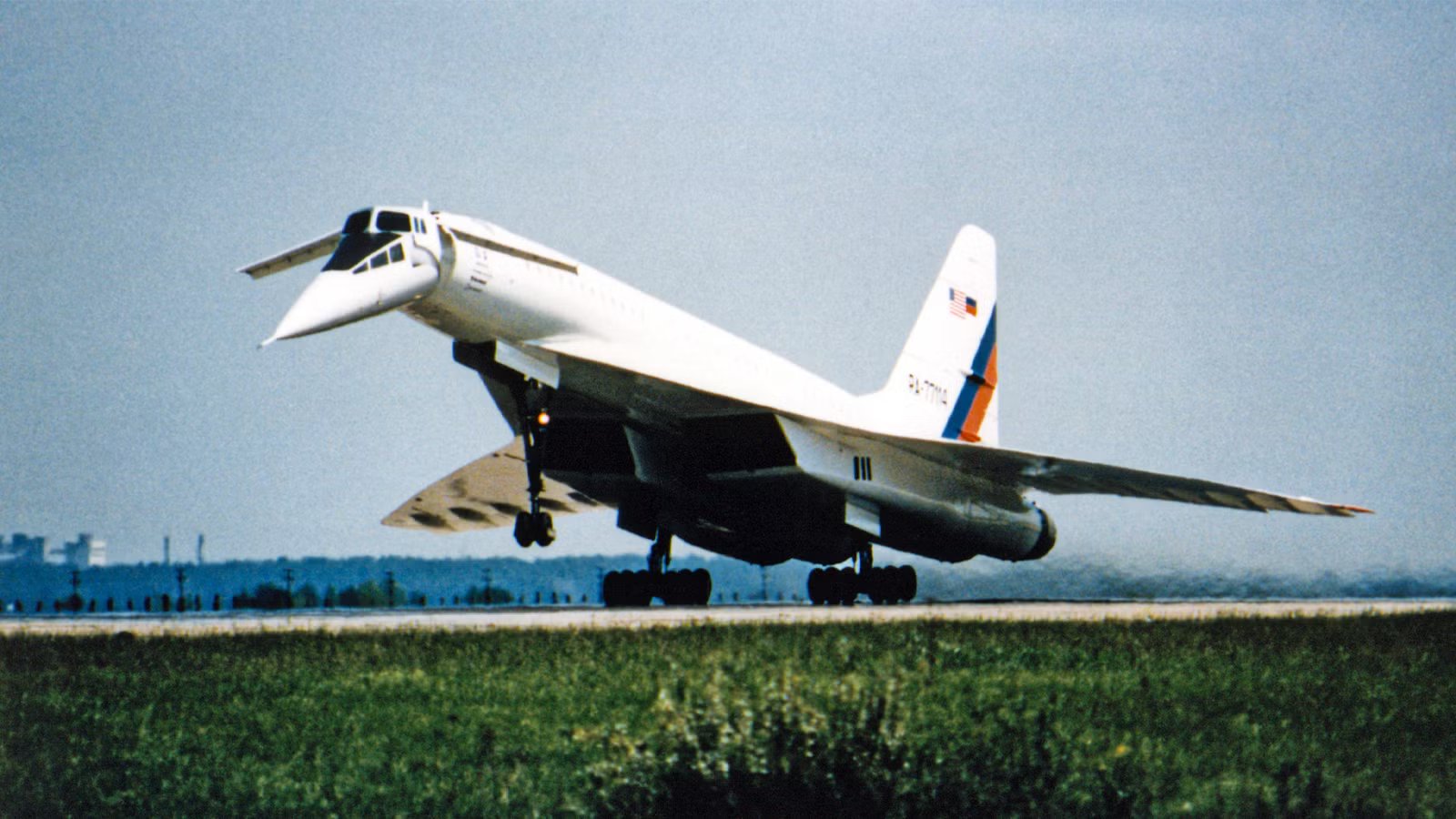
However, Concorde was not the only high-speed aircraft to shape this narrative, as earlier aircraft like the Boeing 707 and Douglas DC-8 had already introduced significantly higher cruise speeds compared to propeller-driven aircraft, shrinking global travel times in the mid-20th century. The Tupolev Tu-144 also showcased the highest commercial flying speeds, while later aircraft such as the Boeing 747 and the Lockheed L-1011 TriStarpushed performance boundaries within subsonic limits, balancing speed with range and capacity. Some of the fastest commercial aircraft in history are outlined in the table below:
|
Ranking |
Aircraft |
Top Speed |
|---|---|---|
|
1 |
Tupolev Tu-144 |
1,510 mph (2,430 km/h) |
|
2 |
Concorde |
1,354 mph (2,180 km/h) |
|
3 |
Airbus A380 |
634 mph (1,020 km/h) |
|
4 |
Boeing 747 |
614 mph (988 km/h) |
|
5 |
Boeing 787 Dreamliner |
593 mph (954 km/h) |
Despite these advances, the real-world benefits of supersonic travel were constrained by a range of operational and regulatory limitations, including restrictions on overland supersonic flight due to the disruptive effects of sonic booms. As a result, aircraft like Concorde were largely confined to transoceanic routes, limiting their network flexibility and overall impact on global travel patterns.
Moreover, even supersonic aircraft had to contend with the same ground-based inefficiencies as their subsonic counterparts, including taxi delays, departure queues, and arrival sequencing at busy airports. A Concorde flight that saved several hours in the air could still lose a portion of that advantage through routine operational delays, illustrating how speed alone could not overcome more general constraints within the commercial aviation environment.
Economic factors further complicated the picture, as high-speed aircraft typically consumed significantly more fuel and carried fewer passengers, leading to higher operating costs and ticket prices. For many passengers, the premium required to fly faster was not justified by the time savings, particularly when alternative options such as overnight flights could achieve similar practical outcomes without the added expense.
Airport Congestion & Ground Delays

Airports themselves represent one of the most significant bottlenecks in the aviation system, as their capacity is inherently limited by physical infrastructure, operational procedures, and safety requirements. No matter how fast an aircraft can fly once airborne, it must still operate within the constraints of runways, taxiways, gates, and air traffic control systems that govern the flow of traffic on the ground.
At major international hubs, congestion can lead to extended delays both before departure and after arrival, with aircraft often waiting in long queues for takeoff clearance during peak periods. Similarly, inbound flights may be required to slow down, enter holding patterns, or follow extended approach paths in order to maintain safe spacing, all of which add time to the journey regardless of the aircraft’s cruising speed.
Ground operations further contribute to these delays, as activities such as refueling, baggage handling, catering, and cleaning must be completed before an aircraft can depart again. These processes are essential to airline operations but are largely unaffected by how fast an aircraft can fly, meaning that improvements in speed do little to address one of the most time-consuming aspects of air travel.
Even after passengers disembark, additional delays can occur while waiting for baggage or navigating through large, busy terminals, reinforcing the idea that total travel time is shaped by a wide range of factors beyond the flight itself. In many cases, incremental improvements in airport efficiency can have a greater impact on overall journey times than increases in cruising speed.

Boom Vs Concorde Vs Tupolev: Supersonic Passenger Jets Compared
Both blazed a supersonic trail that Boom’s Overture now aims to surpass, but how do they compare?
Efficiency, Economics & The Modern Trade-Off

In the modern aviation industry, the emphasis has shifted away from maximizing speed at all costs and toward achieving an optimal balance between performance, efficiency, and sustainability, reflecting both economic realities and evolving passenger expectations. Airlines operate in a highly competitive environment where fuel costs represent a significant portion of total expenses, making efficiency a critical priority. Focusing on longer non-stop flights rather than fast aircraft is now more common, for example with the upcoming Project Sunrise from Qantas, which will see an increase in non-stop flights connecting Australia with Europe and North America, adding to existing non-stop services between Perth Airport (PER) and London Heathrow Airport (LHR).
Flying at higher speeds generally requires more fuel, as aerodynamic drag increases and engines must work harder to maintain velocity, leading to higher operating costs and greater environmental impact. As a result, airlines often choose to operate aircraft at slightly lower speeds that minimize fuel consumption while still maintaining reliable schedules, a practice sometimes referred to as cost index optimization.
Passengers, for their part, have demonstrated that affordability, reliability, and convenience often outweigh the benefits of marginally shorter flight times, particularly on routes where the difference amounts to less than an hour. A flight that departs and arrives on schedule at a reasonable price is typically more attractive than one that is faster but significantly more expensive or less predictable.
Modern aircraft designs reflect this reality, as manufacturers focus on improving fuel efficiency, reducing emissions, and enhancing passenger comfort rather than dramatically increasing cruise speeds. While technological advances continue to push the boundaries of what is possible, the industry as a whole has recognized that speed is only one piece of a much larger equation, and not always the most important one when it comes to delivering a better travel experience.