dailynewsnblog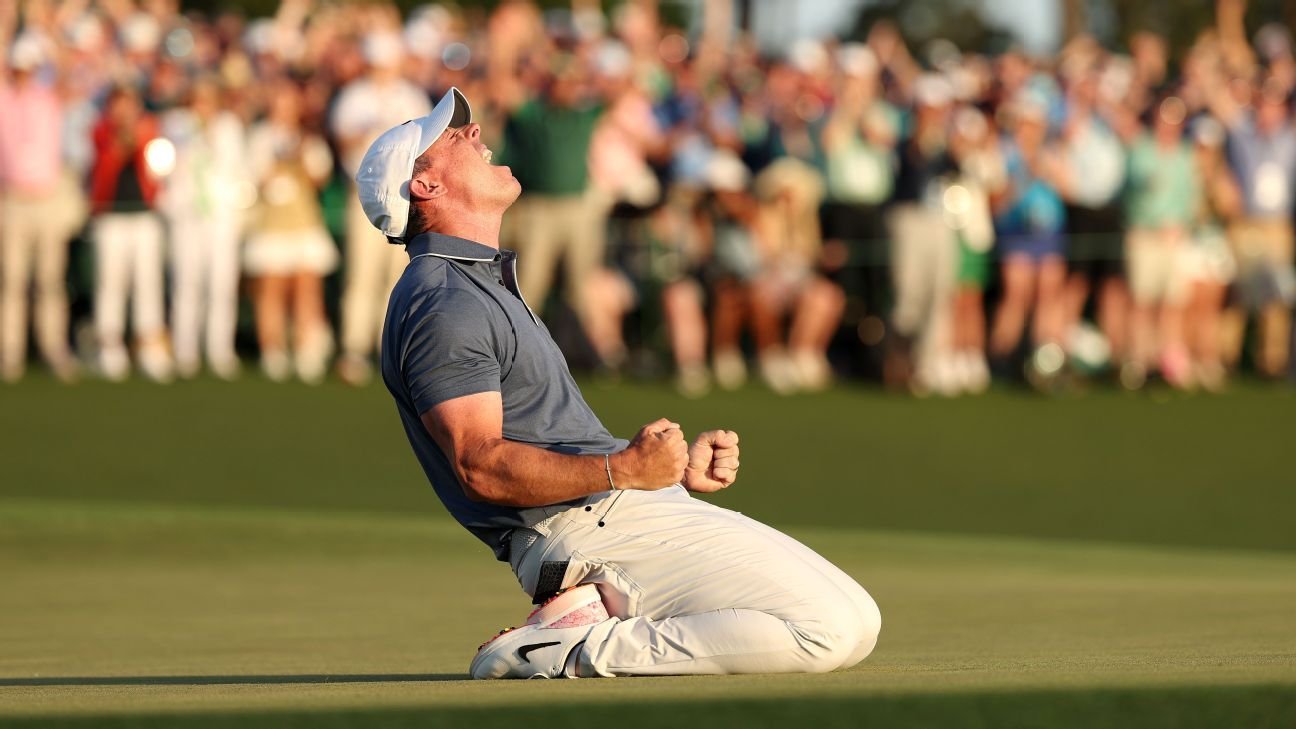
-

Marty Smith
Multiple Authors
HOLYWOOD, Northern Ireland — Tucked away on a steep hillside high above County Down, overlooking Belfast Lough, sits the 6,100-yard parkland runway from which Rory McIlroy took flight.
And no matter how high he soars or how far his reach extends or how many days pass until he returns, Holywood Golf Club will always be home.
Here in the Emerald Isle, golf is more than a game. It is a connector. Families. Friends. Generations. Here, there’s a different reverence for history. You just … feel it.
Locals explain that the game’s origins in Northern Ireland reach back 145 years to Royal Belfast, just down the hill from here. Holywood came along in 1904. And in 1994, it realized it had a prodigy on the premises.
“I worked very closely with a professional in the juvenile section, and he told me about this young lad who was going to be very good,” said Eddie Harper, a gentleman nursing a recent knee replacement, who for decades oversaw Holywood’s junior program. “[Rory] was 5 or 6.”
That pro he mentioned was Michael Bannon, who went on to become Rory’s longtime coach. In 1996, Bannon approached Harper with a plea: Admit the kid to the club. He’s too good to deny it. The minimum age for admittance was 10. Rory was 7.
“I had Rory in for the interview; dark suit, red tie, white shirt, sat down in front of me, very polite,” Harper said. “We talked about behavior, etiquette, and he piped up, said, ‘Mr. Harper, if you let me into this club, I’ll not hold anybody up. I know all the rules of golf and I’m a very quick player.’ He got in. And the rest is history.”
As golf goes, possibly the rarest history. Just six men have completed the career glam slam, winning all four major championships: Gene Sarazen, Ben Hogan, Gary Player, Jack Nicklaus, Tiger Woods, and — as of April 2025 — Rory McIlroy.
IN MARCH 2026, McIlroy strides into the dimly lit living room of a rental home at Bay Hill. There are three rooms in the house, each of which is stuffed full of television crews and equipment. ESPN goes first.
We share pleasantries, but I quickly request to get started. McIlroy is invariably honest and considerate to the media, thoughtful in response and genuinely curious. He often gives time he doesn’t have. And he doesn’t have much today. I get 10 minutes.
He starts by succinctly detailing his major championship experience.
“I found the first three pretty quickly and pretty easily in my career,” McIlroy says. “That last one was my kryptonite.”
After shooting 80 in the final round of the 2011 Masters to give away a four-shot lead, McIlroy rebounded and won the 2011 US Open at age 22, running through Congressional Country Club in historic fashion. He added the Open Championship and the PGA Championship by 25. Nothing, it seemed, could stop him.
But each year in early April, as the azaleas bloomed at Augusta National, McIlroy consistently wilted.
“I just couldn’t — I couldn’t figure out a way to get it done,” McIlroy says. “And I kept trying. And I kept coming back. And, probably since 2011, driving out of Augusta National every Sunday night disappointed, and …”
He pauses.
“Gutted?” I suggest.
“Gutted,” McIlroy confirms.
There were some bright spots. He specified 2022, when he shot a Masters Tournament career-best 8-under 64 and holed out from the right greenside bunker to post a runner-up finish to Scottie Scheffler.
“That was probably the least disappointed I felt at any one time going out of there,” he said.
For 16 years, Holywood and all of Ireland watched their boy anguish at Augusta. Time and again, they shared and felt his heartbreak.
“It was like a cloud had come down, we were all very depressed about it,” Harper said, leaning against a who-knows-how-old brick wall across the cart path from the Holywood first tee. “It took so long before he won something, word started to get around — will he ever win another major? People began to doubt.”
McIlroy had been so close so many times. There was the 2023 U.S. Open at Los Angeles Country Club when he finished second to Wyndham Clark after failing to card a birdie during the final 17 holes. And the 2024 U.S. Open at Pinehurst No. 2, when he held a two-shot lead with five holes to play and missed a pair of short putts over the final three holes, allowing Bryson DeChambeau to win.
But as painful as those moments were, Augusta was always worse. Final hurdles have a way of feeling higher, especially when they represent the obstacle toward the finish line of a childhood dream.
“I’ve always been a dreamer, big, big dreams, big ideas. I’ve never lost that,” McIlroy said. “I’ve never let the world take that from me. I think the world can turn you into a pretty cynical person, if you let it.
“I’d say [the Masters] was the — burden’s not the right word — but I was carrying this lifelong dream of winning all the majors, you know? I said that to anyone that would listen, when I was 7 or 8 years old.”
IN 1998, WHEN McIlroy was 9, he won the junior under-10 world championship at Doral. That was the moment everything changed.
“Well, his fame, if that’s the right word, had spread around the club,” Harper said. “He won the world under 10 and that put him in the spotlight. He appeared on [Gerry Kelly’s show] in Belfast hitting golf balls into a washing machine, and that created widespread interest. So then word got ’round the whole of country about Rory, and it put a lot of pressure on him because people were expecting him to do well.”
“The club basically said, look, we have to look after this guy because there is something there,” club president Tony Denvir said. “Obviously, his father, his uncle, his grandfather was a superb player. So it’s in the genes of the McIlroy family, obviously. “
As a little boy Rory was here, hitting plastic golf balls up and down hallways, often to the chagrin of the members. He was here as a 9-year-old, winning tournaments on far-away continents. He was here a teenager causing trouble. He was here as a 22-year-old major champion. And he was here last April when he completed the grand slam.
And that’s the reason I’m here: to find the how behind the who. Within a few hours you understand why Rory is Rory.
Part of that is his parents’ work ethic, and his appreciation for how deeply they sacrificed for his dream.
“Gerry and Rosie kept the feet firmly on the ground; they showed him such a tremendous work ethic with what they had to do,” Ruth Watt, HGC lady captain, said. “They worked nonstop, and yes, traveled the length and breadth of the country.”
The McIlroys gave so much to Rory’s career. His mother, Rosie, worked a graveyard shift at a factory in Bangor, stuffing rolls of tape into cardboard shipping boxes. His father, Gerry, was a barkeep at multiple watering holes, including the one at which I sat with Denvir and former HGC club president Stephen Tullin, small-talking the weather.
The bar is polished granite, positioned just inside the door from a parking lot reserved for dignitaries. Rory has his own designated parking spot, positioned closest to the pro shop. Denvir and Tullin meet here daily to toss back 5 o’clock pints of crisp lager. Three months have passed, they tell me, since they last saw the sun.
“Thanks for bringin’ the good weather with ya!” they howl.
We cheers and nod. It’s Ireland.
Today they welcome an outsider in, one of the estimated thousand-plus in the past year who traveled from far and wide to immerse in an historical experience unique to them: Rory’s root system.
Midway through a half-hour conversation that quickly transitions from rain to identity, they teeter on an emotional seesaw. One moment it thrusts skyward towards belly laughter and fist-pumping, beer-spilling euphoria. The next, it plummets into misty-eyed reminiscence. They were accustomed to heartbreak.
McIlroy is the fulcrum on which these emotional extremes hinge. He is the pride and joy of this establishment, this town — and in some contexts this country.
Denvir is seated to my left, Tullin to his left. Denvir has short gray hair, a wry smile and a contemplative mind. Tullin is quick with a joke and sprinkles morsels of Irish gold into his sentences. As I teach them the proper usage of “y’all,” they regale me in Rory stories.
Tullin: “Used to be a table tennis table in here, and I played him for a tenner. He beat me, so I had to give him a tenner. That’s my claim to fame — playing Rory at anything.”
Denvir: “Meeting him for the first time. Whenever he won his first major, [the 2011] U.S. Open at Congressional, he came back here, and I didn’t know what to expect. But he was just such a genuine guy, and I shook his hand, and had a quick chat with him. I thought, ‘I’m talking to one of the best golfers in the world. This is fantastic!’ He’s just such a good guy.”
Everyone here, it seems, has a Rory story. Bellied-up beer sippers at the cash-only Maypole Bar. The rental car attendant at Belfast City Airport, who asks why we’re here and instantly jumps into the fine detail of a round he once played against the Grand Slam champion. The teachers at Rory’s secondary school, Sullivan, remember well the shaggy-haired kid with big dreams and unprecedented talent.
“Rory’s story shows people that with dedication and hard work, they can get somewhere,” Sullivan golf organizer Andy Cave said, as his students peeked curiously from the hallway, through the small square windows in the door at this odd American camera crew sitting at the desks in their history class. “And it doesn’t need to be from a hugely privileged background. And I think the fact that he’s done that, but then also that he remembers those people that helped him to get to where he is, is something which should inspire a lot of people.”
This includes “The Girls,” a collective moniker Gerry bestowed on them, a fivesome of ladies who convene often for glasses of wine and golf rounds.
“I remember once when we were sitting having a meal in the restaurant, and we were looking down on the 18th green, and Rory was there with a number of his friends chipping onto the green — and of course, not allowed to do that,” chuckled Eileen Patterson. “Gerry never said anything, but he disappeared. He realized that [Rory] was breaking the rules, and he didn’t try and make a difference for Rory. He took away the clubs for 10 days. That was the worst thing that could happen.”
McIlroy’s presence is everywhere here. Ball markers, towels, even the Wi-Fi password (sorry guys, might have to change it now). After he secured the Grand Slam, fans from across the globe flocked to experience it. So many, in fact, the club added a Rory Tour.
On a glorious Friday morning, I met lady captain Watt at the Holywood entrance to take in the tour. She pointed out the names of generations of McIlroys on the Club Champion placard, myriad photographs from Rory’s youth, and replica trophies from three of Rory’s major championships. Representing The Masters title was an autographed yellow Augusta pin flag.
“It would be lovely to have a miniature of the Augusta clubhouse, but I believe that’s not done,” Watt said. “When he won the Masters was magical. The clubhouse was just electric for days. Really and truly. It was a late night here, after midnight, whenever it was finished.
“Tears were first. Because after dropping all those shots and getting to a playoff, which we never expected. We thought he was just going to sail through. But that’s golf.”
“It was the most stressful 5½ hours of my life,” Cave said. “Midway through the round, he kind of pulled away a little bit — and we were almost believing.”
THAT SUNDAY, PAIRED once again alongside DeChambeau, McIlroy walked to the 13th tee with a two-stroke lead. Following a quality tee shot and a precise second shot, McIlroy was 86 yards from the pin, with Rae’s Creek guarding the green in front of him.
“I wouldn’t say I let my guard down, but maybe relaxed a little bit,” he said.
His third shot landed short and shot back into the water. He carded a double bogey, opening the door for the competition. That included Justin Rose, who, up ahead, would ultimately card a 66. (Rose later surmised that that Sunday at Augusta may have been the best round of his life).
“After 13, it helped me snap back into the mindset of, ‘nope, you’ve not won this yet,” McIlroy said. “You are nowhere close to winning this, yet. I snapped back into not letting myself think that I was going to win the Masters.”
He would bogey the 14th to hand Rose the outright lead. Then on 15, he pulled his drive left, setting up one of the greatest golf shots of his life. Facing a daunting right to left draw around a row of Georgia pines, McIlroy held an 8-iron. The wind picked up, and after DeChambeau hit his shot in the water, McIlroy adjusted to a 7-iron. The ball moved high and left, landing quickly on the green and rolling out to 6 feet. CBS’ Jim Nantz enthusiastically called it “the shot of a lifetime.”
0:27
‘Shot of a lifetime!’ Rory hits majestic fairway shot
The crowd just loves this shot from Rory McIlroy at Hole 15, eventually leading to a birdie for the Northern Irishman.
A birdie at 17 on the strength of a blistered approach shot meant McIlroy walked to the 18th tee as the outright leader. He missed a par putt just under the hole and scored a bogey, setting up a playoff with Rose. He walked off the 18th green and kissed his wife, Erica, and daughter, Poppy, and strode to the clubhouse stone-faced through thousands of screaming patrons.
“The roller coaster of the shot on 15, the shot on 17, a five in regulation on the last,” McIlroy remembered earlier this year at Bay Hill, slouching a bit in the chair. “And that time between signing your card and getting back to the 18th tee. I had a big wait on 18, Justin Rose, the whole thing.
“I had to work hard on staying present and not listening to the roars up ahead of, like, what does that mean? What did he do? Looking at the leaderboard. I’m really proud of myself, just staying in my own little — my own little world.”
On a golf cart ride back to the 18th tee for the playoff, McIlroy’s caddie and best friend, Harry Diamond (whose 2002 Ulster Boys Championship photograph adorns the wall at Holywood as well) said simply, “Well, pal, we’d have taken this on Monday morning.” It was a mental reset McIlroy needed.
“When I look back at that day, and everything that I had to go through, I’m proudest of myself because I didn’t let the moment get to me, either way, if that makes sense?” McIlroy said.
In the playoff, McIlroy was brilliant. He stuffed the approach to 3 feet, then walked up the 18th fairway to raucous cheers of “Ror-y! Ror-y!” Rose narrowly pushed his birdie putt. McIlroy made his to finally earn the title: Masters champion.
When the putt dropped, McIlroy tossed his putter into the air, began to weep and fell to his knees.
“The release was my expectations, everyone else’s expectations, the narrative that had been built around me at that golf tournament for 15 years,” he said. “And remembering who I was as a little boy in Holywood, with this dream and making it a reality.”
IN THAT MOMENT, the folks back in Holywood were partying and cheering and sobbing right along with him.
“It is emotional, because he’s one of us,” Denvir said. “Born and bred in Holywood. If you think about the size of this country, it’s s a tiny country. Holywood’s a very small place. And his whole family, they’re just so down to Earth. They’re just normal, down-to-Earth people.”
Stephen Tullin nodded with his pint.
“It just does feel like it’s one of us. We’ve not done it, but certainly to be associated with what he’s achieved is amazing for this golf club and for the town and the country,” Tullin said. “Rory is just Rory. He’ll not change. He comes up and he talks to everybody. He gives everybody time. And he’s very generous to the club.”
Beyond the countless donated clubs, bags, flags and trophies, the sterling example of McIlroy’s generosity is the state-of-the-art workout facility he donated, complete with five golf simulators, three of which include Trackman shot data technology. The gym created a new revenue stream for the club. As Ruth Watt explained, dozens of new members joined HGC just to use the workout room. Meanwhile, the sim room allows members to congregate for nine-hole rounds when the weather outside is sour.
The prevailing guestimate by members at Holywood Golf Club is that McIlroy gave £750,000 (nearly $1 million) of his own money to help build the facility.
“We all love Rory, and we’re very, very proud of him,” Helena Campbell, one of The Girls, said. “And he’s brought such a name to Holywood Golf Club and to Holywood itself. There’s not a person in Holywood [who] wouldn’t speak well of Rory McIlroy and his family.”
Days after Scottie Scheffler ceremonially placed the green jacket across his back, McIlroy boarded a private jet with Poppy and brought it home to Holywood. His parents, who Rory explained were busy moving into a new home in Ireland, weren’t in attendance to see their only child walk into history at Augusta.
“I just desperately wanted to see my folks, just to give them a hug, just to show them the jacket,” McIlroy said. “I wanted to share it with them. I wanted to celebrate it with them. As I get a little bit older in my life — and I’m a parent now — you sort of see your parents’ mortality a little bit more. And appreciation and the gratitude I had that they were still on this planet, on this Earth to see what I had done, that meant a lot to me.”
From mum, there were “loads of tears.” “With my dad, it’s a little bit different,” he laughed. “He’s a 66-year-old man that tries to keep stuff in. But when I come into their house and I’ve got the green jacket there, his whole face and his eyes just lit up. It was very, very emotional.”
Right before we chatted in March, McIlroy took Gerry back to Augusta to play a round with Chairman Fred Ridley. It feels different now. It feels earned.
“It’s not that I never felt accepted, but I just felt a little more accepted,” McIlroy said with a laugh. “I think there is a different feeling when you go back there and you are a past champion, and they present you with your green jacket as you walk into the clubhouse.
“And you can go upstairs to your locker, and change your shoes. I just feel like I’m a little more a part of the club, which is an amazing feeling I’ll be able to cherish for the rest of my life.”
Back at Holywood, while “conducting market research,” I ordered a(nother) pint of Guinness. And listened. As I watched the sandy froth dive and the chocolatey brew rise in the glass, laughter and pride pervaded. Rory stories. Joy for time together at twilight, reliving a day immersed in the adoration and addiction of hitting a small white ball around a field sometimes.
And it was beautiful.
“He gives us so much to hope, because golf is our thing and he’s the one putting us out there on the international stage,” Callum McGreevy, a young Irishman sitting on the first tee at Holywood, said in a setting sun. “It’s just amazing to see that it’s possible coming from such a small country to do so much.”