dailynewsnblog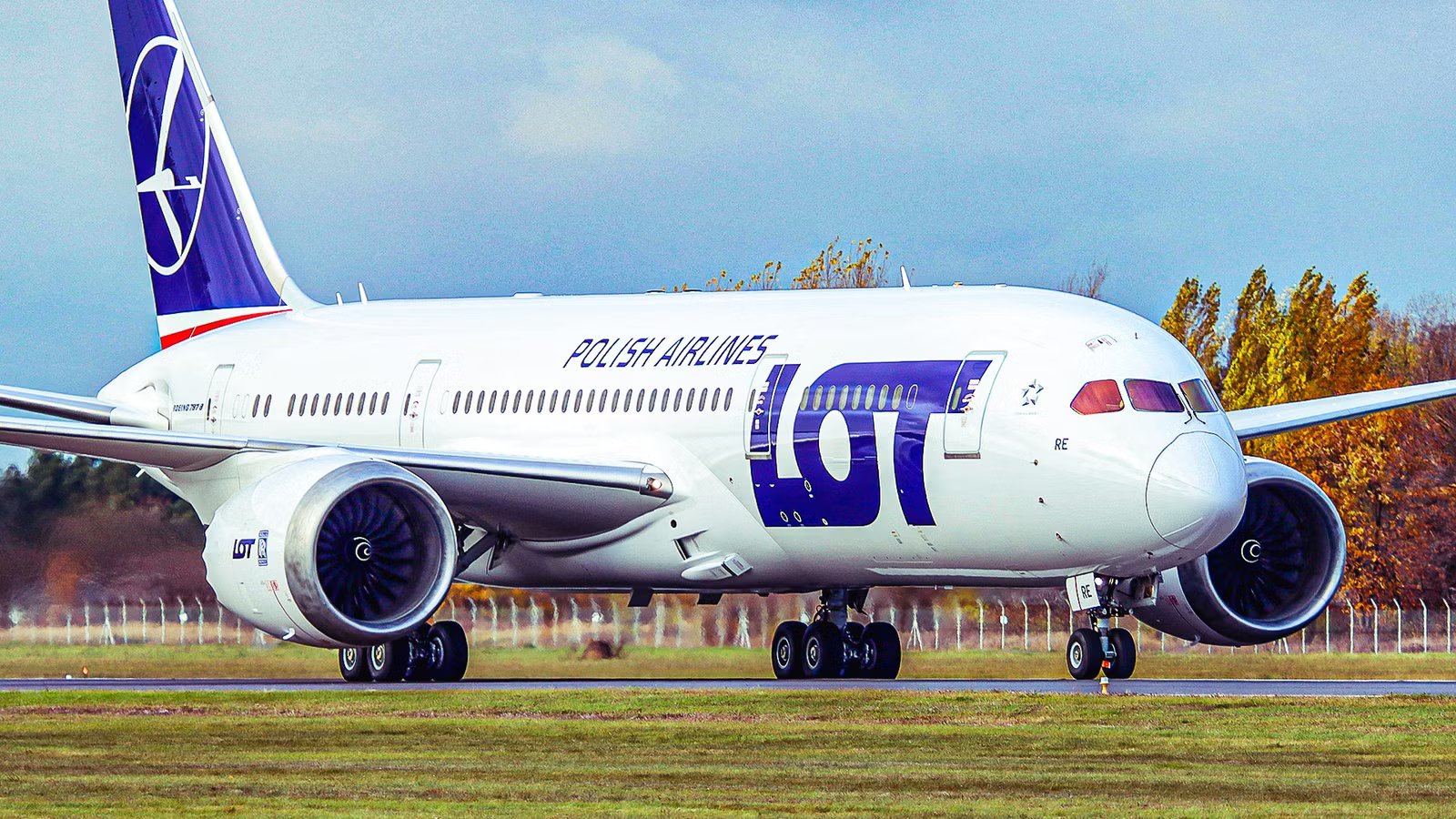
The Boeing 787 Dreamliner remains one of the most commercially significant widebody aircraft in service today. Designed to deliver long-range capability, improved fuel efficiency and passenger comfort, the aircraft has become a cornerstone of modern airline fleets. By 2026, it continues to see strong global demand, with hundreds of outstanding orders and ongoing commitments from major carriers.
However, answering the question of how much a Boeing 787 costs is more complex than citing a single number. Pricing varies significantly depending on the variant, order size, customization, and negotiated discounts. Airlines rarely pay the published list price, and real-world transactions often reveal dramatically lower per-aircraft costs. This article provides a detailed breakdown of Boeing 787 pricing in 2026, including list prices, actual transaction values, differences between variants, Boeing Business Jet configurations, and real airline orders that illustrate how pricing works in practice.
List Prices Of The Boeing 787 Family

Determining the list price of the Boeing 787 in 2026 requires some context.  Boeing no longer regularly publishes updated list prices for its aircraft, a shift that reflects the growing gap between official pricing and real world transaction values. As a result, the aviation industry continues to rely on the last widely published Boeing list prices as baseline reference points. These legacy figures, originally published in the late 2010s, remain the standard benchmark used by airlines, leasing companies, and analysts when discussing aircraft valuation. Based on those figures and consistent industry usage, a rough estimate of 2026 list prices for the Boeing 787 family is shown in the table below, based on recent years’ data.
|
General Price Ranges for Boeing 787 Family |
|
|---|---|
|
Variant |
Price range |
|
787-8 |
$248 million to $260 million |
|
787-9 |
$292 million to $305 million |
|
787-10 |
$338 million to $355 million |
|
Source: Statista |
|
These price figures increase with aircraft size and capacity. The Boeing 787-8 is the smallest and least expensive variant, while the 787-10 is the largest and most expensive. The 787-9 sits in the middle and has become the most widely used version due to its balance of range and passenger capacity.
Even though these list prices are no longer actively updated by Boeing, they remain useful for comparing aircraft across manufacturers and understanding the relative positioning of the 787 family in the widebody market. They also provide a consistent baseline from which discounts and real world transaction values can be evaluated. However, it is important to emphasize that these reference prices do not reflect what airlines actually pay. In practice, nearly all aircraft are sold at significant discounts, making negotiated transaction prices far more relevant than any published list values.
Real World Pricing Dynamics: Negotiated Discounts

In real airline transactions, the unit price of a Boeing 787 is typically far lower than its list value. Discounts commonly range between 30% and 50%, and in some cases even more for higher orders. For example, a Boeing 787-9 with a nominal list price of around $300 million may be sold for closer to $150 million to $180 million when purchased in bulk. The final figure depends on factors such as order size, delivery timing, and the competitive landscape between manufacturers.
Large orders provide airlines with substantial leverage. Manufacturers are willing to offer aggressive pricing to secure long-term contracts, especially when competing against rival aircraft programs. These deals often include additional incentives such as maintenance support, pilot training packages, and spare parts agreements.
Market conditions also play a role. During periods of reduced demand or production slowdowns, manufacturers may lower prices to maintain order flow. Conversely, when demand is strong and production slots are limited, pricing becomes firmer. As a result, the true cost of a Boeing 787 is best understood as a negotiated range rather than a fixed number. For most major airlines in 2026, the effective purchase price typically falls between $140 million and $200 million per aircraft, depending on the variant and deal structure.

Why Boeing Has Seen Such A Rebound In 787 Dreamliner Production
The manufacturer has seen its production numbers increase notably.
Cost Differences Between 787 Variants

Each Boeing 787 variant is designed for a different operational role, and this is reflected in both pricing and airline demand. The 787-8 is the smallest and generally the least expensive. It is suited for long, thin routes where passenger demand is moderate, but range requirements are high. While less popular today than newer variants, it still offers strong economic performance for specific use cases.
The 787-9 is the most widely ordered version of the aircraft. It strikes a balance between range and capacity, making it highly versatile for both long-haul and medium-density routes. As of 2026, it represents the majority of outstanding orders, with over 1,400 total orders yet to be fulfilled across the program.
The 787-10 is the largest variant and carries the highest list price. It is optimized for high capacity routes between major hubs, offering more seats but slightly reduced range compared to the 787-9. Airlines often select this model to replace older widebody aircraft on busy international routes. These differences not only influence the purchase price, but also long-term revenue potential. Airlines evaluate how each variant fits into their network strategy, which ultimately determines the overall value of the aircraft beyond its upfront cost.
Boeing Business Jet 787 Pricing

In addition to commercial airliners, Boeing offers the 787 platform as part of its Boeing Business Jet lineup. These aircraft are configured for private, corporate, or government use and occupy a significantly higher price category. The base cost of a BBJ 787 typically aligns with the underlying commercial variant, starting around $250 million to over $300 million. However, the final price can increase dramatically due to customization.
Interior completion is the most significant cost driver. BBJ 787 aircraft are often fitted with luxury features such as private bedrooms, conference rooms, lounges, and advanced communication systems. These modifications can add tens of millions or even over $100 million to the total cost. As a result, fully outfitted BBJ 787-9 aircraft frequently exceed $400 million. In some cases, highly customized examples approach or surpass $450 million, depending on the level of luxury and technology installed. Unlike airline purchases, these aircraft are typically one-off transactions tailored to individual clients. This makes pricing highly variable and dependent on specific requirements.
Why Boeing Has Seen Such A Rebound In 787 Dreamliner Production
The manufacturer has seen its production numbers increase notably.
Recent Airline Orders

Real world orders provide the clearest insight into how much airlines actually pay for the Boeing 787. In 2026,  Delta Air Lines placed a significant order for 30 Boeing 787-10 aircraft, with options for an additional 30. At list prices, such a deal would be valued at over $10 billion. However, applying typical industry discounts suggests the actual transaction value is likely closer to $5 billion to $7 billion, depending on negotiated terms.
Similarly, Ethiopian Airlines confirmed an order for nine Boeing 787-9 aircraft as part of its fleet expansion strategy. Using list prices, this deal would be worth roughly $2.7 billion, but real world pricing likely reduces that figure to around $1.3 billion to $1.6 billion. Looking at broader data, Boeing has accumulated more than 2,300 total orders for the 787 program as of 2026, with over 1,100 aircraft still to be delivered. This large backlog reflects sustained demand and can give Boeing leverage in pricing negotiations, particularly for near-term delivery slots.
The backlog can also be a negative factor for Boeing, as airlines may become impatient. The 787 family faces significant competition, most directly from the revamped Airbus A330-800 and A330-900 “NEO” fleets. The prices of these competing aircraft ultimately affect the 787’s price, since Boeing has to remain competitive. Regardless, these examples demonstrate that while list prices provide a useful reference, actual transaction values are shaped by scale, timing, and strategic considerations. Large airlines routinely secure pricing that is significantly lower than publicly advertised figures.
Conclusion: Price Varies

The cost of a Boeing 787 Dreamliner in 2026 varies widely depending on how it is measured. Official list prices range from approximately $250 million to over $350 million, depending on the variant, but these figures rarely reflect what airlines actually pay. In real world transactions, discounts reduce the effective cost to roughly $140 million to $200 million per aircraft for most large orders. The 787-9 remains the most popular variant due to its versatility, while the 787-10 commands higher prices for its increased capacity. The 787-8 continues to serve niche roles at a lower cost.
Beyond commercial aviation, BBJ 787 aircraft introduce an entirely different pricing scale, with fully customized examples exceeding $400 million. These aircraft highlight the flexibility of the platform but also underscore how variable pricing can be. Ultimately, the cost of a Boeing 787 is not defined by a single number. It is shaped by negotiation, order size, market conditions, and long-term strategic planning. For airlines, the true value of the Dreamliner lies not just in its purchase price, but in its ability to deliver efficient, reliable, and profitable operations over decades of service.