dailynewsnblog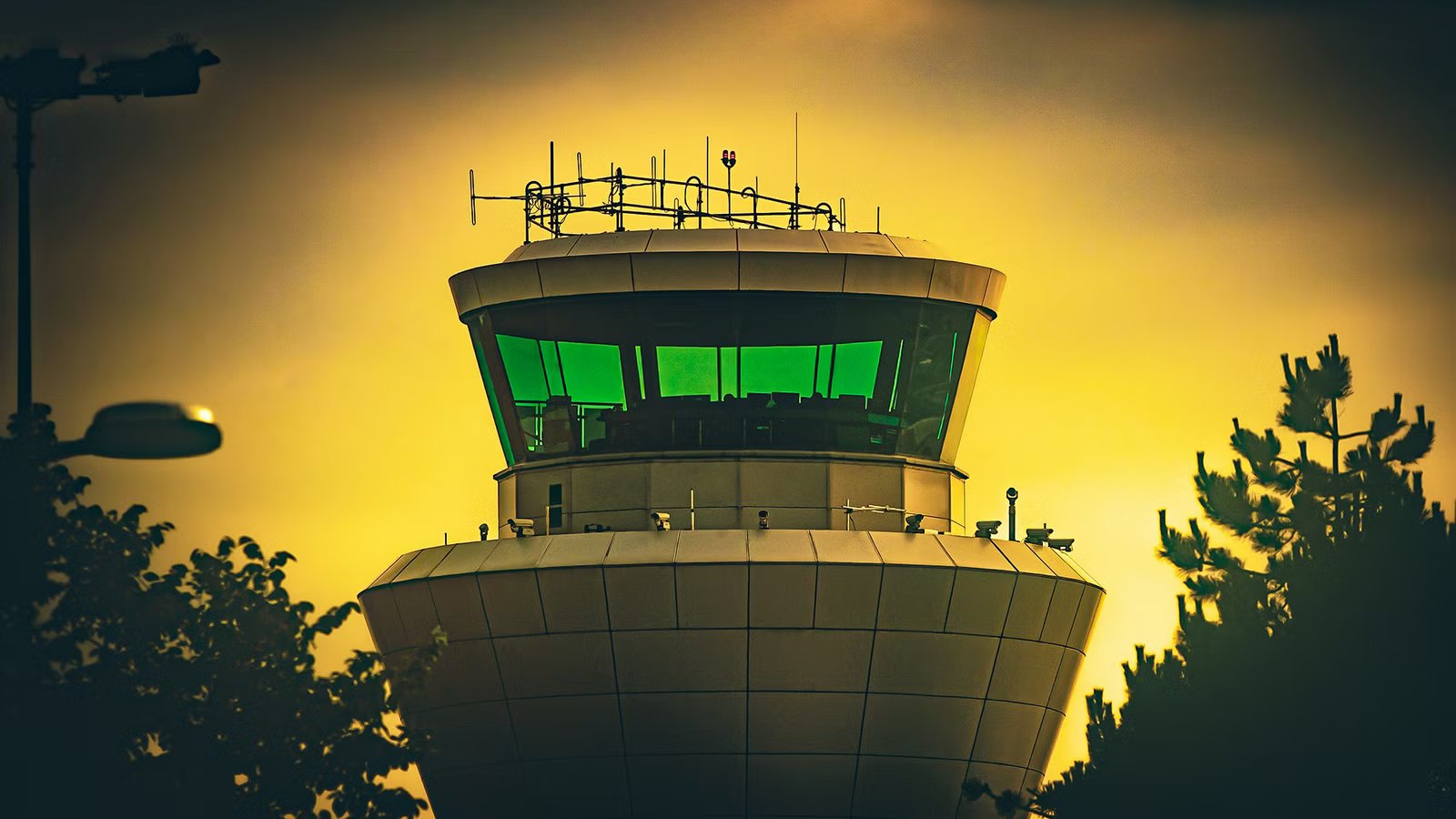
Air traffic control (ATC) has long been one of the most demanding jobs in commercial aviation, and, in 2026, it remains one of the best-compensated as well. The headline salary figures only tell part of the story. A career in the tower, control facility, or route center can begin at a much lower trainee rate before rising sharply as controllers complete instruction. Once they progress through on-the-job training and eventually certify at more complex facilities, compensation really begins to skyrocket. From there, pay can climb significantly depending on geography, facility level, traffic volume, and schedule, with nights, weekends, holidays, and overtime all adding to total compensation.
This ultimately helps explain why air traffic control is often described as a high-pressure, high-reward profession, and why the work carries enormous responsibility, yet the pay structure is designed to reflect that responsibility. In fact, federal data shows that the occupation’s median wage remains quite comfortably in six-figure territory, while the Federal Aviation Administration (FAA) has also raised entry pay for Academy trainees to strengthen hiring and staffing pipelines. Therefore, while no single number captures what an air traffic controller earns, the broader picture is still incredibly clear. In 2026, it is still a career where experience, certification, and assignment make major differences in take-home pay.
A Brief Overview Of ATC As A Profession

Before diving deeper into salary analysis, it is important to take a higher-level view of air traffic control as a profession and the steps required to end up in one of these seats full-time. Air traffic control is a uniquely high-stakes public-safety profession, as controllers are responsible for keeping aircraft safely separated, managing takeoffs and landings, coordinating traffic flow, and reacting instantly to changing weather, runway conditions, and in-flight emergencies.
In practical overall terms, that means that the job is mentally intense, highly procedural, and built around constant concentration rather than physical labor. From a work-life balance standpoint, this is extremely mixed. Most controllers are full-time federal employees with structured rules on maximum hours and required rest, but many also work rotating schedules that include nights, weekends, and holidays, especially at larger 24/7 facilities.
The FAA requires 10 hours of rest between shifts. The job itself is not just handed to you; there are several prerequisites. The FAA requires, for starters, that all applicants be US citizens under 31 at the time of application and be able to speak English clearly and intelligibly. They need to be physically and mentally fit enough to pass strict medical and background checks. Candidates must also pass the FAA’s pre-employment testing, including multiple assessments, and must qualify through either at least one year of full-time work experience, at least one year of higher education, or a combination of the two before attending FAA training in Oklahoma City.
What Does The Training Process Actually Look Like?

It is important to note that, as in almost any profession, the highest salaries in ATC are not offered to entry-level employees. In the United States, the ATC training pipeline is long, structured, and deliberately unforgiving because the FAA prepares people for a safety-critical job where mistakes can have immediate consequences, according to the agency. For most entry-level hires, training starts with air-traffic basics, a 19-day series of virtual lessons that are taught from home.
This course covers core aviation and air traffic concepts and ends with a single exam. Trainees who do not pass cannot continue in the program. After that, candidates move into option-specific training and spend several months at the FAA Academy in Oklahoma City, where instruction begins in the classroom and quickly shifts into a high-fidelity simulation for tower, TRACON, or enroute work. During this period, trainees are paid and receive travel and per-diem support while in Oklahoma City.
Graduating from the Academy does not necessarily make one a fully-qualified controller. Instead, new hires are then assigned to facilities around the country, where they undergo additional classroom instruction, live-position training, and close evaluation by senior controllers. That field phase is often the longest part of the process, typically taking one to three years before a trainee earns Certified Professional Controller status. Even after certification, training does not really end, primarily because controllers must continue recurrent proficiency training to stay current and qualified.

Why Are Air Traffic Controller Trainees Getting A Raise?
Becoming an air traffic controller involves a rigorous and demanding process that requires extensive training and certification.
Early-Career Air Traffic Control Salaries

For early-career air traffic controllers, pay typically starts well below the eye-catching six-figure numbers associated with the profession, but it quickly rises once training milestones are met. In the FAA’s current hiring pipeline, entry-level trainees are paid during Academy training in Oklahoma City, and the organization says the starting pay during that stage is around $22.61 an hour, down from around $30.
A current FAA entry-level ATC job announcement typically also lists the junior pay band, starting at around $47,026 per year before additional locality pay, so a new hire’s actual compensation can be somewhat higher depending on where they are ultimately assigned. From there, the key feature of early-career pay is progression. New controllers do not remain at the trainee rate for long if they advance successfully.
After the Academy, they transition to field facilities as developmental controllers, where their pay increases as they complete successive phases of on-the-job training and assume more operational responsibility. The FAA states that after academy graduation, controllers typically spend one to three years gaining experience before becoming Certified Professional Controllers, and their pay continues to increase during that period. Therefore, early-career ATC salaries are more like a steep upward trajectory than a flat entry-level wage.
A Look At Senior ATC Salaries

Senior air traffic controller pay is a key place where the profession’s reputation for strong compensation becomes extremely clear. Once controllers reach Certified Professional Controller Status and work at busier, more complex facilities, earnings comfortably move into six figures and can climb much higher depending on the locality, facility level, and overall operating schedule. The FAA now states that within three years of graduating from the Academy, the average certified professional controller earns more than $160,000 per year.
This aligns with federal labor data showing a median annual wage of $144,580 for the occupation in May 2024, while the highest-paid 10% earned more than $210,410. In other words, senior controllers are not just earning more because they have been on the job longer. Rather, they are being paid for certification, complexity, responsibility, and often punishing schedules that include nights, weekends, holidays, and overtime.
Pay rates can also climb significantly higher at top-tier facilities and in advanced traffic-management roles. For example, a current FAA posting for an ATC Management Coordinator role in Ronkonkoma, New York, lists a market-leading salary range of $181,423 to $228,000, including locality, and the FAA’s 2026 pay system notes that controller pay, including locality, is capped by law at $228,000.

Here’s Why The FAA Is Paying Some Employees To Not Retire Yet
The FAA has resorted to offering retention pay to veteran air traffic controllers eligible for retirement, in an attempt to maintain experienced staff amidst ongoing staffing shortages.
A Broader Shortage Of Air Traffic Controllers

When viewed in the context of today’s air traffic controller shortage, ATC salaries look less like a perk and much more like a workforce tool. The job is well paid because the system as a whole is under strain. The FAA had approximately 14,500 certified controllers at the end of fiscal year 2025, up from 14,264 at the end of 2024. It is trying to rebuild the pipeline, with its 2025-2028 workforce plan calling for 2,200 controller hires in fiscal year 2026 and 8,900 hires through 2028.
This all comes while the agency’s 2026 budget request sought funding to train up to 2,500 new controllers that year. Higher trainee pay and strong senior compensation, therefore, serve an extremely practical purpose. They help attract applicants into a profession with long training timelines, strict medical and security screening, rotating shifts, and high overall turnover rates.
However, pay alone is not sufficient to fix the shortage. Hiring and certification can take years, and the DOT inspector general has also flagged academy instructor shortages, training-capacity limits, and high failure rates. Thus, in 2026, ATC pay is best understood as part of a broader retention-and-recruitment response to a still-constrained labor pipeline, rather than as merely generous federal compensation.
What Is Our Bottom Line?

At the end of the day, air traffic control is an extremely unique profession with a fundamentally one-of-a-kind skill set. The cost of training to become a controller is high, but high salaries can be a lucrative reward for those who complete the entire training regime.
The challenge that exists, however, is that not enough controllers have entered the training pipeline over the last decade to adequately fill towers and other control facilities at airports. If this had been the case, then we would not be facing the massive and concerning shortage we see in the market today.
Legacy carriers, low-cost airlines, and all other operators rely on air traffic controllers to help them fly and land safely, and without them, the industry would not function. Therefore, it is hard to argue that ATC professionals are not essential, and compensation should be used as a lever to improve controller retention and staffing levels.