dailynewsnblog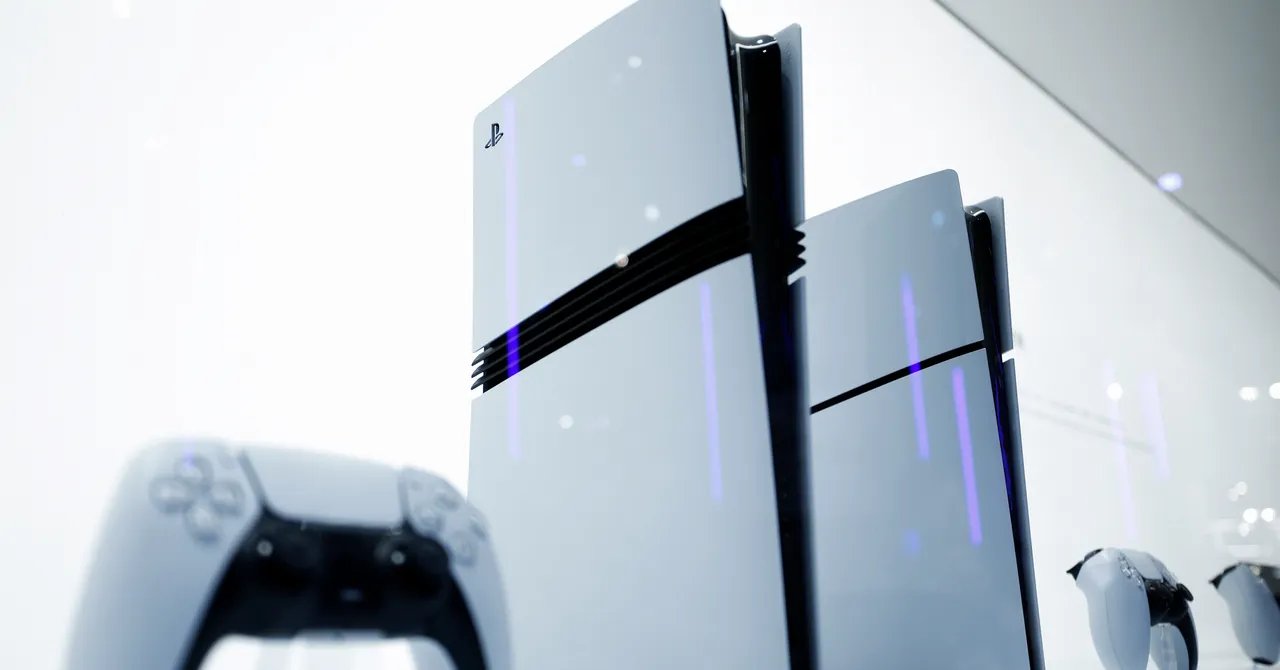
If you’ve been holding off on picking up a PlayStation 5 in hopes of a price cut, bad news: the cost of every model of Sony’s all-conquering console has instead just gone up considerably.
It’s a move that breaks with decades of tradition (or at least consumer expectations) and is undoubtedly a blow for anyone hoping for a discount, five years into the current console generation. However, it’s also a sign that the current generation is likely to stick around for a while yet—and that may be a good thing, for the industry and players alike.
Historically, at this point in a console generation, incumbent hardware sees steep discounts. For example, the PS4, which launched for $400 in 2013, was retailing for $300 by 2018, a 25 percent decrease. Even if hardware is loss-leading, it’s a pricing trajectory that’s usually win-win for manufacturers and customers alike. Production and component costs will typically have dropped over that half-decade, allowing companies to drop the retail price, often alongside slimmed-down hardware revisions. At the same time, players who weren’t won over at a console’s launch have a cheaper entry point and years of games to catch up on. But this generation has been anything but typical.
Generational Abnormalities
The AI bubble has seen RAM and SSD storage prices skyrocket in the last few months, impacting the entire global tech sector. Sony as a whole has been hit hard by this, with the recent announcement that it was suspending its memory card business, while the PlayStation corner of the fiefdom just confirmed long-standing rumors of price increases for its console family.
The new MSRPs went into effect on April 2, and there’s no sugarcoating that they mark significant increases. The “entry-level” digital edition PS5 console—the one without a disc drive—is the worst hit, leaping to $600. That’s $100 higher than its previous US retail price (which was already up following an earlier hike back in August 2025, driven by Trump’s tariffs) and a staggering 50 percent higher than its $400 launch price back in 2020.
The base PS5 with a disc drive is up 30 percent on its original $500 price, now costing $650, while the PS5 Pro “only” goes up around 29 percent from its $700 launch price, setting buyers back $900—though it also doesn’t come with a disc drive, so prepare to shell out another $80 to play physical games or Blu-ray movies. Elsewhere, the PlayStation Portal, Sony’s handheld that allows users to stream games from their PS5 or the cloud, has also increased by $50, from $200 to $250.
PlayStation is far from alone in increasing its prices. Xbox increased its hardware and GamePass subscription costs multiple times in 2025, eventually bringing the MSRP of the top-end 2-TB Xbox Series X to its current $800, and is rumored to be considering another hike. The Switch 2 dodged tariff-induced price hikes at launch but is also reportedly “contemplating raising the price of that device in 2026,” per Bloomberg—and the same report suggests Sony may be delaying the inevitable PlayStation 6 to as far off as 2029, all due to the AI-induced parts crisis.
Even Valve’s handheld Steam Deck isn’t immune—while prices have so far only risen in Japan, South Korea, and Taiwan, the manufacturer has announced that the original 256 GB, LCD-screen model (the cheapest) “is no longer in production, and once sold out will no longer be available” while the newer OLED models, available with either 512 GB or 1 TB of storage “may be out-of-stock intermittently in some regions due to memory and storage shortages.”