dailynewsnblog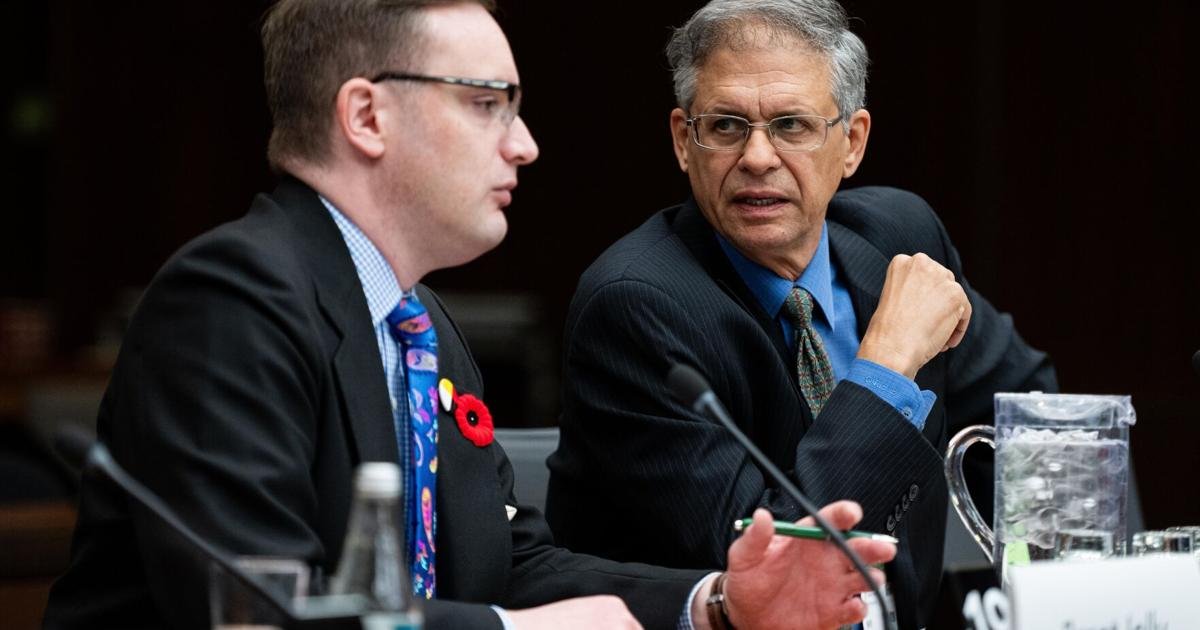
OTTAWA — A veteran Canadian journalist facing unproven and disputed allegations that he is working as a pro-Russian operative was the subject of several interviews during an investigation involving the RCMP, the Star has learned.
The exact purpose of the inquiries is unclear, but sources familiar with the probe said members of the RCMP-led INSET national security body had conversations with numerous individuals during the past two years that focused on the Ottawa Citizen’s David Pugliese and claims he is linked to Moscow. At one meeting in 2025, INSET officials “made it clear” they were approaching the matter “as a national security issue,” one of the sources said.
In an emailed statement, Pugliese confirmed he has also “communicated several times with the RCMP,” and told police he is open to further discussion while he categorically rejects “false allegations” that he is a “Russian asset.”
The revelation adds to a muddy and contested picture, with claims of Cold War espionage first levelled by a former Conservative cabinet minister, outstanding questions about a mysterious purported Soviet spy dossier that names Pugliese as a recruitment target, and a possible connection to a Canadian military counter-intelligence officer who was later accused of leaking secrets to a foreign agent.
RCMP spokesperson Marie-Eve Breton did not confirm or deny the police force is investigating Pugliese, or if inquiries related to him were part of a broader probe.
“Generally, only in the event that an investigation results in the laying of criminal charges, would the RCMP confirm its investigation, the nature of any charges laid, and the identity of the individual(s) involved,” Breton said.
The Star agreed not to identify sources for this story so they could speak freely about a sensitive matter.
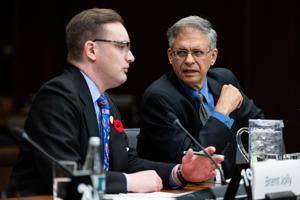
The allegations about Pugliese became public in October 2024, when former cabinet minister Chris Alexander appeared before a parliamentary committee studying Russian misinformation. While there, he accused Pugliese of long-standing “covert ties” to Moscow. He also revealed the existence of a mysterious dossier that purports to show Soviet intelligence agents targeted Pugliese for recruitment when he was a young reporter during the latter years of the Cold War.
But despite Alexander’s insistence that the documents are authentic, questions remain about their veracity, as well as their origins, who began circulating them, and why.
It’s also not clear how, or whether, the Pugliese allegations factor into the case of Master Warrant Officer Matthew Robar. The Canadian military counter-intelligence officer was investigated by INSET — the same RCMP-led body the Star’s sources said sought information related to Pugliese — starting in 2024, according to a news release, before he was charged in December with allegedly leaking secrets to a foreign agent.
Three sources interviewed on condition they weren’t named told the Star that Robar spoke with several individuals about Pugliese, his alleged ties to Russia and reporting on Canadian soldiers involved in pro-Ukrainian activity who were subjects of his reporting. That includes a conversation with Alexander — the former cabinet minister — barely two weeks before he revealed the existence of the purported Pugliese dossier at the parliamentary committee.
Robar’s lawyers, Cmdr. Brent Walden and Maj. Francesca Ferguson, told the Star by email that their client “maintains his innocence and intends to defend himself against all charges.” The lawyers declined to respond to a series of questions, including about any conversations Robar had with Alexander and others about Pugliese, and whether the allegations against the journalist are connected to the charges Robar faces.
Wesley Wark, a national security expert and senior fellow at the Centre for International Governance Innovation, said any investigation that touches on a Canadian journalist would be “very sensitive” because of political concerns and legal precedents that protect reporters in areas like the possession of classified information.
As Wark explained, a probe by INSET — the body led by the RCMP that includes the national intelligence service, border agency, and others — could fall under two categories: suspected espionage or sabotage, or “foreign influenced activity.”
Such an investigation could only target a journalist like Pugliese if there were “reasonable grounds” to believe he was engaged in such activity, Wark said.
Pugliese has also faced allegations reported in the English-language Kyiv Post — which he rejects — that his reporting on issues such as alleged Ukrainian Nazi sympathizers and how former Liberal cabinet minister Chrystia Freeland’s grandfather worked at a Nazi newspaper during the Second World War coincided with Russian propaganda efforts.
Responding to the Star this week, Pugliese said he is aware complaints have been made to police agencies and national security officials by at least two individuals — including the person behind a $37-million lawsuit against Pugliese and his employer, Postmedia — whom he said are disgruntled over his reporting on the alleged mismanagement of pro-Ukrainian organizations called Mriya Aid and Mriya Report since 2023.
“This is not the first time I have been under police investigation related to my reporting,” Pugliese, who has written on defence and the military for decades, said in a statement to the Star. He referred to a National Post story from 2013 that said he had been investigated by military police for allegedly publishing classified information, among other instances.
“There has been an ongoing pattern of harassment against me by the Canadian Forces and (Department of National Defence) leadership that appears directly linked to my decades of journalism and trying to hold their organization to account,” Pugliese said.
“I stand by my reporting.”
According to multiple sources, as well as documents released through the public access-to-information system and obtained by the Star, the RCMP received complaints related to Pugliese’s reporting — as well as concerns that other individuals were engaged in subsequent online harassment and intimidation — as early as 2023.
A Canadian reservist named Capt. Joseph Friedberg, who was involved in the Mriya Report organization that Pugliese wrote about, submitted written concerns to the Toronto Police Service, York Regional Police Service and the RCMP, documents obtained by the Star show. This included allegations that someone was sharing images of Friedberg’s children online, as well as other personal details and death threats. Documents submitted to police also show complaints involved suspected home break-ins in 2022.
Department of National Defence emails from September 2023 also refer to a “roundtable” about the internal handling of media reports related to Friedberg and another soldier named in Pugliese’s stories, Lieut.-Col. Melanie Lake, the former head of a Canadian military operation to train Ukrainian soldiers. One of the messages mentions that Friedberg faced a “similar threat as LCol Lake raised at the roundtable” in what was a “very challenging and stressful situation for his family.”
Spokespeople for the Canadian Armed Forces declined to answer questions about the roundtable and related concerns, citing privacy and security priorities.
Lake and Friedberg declined to comment when contacted by the Star.
Documents obtained by the Star also show that the RCMP received digital copies of the alleged Pugliese dossier, while multiple sources said INSET officials asked about it.
Though it’s still not clear where the dossier came from, two sources told the Star they received the dossier from unknown sources online in 2023 and 2024, before Alexander revealed its existence at the parliamentary committee.
During his appearance, Alexander described the dossier as “incomplete” and said it came from the KGB archive in Ukraine, where Soviet agents worked during the Cold War. He claimed Canadian national security officials had seen it, and that the documents were “authenticated” by experts he did not name. He also asserted — without providing proof — that Pugliese had “long-running, covert ties to Moscow” and that further documents were held in the Russian capital.
Pugliese appeared before the committee the following week to denounce Alexander, defend his journalism, and dismiss his alleged link to Soviet and Russian intelligence as “preposterous” and “fabricated” claims. Postmedia, the company Pugliese works for, has also backed him, stating that he faces “unverified allegations that are false and intended to discredit his investigative work.” The newspaper chain also said it has never been approached by intelligence or law enforcement concerning Pugliese.
Alexander, meanwhile, declined to comment for this story.
Obtained by the Star in Cyrillic, alongside an English translation, the dossier includes eight digital copies of what appear to be scanned pages that are handwritten and produced on a typewriter.
Dated between 1982 and 1990, the documents describe how Soviet agents targeted Pugliese — identified by name and under the code name “Stuart” — as a potential intelligence asset.
The dossier does not clearly state that Pugliese ever worked with or on behalf of Soviet or Russian intelligence.
Further questions came up in the summer of 2025, when an Italian leather worker in the Michigan auto industry named Giuseppe Bianchin released a report on a website for publishing independent research papers. The report consulted international experts who interrogated the handwriting in the Pugliese dossier, and detailed suspiciously repeating dust marks on the typewritten pages. Bianchin cited a graphic designer from the Netherlands — Erik van Blokland — who said he invented the typewriter-style font used on two pages in the dossier.
Van Blokland confirmed by email that he believes the documents were “set in a digital font that I created in 1993” — three years after the most recently dated page in the dossier.
Based on this and other findings from a handwriting expert and official archivists in Ukraine, who told Bianchin they could not confirm that the dossier pages were on file, Bianchin concluded the documents were “modern forgeries.”
Simon Miles, a Canadian historian and expert on Russia and the Soviet Union who is a professor at Duke University in the United States, said at first blush the documents appear consistent with those created during the Cold War. But he said Bianchin’s report raises red flags, including how archivists in Kyiv couldn’t verify their existence.
Andriy Kohut, the director of the Sectoral State Archive of the Security Service of Ukraine who was quoted in Bianchin’s report, did not respond to questions from the Star, but has said previously that the documents appeared authentic at first glance.
But assuming the dossier is real, Miles said it wouldn’t confirm anything except that Pugliese was discussed as a recruitment target — a common practice for public figures like journalists during the Soviet era. “There’s not a straight line from what these documents say to, ‘This guy betrayed his country,” he said.
For Wark, the national security expert, the situation has the imprint of a possible foreign misinformation campaign, regardless of whether the documents are real or fake.
But that raises the question, “Whose information operation is it?” Wark said. “Is it Russian? Is it Ukrainian? Is it some weird combination of both?”
That is one of the “great unknowns” to an already strange story, he said.
Neither the Ukrainian nor Russian embassies in Ottawa responded to questions from the Star.