dailynewsnblog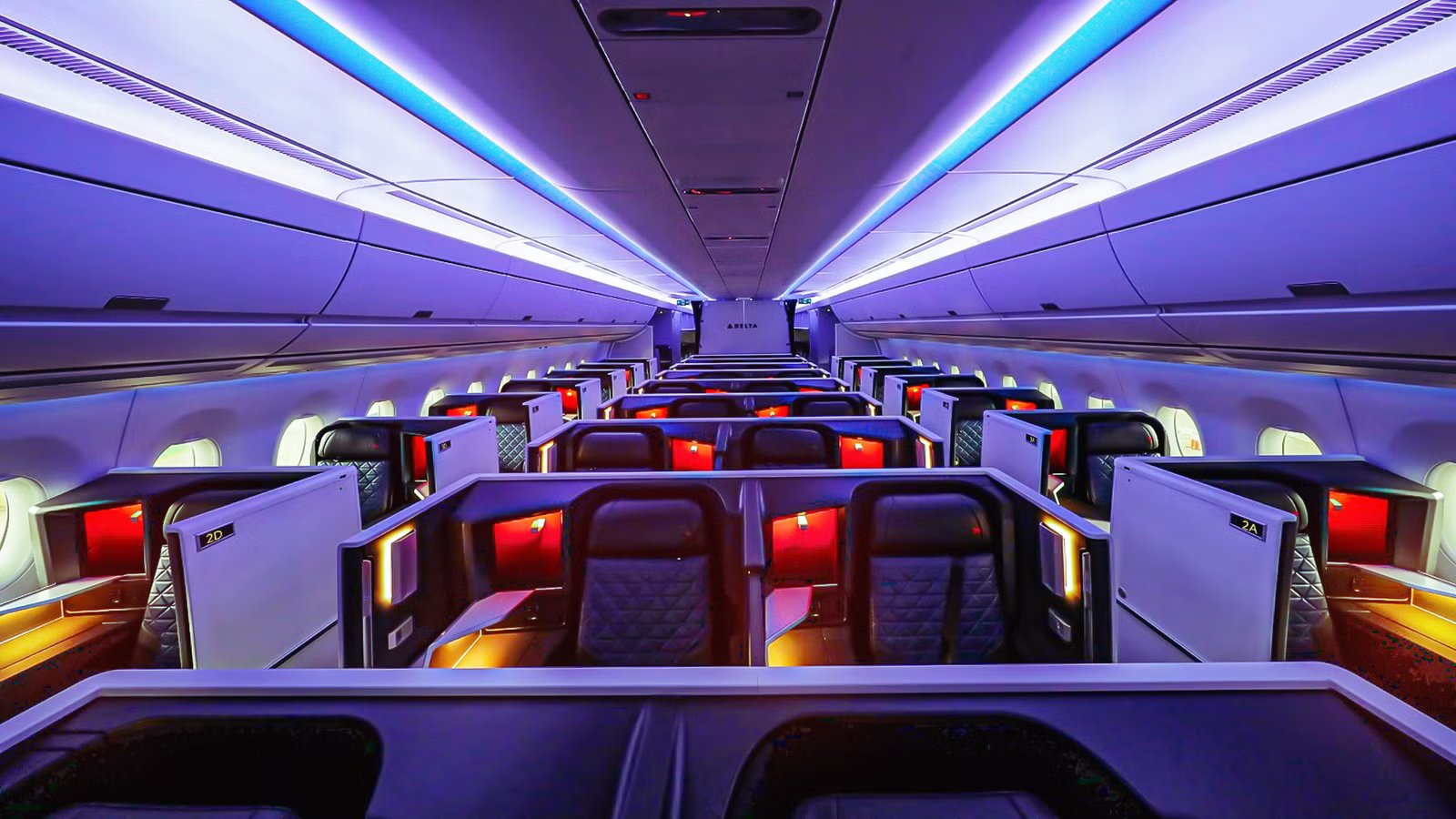
 Delta Air Lines, long the champion of the premium experience in the United States, is systematically dismantling the all-inclusive nature of its front-of-cabin products. Bringing in new premium tiers represents a profound change in how the airline views its most expensive cabin sections. It is a transition from selling an experience to selling a commodity seat, where the physical bed remains the same, but the dignity of flexibility and the convenience of early seat selection are now being sold back to the passenger at a premium.
Following the internal success of Comfort Basic in late 2025, Delta is now betting that even its most affluent customers are willing to trade their peace of mind for a marginal price break. However, as we pull back the curtain on the pricing strategy and the hidden restrictions, it becomes clear that this is less about providing a cheaper way to fly and more about a sophisticated revenue management fence designed to keep in the airline’s highest-margin fares, which leads to the all-new Delta One Basic fare class.
Bringing Basic To Delta One

When Delta pulls the trigger on these unbundled fares throughout 2026, the first question from most travelers is whether the onboard experience itself is being cheapened. The short answer is no; the Thompson Vantage XL suites or the new Delta One Next Gen shells remain untouched. It is still the same multi-course meal, the same bedding, and the same access to the IFE system as the person sitting next to you who paid for a Main or Extra fare. For Delta, the soft perks are where the real profit margin lies, leaving the hard product as a baseline for all business class occupants.
However, the service layer surrounding that seat is where the pruning begins. Under the Basic tier, the ability to choose your specific suite is restricted until roughly 24 hours before departure, often leaving these passengers with the less desirable bulkhead or high-traffic galley-adjacent seats. Furthermore, the loss of ticket flexibility is absolute, as these fares are typically non-refundable and non-changeable. It is a stark reminder that even in 2026, the airline considers the right to change your mind a luxury worth as much as the lie-flat bed itself.
The most controversial element of this unbundling is the potential impact on ground services. Delta has not yet completely severed Sky Club access for Basic Delta One passengers, but the precedent set by international carriers suggests this is the next logical step in the perk purge. Stripping away the lounge and the priority boarding, Delta is creating a tiered system within the elite cabin that mirrors the Basic Economy experience of the main cabin. With this, Delta can sell every last seat on a flight while making the budget premium traveler feel the weight of their savings every step of the way.
The Right Passenger For The Right Fare

Delta President Glen Hauenstein’s recent Q4 earnings call was an admission of a pricing philosophy that relies on a specific type of psychological anchoring. By citing an example where a seat costs $500, but is offered at $450 if the passenger accepts a 48-hour seat assignment window and a non-refundable status, Delta has exposed the thin margin of their discount. This $50 gap relies heavily on human nature; it is just enough of a saving to tempt a leisure traveler, but far too small a discount for a corporate traveler to justify the massive loss of institutional flexibility.
Positioning the restricted fare as the baseline, the airline raises the ceiling on what it considers a flexible ticket. What this means in reality is a 10% saving on a $500 ticket requires surrendering the right to change a flight that might be worth ten times that in lost business opportunities. It is a masterclass in revenue fencing, ensuring that those who can pay for flexibility must pay for it, while those who are price-sensitive are harvested for every remaining dollar of unbundled revenue.
|
Feature |
Delta One Basic |
Delta One Main |
Value of the Perk |
|
Price (Example) |
$450 |
$500 |
$50 Difference |
|
Seat Selection |
48 Hours Before Flight |
At Time of Booking |
High (Window vs Aisle) |
|
Refundability |
None |
Changeable for a Fee/Credit |
Critical for Business |
|
SkyMiles Earning |
Reduced / Basic Rate |
Full Cabin Multiplier |
Long-term Loyalty Value |
|
Boarding Zone |
Late Premium Group |
Early Premium Group |
Overhead Bin Access |
This tiered approach also allows Delta to clean up spoiled inventory without devaluing the brand’s premium image. Through this, Delta can attract the high-end leisure traveler who is browsing for a deal but doesn’t require the rigid protections of a corporate contract. It is a digital filter that keeps the wrong kind of traveler from accessing the right kind of price, ensuring that the front of the cabin remains a high-yield fortress even when the global economy fluctuates.

Delta Unbundles Premium: ‘Basic’ Business And First Class Fares Coming In 2026
Delta Air Lines will launch Basic Business and First Class fares in 2026, unbundling premium travel as fare segmentation expands across cabins.
Backed By Data

This decision to unbundle even premium fares on Delta was the direct result of an experiment that began in November 2025 with the launch of Comfort Basic. Taking away the flexibility and seat selection from its extra-legroom economy product, Delta created a litmus test for the American traveler’s price elasticity. The results, as noted by executives during the recent Q4 earnings call, exceeded internal projections. Passengers were actively choosing the restricted fare in numbers that suggested a green light for the rest of the cabin.
This success proved a key point in Delta’s internal data: the physical comfort of a seat, in this case, three extra inches (7.6 centimeters) of legroom, carried more weight than the abstract value of a refundable ticket for a significant segment of the market. When this logic is scaled up to the Delta One cabin, the implications are even more lucrative. If a traveler is willing to forgo a seat assignment for a bit more knee room in the back, the airline correctly assumes they will move mountains of administrative restrictions to secure a lie-flat bed at a slight discount.
The data from the Comfort Basic rollout also revealed that unbundling acts as a powerful acquisition tool for younger, high-earning travelers who are not yet tethered to a corporate travel policy. These aspirational flyers are often ignored by traditional legacy pricing, but they are the primary targets for a Basic Delta One fare. By using the late 2025 pilot as a blueprint, Delta has identified exactly where the breaking point lies for the modern passenger. They have learned that even if people complain about the industry on social media, their booking behavior tells a much more compliant story.
Global Synchrony

The American market is only now grappling with the concept of a no-frills lie-flat seat, but the global stage has been rehearsing this play for several years. Delta is importing a highly successful revenue model from the Middle East and Europe and bringing it to a new market. Carriers like  Qatar Airways and
  Emirates have already proven that the business lite or business classic fare can exist without damaging the brand’s prestige. Now that US airlines are following suit, it seems the all-inclusive era for transatlantic and transpacific corridors is no more, synchronizing the global premium experience.
Unbundling allows an airline to maintain a high headline price for its most flexible tickets while offering a restricted version that competes with the growing long-haul low-cost sector. For example, when Qatar Airways launched its classic fare, it stripped away lounge access, a move that was initially met with outrage but eventually became a standard expectation for the budget-conscious business traveler. Delta’s rollout follows this trajectory almost perfectly, using the global success of these unbundled products as a shield against domestic criticism.
European carriers like  Air France have been more hesitant to strip away the pre-flight experience, the Gulf carriers have used it as a primary lever to force travelers into higher fare brackets. With Delta’s plans, the industry is watching closely to see if they will follow the Finnair path of removing almost everything but the seat, or the Air France path of maintaining some degree of pre-flight luxury. Regardless of the specific perks, the message is the same: the seat is just the entry fee, and the experience is now a menu of paid add-ons.

Why In The World Did Delta Air Lines Already Retrofit The Cabins Of Some Airbus A350s?
The carrier has made some unique decisions.
Always One Step Ahead

Corporate travel departments have long operated under a simple mandate: book the lowest available fare in the required cabin. By introducing a Basic Delta One ticket that strips away flexibility and advance seat selection, Delta is making that lowest fare unusable for the average business traveler. A consultant flying from  New York to
  London cannot risk a non-refundable, non-changeable ticket for a meeting that might move by six hours or two days.
This strategy forces the corporate traveler, or their automated booking tool, to select the Main or Extra tiers, which carry the traditional protections and perks of a business class ticket. With this, Delta can raise the price of those flexible seats without officially raising the starting price of the cabin. It is a brilliant piece of financial engineering: the airline gets to advertise a lower entry price to attract the public, while simultaneously ensuring their most consistent customers are paying a premium for the privilege of being able to change their flight.
Where data analytics can predict no-show rates with terrifying accuracy, the Basic fare acts as a stabilizer. Since these tickets are non-refundable, the revenue is locked in the moment the purchase button is clicked. Delta can then oversell the cabin with more confidence, knowing exactly how many frozen seats they have versus how many flexible seats might open up at the last minute for high-value, walk-up fares.
Same Seat, Different Rules

The SkyMiles program was built on a simple promise: if you spend more, you earn more. However, the introduction of a Basic Delta One fare creates a friction point in the loyalty loop. When a passenger spends thousands of dollars on a lie-flat bed but receives reduced Medallion Qualification Segments (MQS) or a stripped-back mileage multiplier, the value proposition of brand fealty begins to dissolve. What this likely means is a change for Delta, prioritizing immediate revenue over the lifetime value of a high-net-worth traveler who might occasionally look for a deal.
Basic premium passengers will likely be barred from using the Sky Priority lanes or restricted from the most exclusive tiers of the Sky Club. This creates a tiered hierarchy within the elite cabin itself, a class within a class, almost, that can lead to significant brand dilution. If a Delta 360 member or a Diamond Medallion finds themselves in a Basic seat due to a last-minute booking or a corporate policy restriction, the friction of being treated like a budget traveler can lead to a status revolt where the passenger looks toward competitors who still offer a unified premium experience.
The all-inclusive business class ticket may well become a boutique relic of the past, preserved only by a handful of ultra-luxury carriers. For the rest of the industry, the Delta model provides a template for a future where every single aspect of the journey, from the overhead bin space to the pre-departure glass of champagne, is a line item on a digital menu. To navigate this new world, you need to look beyond branding and to what is really part of the price; the same seat rarely comes with the same set of rules.