dailynewsnblog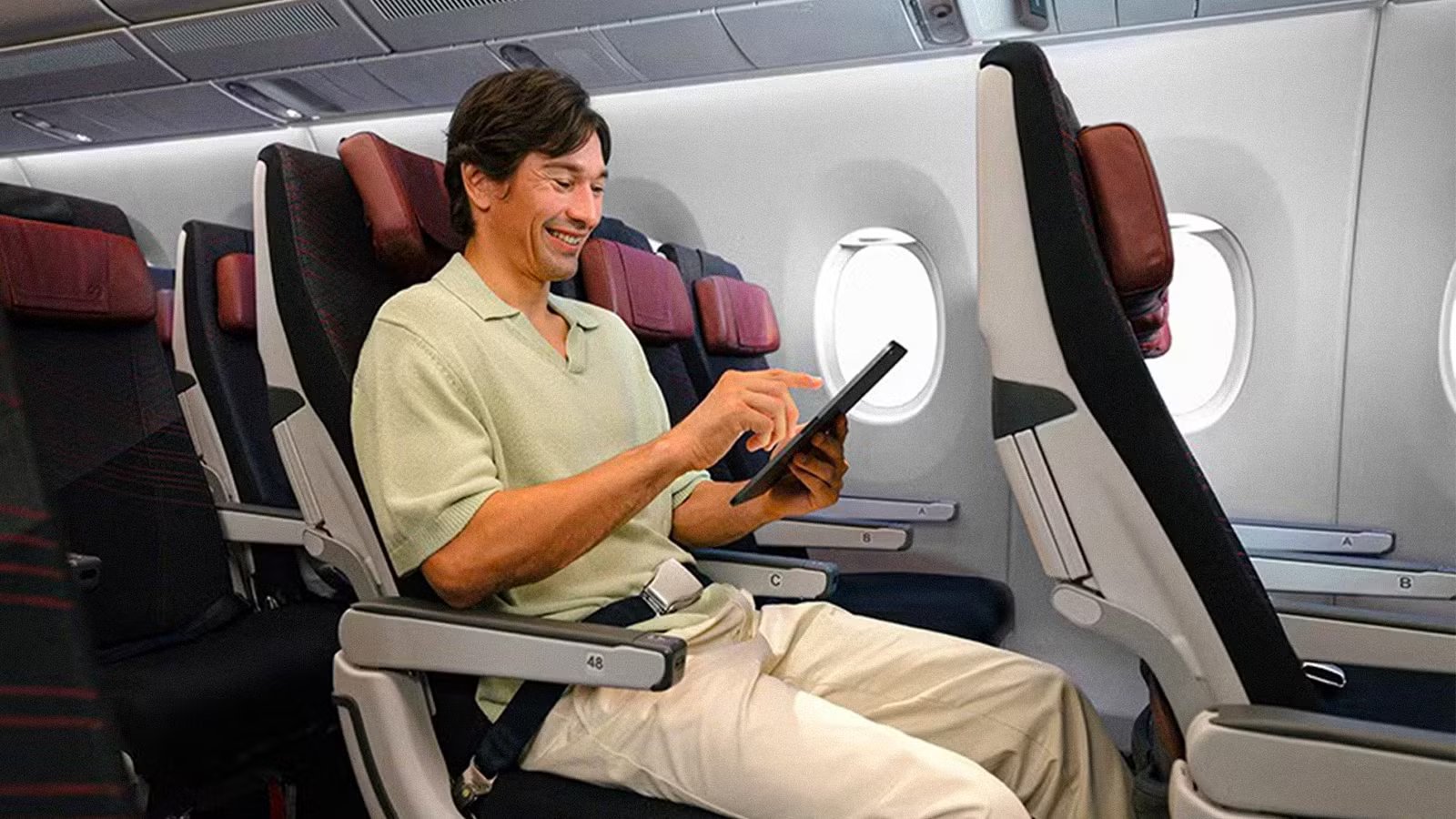
For the vast majority of passenger airlines, economy class is fundamentally a math problem. For every extra inch of pitch, every wider armrest gap, and every missing middle seat, there needs to be a justification for the lost passenger capacity and thus the lost revenue potential. This is ultimately what makes Japan Airlines (JAL) so interesting in 2026. Rather than squeezing the maximum possible number of passengers onto its long-haul flagships, JAL has spent years doing the exact opposite on key aircraft types. This is all while keeping its Boeing 777-300ERs at nine-abreast in economy and offering an eight-abreast layout on certain 787s, where nine-abreast functions as the industry norm.
The result here is a product built less around absolute density and more around the passenger’s physical experience in the seat itself. That philosophy has not gone unnoticed by industry regulators and monitors. Skytrax’s 2025 results again named JAL as the winner of its prestigious Best Economy Class Airlines Seat award, reinforcing the carrier’s reputation for making comfort a core part of its brand rather than just an afterthought. We aim to argue that JAL’s economy cabin is luxurious by design, treating cabin space as a competitive asset even when doing so means sacrificing seats that many rivals would happily sell for an additional chunk of change.
How Do Airlines Decide How Much Economy Legroom They Want To Offer?

Airlines do not decide legroom in isolation. Rather, they decide on it as part of a broader revenue-generation strategy. Seat pitch is the distance from one seat to the same point on the seat in front, and it is the most commonly used industry proxy for how roomy economy seats actually feel. This is exactly what makes offering additional legroom a key asset, especially when an airline is looking to boost yields and operating in corridors where competitors offer fundamentally inferior products. Pitch, however, is only one variable for airlines to balance.
Carriers also have to weigh seat width, cabin layout, route length, expected load factors, competitive pressure, and ancillary revenue potential when making these decisions. Boeing notes that airlines increasingly use slim-profile seats and lower pitch to extract greater productivity from the same aircraft, while low-cost carriers, in particular, rely on higher-density layouts as part of a lower-yield, higher-volume model. This can give a legacy carrier with a comfortable product a key advantage.
Analysts reported in 2025 that some refurbished 777s gained roughly 20 extra economy seats after moving from nine-abreast to ten-abreast layouts. At the same time, seat comfort has real pricing value. Other industry observers have also found that comfort and convenience are key drivers of seat-selection spending, that extra-legroom seats command more on longer flights, and that pricing varies by route, competition, layout, and passenger demand. In other words, legroom is never just a matter of comfort. Rather, it is a commercial choice about where an airline wants to sit on the spectrum between yield, volume, and overall brand differentiation.
A Brief Overview Of Japan Airlines

Now it is time for us to introduce the subject of this analysis: JAL. This carrier is not a niche boutique airline making a quirky cabin choice on a handful of carefully-chosen leisure routes. Rather, it is one of Asia’s largest full-service network airlines, founded in 1951 in Tokyo. As of 2025, the carrier was serving 131 domestic routes and 66 international ones, making it one of the largest players in the East Asian market.
This scale matters because it fundamentally means that JAL’s economy-seat strategy is being deployed by a global network airline competing across North America, Europe, and Asia, not by a small operator with limited commercial pressure. It is equally important to consider how the carrier identifies itself and its operational strategy. The airline’s management strategy emphasizes building deep and long-term relationships with customers based on empathy, to become the airline group with the world’s best passenger experience reviews.
That language helps explain why the carrier continues to invest in baseline comfort instead of treating economy class as purely a numbers game. The awards history for the carrier reinforces the same point. JAL remains a 5-Star airline according to Skytrax, and its own awards page touts the consistently high performance of its economy cabin in international rankings. Put simply, JAL is quick to sell itself as a premium-minded full-service airline with a customer proposition that begins in economy class. Its spacious cabins are not a side note but rather a central piece of what JAL wants to be known for.

This Airline Has The World’s Best Economy Class Seat In 2026
Japan Airlines was recently given the award for the best economy class seat in the world.
The Boeing 777-300ER: Giving Up Seat #10

Japan Airlines | Simple Flying
The clearest example of JAL choosing to sacrifice revenue seats for passenger space is with the 777-300ER. On this jet, JAL’s long-haul economy-class cabin uses a 3-3-3 layout, not the standard 3-4-3 you will find on most international airlines. JAL indicates that its 777-300ER econmy cabin features just 147 seats, with a seat width of around 18.5 inches (47 cm) and a seat pitch that exceeds 33 inches (84 cm).
Boeing’s own 777 marketing language is extremely revealing here: it says that nine-abreast seating can deliver premium-economy comfort, while ten-abreast seating provides standard-economy comfort. This is essentially the trade-off that JAL has elected to make, but in reverse. Instead of using the aircraft’s wide fuselage to add one more passenger per row, it uses that space to make every existing seat broader and much more tolerable on long-haul flights.
This is ultimately not just a cosmetic difference. On aircraft where travelers may choose to spend ten or twelve hours in economy, seat width and shoulder room often matter just as much as recline. By opting for a denser layout that many other airlines favor, JAL turns the 777 from a yield-maximizing platform into a comfort-forward one. That is a real revenue sacrifice.
The Boeing 787: Giving Up Seat #9

JAL’s dynamic Boeing 787 strategy is another way that the carrier distinguishes itself. On its long-haul JAL SKY SUITE product, the airline uses a 2-4-2 layout rather than the industry-standard nine-abreast arrangement in economy. The airline explicitly says that this is significantly more relaxed than the normal layout and provides a nice extra amount of seat width.
Published specifications closely match those of the airline’s 777-300ER product. The airline also pairs that configuration with a slimmer seat design intended to create more legroom and a more comfortable personal space. This matters primarily because the 787 is an aircraft that many airlines have used to pursue efficiency. JAL instead uses it to make a statement, as a next-generation widebody does not have to mean squeezing in one more seat per row simply because the market may choose to allow it. The Dreamliner cabin, therefore, becomes the purest expression of JAL’s human-centered logic.
Rather than asking how many passengers the fuselage can physically hold, the airline asks what layout gives economy travelers the least compromised overall experience. That philosophy aligns neatly with the airline’s awards record. JAL’s economy seat page notes eight consecutive wins for the product, and its awards history says that the carrier again won the airline’s Best Economy Class Airline Seat title in 2025.

The Airlines With The World’s Longest Legroom In Economy In 2026
Who has the most room to stretch in coach?
What Kind Of Competitive Advantage Does This Offer Japan Airlines?

The primary competitive advantage of all this is the product differentiation that passengers feel. Most airlines separate themselves in premium cabins and use economy as a battleground of fares and seat fees. JAL does something smarter by allowing its economy product to offer genuine comfort.
This helps in several ways, strengthening performance on long-haul routes where comfort matters more and where travelers will notice the difference between better and more cramped seats. This gradually improves the carrier’s pricing power, which can help prop up yields in both the medium- and long-term.
It also supports JAL’s broader customer-oriented strategy and reinforces the credibility of its service brand through repeatable physical experience, not just marketing language. At the same time, it also creates an aura of quality that international organizations (like Skytrax) continue to reward the airline for.
A Unique Fundamental Strategy

At the end of the day, Japan Airlines is a capable legacy carrier with market experience. It knows exactly what it is doing by giving up revenue in favor of offering comfier seats for passengers. Analysts who argue that this is a poor decision by the carrier are likely basing their claim on the belief that JAL’s yields are not high enough to justify eliminating so many seats.
This strategy is fundamentally unique and helps keep the airline anchored as a premium player in a market that is only becoming more competitive every year. When battling over high-yielding travelers, having a consistent experience and a passenger-friendly reputation is critical.