dailynewsnblog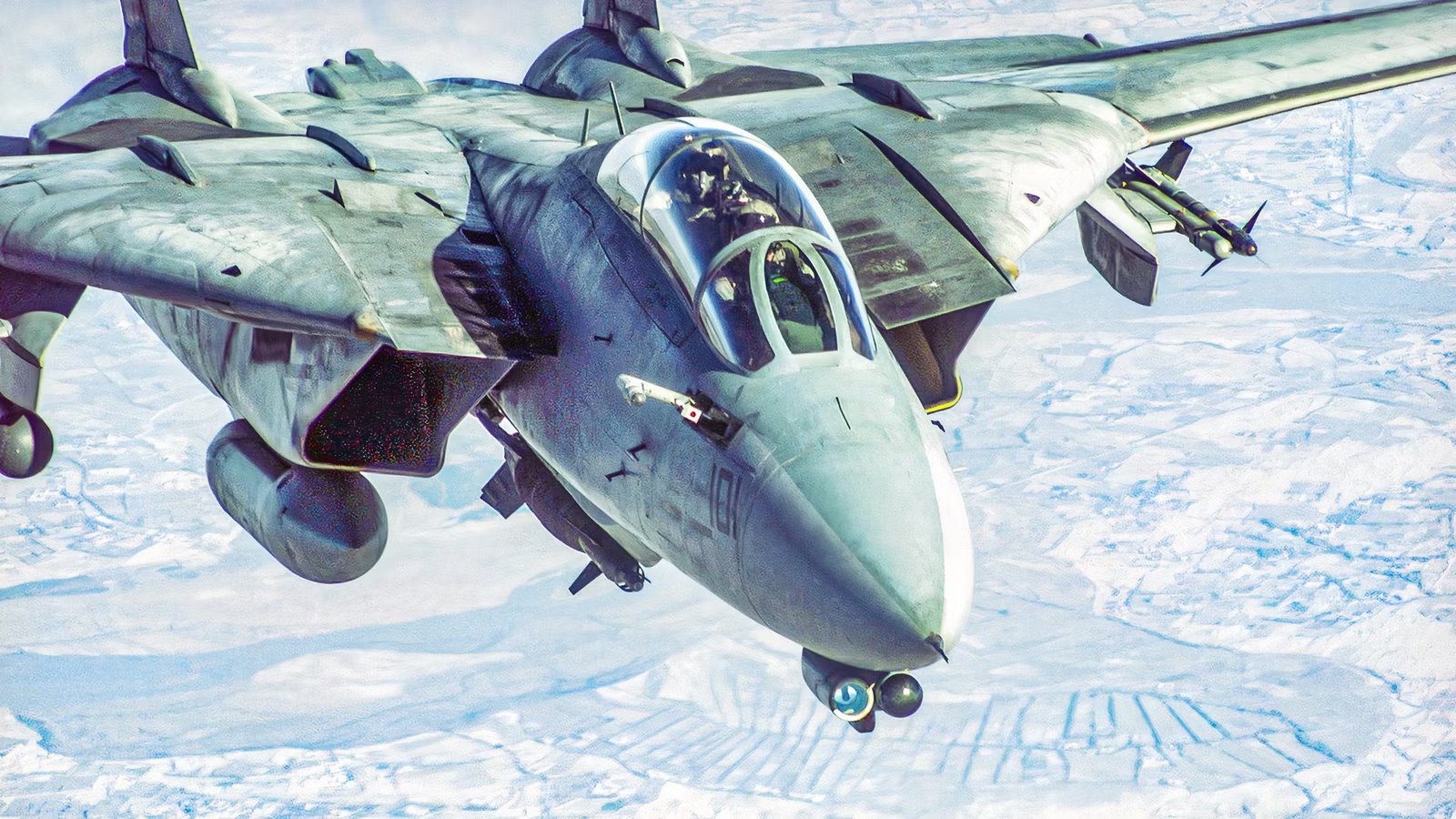
Just about as soon as the smoke from the Second World War began to clear, and efforts to begin rebuilding Europe were underway, mutual suspicion and distrust between the United States (US) and Soviet Russia (USSR) set in. Both the US and the USSR sought to strengthen their spheres of influence and the client states within them.
In order to prevent the USSR from expanding its influence regionally and globally, the policy of Containment was initiated and served as a guiding force for US policy for decades. The story of how Iran gained the most powerful air force in the region, including roughly three wings of northrop grumman F-14s, is firmly embedded in the US’ Containment Policy of the Cold War.
The Shah Of Iran, The Cold War, & US Weapons

Mohammed Reza Pahlavi attained the title of Shah during the Second World War, when the allies forced his pro-German father to step down. Once firmly in power, Shah Pahlavi immediately began building up the Iranian armed forces.
This was due in large part to the Soviet occupation of northern sections of Iran, particularly Iranian Azerbaijan. This prompted the Shah to view a Soviet invasion, occupation, and annexation as a very real possibility.
During this time, Tehran’s procurement of American arms increased seven-fold…
This Soviet threat initiated a US-Iranian partnership, and by 1942, a US military advisory mission began. The aim of this training program was to increase the proficiency of the Iranian gendarmerie; by 1943, a similar US training mission began with the Iranian Army.
By 1947, the US began to extend credit to Iran, whose coffers had nearly run dry; this credit was then used to purchase surplus military equipment.

How Many F‑14 Tomcats Were Built?
Only 712 F-14 Tomcats were ever built. Here’s how Cold War strategy, cost, and Iran shaped the iconic fighter’s limited production run.
A key area of this military modernization was the Imperial Iranian Air Force (IIAF). As noted by Major Ronald E. Bergquist, Shah Pahlavi stated in his 1961 autobiography, Mission for my Country:
“Our armed forces—and especially our air force—are weak and suffer from lack of the most modern equipment.” He noted the IIAF, at that time, was “a small air force designed mainly for providing support for our ground forces in limited actions.”
The IIAF needed an aircraft that was a versatile air superiority fighter, as well as one that had powerful enough radar to cover the gaps in its vulnerable ground-based radar network. These issues were soon to be answered by the US government, keenly aware that Iran was a valuable link in its containment strategy.
Enter President Nixon And The Military Industrial Complex

By 1971, Britain concluded its traditional security commitments in the Persian Gulf region. To fill this void, President Nixon envisioned Saudi Arabia and Iran as two reliable pillars of security for the US’s regional strategy. As detailed by James Walter Mueller and Eric Beasley Nye:
“The next major arms commitment from the U.S. came at a brief but highly eventful meeting on 21 May 1972. President Nixon stopped overnight in Tehran on his way home to the U.S. from a visit to Moscow. During this brief stop President Nixon is said to have told the Shah he could buy any conventional arms he wanted from the United States.”
The aptly named Persian King, was the official title of the $300 million project that armed the IIAF with the F-14…
During this time, Tehran’s procurement of American arms increased seven-fold, and, according to the Defense Intelligence Agency (DIA), Iran’s purchases included “…F-4, F-5, and F-14 fighter aircraft; AH-1 Cobra attack helicopters; M60 tanks; HAWK and SM-1 surface-to-air missiles…and TOW antitank guided missiles…”
While the F-4 would be the backbone of the fleet with 166 airframes, the F-14 would become the crown jewel of a burgeoning Imperial Iranian Air Force, meeting or exceeding the goals of the Shah.
The F-14 Tomcat Heads To Iran

Between 1970 and 1977, the IIAF experienced a surge in personnel, going from a low of 17,000 to a peak of roughly 100,000. This increase in airmen was mirrored by a rise in combat aircraft from 175 to 341. Amongst that number was the Northrop Grumman F-14.
The aptly named Persian King, was the official title of the $300 million project that armed the IIAF with the F-14 and thus made them a bulwark of strength in the region against any possible Soviet adventurism.
Persian King was signed on January 7, 1974, and it provided the first 30 F-14s, in addition to a substantial amount of spare parts, additional engines, and a cutting-edge armament package including 424 AIM-54 Phoenix missiles. This latter was a radar-guided air-to-air missile that allowed the Tomcat to engage multiple high-altitude threats, including those beyond visual range.
Technical Notes For The Northrop Grumman F-14 (Airframe)
|
General Characteristics |
Related Data |
|---|---|
|
Crew |
2 (Pilot and Radar Intercept Officer) |
|
Length |
62 feet 9 inches (19.1 meters) |
|
Wingspan |
Spread: 64 feet (19.55 meters) Swept: 38 feet (11.58 meters) |
|
Height |
16 feet (4.88 meters) |
|
Wing Area |
565 ft² (54.5 m²) |
|
Empty Weight |
43,735 lb (19,838 kg) |
|
Loaded weight |
61,000 lb (27,700 kg) |
|
Maximum takeoff weight |
74,350 lb (33,720 kg) |
|
Power plant |
2 × General Electric F110-GE-400 afterburning turbofans |
|
Dry thrust |
13,810 lbf (61.4 kN) each |
|
Maximum fuel capacity |
16,200 lb internal; 20,000 lb with 2x 267-gallon external tanks |
Details Provided by: MAPS Air Museum
Grumman, which was on the verge of bankruptcy…when the Shah ordered the Iranian bank Melli to lend the company the needed funds to fulfill the IIAF order.
Technical Notes For The Northrop Grumman F-14 (Performance)
|
General Characteristics |
Related Data |
|---|---|
|
Maximum speed |
Mach 2.34 (1,544 mph, 2,485 km/h) at high altitude |
|
Combat radius |
500 nmi (575 mi, 926 km) |
|
Ferry range |
1,600 nmi (1,840 mi, 2,960 km) |
|
Service ceiling |
50,000 feet (15,200 meters) |
|
Rate of climb |
>45,000 ft/min (229 m/s) |
|
Wing loading |
113.4 lb/ft² (553.9 kg/m²) |
|
Thrust/weight |
0.91 |
Details Provided by: MAPS Air Museum
Six months later, in June 1974, an additional 50 F-14As were purchased. This included 290 Phoenix missiles. In sum, the price tag for this massive armaments package was $2 billion. At the time, this was considered the largest single foreign military sale in US history.
Given the sheer size and complexity of this weapons program, and other weapons sales and training programs, it should come as no surprise that Iran, in the 1970s, was the largest customer of US Military equipment, per the DIA.

The US Air Force’s Top 10 Military Aircraft By Fleet Size
A ranked list of USAF’s largest fleets of aircraft by model.
The “Persian King” Arms Contract Likely Saved Northrop Grumman

This massive order and the Shah’s desire to have the F-14 flying for the IIAF, in the end, saved the Tomcat project, which had come dangerously close to oblivion. This was due to the all too familiar cost and schedule overruns of highly touted and sophisticated American weapons projects.
To this point, by 1974, when Northrop Grumman was manufacturing the first tranches of Tomcats for the US Navy and Iran, the United States Congress blocked funding for the program for the aforementioned reasons. Grumman, which was on the verge of bankruptcy, was given new life when the Shah ordered the Iranian bank Melli to lend the company the needed funds to fulfill the IIAF order.
In May 1974, the first group of…Iranian F-4 pilots arrived at NAS Miramar, California, to begin their training on the F-14…
Had it not been for this timely and most-needed infusion of Iranian funding, the entire F-14 program could have been closed down very easily. This would have deprived the US Navy of its primary fleet fighter.
Training Begins: Iranian Pilots Head To The US To Develop Their Craft

The breadth and scope of this arms deal included the training of the IIAF crews that would operate the F-14 and the ground crews that would maintain them.
Before the first F-14s touched down in Iran, a large new air base was constructed in the desert near Isfahan, slightly over 200 miles (339 km) to the south of Tehran. The base was then known as Tactical Fighter Base 8 (TFB-8). In order for this new base to be fully staffed with both fighter crews and maintenance personnel, this first group of selected personnel for this program was deployed to the US for training.
According to Tom Cooper and Farzad Bishop:
“In May 1974 the first group of four highly experienced Iranian F-4 pilots arrived at NAS Miramar, California, to begin their training on the F-14 with the Navy’s West Coast F-14 training unit, VF-124 ‘Gunfighters’. They were Gen Abdol Hossein Minousepehr…, Majs Mojtaba Zangeneh and Mohamad Farvahar and Capt Karan Heidarzadeh.”.
Following this initial group, in June, a follow-on contingent of 80 officers touched down at NAS Oceana, Virginia, to begin their training program with the VF-101 “Grim Reapers.”
The situation worsened considerably on November 4, 1979, when students loyal to…Ayatollah Khomeini stormed the US Embassy in Tehran…
While the pilots were learning the fine details of the F-14, Iranian ground crews were sent to Pratt & Whitney to learn the technical aspects of the sophisticated TF30 engine. Additionally, 26 engineers were given access to the Weapons Division of Hughes Aircraft Corporation in order to study and refine their knowledge of the AWG-9 radar, its associated systems, and the AIM-54A Phoenix missile.
By 1978, the IIAF was the most powerful regional air force, in terms of the quantity and quality of its aircraft, weapons, and training.

6 Aircraft That Represent The Future Of Air Combat
Discover six aircraft redefining modern air warfare, from stealth fighters to missile trucks, shaping the balance of air power in 2026 and beyond.
From Ally To Liability

By January 1979, the situation had changed dramatically. The Shah fled Iran as a result of a popular revolution, due to numerous factors, including revulsion at his heavy-handed autocratic governance, economic recession, and views that he was a pawn of the US.
The situation worsened considerably on November 4, 1979, when students loyal to the new supreme leader, Ayatollah Khomeini, stormed the US Embassy in Tehran, capturing 52 American hostages. This crisis lasted 444 days, during which time the US severed diplomatic relations with Iran.
…it had been discovered that buyers from Iran, China…had already exploited gaps…to purchase sensitive military equipment, including those pertaining to the F-14.
The issue now was the fact that a hostile Iran had in its possession some of the US’ most sophisticated weapon systems, and there was no way to ensure that they would not sell or trade these systems to other hostile or quasi-hostile actors.
This issue came to the fore during the eight-year Iran-Iraq War, specifically in 1982. At that time, China became Iran’s top arms supplier, and the arrangement could not have been better for China. Iran would gain much-needed munitions and armor, and China would gain access to American and Russian military equipment, which was far more sophisticated.
According to the Netherlands Institute of International Relations:
“China supplied most of Iran’s heavy artillery and tanks and Iran, in exchange, handed over Soviet weapons captured from Iraq and US-made advanced aircraft which had been supplied to Iran under the Shah, including the F-4 Phantom fighter/bomber and air-refuelling [sic] technology.”
Given the breadth and scope of US equipment in Iran’s arsenal, and the fact that they were in a vulnerable position due to the Iran-Iraq war, it was very reasonable for American military planners and policymakers to assume that the F-14 would be an excellent bargaining chip. Thus, it was imperative to ensure that no further equipment made it to Iran, either to support its F-14 fleet or as tradable items, such as the F-4.
The Decision To Shred

To compound the issue of top-of-the-line US aircraft ending up in the hands of China, Iran would eventually need to replenish its mauled fleet of aircraft. As early as 1982, Iran’s air force was severely diminished.
According to a CIA intelligence estimate of the same year, the Iranian air force had lost 200 fighters since 1980, down from a prewar inventory of over 400 under the Shah. At that time, their operational aircraft included 35 to 40 F-4s, 20 to 25 F-5s, and 10 to 15 F-14 fighter aircraft.
The same CIA estimate notes that the aircraft that were rendered out of service, some 150, were cannibalized to supply the remnants listed above. The spare part shortages covered nearly every aspect of the aircraft still in service. This included tires, advanced avionics, weapons and engine components with flight control, radar systems, and air-to-air missile components being the most critically needed parts.

7 Reasons Why The F-22 Still Outperforms Newer Jets
While the F-35 now outperforms F-22 as a balanced advanced fighter, the F-22 still wins in its air dominance role and some flying characteristics.
Given the severely diminished status of the Iranian air force and the fact that it had become an adversarial state virtually overnight, it was essential that no F-14 components reach Iranian maintenance bays.
Thus, the decision was made to shred the remaining 165 F-14s at Davis-Monthan Air Force Base. This was done after it had been discovered that buyers from Iran, China, and other countries had already exploited gaps in the surplus procurement program to purchase sensitive military equipment, including those pertaining to the F-14.
The F-14, An Aircraft Whose Fate Was Intertwined With Iran

From 1974 to its retirement in 2006, the F-14 Tomcat served the US Navy admirably as its key, fleet interceptor. Its powerful radar also made it an incredible asset to the IIAF, allowing the aircraft to cover the gaps in its land-based air-defense architecture. Additionally, the F-14s serving in the IIAF made it much more difficult for Soviet Russia to make aggressive moves on Iranian territory.
For the US, having Iran as a regional security partner further allowed the US to focus on its military personnel and equipment in Europe and, to a smaller extent, in Asia.
Yet, as has happened with other US policies, the building up of Iran became a source of blow-back, as the US strengthened a nation that would later become hostile towards it. Unfortunately, the final fate of the F-14 was tied up in this debacle.