dailynewsnblog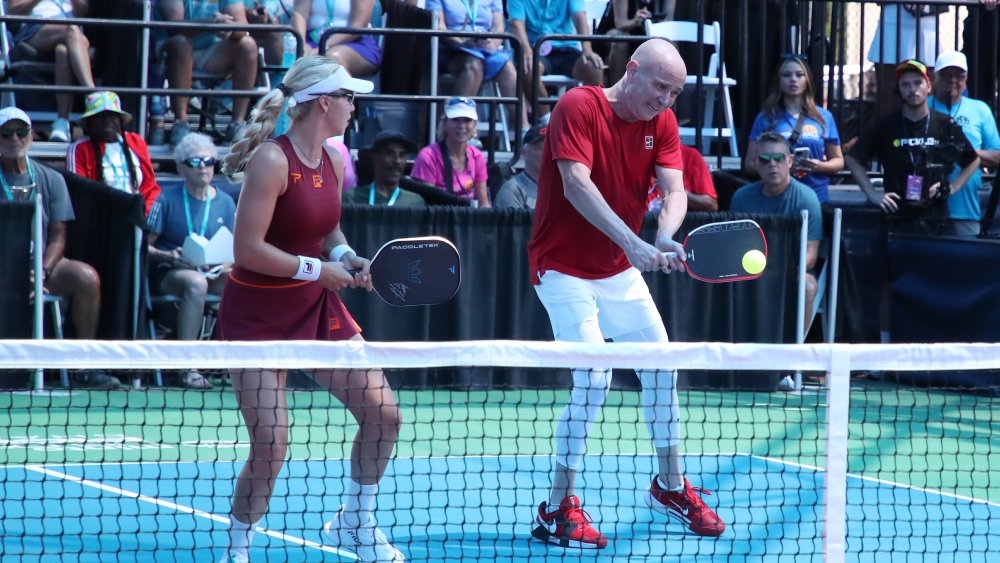
has become the key revenue driver for the sporting goods industry.
In 2025, total sporting goods wholesale sales rose 3.7 percent to $130.0 billion from year-ago levels, according to the Sports & Fitness Industry Association (SFIA). The total gain over the past five years is 34.7 percent. SFIA said the “industry sustained remarkable post-pandemic momentum, adding nearly $35 billion in wholesale volume over five years.”
Pickleball is the growth story of the decade, with wholesale sales up 22 percent year-over-year to $409.7 million and representing the fastest-growing category. The sport of golf has shown post-pandemic boom staying power, with total wholesale sales in the category up 3.6 percent year-over-year to $4.51 billion and representing a “staggering 61.4 percent” increase since 2020. Among the established sport categories, the fastest-growing sector was baseball/softball, with wholesale sales up 7.9 percent last year to $891.4 million.
Of all the categories SFIA tracked, it was athletic footwear that outperformed the broader market. Last year, the category topped $24.1 billion, up 7.4 percent year-over-year. That was nearly double the industry’s average growth rate of 3.7 percent. Athletic footwear is the single largest revenue driver in the industry, with fitness/workout shoes and running footwear representing the category’s standouts.
Jenny Karn, SFIA’s senior director, noted that participation across sports and fitness has reached record levels, “with more than 250 million Americans active in 2025, marking seven consecutive years of growth.”
Overall, athletic footwear has grown 45.4 percent over a five-year period, with total wholesale sales reaching $24.11 billion last year from $16.58 billion in 2020.
By shoe category, golf saw the biggest year-over-year change, up 10.6 percent to $416.3 million. Second was walking shoes, up 9.3 percent to $698.4 million, followed by outdoor/adventure footwear, up 9.2 percent to $1.21 billion. Rounding out the top five were fitness/workout shoes, up 8.6 percent to $2.50 billion, and sport sandals/slides, up 8.3 percent to $406.5 million.
Grouped in close proximity in growth were casual/fashion shoes, up 7.9 percent to $1.54 billion; classic/original shoes, up 7.6 percent to $3.34 billion; running shoes, up 7.3 percent to $7.12 billion; skate/surf footwear, up 6.9 percent to $1.17 billion, and kids athletic footwear, up 6.7 percent to $3.13 billion. Tennis shoe sales rose 5.8 percent to $240.0 million.
Within team sports, baseball shoe sales rose 6.3 percent to $322.5 million, followed by football shoes, up 5.3 percent to $198.3 million, and basketball footwear, up 5.0 percent to $1.38 billion. Rounding out team sports were soccer and volleyball shoes, each up 4.7 percent at $$411.2 million and $24.5 million, respectively.
In other sporting categories year-over-year, total team uniform sales rose 5.4 percent to $1.83 billion. Branded activewear wholesale sales were up 1.1 percent last year to $15.71 billion. And total athletic apparel saw wholesale sales rise 2.5 percent to $31.35 billion.
Within athletic apparel, fleece/sweat sales rose 9 percent to $4.50 billion, which also saw a gain of 108.9 percent since its 2020 sales level of $2.16 billion. Last year saw warm-up apparel up 7.0 percent to $294 million and outwear gaining 6 percent to $2.55 billion. Sales of socks, swimwear and underwear were flat, at $1.64 billion, $2.18 billion and $748.4 million, respectively. Sales of sports bras were down 4.0 percent last year to $513.3 million.
SFIA said the blurring of athletic and casual wear continues to benefit the performance and lifestyle apparel segments. The organization also found that wholesale sales of licensed merchandise rose 4.3 percent year-over-year to $13.6 billion.
“As fan engagement, live events and media rights deals remain robust, this category is a strong opportunity for brand-adjacent revenue,” SFIA said.