dailynewsnblog
 United Airlines has a long history of employing widebodies on its domestic routes where it can justify the higher capacity. Think hub-to-hub trunk routes such as
  Chicago O’Hare International Airport (ORD) to
  Denver International Airport (DEN), or its premium transcontinental flying from coast to coast, not to mention its various Hawaii services where demand is strong enough to justify twin-aisle aircraft.
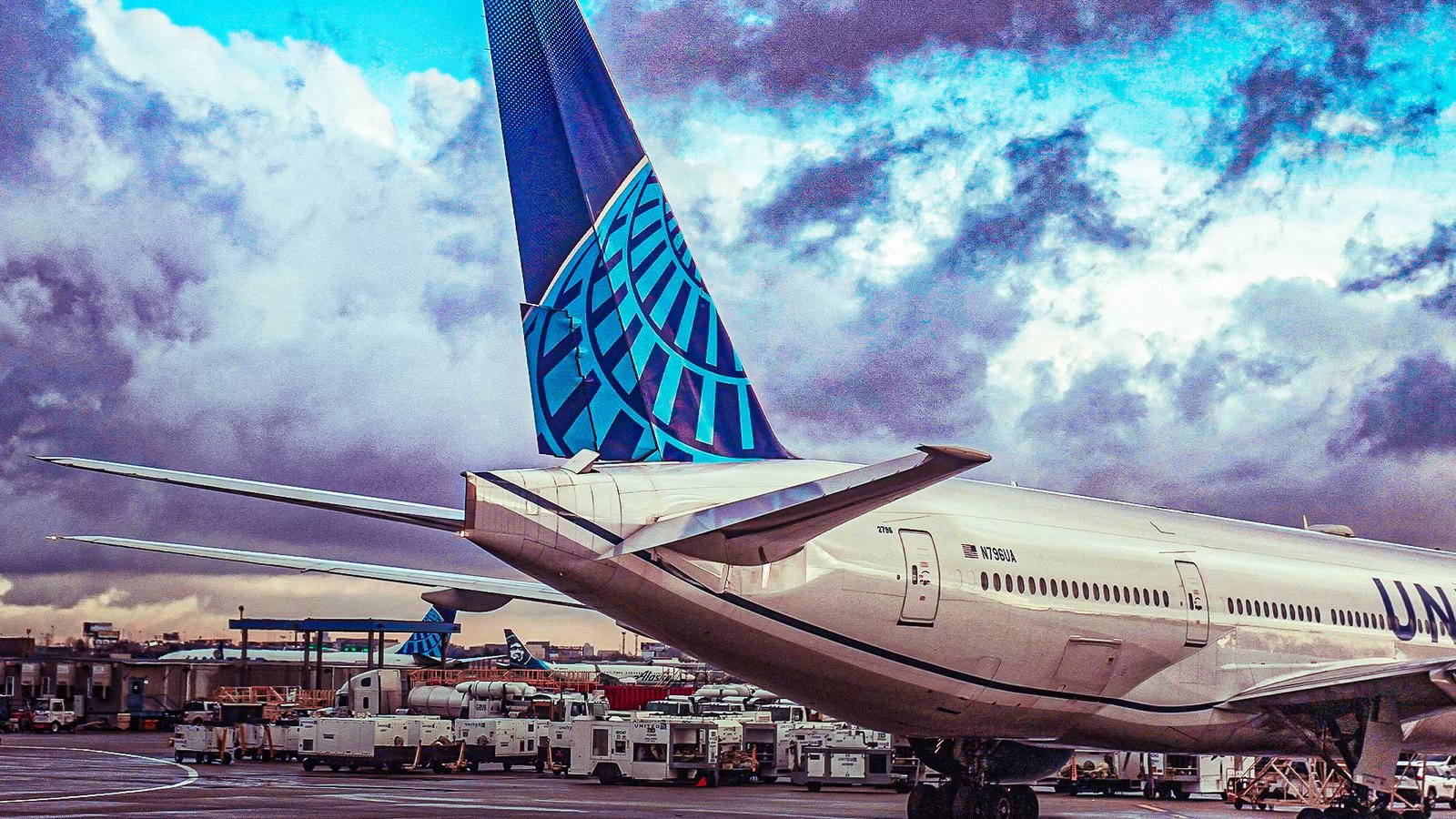
In practice, that has meant deploying aircraft like its higher-capacity Boeing 777-200 sub-fleet on busy domestic routes where United needs to move large volumes of passengers efficiently. But in 2026, the airline has been removing widebodies from domestic service at a prodigious rate. Next quarter will see a 26% year-over-year reduction in domestic widebody routes — but why is this happening?
A Dramatic Drop In Domestic Widebody Flights

The clearest way to examine this is with data from Cirium Diio, and to look ahead to the third quarter of this year (Q3 2025) — which includes the highest volume summer flying — and compare it to the same period from last year (Q3 2024). This comparison shows that this year United will have nearly 1,400 fewer domestic widebody flights compared to last year, a drop of 26%.
|
United Airlines Domestic Widebody Flights: Q3 2026 Vs. Q3 2025 |
|||
|
Widebody Type |
Q3 2026 |
Q3 2025 |
% Change |
|
767-400 |
198 |
211 |
-6% |
|
777-200/-200ER |
2,422 |
3,811 |
-36% |
|
777-300ER |
552 |
560 |
-1% |
|
787-8/9/10 |
844 |
825 |
+2% |
|
Total |
4,016 |
5,408 |
-26% |
But double-click on the widebody types, and the data becomes even more revealing. We can see that while United does employ its Boeing 767-400, Boeing 777-300ER and Boeing 787 fleets on domestic routes, it’s very limited, amounting to less than nine round-trips per day. By comparison, it’s the 777-200 that does the heavy lifting, accounting for nearly three quarters of all domestic widebody flights.
This intuitively makes sense. The newer 787s and larger 777-300ERs are primarily for long-haul international assignments, while the larger 767 variant is almost exclusively a transatlantic workhorse. The 74 aircraft of the 777-200 fleet do plenty of international flying as well, but United maintains a sub-fleet of 23 777-200s in a higher-density 364-seat configuration for domestic trunk routes, and it is this specific part of the operation that is reducing its domestic flying by more than a third.
But why? Reuters has reported that United is trimming flights from its schedule due to the rising fuel costs, but that’s not the primary reason. United’s 777-200s have an average age of 27 years, with the oldest examples now well into their fourth decade, so retirement is a possibility. But that’s not what is happening either (yet). Instead, it’s once again… a Pratt & Whitney (P&W) problem.
A Different Kind Of Pratt & Whitney Issue

To be clear, United’s challenges with the P&W engines on its 777-200s are nothing to do with the well-publicized GTF engine manufacturing issues that have plagued airlines flying the Airbus A320neo and Airbus A220 family aircraft. Instead, the issue is the availability of the PW4000 engines that power the pre-merger United 777 fleet (Continental Airlines opted for GE), and their associated parts.
While the PW4000 was a very popular engine when it was launched in the 1980s, and has been used to power a range of Airbus and  Boeing variants, it is the PW4000-112 (named for its 112″ inch fan diameter) that is used for the 777-200. The problem is, most airlines chose the GE Aerospace alternative, such that of the 600+ Boeing 777-200/200ER/300s flying today, only 12% are P&W-powered, and nearly two thirds of those are already in United’s fleet.
So United has a problem — where does it get new engines and parts? There’s no easy answer, as there are only 32 non-United 777-200s flying, almost all for All Nippon Airways and Korean Air. So United has been forced into quietly parking ever-more of its older 777-200s in long-term storage. Of the 23 domestic-configured 777-200s, ten are now parked in the desert at Victorville Airport (VCV) in Southern California.
These aircraft are marked by United as stored, not retired, and they could conceivably be brought back into service at some point. However, given the lack of available engines, and the fact that none of them are younger than 25 years old, this would seem highly unlikely. Instead, the much more likely scenario is that they will be cannibalized for parts in order to keep the rest of the 777-200 fleet flying while United awaits further 787 deliveries from Charleston.

Stored, Not Retired: United Airlines Ferries Another Boeing 777-200 To Victorville
The 25-year-old Boeing 777-200, registered as N212UA, operated a ferry flight to Victorville, California.
The Routes That Are Hit Hardest

For many readers, this is bad news. As much as the United 777-200s are higher-density and criticized for their 3-4-3 configuration in economy class, the fully-flat beds up-front were particularly welcome on transcontinental red-eye flights, and the airline doesn’t offer anything comparable (yet) with the narrowbodies that are replacing the domestic widebodies.
While the airline’s primary transcontinental routes from  Newark Liberty International Airport (EWR) to
  San Francisco International Airport (SFO) and
  Los Angeles International Airport (LAX) remain relatively untouched, these are the top five routes that are most impacted by United storing an increasing numbers of 777-200s:
|
United Routes With The Greatest Reductions In Widebody Flights |
||
|
Route |
Flight Reduction |
Notes |
|
San Francisco — Chicago |
-266 |
No widebody flights in Q3 2026 |
|
San Francisco — Denver |
-218 |
No widebody flights in Q3 2026 |
|
San Francisco — Honolulu |
-208 |
Retains a single daily 777-200 flight |
|
Denver — Houston |
-184 |
No widebody flights in Q3 2026 |
|
Denver — Washington DC |
-184 |
No widebody flights in Q3 2026 |
There are five trunk routes that are losing at least daily 777-200 service, and four of those from SFO and DEN will have no widebody flights at all in Q3 2026. Flights to Hawaii are also big losers in the re-shuffle, with United’s premier route from San Francisco to Honolulu International Airport (HNL) dropping to a single daily 777-200 flight, and other routes to Kahului (OGG) and Kona (KOA) losing all 777-200 service.
To be clear, the capacity is being filled in by narrowbodies, most frequently by the Boeing 737 MAX 9. For example, the SFO-ORD route might be losing 266 widebody flights, but the frequencies of the 737-9, A321neo and 757-300 replacements actually lead to a higher available seat count. And occasionally, on routes such as IAD-HNL and ORD-OGG, the 787-8 is stepping up to the plate, so it’s a change of widebody.
But sadly, the overall picture shows us that this is the beginning of the end for the 777-200, and domestic widebody service with United will become increasingly rare.