dailynewsnblog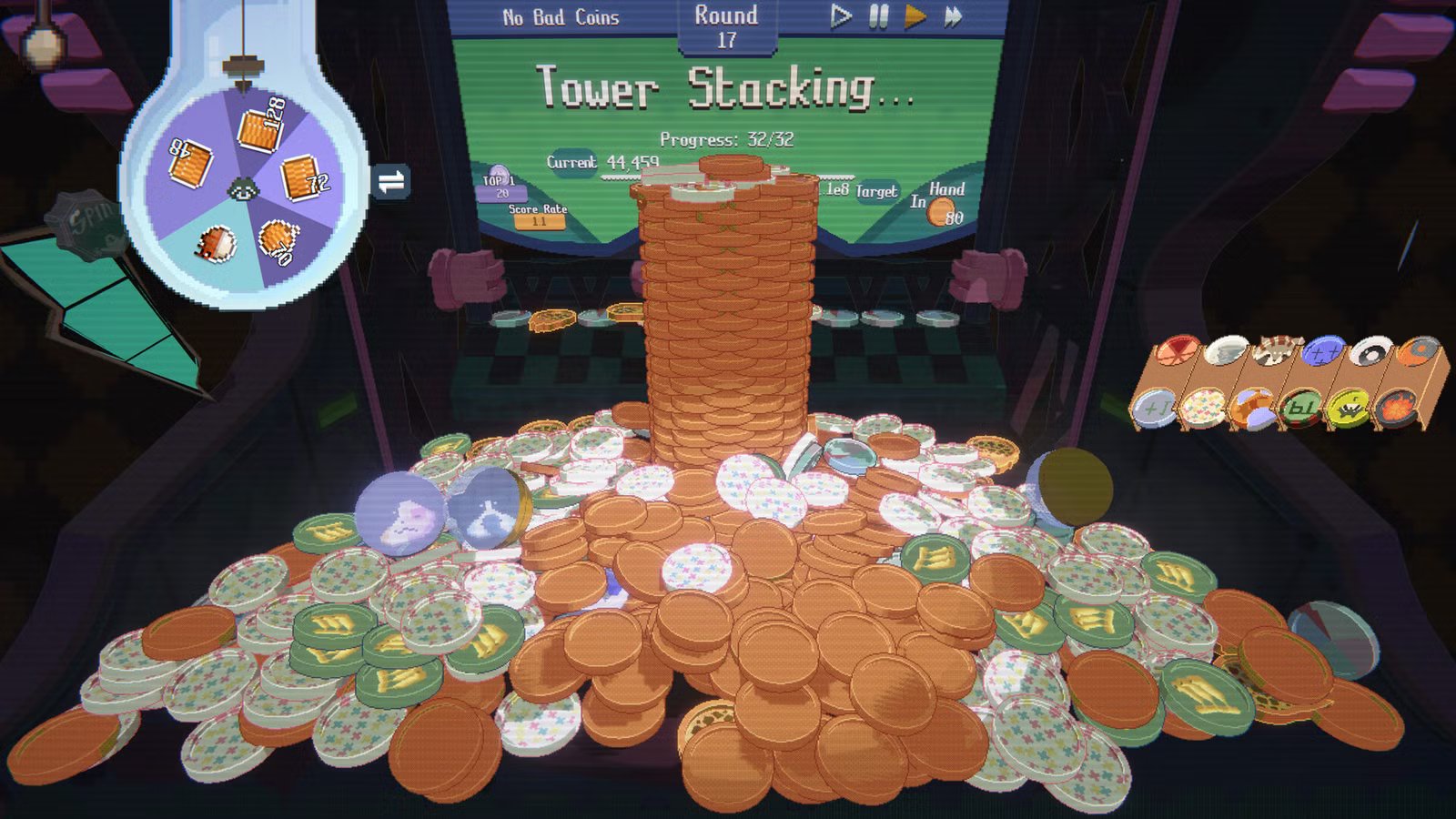
Hey, remember Balatro? Man, what a game. Even two years after its release, I’m still thinking about what a lightning-in-a-bottle idea developer LocalThunk captured there. Taking the design language of a roguelike and applying it to a deceptively strategic card game like poker? I could write a dissertation on why that fusion works as well as it does. I could probably also write one about the wave of games it has already inspired, but that paper wouldn’t be quite as flattering.
Following last year’s CloverPit (Balatro, but slot machine), developer Doraccoon has jumped on the emerging trend with Raccoin (Balatro, but coin pusher). The elevator pitch tells you almost everything you need to know about the new gambling roguelike: do some build-crafting, gradually increase your score with each upgrade, rack in the dopamine rewards. What the on-paper pitch doesn’t communicate is just how hollow that hook is removed from the game that inspired it. There’s a good reason that Balatro is still the best at what it does, and it’s not just because it was first.
At a glance, Raccoin looks very different from Balatro — at least compared to more direct riffs like 2024’s Dungeons and Degenerate Gamblers. The roguelike runs aren’t set inside a card game, but a coin pusher machine. What’s a coin pusher, you ask? It’s one of those arcade attractions where an automated tray pushes a pile of coins around. You drop some coins in the machine in hopes that the extra mass in the coin pile will cause the tray to push a few coins into the prize hole. For me, it’s always been a scammy, C-tier carnival game that’s about as exciting as watching Chuck E. Cheese’s animatronic head rust in real time, but what do I know? Coin pushing videos are a surprisingly popular niche on platforms like YouTube.
And so, Raccoin capitalizes on that by adding deckbuilder and roguelike elements to God’s dullest game. In each round of a run, you simply have to score a certain number of points. To get there, you need to shoot coins onto the field, trading in the tickets you earn along the way to get more stacks. The twist is that you can make a simple game more complicated by amassing passive perks and specialty coins that add a bit of chaos to the machine while keeping your combo multiplier high. By the end of a successful run, you’re not simply waiting for a tray to push a few measly coins into the prize slot; you’re hacking the damn thing. In that way, it’s exactly like Balatro, but with the hand-crafting replaced with satisfying physics manipulation backed by ASMR-worthy coin-dropping sound effects.

Here’s the rub: No amount of goofy gimmickry can make up for the fact that you are playing the arcade equivalent of slug racing. The exciting crescendos where multiple effects trigger in rapid succession — spinning prize wheels, sprouting coin towers, board-changing items like UFO catchers — are outweighed by the moments where you’re simply waiting for the tray to slowly inch a few coins into the hole. The payoff is rarely worth the reward, as failed runs tend to peter out anticlimactically rather than blow up in one risky decision. I’ve yet to have a full run that felt genuinely enjoyable from start to finish, just a few moments of gleeful noise that leave me honking like a seal while hectic reactions I don’t understand happen on screen.
But why doesn’t it work for me? It should, right? After all, none of this is really all that different from Balatro under the hood. It’s the same kind of “numbers go up” game where I’m managing exponential growth through build-crafting. Raccoin is arguably even more active as a game considering that I can at least shoot dozens of coins into the machine and try to strategically craft piles that will cause a chain reaction. Yet, no matter how many weird coins I unlock that can manipulate the board or send my multiplier into the stratosphere, nothing feels as exciting as scoring a pair of buffed up twos and getting a million points for a weak hand.
The problem for games like Raccoin is that they are replicating the most superficial parts of Balatro. They map the mechanics of the roguelike play without understanding why they work so well in the context of poker specifically. The secret to Balatro’s success? Your average deck of playing cards. Those 52 cards have kept humanity entertained for centuries because they give us endless room for invention. You can always create a new game from the same set of tools, in turn changing the function and value of that king in your hand. Think of a deck of cards as the world’s most powerful game engine.

Balatro gets that. It’s a game that builds on the endless versatility of cards by recontextualizing them in each run. Your buffs, hand multipliers, and jokers transform the 52 cards that you use time and time again. A queen of hearts feels different in your hand depending on the rules you’ve created through your build. You’re not playing regular poker rounds on each run; you’re inventing a new variant of the classic game altogether. And yes, it also draws on the sticky appeal of gambling, but to chalk Balatro’s enduring popularity up to that alone feels too reductive. There’s something more meaningful happening with each shuffle of the deck.
So, what then am I supposed to take from Raccoin? What does the rule-shifting premise of a roguelike emphasize about the appeal of a coin pusher? If there’s an answer, I’ve yet to find it. Maybe I’m supposed to engage with it as a power fantasy about outconning a machine built to defeat you. You won’t stop me from claiming my prize! That’s the same appeal powering CloverPit, after all — a more direct “fuck you” to the dastardly slot machine.
But where Balatro feels sincere in its love of poker and all its complexities, both Raccoin and CloverPit come off as ironic gags at best. Wouldn’t it be funny if you added roguelike elements to a coin pusher!? They’re explorations of video game systems that don’t seem to care about the physical game they’re building on; they’re interested in Balatro first and foremost. (Even Raccoin’s groovy background music sounds like a royalty-free cover.)

To some degree, that’s fine. Video games are a medium built on iteration. The magic comes from developers riffing on one another’s design discoveries and placing them into new contexts. You could call Balatro a deconstruction of Hades. I love getting to see where one game’s brilliant ideas do and don’t map onto other foundations, just as I’ve loved watching Nintendo try to figure out how to reimagine some of its classic games as pseudo-battle royales. Even when an idea like Raccoin doesn’t work, there’s still value in figuring out where the experiment breaks down. I’ve had more fun thinking about it than I have playing it.
I’m sure Doraccoon isn’t losing sleep over any of this. Raccoin sold 100,000 copies on its first day and seems to be going over well enough with the kinds of players who dig this flavor of roguelike. We love when a number gets bigger, folks. But if the goal is to create something that stands on its own rather than something you’re bound to buy bundled with Balatro in a good Steam deal, the developers behind these roguelikes could stand to investigate where the game and the game intersect. Why is a coin pusher interesting? What video game systems best explain that? Being able to connect those dots is a skill that separates the Balatros from the Balatro-likes. Otherwise, you’re just dropping another coin in a machine full of them and hoping that will be enough to knock some cash into the hole.