dailynewsnblog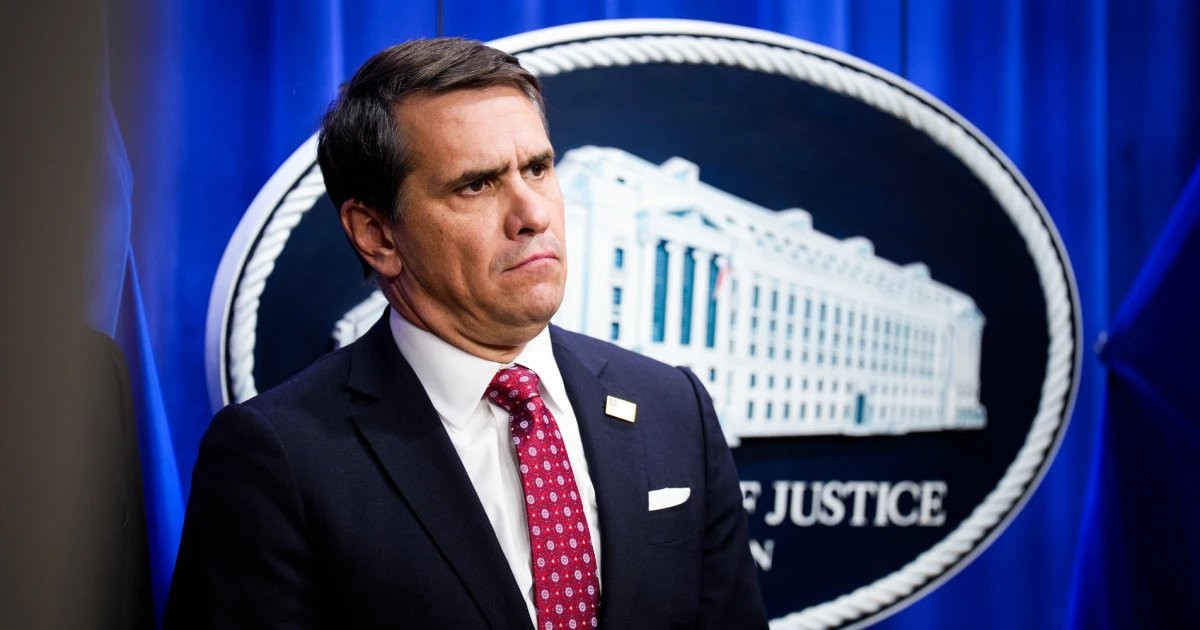
Blanche also represented Trump in two federal criminal cases. One was in Florida, where he was being prosecuted on charges that he improperly kept classified documents after he left the White House and then lied to investigators about it.
That case was eventually dismissed by U.S. District Judge Aileen Cannon, who found that special counsel Jack Smith’s appointment was illegal.
The other was the federal election interference case, which Smith brought against Trump in Washington. That case and a Justice Department appeal of Cannon’s decision were dropped after Trump was re-elected.
Bondi said on X that Blanche was “amazing” and that she’d work directly with him on the transition.
Mimi Rocah, who worked with Blanche in the Southern District of New York, was initially hopeful about his tenure as deputy attorney general, saying in 2024 that he “believes in the vision of the Department of Justice to do the right thing, in the right way, for the right reasons.”
She’s no longer hopeful. Rocah told NBC News on Thursday that Blanche had “shown in his role as deputy AG that he is willing to act more as Donald Trump’s defense attorney than a justice official who defends his employees, seeks justice and tries to uphold the rule of law.”
“I expect nothing different from him in this elevated role,” she added.
Stacey Young, a former Justice Department official who founded the group Justice Connection, which seeks to highlight Trump administration changes to the Justice Department, said that Blanche “has never stopped seeing himself as Donald Trump’s personal lawyer” and that he used his position “to illegally fire career employees, smear whistleblowers and attack the judiciary.”
“Time and again he has shown that his guiding star is fealty to the president, not upholding the rule of law,” Young said.
Like Bondi, Blanche has been embroiled in the public battle over the Justice Department’s handling of its review of the case against Jeffrey Epstein, the politically connected sex offender who died by suicide in federal lockup while he was awaiting trial on sex trafficking charges in 2019.
After some of Trump’s supporters accused the Justice Department of covering up for Epstein by announcing in July that it wouldn’t prosecute anyone else in the case or release any more information, Blanche announced he was going to personally interview Epstein’s convicted co-conspirator, Ghislaine Maxwell.

In the interview, Maxwell said she’d never seen Trump behave inappropriately when he was friends with Epstein. She was subsequently moved to a lower-security facility. Blanche defended the move as necessary for her safety.
Blanche also took the lead on the Justice Department’s release of its Epstein files after Congress passed the Epstein Files Transparency Act. He announced in December that the Justice Department would release hundreds of thousands of files, and then it released only a small fraction of that amount.
The department made public more files at the end of January. Millions were withheld, most of which Blanche said were duplicates, but about 200,000 were held back or redacted for various legal reasons.
The law’s co-authors, Reps. Thomas Massie, R-Ky., and Ro Khanna, D-Calif., have said that’s potentially a violation of the act and that most of that information should be released. Blanche has said he’s complying with the law.
During a podcast appearance, Blanche was asked about Epstein and the many conspiracy theories that have swirled. He said he wasn’t a conspiracy theorist himself, but he spoke about the “beauty” and “importance” of them.
“When I say I’m not a conspiracy theorist, it’s because if you prove one right, then it’s not a conspiracy theory; it’s totally true,” he said.
After Trump’s announcement Thursday, Blanche took to X to thank Bondi “for her leadership and friendship” and Trump “for the trust and the opportunity to serve.”
“We will continue backing the blue, enforcing the law, and doing everything in our power to keep America safe,” his post said.