dailynewsnblog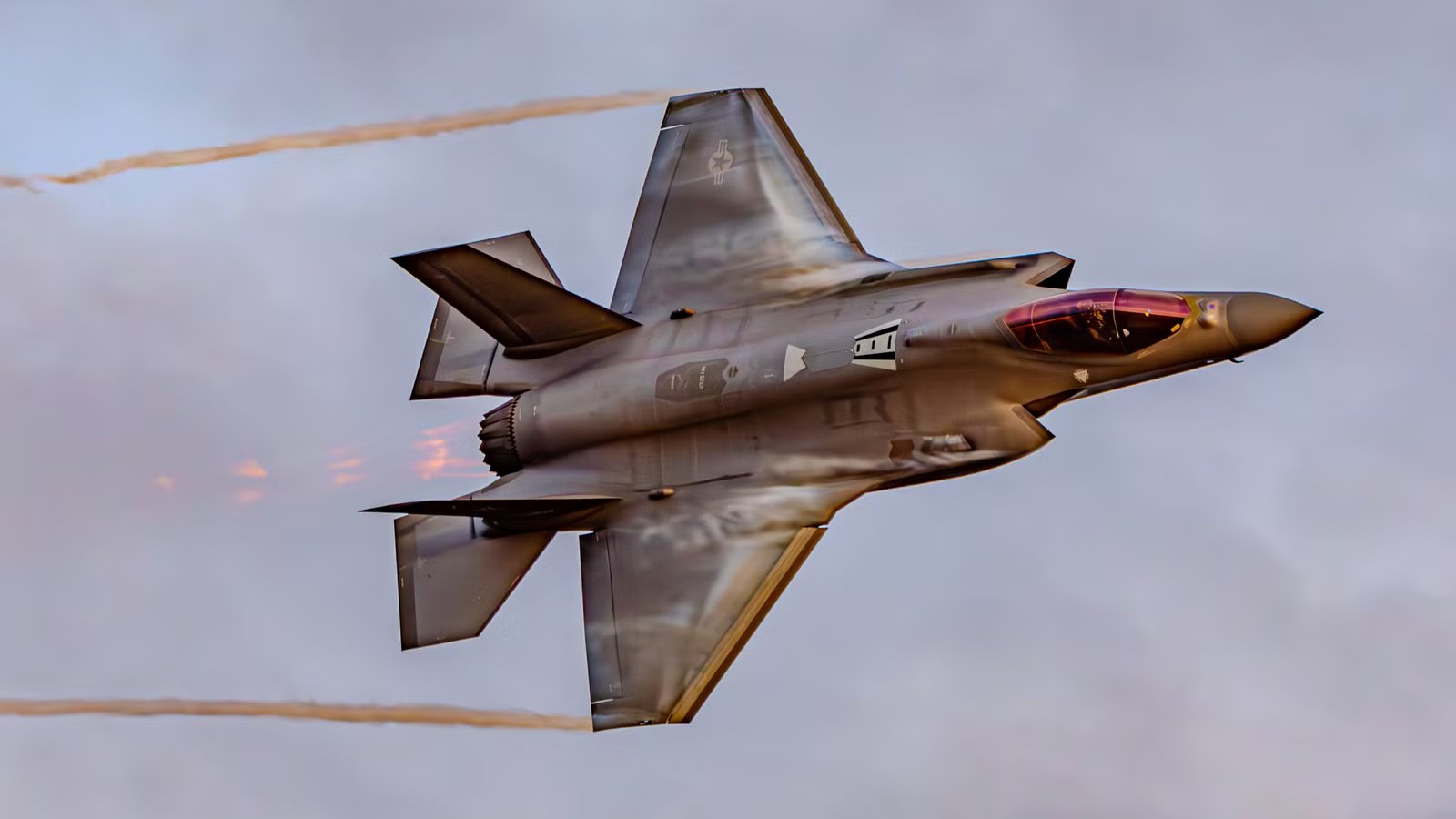
The Lockheed Martin F-35 Lightning II is expensive because it is the world’s most capable and high-end fighter jet. It is an aircraft that is better thought of as a super-sensing, super-fusing supercomputer than a fighter jet in the classic sense. Lockheed Martin has managed to reduce the flyaway costs of the F-35 to surprisingly low levels, but it’s the add-on, maintenance, and various associated costs that drive up the total expenses.
While many headlines focus on the flyaway cost, that is only the beginning of having a functioning F-35 capability. In a sense, purchasing the F-35 is cheap, but sustaining them, training for them, creating the ecosystem for them, and then supporting them over 40 years is expensive. This is true of all advanced modern fighter jets, but is particularly acute for the F-35.
Not Just Another Fighter Jet

It is important to note that there simply is no other fighter jet to compare the F-35 to in any meaningful way. The F-35 exists in a class of its own. To make a commercial aircraft analogy, its kinda like comparing the cost of a narrowbody Boeing 737 MAX with the cost of a widebody Boeing 777X. It can be done, but it is largely meaningless as the aircraft are built for very different missions. Some like to compare the F-35 to the Saab Gripen E, but the Gripen is a lightfighter that competes with the Lockheed Martin F-16 Block 70 on the export market, not the F-35.
When air forces purchase the F-35, they have less of a need to purchase certain enablers like AEW&C and electronic warfare, as the F-35 offers a ‘god’s eye-view’ of the battlespace, and it excels in electronic warfare. Additionally, even a limited number of F-35s can significantly boost the capabilities of a country’s existing fleet of 4th-generation fighters.
Examples include the UK, Germany, and Italy. Those countries operate Eurofighter Typhoons, which are made more capable by F-35s operating alongside them. The F-35 can significantly boost the Eurofighter’s situational awareness and allow it to keep its radars turned off for longer. Emitting is one of the riskiest things to do in modern air combat. All this means that it makes little sense to compare the cost of an F-35 to the cost of any other fighter jet on a one-for-one basis.
The Package Deal Vs Flyaway Unit Cost

The advertised flyaway costs of an F-35 are now incredibly cheap for what it is. Lockheed Martin says that the flyaway costs for F-35A for the Lots 15, 16, and 17 are only around $82 million. Costs rise somewhat with the carrier-based F-35C and even more with the STOVL F-35B. $82 million is a lower per-unit flyaway cost than many of the world’s updated 4th (4.5th) generation fighter jets like the F-15EX, Rafale, and Eurofighter.
But no fighter jet is combat-worthy at flyaway condition. At that configuration, it may be able to fly, but it can’t fight or integrate. For a country purchasing 24 F-35s, the base purchase price of the aircraft itself is likely only around 30-40% of the overall package deal. A country can expect to pay around $250 to $275 million per aircraft, with more than half of that expense being supporting the “ecosystem” in which the aircraft is to operate.
|
Estimated approx costs for F-35 (per F35.com, export contracts, etc.) |
|
|---|---|
|
Fly-away cost |
From $82.5 million (Lots 15-17 for F-35A) |
|
Combat-ready cost |
$100-$130 million |
|
Newer Lots |
Closer to $100 million fly-away cost (F-35A) |
|
Total package cost (averaged per unit) |
$250 to $275 million |
|
Number delivered |
Over 1,310 |
These package deals typically include add-ons like training, simulators, initial spares, munitions, logistics support, and sometimes infrastructure upgrades to host the jet. The F-35 can’t be operated by the same infrastructure that was used to operate older jets like the F-16 without modifications to hangars, tooling, etc. As an illustration, US Air Force is spending $1.5 billion to upgrade its Ellsworth Air Force Base to host will be its incoming next-generation B-21 Raider strategic bomber.

Which Country Has The Most Superior Fighter Jets In The World?
The best overall fighter jet is arguably the F-35, while the F-22 is the best at its specialized role.
Modern Fighter Jets Are Expensive

While a quarter of a billion dollars per F-35 may sound expensive, it is in the same ballpark as many modern high-end 4th-generation fighter jets. The bottom line is that having high-end modern fighter jets costs money. This is why modern air forces only operate high-end fighter jets in modest numbers. Countries that operate a large number of fighter jets on paper (e.g., Russia to some degree and North Korea entirely) make up the numbers with low-end fighters and old airframes that exist mostly to pad out the on-paper numbers.
Demonstrating the costs of high-end jets, Egypt purchased 24 Rafales for around $250 million each, averaged per unit. This is the package cost and is a similar price that has been agreed by Serbia for purchasing 12 Rafale examples. Brazil is paying around $150 million each for its Gripen Es with local assembly and heavy technology transfer. According to reporting by Breaking Defense, Colombia is estimated to be paying up to $220 million each for 17 Gripen Es (total $3.6 billion). The Colombia deal is a more extensive support package.
The F-35 is the most expensive because it is the most sophisticated and provides the most capability. Other jets like the Rafale and Eurofighter are also high-end and expensive aircraft. Air forces that want a credible but lower-cost and lower-capability option may purchase the Gripen, F-16, F/A-18, or the large Su-30. Those who can’t afford those may purchase a very low-end fighter like the JF-17 or an advanced trainer/light fighter like the FA-50.
Costs Vary By Circumstance & Air Force

The cost of purchasing an F-35A is expected to be in the region of $250–300 million over 20 years. This can change significantly depending on a range of factors. For example, the fact that the US produces them and operates them at scale typically means it can achieve a lower per-unit cost. Export air forces with small air forces will likely have higher per-unit costs.
Costs also depend on how much the air forces upgrade them and use them. All else being equal, the more the F-35 is flown and the more it is kept up to date, the more expensive it will be to operate. For example, the US is currently upgrading its new-built F-35s from the AN/APG 81 radar to the AN/APG 85 next-generation AESA radar as part of its Block 4 upgrade.
The cost of the AN/APG 85 radar has not been disclosed, but the cost of the older AN/APG 81 radar is estimated to be around $5 million. The US has not approved the much more capable AN/APG 81 radar for export, but if it did, export air forces would have the option to upgrade their F-35s. It can be assumed that the cost of just replacing the radar and the new bulkhead needed for it would be over $5 million just for that one upgrade.

The F-35’s Role In Multinational Air Defense Alliances
The F-35 is set to play a central role in air defense of both the United States and its allies for decades to come.
When Geopolitics Clouds The Debate

The debate happening in Canada over the F-35 vs Gripen is driven by geopolitics, not capability. The leaked Radio Canada report shows the F-35 won the competition “by a mile,” even with the Gripen aided by the Saab GlobalEye AEW&Cs and the F-35 competing alone. The debate is driven by Canada not wanting to be dependent on the US for its leading capability. Ironically, Canada is dependent on the US to allow the Saab Gripen to be integrated into NORAD and for the US to supply the engines for the aircraft.
NORAD integration is something Saab has said is possible, but has not demonstrated how. Dassault and the Eurofighter Consortium backed out of the competition as they assessed it was not feasible to integrate their Rafale and Eurofighter jets into NORAD. Another issue clouding the debate is national narratives and marketing, with Dassault boasting the capabilities of the Rafale, Russia’s Sukhoi making dramatic animations of its (seemingly failed) low-end Su-75 Checkmate downing F-35s, and Turkey talking up its domestic Kaan fighter.
Another factor is that the US is very selective about which countries it sells the F-35 to. It has blocked Egypt, Turkey, Qatar, the UAE, Indonesia, Taiwan, and Thailand from purchasing it for various reasons. It is not in the interests of countries unable to purchase the jet to point out that their air forces are equipped with inferior aircraft. If countries vote with their wallets, then almost every eligible country with an F-35-like need has purchased it. Exceptions like France, Sweden, and Spain are driven by geopolitical considerations or protecting their domestic programs.
Cost Is Generally Not The Biggest Concern

The flyaway cost of the F-35 is not particularly important. What is more important are the total package costs, the geopolitical realities of that country in relation to the United States, whether the country has a domestic fighter jet industry to protect, and what capabilities are required. As a rule, smaller air forces that are close US allies and can afford the F-35 have only purchased the F-35 (e.g., Singapore, Denmark, Switzerland, Finland, the Netherlands, Belgium, Norway).
Air forces with larger budgets, but also have the requirement for the F-35, while also having to protect their domestic industries, have chosen to have mixed fleets (e.g., the UK, Germany, and Italy). To some degree, the F-35 is better not thought of as a rival to 4th-generation fighter jets, but as a complement. The F-35 can keep these older jets capable for longer.
The F-35 is a node, a sensor, and a command center, designed to be plugged into a larger kill chain. Marketing and geopolitics often focus on the F-35’s cost or its previous delays, but at its core, the issues are not really about cost or delays. After all, Sweden’s contract to supply Brazil with 36 Gripen Es is now seven to eight years behind schedule, but that doesn’t attract a lot of headlines.