dailynewsnblog
This is the second post in a series on 3D print blocking, for the first entry check out: Print Blocking is Anti-Consumer – Permission to Print Part 1
Legislators across the U.S. are proposing laws to force “print blockers” on 3D printers sold in their states. This mandated censorware is doomed to fail for its intended purpose, but will still manage to hurt the professional and hobbyist communities relying on these tools.
3D printers are commonly used to repair belongings, decorate homes, print figurines, and so much more. It’s not just hobbyists; 3D printers are also used professionally for parts prototyping and fixturing, small-batch manufacturing, and workspace organization. In rare cases, they’ve also been used to print parts needed for firearm assembly.
Many states have already banned manufacturing firearms using computer controlled machine tools, which are called “Computer Numerical Control or CNC machines,” and 3D printers without a license. Recently proposed laws seek to impose technical limitations onto 3D printers (and in some cases, CNC machines) in the hope of enforcing this prohibition.
This is a terrible idea; these mandates will be onerous to implement and will lock printer users into vendor software, impose one-time and ongoing costs on both printer vendors and users, and lay the foundation for a 3D-print censorship platform to be used in other jurisdictions. We dive more into these issues in the first part of this series.
On a pragmatic level, however, these state mandates are just wishful thinking. Below, we dive into how 3D printing works, why these laws won’t deter the printing of firearms, and how regular lawful use will be caught in the proposed dragnet.
How 3D Printers Work
To understand the impact of this proposed legislation, we need to know a bit about how 3D printers work. The most common printers work similarly to a computer-controlled hot glue gun on a motion platform; they follow basic commands to maintain temperature, extrude (push) plastic through a nozzle, and move a platform. These motions together build up layers to make a final “print.” Modern 3D printers often offer more features like Wi-Fi connectivity or camera monitoring, but fundamentally they are very simple machines.
The basic instructions used by most 3D printers are called Geometric Code, or G-Code, which specify very basic motions such as “move from position A to position B while extruding plastic.” The list of commands that will eventually print up a part are transferred to the printer in a text file thousands-to-millions of lines long. The printer dutifully follows these instructions with no overall idea of what it is printing.
While it is possible to write G-Code by hand for either a CNC machine or a 3D printer, the vast majority is generated by computer aided manufacturing (CAM) software, often called a “slicer” in 3D printing since it divides a 3D model into many 2D slices then generates motion instructions.
This same general process applies to CNC machines which use G-Code instructions to guide a metal removal tool. CNC machines have been included in previous prohibitions on firearm manufacturing and file distribution and are also targeted in some of these bills.
There are other types of 3D printers such as those that print concrete, resin, metal, chocolate and other materials using slightly different methods. All of these would be subject to the proposed requirements regardless of how unlikely doing harm with a gun made out of chocolate would be.
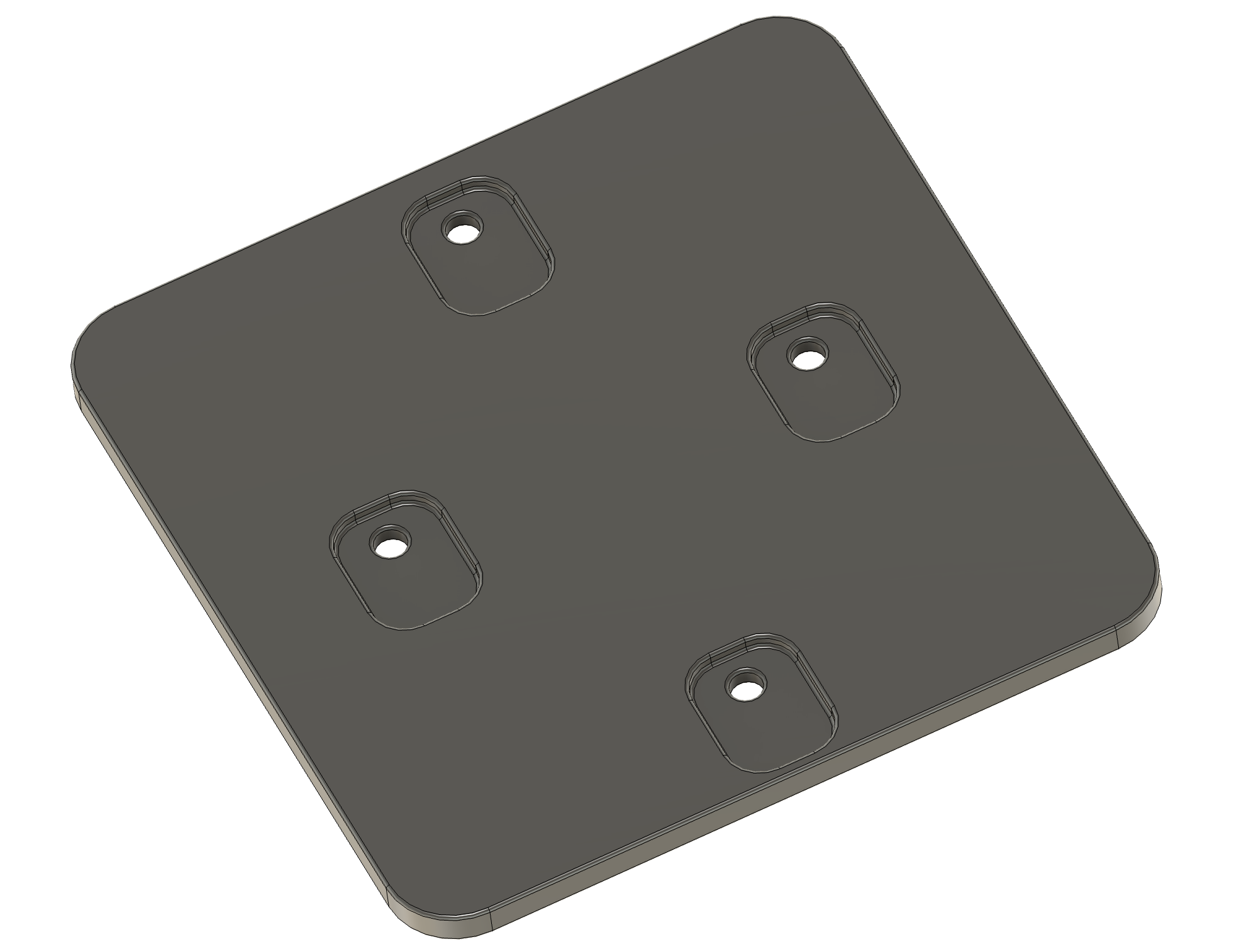 Simple rectangular 3D model for test fit | 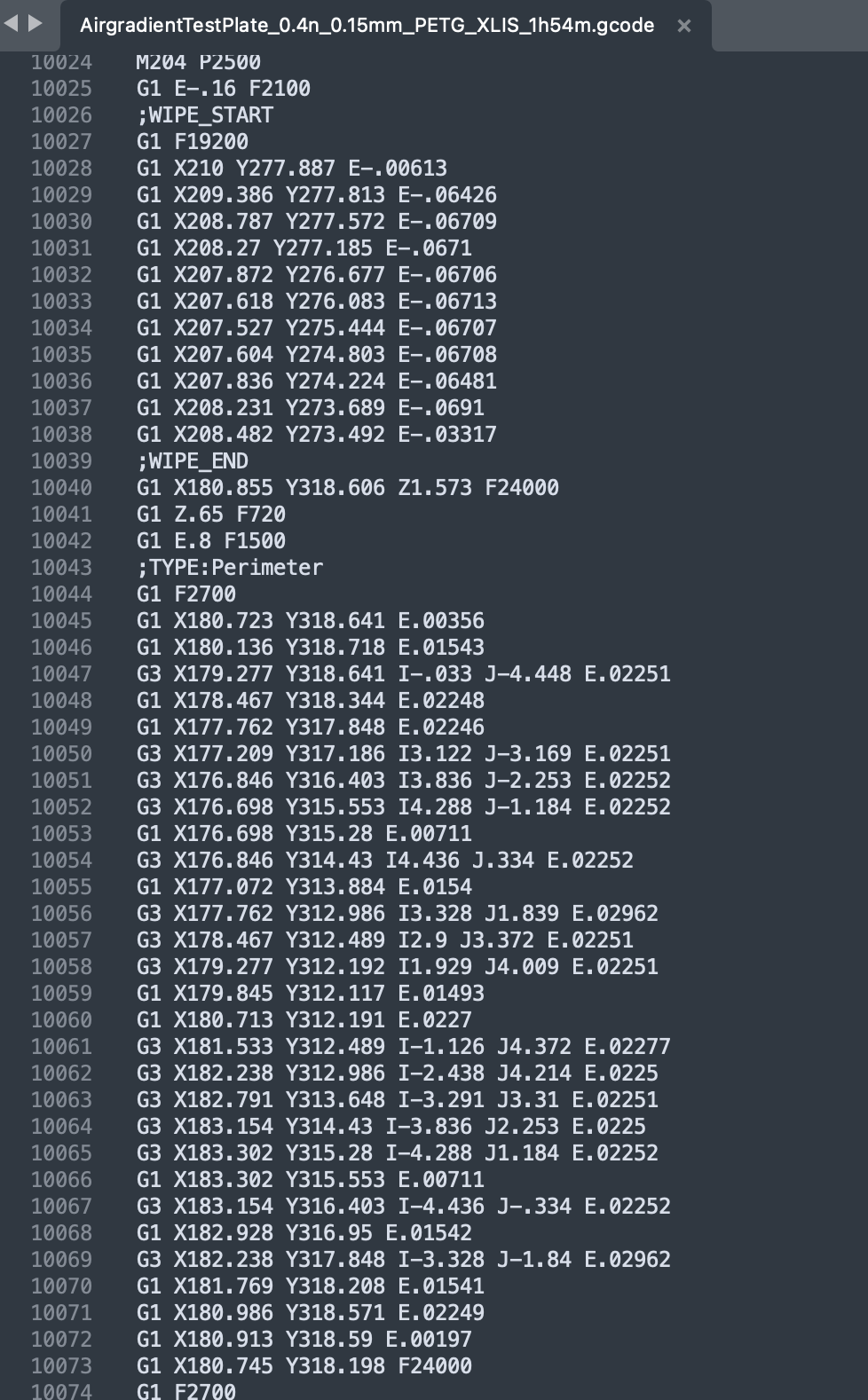 Part of a 173490 line long G-Code file produced by slicer for simple rectangular model. |
Part of a 173,490 line long G-Code file for a simple rectangular part.
How is Firearm Detection Supposed to Work?
Under these proposed laws, manufacturers of consumer 3D printers must ensure their printers only work with their software, and implement firearm detection algorithms on either the printer itself or in a slicer software. These algorithms must detect firearm files using a maintained database of existing models. Vendors of printers must then verify that printers are on the allow-list maintained by the state before they can offer them for sale.
Owners of printers will be guilty of a crime if they circumvent these intrusive scanning procedures or load alternative software, which they might do because their printer manufacturer ends support. Owners of existing noncompliant 3D printers in regulated states will be unable to resell their printers on the secondary market legally.
What Will Actually Happen?
While the proposed laws allow for scanning to happen on either the printer itself or in the slicer software, the reality is more complicated.
The computers inside many 3D printers have very limited computational and storage ability; it will be impossible for the printer’s computer to render the G-Code into a 3D model to compare with the database of prohibited files. Thus the only way to achieve this through the machine would be to upload all printer files to a cloud comparison tool, creating new delays, errors, and unacceptable invasions of privacy.
Many vendors will instead choose to permanently link their printers to a specific slicer that implements firearm detection. This requires cryptographic signing of G-Code to ensure only authorized prints are completed, and will lock 3D printer owners into the slicer chosen by their printer vendor.
Regardless of the specifics of their implementation, these algorithms will interfere with 3D printers’ ability to print other parts without actually stopping manufacture of guns. It takes very little skill for a user to make slight design tweaks to either a model or G-Code to evade detection. One can also design incomplete or heavily adorned models which can be made functional with some post-print alterations. While this would be pioneered by skilled users—like the ones who designed today’s 3D printed guns—once the design and instructions are out there anyone able to print a gun today will be able to follow suit.
Firearm part identification features also impose costs onto 3D printer manufacturers, and hence their end consumers. 3D printer manufacturers must develop or license these costly algorithms and continuously maintain and update both the algorithm and the database of firearm models. Older printers that cannot comply will not be able to be resold in states where they are banned, creating additional E-waste.
While those wishing to create guns will still be able to do so, people printing other functional parts will likely be caught up in these algorithms, particularly for things like film props, kids’ toys, or decorative models, which often closely resemble real firearms or firearm components.
What Are The Impacts of These Changes?
Technological restrictions on manufacturing tools’ abilities are harmful for many reasons. EFF is particularly concerned with this regulation locking a 3D printer to proprietary vendor software. Vendors will be able to use this mandate to support only in-house materials, locking users into future purchases. Vendor slicer software is often based on out-of-date, open source software, and forcing users to use that software deprives them of new features or even use of their printer altogether if the vendor goes out of business. At worst, some of these bill will make it a misdemeanor to fix those problems and gain full control of your printer.
File-scanning frameworks required by this regulation will lay the foundation for future privacy and freedom intrusions. This requirement could be co-opted to scan prints for copyright violations and be abused similar to DMCA takedowns, or to suppress models considered obscene by a patchwork of definitions. What if you were unable to print a repair part because the vendor asserted the model was in violation of their trademark? What if your print was considered obscene?
Regardless of your position on current prohibitions on firearms, we should all fight back against this effort to force technological restrictions on 3D printers, and legislators must similarly abandon the idea. These laws impose real costs and potential harms among lawful users, lay the groundwork for future censorship, and simply won’t deter firearm printing.