dailynewsnblog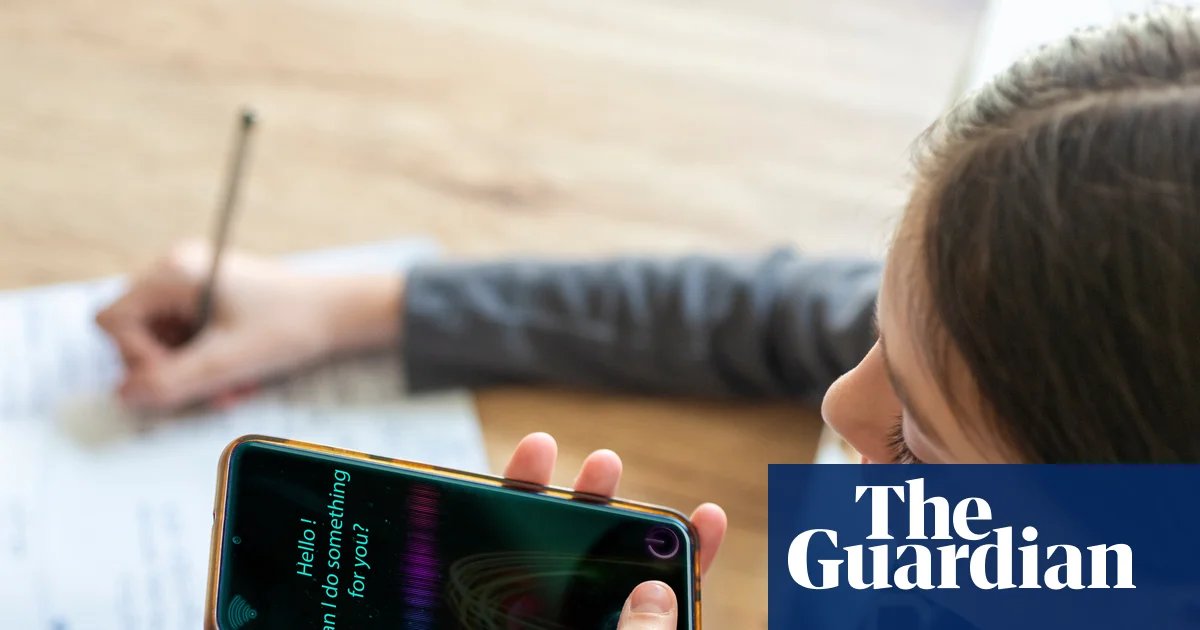
Pupils using artificial intelligence are losing their capacity for critical thinking, according to a survey of secondary school teachers in England.
Two-thirds said they had observed the decline among children who they also said no longer felt the need to spell because of voice-to-text technology.
“Students are losing core skills – thinking, creativity, writing, even how to have a conversation,” one teacher told the National Education Union poll.
“AI is destroying what ‘learning’ – problem-solving, critical thinking and collaborative effort – is,” said another. A third anonymous contributor added: “Children no longer feel the need to spell as voice-to-text replaces knowledge.”
The government has called for a digital revolution involving AI in schools, and in January announced plans to develop AI tutoring tools to provide one-to-one learning support for up to 450,000 disadvantaged pupils.
Bridget Phillipson, the education secretary, said at the time: “AI tutoring tools have the potential to transform access to tailored support for young people, taking tutoring from a privilege of the lucky few, to every child who needs it – so all children can achieve and thrive.”
Of the 9,000 state school teachers polled by the NEU, which is holding its conference in Brighton, 49% said they opposed the government’s plan for AI tutors, with just 14% in agreement.
They worry that it will be used to cut costs and undermine the value of teaching skills. “Students who need tutors often need more than academic support. AI will not give them that,” said one respondent.
“Students will not be motivated by an AI tutor,” said another, while a third said: “Disadvantaged students need human interaction for tutoring rather than AI so that social skills can be enhanced and social isolation reduced.”
Although teachers are sceptical about pupils using AI and complain about it aiding cheating in exams and homework, some admit they increasingly rely on it to do their jobs.
As many as 76% use AI for day-to-day work, a significant increase from 53% last year. In the main, it is being used to create resources (61%), plan lessons (41%) and do admin (38%). Just 7% are using AI tools for marking.
However, 49% of schools lack any policies governing the use of AI either by staff or students and 66% have no policy specifically for students.
“Staff are not trained to use it properly, but are using it and it’s producing sub-standard slop,” was one comment in the new poll. Another said: “If used correctly, AI can be a valuable educational tool; regulation and guidance is needed, and training and policies should be in place in every school for staff and students.”
The NEU’s general secretary, Daniel Kebede, said: “Students must be able to think for themselves. This is at the heart of learning, but our survey shows a reliance on AI is having an effect on students’ ability to think critically.
“The profession is far from convinced that AI tutors are a magic bullet for closing opportunity gaps for disadvantaged students. The government is taking a risk in rolling out AI tutoring before its impacts are properly understood.”
A government spokesperson said: “Our mission is to break the link between background and success, and the introduction of AI tutoring tools can help make that a reality – expanding the tailored support that is often only available to a privileged few to every child who needs it.
“No technology should replace the foundations of core knowledge and disciplinary thinking that prepares pupils for later life. But we also have to prepare children for a digitally enabled world. That’s why our schools white paper sets out a clear plan to ensure AI is used safely, critically and responsibly – so every young person can achieve and thrive.”