dailynewsnblog
Animal Behavior, 2026. DOI: 10.1016/j.anbehav.2026.123491 (About DOIs).
Human sperm gets lost in space
Credit:
Sperm and Embryo Biology Laboratory, Adelaide Universit
Credit:
Sperm and Embryo Biology Laboratory, Adelaide Universit
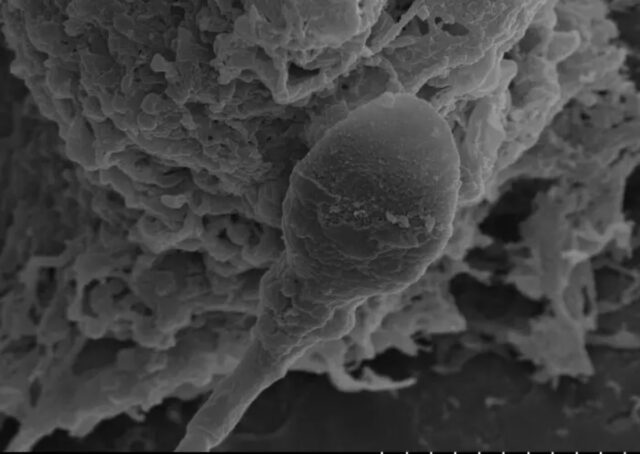
When thoughts turn to the future of space exploration, particularly the potential for extended trips in microgravity, one can’t help but wonder how humans might breed in space. Scientists have tested mice having sex (and making babies) in space, as well as geckos, but what about the potential for human reproduction? Researchers at Adelaide University in Australia discovered that one major challenge might be getting sperm to successfully navigate to an egg in space, according to a paper published in the journal Communications Biology.
The authors took sperm samples from humans, mice, and pigs and put them through a special machine that simulates zero gravity conditions, essentially flipping the sperm cells to disorient them, and then pushing them through a maze that simulates the female reproductive tract. The result: there was a significant decrease in the number of sperm that were able to find their way to the eggs under those conditions, and that decrease wasn’t due to any change in motility. Exposure to microgravity also resulted in a 30 percent reduction in the number of fertilized mouse eggs, suggesting that microgravity might impact embryo development as well.
The good news is that adding a bit of progesterone can help the befuddled sperm overcome the negative effects of microgravity. The next phase will explore how gravity on the Moon, Mars, and artificial gravity systems affect sperms’ sense of direction and early embryo development.
Communications Biology, 2026. DOI: 10.1038/s42003-026-09734-4.
Lost Archimedes page is found
Credit:
Blois, Musée des Beaux-Arts, Inv. 73.7.52. Photography IRHT-CNR
Credit:
Blois, Musée des Beaux-Arts, Inv. 73.7.52. Photography IRHT-CNR
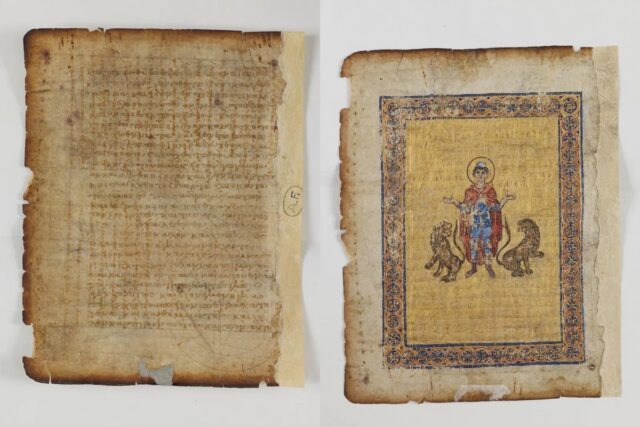
Thanks to scientific and technological advances, archaeologists and conservationists have many new cutting-edge tools for the study of ancient manuscripts, such as revealing older text underneath surface writing. Multispectral imaging, for instance, showed the first known Greek remnants of Hipparchus’ star catalog in 2022, hidden beneath Christian texts on medieval parchment, and also revealed hidden text on four Dead Sea Scroll fragments previously believed to be blank. High-energy X-rays have been used to analyze ancient Egyptian papyri and the badly charred Herculaneum scrolls that survived the 79 CE eruption of Mount Vesuvius.