dailynewsnblog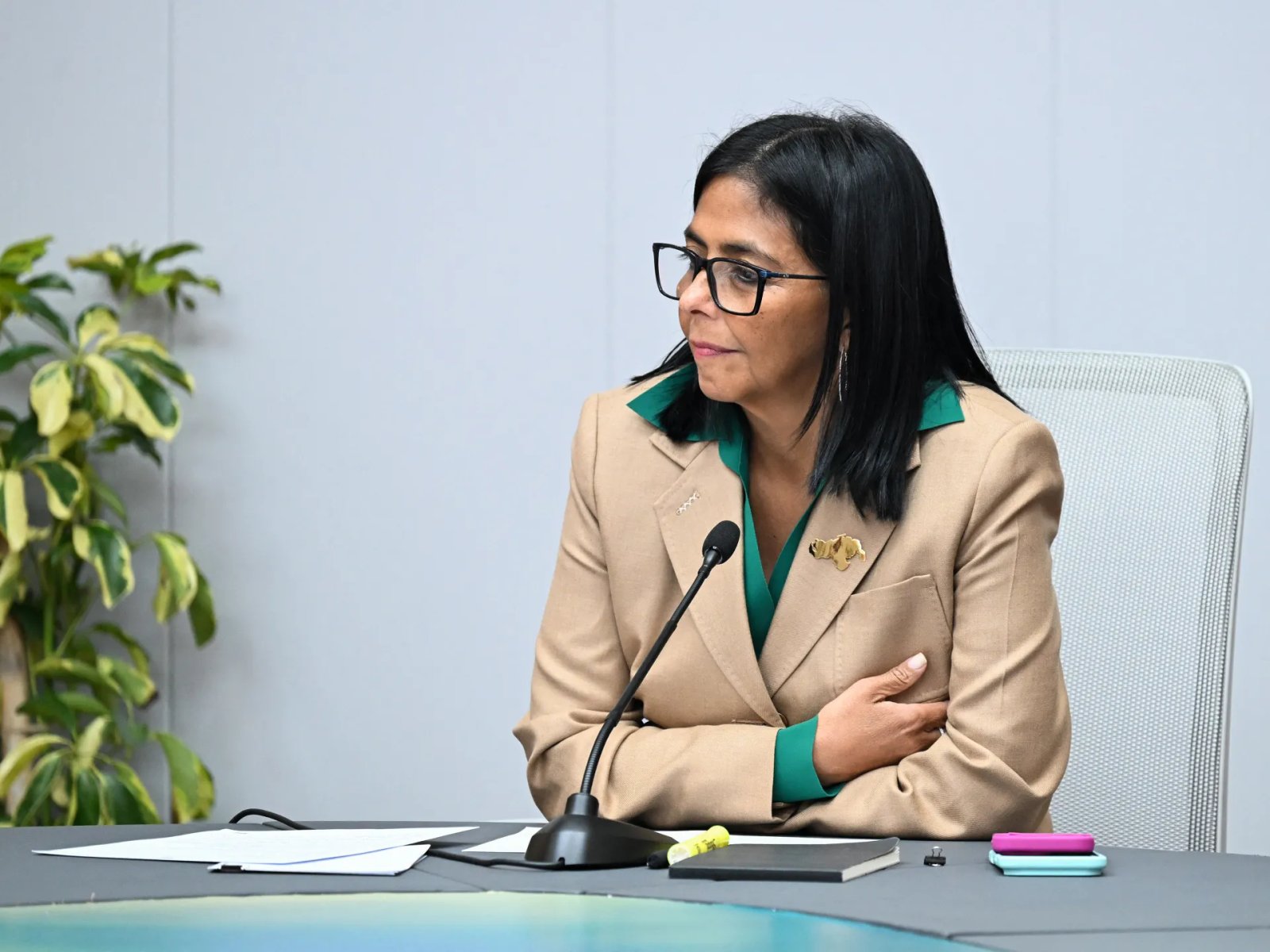
US has exerted growing influence over the Venezuelan government after abducting former President Nicolas Maduro.

Published On 1 Apr 2026
The United States has lifted sanctions against Venezuela’s interim President Delcy Rodriguez, following its abduction and imprisonment of her predecessor, Nicolas Maduro.
The US Department of the Treasury website was updated on Wednesday to show that Rodriguez had been removed from the Specially Designated Nationals List.
Recommended Stories
list of 3 itemsend of list
The move was seen as yet another sign of tightening relations between Rodriguez and US President Donald Trump, who has sought to exert control over Venezuela’s politics since Maduro’s removal.
Rodriguez hailed Wednesday’s decision with a post calling for more sanctions against Venezuelan entities and individuals to be nixed.
“President Trump’s decision is a significant step in the right direction to normalize and strengthen relations between our countries,” she wrote.
“We trust that this progress and determination will ultimately lead to the lifting of the additional active sanctions on our country.”
Rodriguez had been sanctioned under the Office of Foreign Assets Control (OFAC) since 2018, during Trump’s first term in office. The sanctions froze any assets she may have held in the US and prohibited any US-based entity from doing business with her.
In a news release at the time, the US accused Rodriguez of being among a group of government leaders that were “involved in the destruction of democracy in Venezuela” and were “enriching themselves at the expense of the Venezuelan people”.
At the time of the sanctions, Rodriguez had recently been appointed as vice president, a role she served in until January 3, when a US military operation abducted Maduro.
Maduro and his wife, Cilia Flores, who was also captured in the raid, currently await trial in the US on drug-trafficking and weapons possession charges.
Legal experts have widely condemned the US attack as illegal under international law, and Rodriguez herself has called for Maduro and Flores to be returned to Venezuela.
But since being sworn in as Maduro’s replacement, Rodriguez has taken a largely conciliatory approach to US-Venezuela relations.
Rodriguez has taken steps to open the country to greater outside investment, including by signing into law in January a piece of legislation designed to open Venezuela’s vast oil reserves to private investment.
A similar bill, to attract outside investment to the mining sector, received an initial vote in March.
But critics have questioned the circumstances under which these reforms have progressed. Trump has pledged to “run” Venezuela, and after Maduro’s abduction, he warned that a second wave of military action could follow if Rodriguez did not comply with his demands.
“If she doesn’t do what’s right, she is going to pay a very big price, probably bigger than Maduro,” Trump told The Atlantic magazine in an article published on January 4.
For her part, Rodriguez has struck a careful balance between sparse criticism of Maduro’s abduction and improving ties with the US.
The US Department of State said that the country’s embassy in Caracas had officially resumed operations on Monday after a seven-year closure.
International organisations such as the United Nations have said that human rights violations have persisted in the South American country, despite the change in president.
Trump has held up Venezuela as a model for the regime change he would like to see in Iran and Cuba, but critics note that he has kept its government largely intact, despite the ouster of Maduro himself.
Venezuela’s government has long faced accusations of violently suppressing its political dissent through arbitrary arrest, torture and extrajudicial killing.