‘We’ve had some pretty good success regrowing the business’


Nissan (NSANY) Americas chair Christian Meunier came to the New York International Auto Show with a simple message: The brand is back, and it’s building in America.

Standing on the show floor beside the Frontier pickup — one of several US-built vehicles he said is driving the recovery — Meunier said Nissan has been the fastest-growing auto brand in the US for the past six months, fueled by a wave of new product launches and a deliberate shift toward US manufacturing.

“In the last few months, we’ve had some pretty good success regrowing the business again,” Meunier told Yahoo Finance. “We rediscovered that scale is important in our industry. Scale gives you the ability to get the cost in the right place and get the product at an affordable price for people to be able to buy them.”

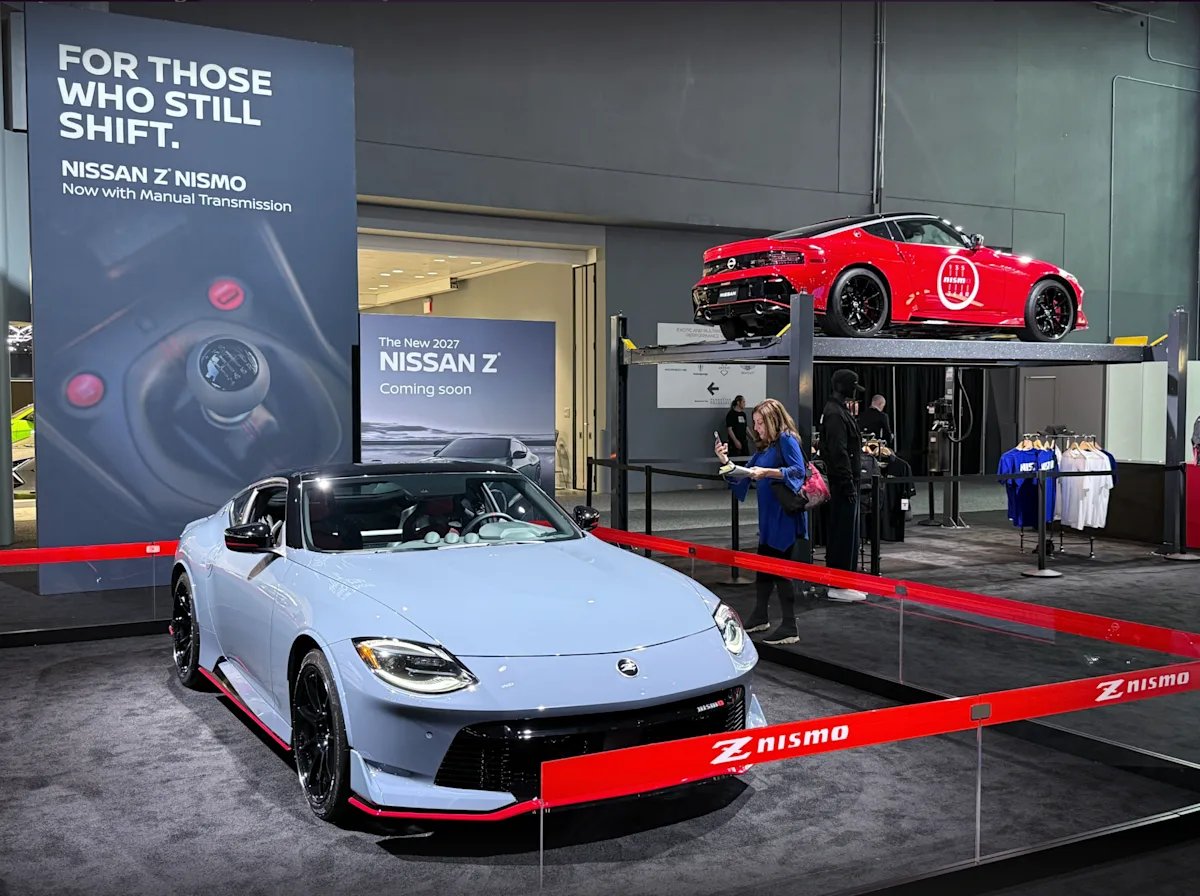
The Nissan Z Nismo edition sports car.
The Nissan Z Nismo edition sports car. · Pras Subramanian

The company is targeting 10% US sales growth in 2026, with an eye toward reaching 1 million annual US sales by 2027 — a milestone that would mark Nissan’s strongest performance since before the pandemic. Recent launches of the new Leaf, Sentra, and Armada have helped, along with the new Infiniti QX65, revealed last week.

Read more: 6 steps to find cheap car insurance in 2026

Nissan still has a lot to prove, however. The company had to cut output and has sold off production capacity as it right-sizes the business. Prior models were lackluster, and competition from China abroad put a huge dent in Nissan’s profits. A failed merger with Honda also put the brand in a tough spot.

But the recent turnaround has drawn notice at the highest levels. President Trump praised Nissan’s US manufacturing expansion on Truth Social, and Meunier said the attention is warranted.

The 2026 Nissan Frontier midsize pickup.
The 2026 Nissan Frontier midsize pickup. · Pras Subramanian

Nissan operates three US facilities — two plants in Tennessee, including a powertrain operation, and a manufacturing plant in Mississippi. The company has rapidly increased the share of US-made vehicles it sells domestically, from roughly 45% when tariffs took effect to 60%-65% today, with a goal of reaching 80%, Meunier said.

“The tariff was not a bad thing for us because it forced us to really accelerate our plan,” Meunier said. “We need to build where we sell. There’s no magic.”

But the tariff picture is more complicated for Nissan’s entry-level lineup. The Sentra and Kicks — two of the brand’s most affordable models — are built in Mexico, where lower labor costs make their price points possible.

Tariffs add $2,500 to $3,000 per vehicle, and with the USMCA trade agreement up for mandatory review in July, Meunier is pressing Washington for relief.

“We need the affordable cars, the entry sedan and entry SUVs made in Mexico,” he said. “A lot of the components are coming from the US, and a lot of engineering resources are in Michigan. It’s good for the American people because they can afford these cars. Enough with cars at $50,000, $60,000 that people can’t afford.”

The discontinuation of the Nissan Versa — until recently the last new car in the US priced under $20,000 — has increased that urgency. Meunier said affordability is core to Nissan’s DNA and pointed to the forthcoming Xterra SUV — once a popular, inexpensive SUV for the brand — as proof Nissan isn’t abandoning its more price-conscious consumers.

The 2026 Nissan Armada full-size SUV.
The 2026 Nissan Armada full-size SUV. · Pras Subramanian

“With the Xterra, we’re going to bring that DNA — affordability, quality, and the edge,” Meunier said. “That’s going to be the symbol of the turnaround of Nissan and big success and growth in the United States, which is the power engine of Nissan globally.”

For now, Meunier said the New York show captures exactly what the resurgent Nissan is about. Looking over at a nearby 370 Z Nismo with a manual transmission, he put it succinctly: “It’s affordable fun that we bring to market.”

StockStory aims to help individual investors beat the market.

Pras Subramanian is the Lead Transportation Reporter for Yahoo Finance. You can follow him on X and on Instagram.

Click here for the latest technology news that will impact the stock market

Read the latest financial and business news from Yahoo Finance


Source link

  • Related Posts

    B.C. to cut 2035 zero-emission-vehicle sales mandate from 100% to 75%

    VICTORIA — British Columbia is moving to change its mandate on sales of zero-emission vehicles, reducing the 2035 target from 100 per cent to 75 per cent. Source link

    Beyond oil: The macroeconomic impact of commodity supply disturbances

    In recent years, commodity markets have been shaken by a series of unprecedented disruptions. The COVID-19 pandemic, Russia’s invasion of Ukraine, China’s export restrictions on critical minerals, and, more recently,…

    Leave a Reply

    Your email address will not be published. Required fields are marked *

    You Missed

    DNA Confirms Ted Bundy Killed Utah Teen in 1974, Investigators Say

    De-fi platform Drift suspends deposits and withdrawals after millions in crypto stolen in hack

    De-fi platform Drift suspends deposits and withdrawals after millions in crypto stolen in hack

    B.C. to cut 2035 zero-emission-vehicle sales mandate from 100% to 75%

    B.C. to cut 2035 zero-emission-vehicle sales mandate from 100% to 75%

    Britain to host 35 countries for strait of Hormuz talks, says Starmer | Strait of Hormuz

    Britain to host 35 countries for strait of Hormuz talks, says Starmer | Strait of Hormuz

    Beyond oil: The macroeconomic impact of commodity supply disturbances

    Backtrack? Why American Airlines Is Worried Over Delta & United’s Passenger Experience Investments

    Backtrack? Why American Airlines Is Worried Over Delta & United’s Passenger Experience Investments