dailynewsnblog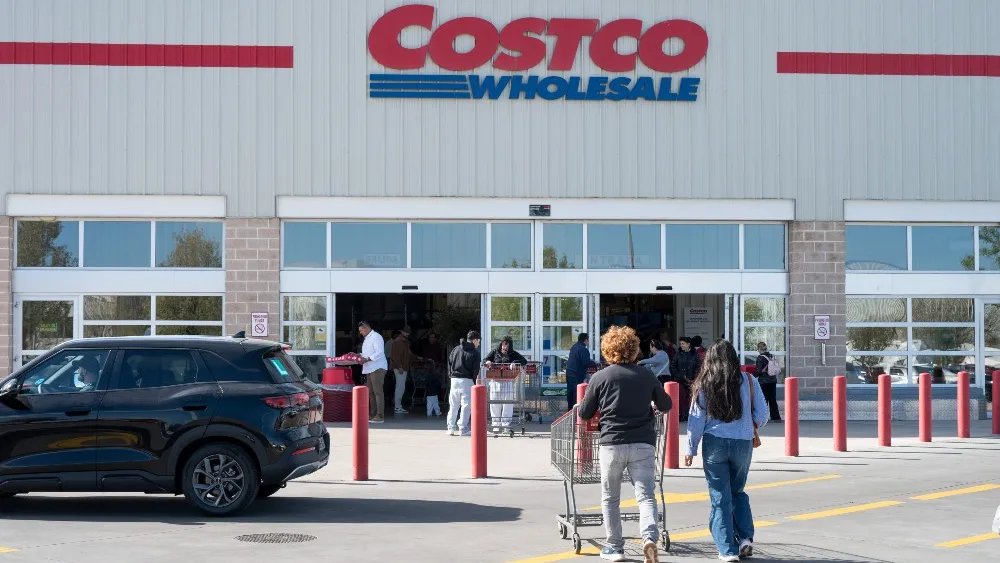
The majority of American retailers are planning to raise prices—again—in 2026, as tariff turmoil continues to roil the supply chain for consumer goods.
New research from KPMG shows that 55 percent of retailers are planning price hikes this year as margins fall and operational costs rise. Drawing on a survey of business leaders that took place throughout the fiscal second quarter of 2026, as well as two surveys conducted in May and September of 2025, analysts concluded that the share of businesses passing on more than half of tariff costs to consumers has risen to 34 percent—double the rate seen last spring.
Those that said they plan to augment MRPS said they would do so by up to 15 percent within the next six months.
“The burden of tariffs has now moved squarely onto the consumer,” the group’s United States sector leader for industrial manufacturing, Brian Higgins, said. “While businesses absorbed the initial shock to their margins, the overwhelming majority are now reshaping their pricing models for a trade environment where cost pressures are the new constant.”
This could deepen the growing ire that consumers are feeling toward their favorite retailers, which are now jockeying for a spot at the head of the line when it comes to tariff refunds. Hundreds of importers, including FedEx and national big-box wholesale retailer Costco, sued the federal government for payback on the duties they paid under the now-defunct International Emergency Economic Powers Act (IEEPA) tariff scheme, which was invalidated by the Supreme Court in February.
Seven plaintiffs from Washington, Ohio, California and Pennsylvania this week launched a class-action suit alleging that Costco is seeking refunds on tariffs paid to customs even though it already passed along the cost of those duties to consumers. Earlier in March, an Illinois shopper brought a similar suit against the company, saying it stands to receive “double recovery” on the tariffs it paid if it doesn’t pass along the refunds to consumers.
Consumer plaintiffs are also taking Lululemon to court over the same issue. On Friday, a suit filed in the US District Court for the Eastern District of Michigan accused the athleticwear chain of benefitting from tariffs at the expense of consumers.
“Lululemon should not be permitted to retain the funds consumers paid above and beyond what they would have absent the IEEPA tariffs,” the complaint read. “The money belongs to Plaintiffs and the Class, and Lululemon is obligated to return it.”
A follow up survey of KPMG’s respondents deployed immediately after the high court’s decision on the IEEPA tariffs was announced showed that businesses were momentarily buoyed by the development, with 44 percent of executives saying their expected margin increases over the next year (up from just 7 percent in September). However, the administration acted quickly to implement contingency plans, imposing a 10 percent global baseline tariff and launching two Section 301 investigations into 60 countries that could lead to the levying of further duties.
Given the turbulence of the situation, half of all leaders still reported low confidence in their abilities to execute investment plans and strategy. Geopolitical developments, like the war in Iran and the consequent cargo constraints seen in the Strait of Hormuz—have also reshuffled essential routes for global trade, building upon the challenges seen in 2025, from continued Houthi attacks in the Suez Canal to complications arising from the war in Ukraine.
For U.S. businesses, the headwinds have been remarkable; a “striking” 82 percent reported a decline in foreign sales, analysts wrote, and 68 percent also said their domestic sales dropped. Europe, Canada and Mexico are still the top export markets for American-made goods, but sourcing costs have risen for U.S. makers by over 25 percent.
Notably—and contrary to the recent hard data showing sourcing shifts in 2025—the surveyed business leaders espoused ambitions to bring some of their operations back to the domestic market. In fact, 26 percent of companies said they were in the formal planning or active execution stages of reshoring, up from 10 percent six months ago. More than half (53 percent) are prioritizing investments in U.S. operations and 39 percent are accelerating the pace of reshoring plans.
But according to KPMG, the runway for this process could be lengthy. Three-fifths (60 percent) of surveyed businesses said it could take one to three years to fully reshore, and hurdles abound, from high labor costs to the need for major capital investment. Then there’s the challenge of unfurling long-established offshore supply chains and rebuilding them stateside amid continued tariff uncertainty.