dailynewsnblog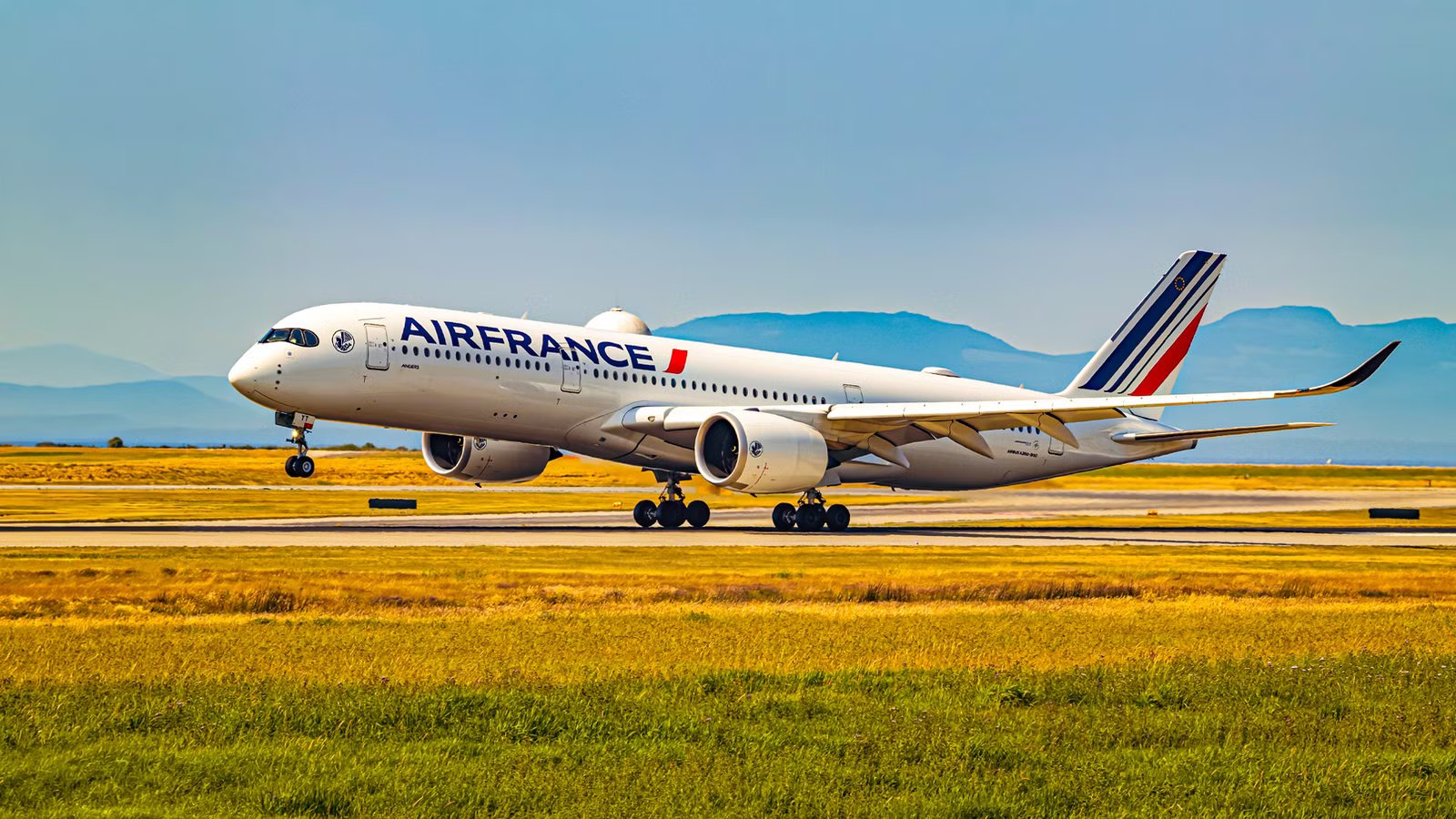
Transitioning from an era of quad-engine giants to the precision of the twin-engine widebody presented a shift in the very philosophy of long-haul travel. To look at the Airbus A350 is to see the future of what an airliner can be, an aircraft built from lightweight composites that prioritizes the quiet efficiency of the journey over the raw, brute force of the past. For a modern airline, the size of its A350 fleet is the ultimate indicator of its commitment to sustainability and its vision for a network that spans the globe without the economic burden of excess fuel.
These six carriers have placed their bets on the A350 to define their flagship service. This list is based on active and total inventory data as of March 2026, reflecting a period of rapid deliveries and strategic fleet modernization. To help understand the realities of each fleet, each section provides a detailed breakdown of how these operators, from the tech-heavy hubs of East Asia to the legacy powerhouses of Europe and the United States, utilize the various A350 variants to dominate the world’s most demanding routes.
6
Lufthansa: Typical German Precision And Efficiency
Modernizing the fleet with the -900 and -1000
.jpg?q=49&fit=crop&w=500&dpr=2)
 Lufthansa has long been a guardian of European aviation standards, and its embrace of the Airbus A350 is a testament to that legacy. As per Planespotters.net data, the airline currently operates a fleet of 31 Airbus A350-900 aircraft, serving as the modern workhorse for its hubs in
  Munich and
  Frankfurt. For Lufthansa, the A350 is the successor to the aging Airbus A340, offering a level of technical reliability and fuel economy that the older four-engine models struggle to achieve.
The induction of these aircraft has allowed the German flag carrier to significantly reduce its carbon footprint while increasing passenger comfort through the introduction of the Allegris cabin concept. With 15 of the larger A350-1000 variants on order and the first deliveries arriving in early 2026, the airline is poised to further expand its capacity on high-demand international sectors.
|
Aircraft Type |
Active Fleet (2026) |
Role in Long-Haul Strategy |
|
Airbus A350-900 |
31 |
Primary Long-Haul Workhorse |
|
Airbus A340-300/600 |
Declining |
Phasing out in favor of A350 efficiency |
|
Boeing 747-8 |
19 |
High-Capacity/Prestige Routes |
Lufthansa ranks at number six with a steady, disciplined rollout of the -900 variant to suit. While it may not yet have the sheer volume of its Middle Eastern or Asian counterparts, its strategic use of the A350 to replace less efficient aircraft demonstrates a focused investment in the future of the industry. The arrival of the -1000 marks a new chapter in their capacity management, proving that even a legacy giant must evolve to survive.
5
Delta Air Lines: Airbus’ American Leader
Trusting in European excellence

For the Atlanta-based carrier, the Airbus A350 represents a departure from the traditional domestic reliance on twin-aisle aircraft from Boeing.  Delta Air Lines stands as the only major United States legacy carrier to fly the type, positioning it as the crown jewel of its international network. It unlocks access to the most competitive premium markets in Europe and Asia with a level of mechanical grace that the older fleet simply lacked.
The airline currently manages a fleet of 40 Airbus A350-900 aircraft, a number that reflects a calculated investment in the highest standards of transoceanic travel. By choosing the A350 over competing airframes, Delta has signaled that it highly values the quietness of the cabin and the efficiency of the Rolls-Royce Trent XWB engines. These machines have become the primary vehicles for the Delta One Suite, allowing the airline to compete on a global stage with a product that feels less like a seat and more like a private residence.
Delta ranks number five and has successfully integrated 40 of these sophisticated aircraft into a massive, complex operation while maintaining a singular focus on the premium passenger. While other American carriers have hesitated, Delta has committed to the A350 as the definitive answer for its high-yield routes.

Why Don’t Any US Airlines Operate The Airbus A350-1000?
The absence will not last much longer.
4
Air France: The Pride Of The Nation
Rapid expansion and regional dominance

The French flag carrier has undergone a quiet revolution, moving its long-haul strategy toward the Airbus A350 with remarkable speed.  Air France has positioned this airframe as the successor to its retiring quad-jets, ensuring that the elegance of French aviation is paired with the absolute peak of modern efficiency. The introduction of this aircraft really altered how the airline manages its most prestigious global corridors.
The airline currently operates a fleet of 41 Airbus A350-900 aircraft, a number that places it just beyond its American partner across the Atlantic. These flagship aircraft showcase the updated Air France long-haul product, which emphasizes the ‘Art de Vivre’ even at 35,000 feet. By investing in the A350, Air France has managed to maintain its frequency to key markets in North America and Asia while cutting fuel consumption by nearly 25% compared to previous generations.
|
Departure Hub |
Primary A350 Destinations |
Frequency (Weekly Average) |
|
Paris Charles de Gaulle (CDG) |
New York, Tokyo, Osaka, São Paulo |
High |
|
Pointe-à-Pitre (PTP) |
Paris (Inter-island and connector) |
Moderate |
|
Fort-de-France (FDF) |
Paris (Strategic regional link) |
Moderate |
Air France earns its place in the top four only slightly, but due to the sheer velocity of its fleet integration, the airline is pushing itself further than ever before. The carrier has managed to take delivery of these aircraft at a rate that has allowed it to retire older, less efficient models ahead of schedule. As the airline continues to take deliveries from its remaining orders, its presence in the A350 operator rankings will only solidify, further cementing its role as a leader in European widebody operations.
3
Cathay Pacific: Keeping Up With Capacity
Mastering the Pacific from the Hong Kong hub

For the Hong Kong-based carrier, the Airbus A350 has become the physical manifestation of its resilience. Operating out of one of the busiest hubs in the world, where competition is as thick as the morning fog, Cathay Pacific has utilized the A350 to maintain its status as a premier global connector. It is an aircraft that understands the duality of the modern airline, one that must balance the comfort of the passenger in the cabin with the raw necessity of cargo in the hold, which truly satisfies Cathay’s business model.
The airline currently operates 48 Airbus A350 aircraft, a fleet split between 30 of the standard -900 variant and 18 of the larger -1000. This mixture allows Cathay Pacific to deploy the aircraft with incredible route flexibility. The -1000, in particular, has become the definitive tool for trans-Pacific routes to North America, where its extended fuselage provides the belly-hold capacity required to move high-value electronics and perishables. It is a tool that earns its keep twice over, every time it leaves the tarmac.
Cathay Pacific ranks at number three, and effectively benefits from the distinct capabilities of both variants. By maintaining a fleet of 48 aircraft, it has created a seamless network that connects the East Asian market to the rest of the world with unrivaled efficiency. The airline has invested the time to master the operational nuances of the A350, ensuring that every flight is a masterclass in logistics and technical execution.

What Is The Lifetime Of An Airbus A350?
Do you ever wonder how an Airbus jet can fly for decades? Discover the reasons for remarkable operating lives.
2
Qatar Airways: The Launch Customer’s Legacy
A diverse fleet for a global crossroad

The relationship between the Doha-based carrier and the Airbus A350 is one of fundamental importance, defined by a shared history of innovation. As the global launch customer for both the -900 and the -1000 variants,  Qatar Airways has played a definitive role in shaping the operational standards of the type. Qatar’s fleet is a technical partnership that has pushed the boundaries of what a twin-engine widebody can achieve on the world’s longest and most prestigious routes.
The airline currently manages a total of 62 Airbus A350 aircraft, consisting of 34 A350-900s and 28 of the stretched A350-1000s. This specific mix allows the carrier to serve its massive global hub with an unparalleled level of flexibility. While the -900 often handles the thinner, long-range sectors, the -1000 serves as the high-capacity flagship, almost always guaranteed to feature the award-winning Qsuite. Flying on a Qatar A350 allows you to experience a cabin where the focus on detail is as sharp as the engineering of the wing itself.
|
Variant |
Total in Fleet |
Typical Business Class |
Total Seating Capacity |
|
A350-900 |
34 |
36 Seats (Qsuite or Diamond) |
283 |
|
A350-1000 |
28 |
46 Seats (Always Qsuite) |
327 – 395 |
Qatar Airways ranks in the second position and has a huge influence on the program and its status as the largest operator of the A350-1000 worldwide. The airline has invested the time to ensure that its A350 fleet remains the backbone of its network, connecting six continents through the heart of the Middle East. It is a fleet built on the principle that capacity must never come at the expense of a premium experience.
1
Singapore Airlines: The Sovereign of the Skies
Redefining Distance with the Ultra-Long-Range

At the summit of the widebody world stands  Singapore Airlines, a carrier that has turned the Airbus A350 into the definitive instrument of its global strategy. For this airline, the A350 is the only option capable of conquering the tyranny of distance. It is an aircraft that allows a city-state to project its influence to the furthest corners of the earth, proving that geography is no longer a barrier to those who invest in the right technology.
The airline currently operates a world-leading fleet of 65 Airbus A350-900 aircraft, a staggering number that includes seven of the specialized Ultra-Long-Range (ULR) variants. These seven variants are the only aircraft in the sky capable of sustaining the 19-hour journey between Singapore and New York without a single stop. It is a technical feat that requires a deep respect for the fuel-to-weight ratio and a cabin environment that preserves the sanity of the passenger over nearly 10,000 miles of flight.
Singapore Airlines holds the first position because it has made the A350 the literal heartbeat of its operation. By deploying 65 of these aircraft across every continent, it has created a network that is as resilient as it is prestigious. The airline has moved beyond the era of the A380 and the 747, embracing a future where the twin-engine A350 is the unchallenged sovereign of the long-haul market. It is the final word and ultimate achievement in the modern aviation industry, and what that world demands is a masterpiece of efficiency and ambition.