dailynewsnblog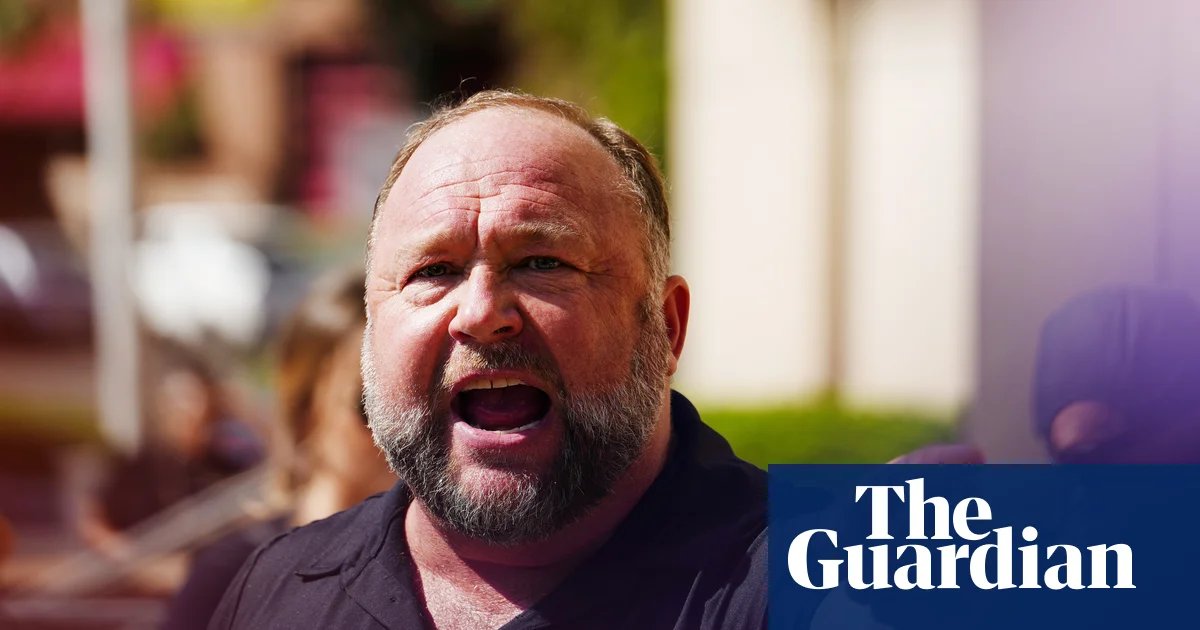
A former video editor and field producer for Alex Jones’s Infowars has said his work for the notorious conspiracy theorist was “nonsense” and “lies”, but he kept at it for four years in his 20s because the far-right media company’s founder was a magnetic presence and it earned him good money.
Josh Owens made those revealing remarks in an NPR interview published on Tuesday promoting his new memoir about once having been an employee of Jones and Infowars – a conversation that also detailed the hand he said he had in fabricating a video of an operative of the Islamic State (IS) terror group sneaking into the US from Mexico immediately after a beheading.
“In Jones’s world, it was all about making things look cinematic,” Owens, who left Infowars in 2017, said to NPR. Likening the aesthetic to that seen in pieces by Vice News, he continued: “We would go out there, we would shoot videos … like we were in the weeds, we were showing what was really going on.
“But it was nonsense. It was lies.”
To illustrate the point to the outlet, Owens recounted how Infowars deployed him to El Paso, Texas, after a conservative website alleged that IS had erected a training base right on the other side of the US-Mexico border, specifically in Ciudad Juárez, Chihuahua.
But the Infowars team didn’t unearth any evidence to support the allegation – so it instead dressed a reporter up to resemble an IS operative, equipped him with a severed head prop and filmed him crossing a stream that the outlet falsely claimed was the Rio Grande on the border.
By the first morning after its publication, the video of that scene had scored 1m views, as Owens put it to NPR.
“We just happened to find a little stream that looked like it could be the Rio Grande,” Owens said. “We said we were on the border. The reporter I was with simulated the beheading, walked across and that’s what we posted.”
Infowars did not immediately respond to a request for comment about Owens’s NPR interview. NPR said it also did not get an answer to a request for comment from Infowars.
Owens described how his job troubled him – yet he forged on because of the good pay and the fact that he perceived Jones to be an engaging force. He ultimately changed his mind when he flew home from a different work trip next to a Muslim woman with a young girl.
“I remember sitting there watching her, and it sounds so cheesy, but it was just this moment of [thinking]: ‘These people didn’t do anything,’” Owens said. Seemingly alluding to the Islamophobia stoked by the fake video he said he helped create on the trip to El Paso, he added: “There’s no reason for suspicion – it’s just racism.
“It’s not like after that I changed everything and all of a sudden became a good person or started to do the right thing. But it did start to make me look at things a little bit differently.”
Owens told NPR that leaving Infowars wasn’t easy because his sense was that it was “kind of black mark” on his résumé that he worked for Jones. He said Jones himself would boast to his employees: “You cannot exist in the world outside … here because you are connected to me.”
According to Owens, he wrote The Madness of Believing: A Memoir from Inside Alex Jones’s Conspiracy Machine to explore various questions about his decision to work for Infowars.
“Why was I there? Why did I do these things? Why did I stick around for so long?” Owens said to NPR. “I don’t have all the answers now, but I think exploring it and asking those questions and taking accountability was just sort of part of the process.”
Owens appeared in the 2024 HBO documentary The Truth vs Alex Jones. In the film, he discusses how Jones was furious when an Infowars crew including Owens failed to find evidence of high radiation levels in California some time after the Fukushima nuclear accident across the Pacific Ocean in Japan.
Jones at the time was using his Infowars show to sell a supplement marketed as protection against radiation. “Did we think he wanted us to lie?” Owens said of Jones in the documentary. “Yes – it was obvious.”
Owens was also deposed when the parents of the children killed in the 2012 Sandy Hook school shooting successfully sued Jones for lying about how the mass murder in Newtown, Connecticut, was a hoax staged by crisis actors to promote stricter gun control in the US.
The US supreme court in October refused an appeal from Jones to overturn the $1.4bn defamation penalty that was awarded to the victims’ families.
Owens told NPR that the Sandy Hook massacre took place between when he was offered the Infowars job and when he accepted the role. He said his memoir doesn’t spend much time on Sandy Hook because he was distracted at the time with undertaking the business of actually joining Infowars.
“I think, if I’m being honest … I wasn’t paying attention to those things,” Owens said. “I never worked on reports about Sandy Hook.”