dailynewsnblog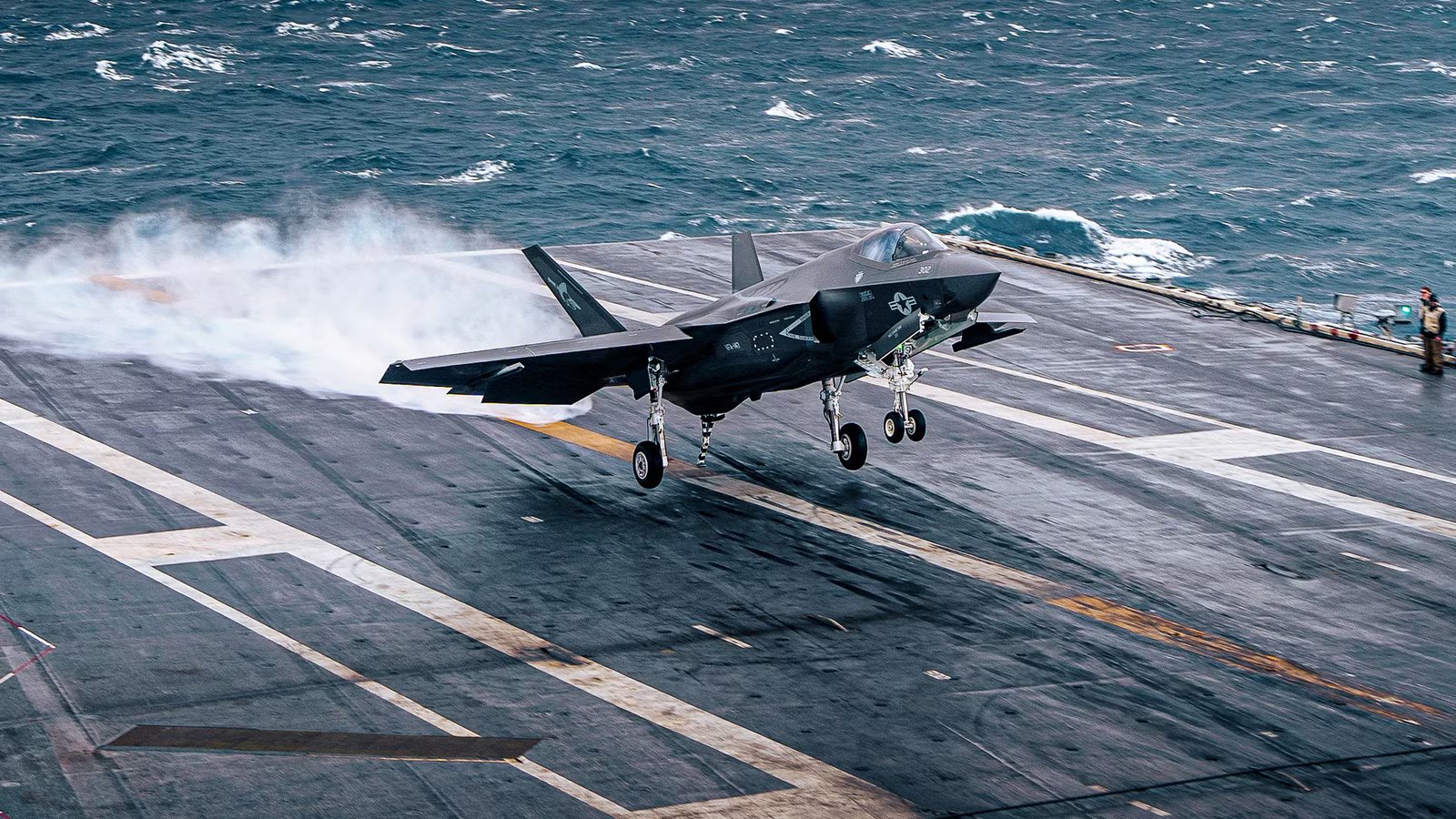
The 21st Century has been marked by exponential advances in the development of fighter jets by advanced air forces around the world. Most notably, the United States, but China has also significantly improved its fleet of fifth generation fighter jets. Russia may have a diminutive number of its own stealth aircraft. However, the capabilities of those jets are undeniably extremely effective, and they are even the only battle-tested examples until the recent conflict in Iran.
In the last decade, fighter jet evolution has shifted away from simply flying faster or higher, focusing instead on invisible digital dominance. This shift represents a fundamental break from the historical development cycles of previous generations. Most notably, the Lockheed Martin F-35 Lightning II, or Joint Strike Fighter, has completely flipped the script on how Air Warfare is viewed from a doctrinal standpoint.
That paradigm shift in strategy and tactics has also changed the engineering of modern fighter jets, and while the upcoming 6th-Gen Fighters will be higher-performing, they will focus more on expanding on the principles established in the F-35.
The Rise of the Flying Supercomputer

In this decade, the F-35 Lightning II has become the gold standard for sensor fusion. This technological principle is the cornerstone of its combat power. Instead of the pilot looking at separate screens for radar, heat signatures, and maps, the jet’s computer now stitches all that data into a single, 360-degree picture. This allows pilots to see and engage enemies before they are even aware that a threat exists.
The ‘speed’ of advancement is now measured by how much data a jet can process rather than how fast it can fly. We have reached a point where ‘raw speed’ is often traded for stealth and survivability. An F-35 is slower than a 1960s MiG-25, but its ‘invisible’ digital advancement makes it exponentially more lethal in modern combat.
Looking toward the 2030s, the Next Generation Air Dominance, or Boeing F-47, is already being developed. This 6th Gen Fighter will feature even more advanced stealth shapes, AI integration, and adaptive cycle engines that drastically increase fuel efficiency. For the upcoming 6th-Gen jets, engineers use digital engineering to design, test, and ‘fly’ aircraft in virtual space before a single bolt is turned.
The US is aiming to go from a concept to a working prototype in just one year with the NGAD, a development cycle unthinkable in previous eras. The US is not alone, however, as the FCAS is expected to begin development in Europe, and the 6th-Gen GCAP partnership between the United Kingdom, Italy, and Japan is aiming to have a prototype in the air around the same time.
The 4.5 Generation Bridge

Despite the rapid advancement of technology-packed stealth fighters, Cold War-era jets remain the highest performance in the world. Although this is no longer the pinnacle of combat power in the 21st Century, the undeniable value combined with a lower cost to fly makes legacy airframes far from worthless. The Boeing F/A-18 Super Hornet and F-15 Eagle are two of the best examples of 4.5-Gen fighter jets modernizing to meet a constantly evolving threat.
Because electronics evolve so much faster than airframes, the last decade has seen a ‘divorce’ between the jet’s body and its brain. In the past, a jet design might have stayed the same for 20 years. Now, hardware becomes obsolete within five years of a project starting because software develops so much faster.
The F-15EX Eagle is compounding its high speed and payload advantages to make it a better missile truck for the future. Meanwhile, the Super Hornet has even gained some stealth features, making it a more effective strike fighter for projecting power ashore from the aircraft carrier. In order for these to communicate effectively with their newer fifth-gen cousins, each is equipped with the best data link, radar, and other weapons equipment possible to maximize their qualities.

Why The Pentagon Is Worried About International Stealth Fighter Development
The new 5th-generation arms race.
The Evolution Of Air Power

In the Golden Era of the dawning jet age, a breakthrough in fighter jet technology was defined by higher altitude and faster top speed. In 2026, that has changed to superior stealth and more powerful computing devices packed into a single airframe. A handful of 4th Gen fighter jets are able to adapt and remain valuable on the 21st Century battlefield, but many are now dinosaurs relegated to the Boneyard.
Below is a table to break down fighter jet generations with the leading examples from each class:
|
1st Generation |
2nd Generation |
3rd Generation |
4th Generation |
4.5 Generation |
5th Generation |
6th Generation |
|---|---|---|---|---|---|---|
|
Messerschmitt Me 262 |
North American F-100 Super Sabre |
McDonnell Douglas F-4 Phantom II |
Grumman F-14 Tomcat |
Boeing F/A-18E/F Super Hornet |
Lockheed Martin F-22 Raptor |
BAE Tempest (GCAP) |
|
Gloster Meteor |
Lockheed F-104 Starfighter |
Northrop F-5 |
McDonnell Douglas F-15 Eagle |
Dassault Rafale |
Lockheed Martin F-35 |
Boeing F-47 (NGAD) |
|
Lockheed P-80 Shooting Star |
Mikoyan MiG-21 |
Dassault Mirage F1 |
Mikoyan MiG-29 |
Sukhoi Su-30 |
Sukhoi Su-57 |
Dassault/Airbus FCAS |
|
North American F-86 Sabre |
Dassault Mirage III |
Mikoyan MiG-23 |
Sukhoi Su-27 |
Sukhoi Su-35 |
Chengdu J-20 |
Chengdu J-XX (speculative) |
A 3rd-Generation F-4 Phantom had almost no software. A 4th-Generation F-16 originally had about 135,000 lines of code. The 5th-Generation F-35 Lightning II operates on over 24 million lines of code. While the ‘flyaway cost’ of jets has soared by about 12.6% annually, the ‘quality-adjusted’ cost, what you get for your money in terms of lethality, reflects a technological progress ratio of roughly 10% per year, far outpacing general inflation.

America’s 5 Fastest Fighter Jets Of All Time
The speed kings of TACAIR.
What Defines A Fighter Jet Generation

The technological gulf between a 3rd-Gen and 6th-Gen fighter jet is an impassable chasm of technology. While these aircraft had supersonic speeds and early Beyond Visual Range missiles, they lacked even a semblance of data link or a trace of stealth. Combine that with the massive empowerment that fly-by-wire technology and Sensor Fusion have given 4.5 and 5th-Gen, and it leaves the 3rd-Gen Fighter Jets, like the McDonnell Douglas F-4 Phantom, completely without hope of a present-day engagement.
Below is a breakdown of the key characteristics that define each generation of fighter jets since the 20th Century:
|
Generation |
Key Characteristics |
Representative Leader |
|---|---|---|
|
1st Gen (1945–1955) |
Basic turbojet engines, no radar, strictly visual dogfighting with machine guns. |
F-86 Sabre / MiG-15 |
|
2nd Gen (1955–1960) |
Introduction of air-to-air missiles, radar, and supersonic speeds in level flight. |
MiG-21 |
|
3rd Gen (1960–1970) |
Improved maneuverability, multirole capabilities (air-to-air and air-to-ground), and advanced missiles. |
F-4 Phantom II |
|
4th Gen (1970–1990) |
Fly-by-wire controls, high agility, pulse-doppler radars, and head-up displays (HUD). |
F-15 Eagle / Su-27 |
|
4.5 Gen (1990–Present) |
4th Gen frames upgraded with AESA radar, high-capacity data links, and reduced radar signatures. |
Eurofighter Typhoon / F/A-18 Super Hornet |
|
5th Gen (2005–Present) |
All-aspect stealth, internal weapons bays, extreme sensor fusion, and supercruise. |
F-22 Raptor |
|
6th Gen (Future) |
AI assistance, loyal wingman drones, directed energy weapons, and advanced digital cloaking. |
NGAD / GCAP |
6th-Gen warplanes will enter the true realm of Science Fiction, where the USAF Star Wars program futilely sought to go. These jets will have artificial intelligence integrated with the ability to remotely control loyal wingman drone swarms and potentially even directed energy weapons, AKA lasers. Almost all of them are expected to be optionally manned, meaning they can be remotely controlled for certain mission scenarios.

Here’s Why Air Forces Are Expanding Their Stealth Fighter Programs
The global race for the ultimate stealth jet.
Why The Cold War Relics Are Still Relevant

The intense pressure of the arms race between the United States and the Soviet Union was responsible for creating some of the most incredible aircraft in the history of aviation. The F-15 is the longest serving example of this competition between great powers. The Eagle boasts a combat record that is unequaled by any other airframe in the history of Air Forces around the world. Today, F-15s in the service of multiple Air Forces have over 100 combined combat kills with zero losses in action.
In fact, the F-15 is still higher performance than the F-22 and the F-35, but the latest versions are nearing Mach 3 and clean configuration. While 5th Generation Fighters cannot match this performance, the 6th Gen is expected to remedy the disparity between speed, power, stealth, and technology.
Variable cycle engines will be a breakthrough technology that is set to define the entire class. The ability to completely reconfigure the profile of the power plants from fuel-saving cruise to maximum power will allow these planes to not only dominate in a dogfight but circle the battlefield as the master of the air.
Still, due to the extremely high procurement costs of these exquisite warplanes and their anticipated prohibitively costly operating prices, the relics of the previous era will still not be retired anytime soon. Serving as missile trucks and steadfast guardians of airspace, Legacy Airframes like the F-15 and the Eurofighter Typhoon will continue to stand watch in eras to come.