dailynewsnblog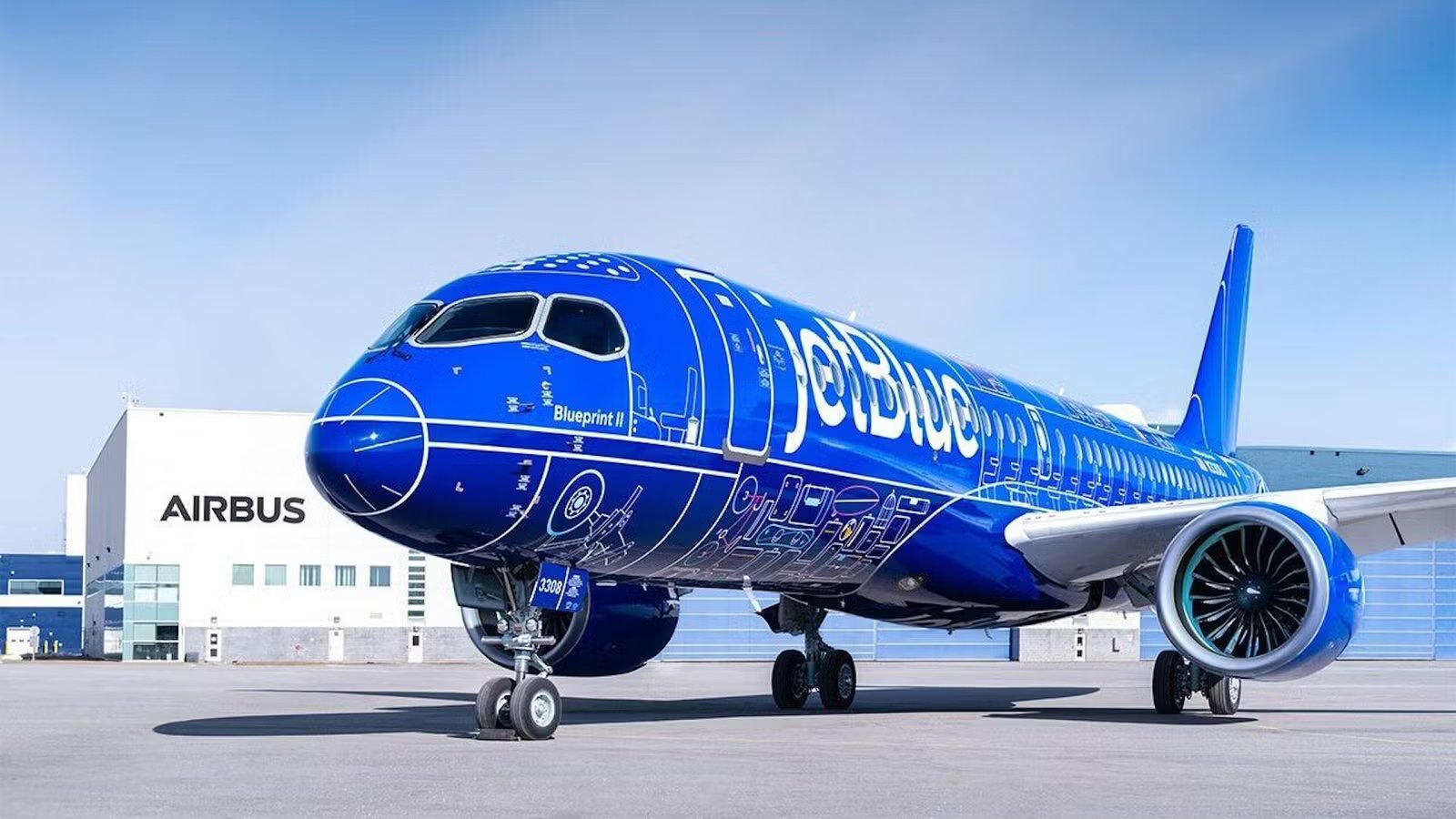
JetBlue Airways is also reviving its beloved Blueprint livery under the new media-friendly moniker of “Blueprint II.” The new scheme will now be deployed on an Airbus A220-300 rather than the Embraer 190 model, which originally carried the design. That matters because the return is more than just a paint refresh, as it links one of JetBlue’s most imaginative liveries with the airline’s newer and more efficient fleet.
JetBlue has teased the aircraft as having the same Blueprint spirit but with many more visual elements, with some aircraft-tracking and photo databases showing the new A220-300 already painted and identified publicly under the new moniker. As for JetBlue, this is a nostalgic brand move that has been wrapped inside a large-scale fleet modernization story.
A Brief History Of This Unique Livery

The original Blueprint livery was first unveiled by JetBlue on February 20, 2017, as the airline celebrated its 17th anniversary. It was significant immediately because it became JetBlue’s 12th special livery and, more importantly, the first ever applied to an E190. Rather than simply adding a logo or partnership branding, JetBlue’s design team treated the aircraft like a playful technical diagram. This is the kind of scheme that was originally conceived as a kind of mechanical X-ray or cutaway drawing.
This “exposed the airplane’s bones” and blended engineering with the airline’s usual and unique sense of fun. The designers even hid nearly 50 travel-related items in the overhead bins, under-seat areas, and cargo holds for spotters to find. Despite using only three core JetBlue colors, the livery was one of the carrier’s most intricate and took nearly two weeks to paint in Quebec before debuting at Boston Logan International Airport (BOS) and flying across the airline’s extensive operational network.
“The see-through paint job draws on both the technical and fanciful aspects of air travel. Mechanical features like the nose gear, jet engine and yoke were among the more obvious design elements to include. But for the onboard features, JetBlue designers drew upon their own travel experiences, crewmember tales, and the airline’s loyal customers for inspiration, even creating fictional characters to compile a list of the items they might be traveling with. Plane spotters are encouraged to give the overhead bins, under-seat storage areas, and the luggage holds a closer look to see if they can spot the nearly 50 items these “Blueprint” customers are traveling with.”
What Are The Impacts Of A New Livery On Passengers?

A new livery does not actually change the seats or onboard product, but it can, in some ways, change how passengers experience the flight. Special schemes make an aircraft feel distinctive when it arrives at the gate, adding novelty, brand warmth, and a sense that the trip is part of something bigger than just transportation.
For an airline like JetBlue, that matters primarily because many of its special liveries are tied to place, community, or identity. A Puerto Rico-themed aircraft, a Dominican Republic-inspired design, or a Boston-oriented aircraft can make customers visiting those markets feel special in unique ways.
They also create social-media value, as passengers will photograph them, share them, and remember their flight much more vividly. On inaugural and reveal flights, airlines often add gateways, events, or fanfare alongside a livery in order to strengthen the overall experience much more.

JetBlue Debuts New Mario & Friends Livery
The aircraft in question has also been given a new name.
Other Noteworthy JetBlue Liveries

JetBlue has built one of the most recognizable special-livery portfolios in the aviation industry. Among the most notable of these is Veterans in Blue, which was unveiled in 2014 as a tribute to military service members, complete with patriotic imagery and a yellow ribbon motif.
Bluericua, which was introduced in 2018, was another important livery dedicated to the airline’s services to Puerto Rico, alongside the 2025 Isla del Bluencanto design. More recently, JetBlue has further leaned into its regional identity, with multiple different liveries highlighting its connection to Boston.
The airline has also leaned into several brand partnerships in its special liveries, including with Dunkin’ Donuts and the Boston Bruins. Together, these liveries show how JetBlue has used aircraft not just as transportation assets, but also as flying billboards for community, culture, and personality.

![Air Canada’s New Very High-Capacity 440-Seat Boeing 777s [Full Route List & Map]](https://dailynewsnblog.com/wp-content/uploads/2026/03/air-canada-boeing-777-300er-about-to-touchdown-1.jpg)