dailynewsnblog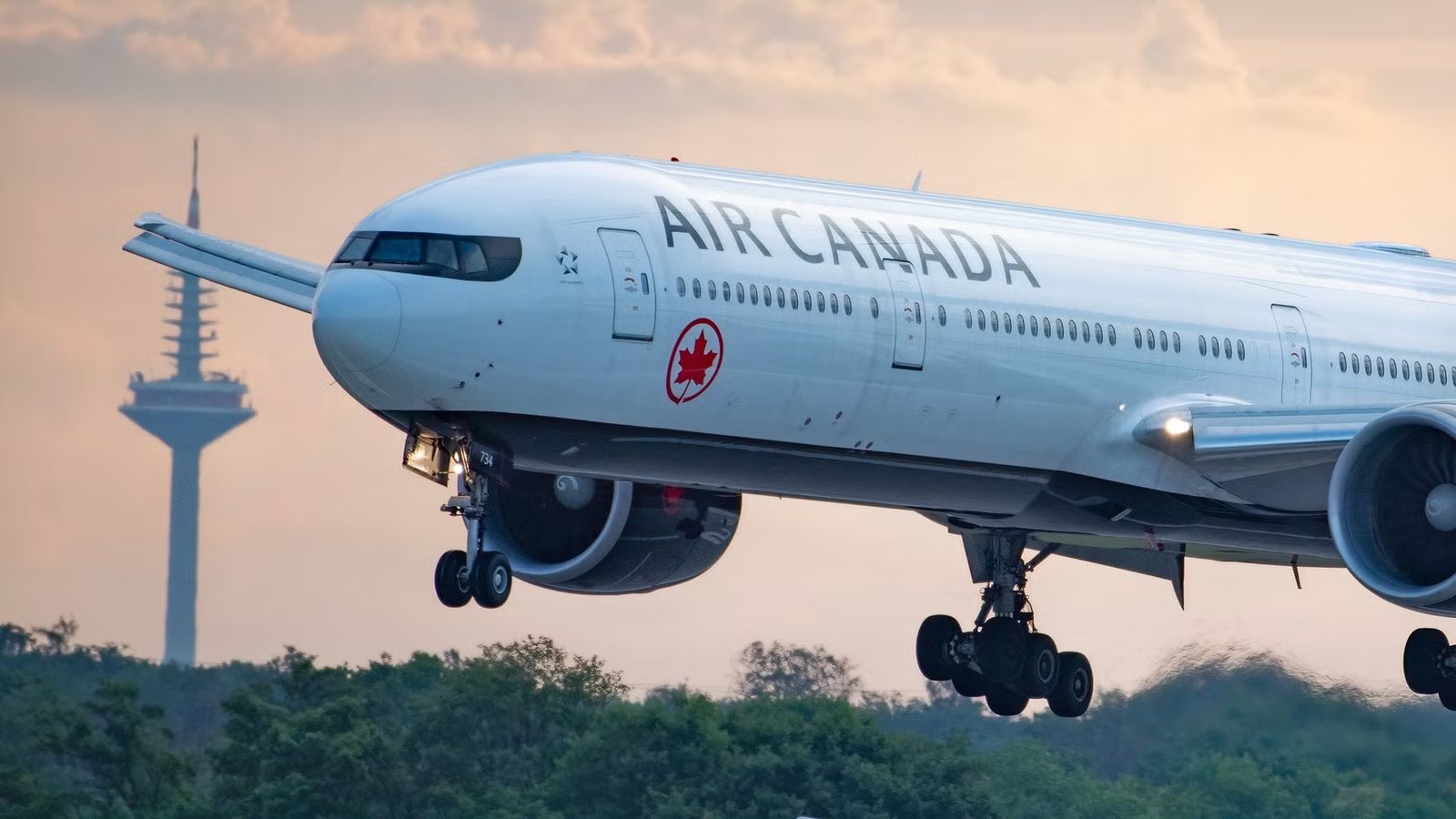
Air Canada has 85 widebody aircraft, consisting of Airbus A330s, Boeing 777s, and 787s. Its 767s are freighters. According to ch-aviation, the Canadian flag carrier has 25 Triple 7s: 19 777-300ERs and six 777-200LRs. Seven 777-300ERs had a whopping 450 seats, with the final flight with that capacity seemingly taking place on March 30, 2026.
Due to removing row 29, the total number of seats has been reduced to a still-substantial 440. The lower capacity means slightly lower fuel burn, and should only reduce revenue with exceptionally high loads. Having 440 seats is highly notable in itself, and especially in a North American context, but multiple airlines fly Triple 7s with more seats. Interestingly, Emirates’ maximum capacity on its 777-300ERs is ‘only’ 421 seats.
Where Air Canada’s 440-Seat 777s Will Fly In Q3 2026

Due to higher demand and fares, most airlines rely on the third quarter of each year (July-September) for greater revenue generation and profitability. As such, this article’s focus is on Q3 2026. All information is based on what is known as of March 31, and may change.
In the peak summer,  Air Canada’s latest schedule submission to Cirium Diio indicates that the new 440-seat aircraft—which are exactly the same as the 450-seaters, just with ten fewer economy seats—will have the equivalent of seven daily departures (each way). That’s flat from when the higher-capacity equipment operated in Q3 2025.
Eight routes will see it, although only six will do so regularly. Except for the two one-off services in the examined period, Air Canada’s new configuration will be entirely deployed from Montreal, which is the airline’s second-busiest hub. That’s no different than the same three months last year. But it is very different from before the pandemic in Q3 2019, when only 30% of services were from the Quebec hub.
|
Route |
The 440-Seater’s Frequency In Q3 2026 Only (July-September)* |
% Of Flights On That Configuration** |
|---|---|---|
|
Montreal to Paris CDG |
Two daily |
100% |
|
Montreal to Athens |
Daily |
75% |
|
Montreal to Brussels |
Daily |
100% |
|
Montreal to Rome Fiumicino |
Daily |
71% |
|
Montreal to Tokyo Narita |
Daily |
100% |
|
Montreal to Vancouver |
Daily |
15% |
|
Montreal to Toronto |
September 30 only |
Well under 1% |
|
Toronto to Paris CDG |
September 30 only |
1% |
|
* Known as of March 31, and subject to change |
** It will vary at other times |
The Airline’s New Highest-Capacity Aircraft

This is the Star Alliance member’s new highest-capacity equipment. Each of the seven frames has 28 lie-flat seats in business (1-2-1), 24 recliners in premium economy (2-4-2; 37″ pitch), and 388 seats in economy (3-4-3; 31″). As ten economy seats are no longer available, some seats will now benefit from greater pitch, which should help to increase revenue and yields.
The proportion of business class has increased marginally to just over 6%. That is, of course, still a tiny proportion. But it reflects where the configuration will fly.
Most of the routes revolve around leisure and visiting friends and relatives’ markets. As these routes tend to have fewer premium passengers, they have relatively low yields. As such, they require sufficiently large aircraft—like the 440-seat 777—with suitably low seat-mile costs.

Massive 25-Hour Flights: Qantas’ 10 New Ultra-Long Routes In 2026
Huge changes are coming to Qantas’ longest services. See them all here!
A Look At The Montreal-Paris Market

This is, of course, a massive francophone market. In 2025, booking data shows that around 710,000 round-trip passengers flew between Montreal and Paris, both CDG and Orly. It was the second most-trafficked city pair between Canada and Europe, behind Toronto-London. Around one in every 14 passengers who flew between Canada and Europe did so from Montreal to the French capital.
Up to nine daily nonstop flights were available last year. They were provided by Air Canada (including on 450-seat 777-300ERs), Air France (which partly flew 472-seat 777-300ERs), Air Transat, and French bee (on its 411-seat A350-900s, rather than its 480-seat A350-1000s). As such, approximately 97% of passengers did not connect en route.