dailynewsnblog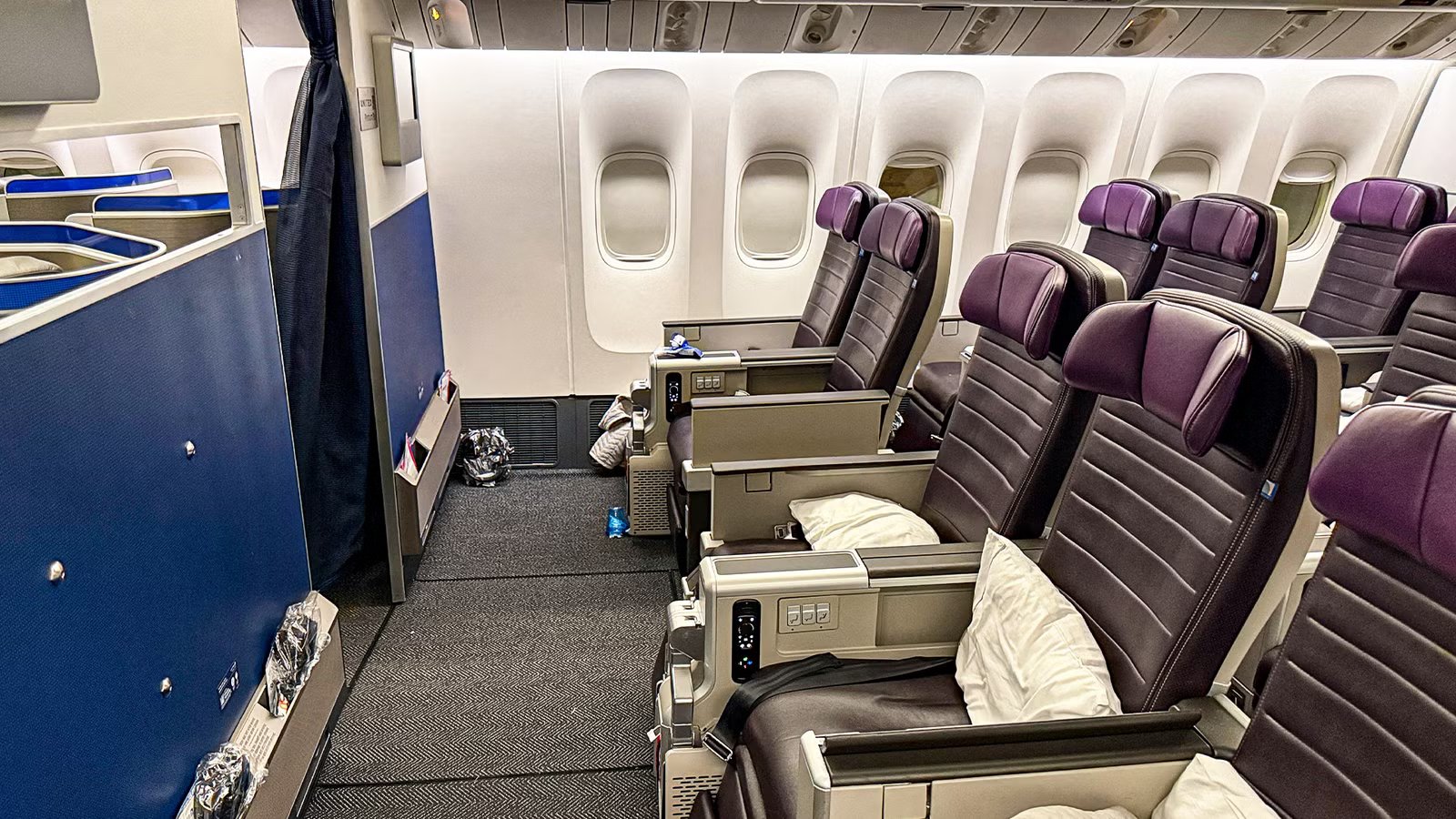
Premium economy acts as a middle ground for those who wish to splurge a little when flying, for additional comfort, but not spend as much as it would cost for a ticket in the premium cabins or business class. However, many airlines do not offer much product differentiation when it comes to short-haul flights, because they are (in most cases) operated by narrowbody aircraft, where cabin space is a limiting factor.
Within the realms of long-haul flights, where widebody aircraft are commonly in use, cabin space is no longer an issue, and the carriers can get innovative with the products they offer. Therefore, this guide will look into how premium economy differs from economy on long-haul flights.
Cabins Are Configured With Lower-Density Seating

While airlines tend to maximize capacity within the economy cabins, when it comes to premium economy, airlines generally trade capacity for increased revenue by providing passengers with more space in the cabin. This is usually done by dedicating the premium economy cabin space with fewer seats. This would also equate to airlines being able to offer a better hard product for customers in the cabin, with higher seat dimensions, justifying the higher level of comfort, with increased ticket fares.
For example,  Emirates‘ economy cabins are configured with a 3-4-3 layout on its Boeing 777 and Airbus A380 aircraft, and a 3-3-3 layout on their Airbus A350, but they have premium economy cabins with 2-4-2 and 2-3-2 layouts, respectively. By removing two seats per row, the airline can now increase the space provided to the remaining seats on the row by increasing dimensions such as seat width, recline, and pitch.
The more space passengers have, the cabin feels a lot roomier and delivers an elevated travel experience, especially on long-haul routes. Furthermore, since premium economy is usually situated within its own cabin, passengers traveling in it also feel the exclusivity of additional services such as priority boarding, guaranteed luggage space in the overhead bins, and even dedicated lavatories onboard.
Premium Economy Comes With Premium Seat Dimensions

As mentioned above, premium economy cabins are configured with a lower density, which equates to more space for the seats, with better dimensions. However, in terms of numbers, how much of a difference does it actually make when it comes to seat dimensions? Based on seat dimension data from aeroLOPA, the table below details how the long-haul economy and premium economy cabins of various major airlines compare.
|
Airline |
Seat Pitch |
Seat Width |
Recline |
|
|---|---|---|---|---|
|
Emirates |
Economy |
32 in (81.28 cm) |
18 in (45.72 cm) |
6 in (15.24 cm) |
|
Premium Economy |
40 in (101.6 cm) |
19.5 in (49.53 cm) |
8 in (20.32 cm) |
|
|
Singapore Airlines |
Economy |
32 in (81.28 cm) |
18 in (45.72 cm) |
5 in (12.7 cm) |
|
Premium Economy |
38 in (96.52 cm) |
19 in (48.26 cm) |
8 in (20.32 cm) |
|
|
ANA |
Economy |
34 in (86.36 cm) |
17 in (43.18 cm) |
5 in (12.7 cm) |
|
Premium Economy |
38 in (96.52 cm) |
19.3 in (49 cm) |
7 in (17.78 cm) |
|
|
Japan Airlines |
Economy |
34 in (86.36 cm) |
18.5 in (47 cm) |
5 in (12.7 cm) |
|
Premium Economy |
42 in (106.68 cm) |
18.9 in (48 cm) |
7 in (17.78 cm) |
|
The above dimensions are based on the most commonly found product across these airlines’ widebody fleet used for international long-haul travel. Dimensions can vary slightly depending on aircraft type and configurations used. In any case, based on the figures above, it becomes clear how the extra space is used to elevate the in-flight experience for passengers. Airlines also use this space to provide additional amenities such as footrests, larger seat-back screens, more storage space, and larger tray tables.

Why These Transpacific Airlines Have The World’s Best Premium Economy Seats
These are the top airlines in Skytrax’s premium economy seats classification that offer them on transpacific flights.
Improved Services & Amenities

The higher ticket fare paid does cover far beyond just a better hard product onboard the aircraft. It also comes with several services and amenities, both onboard the aircraft and at the airport. For example, on the ground, several airlines offer passengers traveling in premium economy separate lanes at check-in and even offer boarding priority over other economy passengers.
Furthermore, premium economy passengers also get additional carry-on or check-in luggage allowance (allowance can vary depending on airline and route flown). Additionally, there are a rare few airlines around the world that even offer lounge access to premium economy passengers, including carriers such as ANA, Japan Airlines, and SAS.
Upon boarding, as mentioned above, passengers get to experience an elevated hard product with more space. Beyond that, many carriers, such as Emirates, United Airlines,  Singapore Airlines, and Cathay Pacific, also provide amenity kits for premium economy passengers.
However, it is worth noting that some of these carriers also provide amenity kits to their economy passengers, albeit they are a different kit. Furthermore, premium economy passengers are treated to an elevated menu, with more meal offerings, larger portions, and even receive additional snacks or pre-departure drinks.
You Get More Miles With Premium Economy

For frequent flyers and those who give importance to collecting airline miles, premium economy might be a solution for collecting more miles and points when flying. This is natural, considering these tickets cost more. However, it becomes a bit difficult to determine and get an exact value as to how many more miles passengers can accrue flying premium economy.
This is because this varies significantly between airlines and the fare brackets offered by each airline. Three routes of approximately equal distance and flight times have been chosen from three different airlines to make a fair comparison, as shown below. Since  United Airlines offers multiple fares under Economy and Economy Plus, a combined average has been obtained for comparison purposes.
|
Airlines |
Miles Accrued In Economy |
Number Of Fare Brackets |
Miles Accrued In Premium Economy |
Number Of Fare Brackets |
Difference In Avg. Miles Accrued |
|---|---|---|---|---|---|
|
Emirates |
1,700 – 2,200 |
2 |
2,600 |
1 |
+33% |
|
Singapore Airlines |
2,934 – 3,912 |
2 |
4,890 |
1 |
+42% |
|
United Airlines |
1,680 – 3,930 |
5 |
6,150 – 7,275 |
2 |
+240% |
It is worth pointing out that the actual difference in miles accrued will be different and can vary on routes, time of travel, and fares paid. However, as this comparison demonstrates, some airlines offer more flexibility in the fare brackets provided to customers with more options, and reward the passengers with miles accordingly.

What Are The Best Airline Miles To Use For Booking Premium Economy In The US?
Discover which airline miles hold the key to unlocking premium economy’s perks without breaking the bank.
It Also Costs More Than Economy

Much like any flight, ticket prices vary depending on the route, the airline used, the time of the year, the fare brackets available, and more. With that being said, this is also where airlines that offer premium economy on a particular route or market gain a competitive advantage over those that do not. But how much more does a premium economy ticket cost over that of economy? The general consensus indicates that a premium economy fare on a long-haul flight can be about 50 to 80% higher than the economy fare.
However, this could then increase by up to 100% on ultra-long-haul flights. With that being said, other factors such as route popularity, season, and market competition can drive the price differences between the two cabins significantly higher. For instance, carriers such as  British Airways can be seen selling their premium economy seats at around 500% of their lowest economy fares on high-demand routes such as
  London Heathrow Airport (LHR) to
  New York JFK Airport.
However, there are instances where passengers might be able to book an economy ticket and upgrade it to premium economy for lower costs. Similarly, when it comes to booking these tickets with miles, passengers (on average) would have to redeem about two to three times the amount of miles for premium economy, compared with economy tickets.
It can be higher, as stated above, depending on the route, demand, and competition. However, these are always limited and dependent on the award spaces made available by the airline on a particular flight. Therefore, the higher the demand on a route, the lower the chances of finding award spaces.
The Bottom Line: Is Premium Economy Worth It?

As mentioned at the beginning of this article, on short-haul flights (especially when product differentiation is low), premium economy might not always be worth the extra buck passengers end up paying. With that being said, on longer flights, passengers flying premium economy can enjoy a wide variety of perks that can truly elevate the travel experience. This would increase the value of the money being spent on traveling in premium economy.
Airlines offering premium economy products on board can capture the market segment that is willing to spend more than the economy fare, but might not be willing to pay the expenses of a business class ticket. This can give airlines a significant advantage in competitive markets where other airlines do not offer such products, as seen in the popularity of Emirates’ premium economy in the Middle Eastern market, because no other airline in the region currently offers such a product.
With that being said, it is worth noting that, because the price difference between economy and premium economy can vary so significantly depending on the route, the added cost might not always be worth the difference passengers end up paying. Furthermore, on high-demand routes, the option to redeem miles and points for premium economy might not even be available. Ultimately, the decision of splurging for a premium economy ticket would be up to the passengers’ preference and the airline options available for the itinerary they are looking at.