dailynewsnblog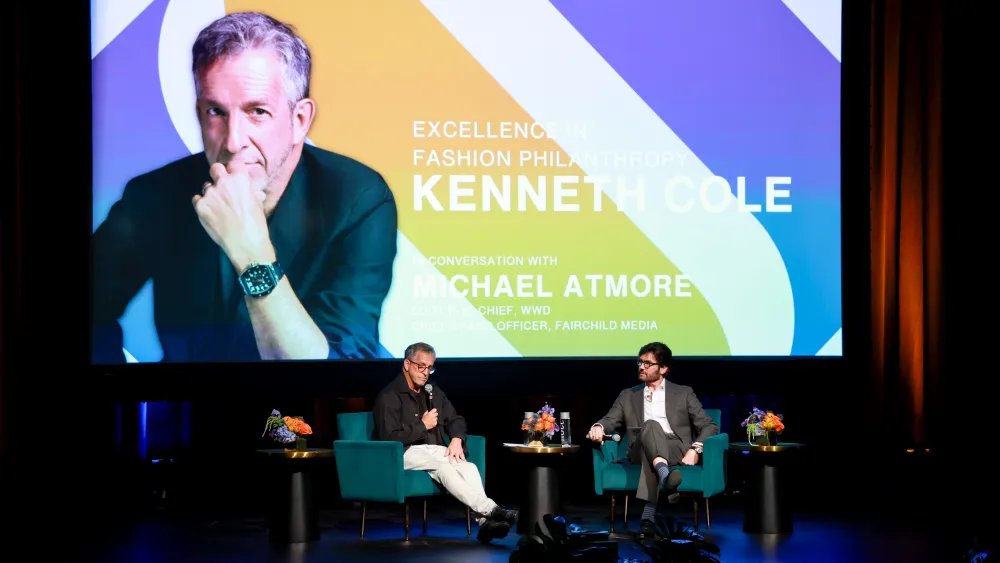
NEW YORK — Kenneth Cole and Selena Gomez were the big winners Monday at the Social Impact Summit, held at the Fashion Institute of Technology. The awards were bestowed by the Social Impact Fund and the FIT Foundation.
Cole received the 2026 Award for Excellence in Fashion Philanthropy, while Gomez, in absentia, was given the 2026 Excellence in Beauty Philanthropy Award.
The summit — a first in New York City — featured speakers from companies such as LVMH Moët Hennessy Louis Vuitton, PVH Corp., Estée Lauder, Hope for Flowers, MAC Cosmetics, Macy’s and Kate Spade New York talking about their work in the social impact space before an audience mostly of FIT students and brand executives.
For over 40 years Cole has used his platform, his brand and his voice to address urgent public health crises, from HIV/AIDS to mental health. In 2020 he founded the Mental Health Coalition with a conviction that four out of four people will be touched by mental illness in our lifetimes.
In accepting his award, Cole said, “It’s an honor but I don’t think social impact is what we do, it’s part of who we are. It’s embedded in the business model. So it’s odd being celebrated for it because I think it’s the most sustainable business model that exists today.”
The Social Impact Fund presented the Mental Health Coalition with a $10,000 grant.
Cole then sat down with Michael Atmore, editor in chief of WWD and chief brand officer, Fairchild Media Group, to discuss how the designer integrates social causes into his business, which has included provocative ad campaigns, along with the importance of using humor and wit to convey social messages.
Cole was asked to talk about the ’80s and how he got started along this path.
“The fashion business is a very hard business, as everybody here knows. The goal is, how do you stay relevant. As hard as it is today, it’s invariably even harder tomorrow. I came to realize that if I can talk to people about not just what’s on their body, but what’s on their mind, and not just what they stood in, but what they stood for, then I can relate to them in such a more meaningful way, and it’s so much more sustainable,” said Cole.
Cole recalled that at the time, AIDS was on everybody’s minds, but nobody’s lips because the stigma was so pervasive. “And you couldn’t talk about it because if you spoke about it, you were presumed to be at risk, which meant you were amongst those communities which were not embraced. And so I figured I would talk about what nobody wanted to talk about. And Annie Leibovitz got on board, and we brought in a bunch of models who agreed to commit their celebrity and their presence, and we basically started down the road, which I have been on for 40-plus years. It changed the man, changed the brand, it changed everything we do,” said Cole.
Was there some pushback and risk in doing that?
“I’ve come to realize over the years that an issue means there are people on two sides. So if you speak about something that creates a little backlash, that isn’t a bad thing necessarily. And for every one person who would have a problem with some of our messages, I believed in my heart, although I couldn’t really quantify, that there were 10 who supported, embraced it, and didn’t take the time to write silly letters and faxes, in those days, and phone calls.”
Cole was asked if it would have been possible to accomplish what he did in the era of social media.
“I don’t think we could have done it today. Today would have been really hard because there’s such an effective minority, and behind them there are all these bots, and there’s the ability to create so much noise and distraction and the opposition point of view has the ability to be so loud. It would be much harder today to do what I did,” admitted Cole.
Cole said he tries to keep the messages witty and humorous. “I don’t take what I do that seriously. At the end of the day, I don’t believe anything we sell is going to change anybody’s life. And I take what we do seriously, but not how we do what we do. I take the world seriously, not necessarily what we bring to market. And I think if you can relate to people in a way that’s not so serious, it’s much easier to connect in a meaningful way,” said Cole.
He was asked what was his proudest moment?
Cole said that he was able to create a business that affects people in meaningful ways. “I used to believe, and I still do, that business depends upon the community — the proverbial hands that feed each other, and academia is a very important component of that,” he said.
Six years ago, Cole shifted his work from HIV/AIDS to mental health. He said with mental health disorders, four out of four people are affected because if it isn’t you, it’s somebody you love, or someone in your community or workplace. “Everybody ultimately is struggling with it in some way, and two out of three of them do so in the proverbial shadow. So we said if we can come up with a way to address this stigma…”
Cole reached out to 50 of the largest mental health service providers and they built this coalition. “It’s a very effective coalition. And with the goal changing the narrative, changing the dialog, changing the culture, giving people the tools to be vulnerable and to teach them. How to be empathetic and to show them how to be the best versions of themselves and show up for each other in the best way.”
Cole said they also brought together “all of the tech, which is a treacherous place to be right now, but we have Meta, TikTok, Snap and Google working with us, and we just introduced the first SOS safe online standards, and they agreed to be held accountable, so we’ll see how that plays out.”
Gomez, who founded her beauty company Rare Beauty in 2020, started with a mission-first approach, launching the Rare Impact Fund at the inception. In just five years the fund has raised over $30 million to support youth mental health, has 30 nonprofit partners, and has been able to reach over 3.5 million young people annually. The business, which launched with Sephora, just started selling Ultra stores in February. Through a checkout campaign, Ulta Charitable Foundation and the Rare impact Fund raised over $2 million in support of youth mental health in one month.
While Gomez unfortunately couldn’t attend to receive her award and participate in the panel discussion, Jenny B. Fine, editor in chief of Beauty Inc and executive beauty editor of WWD, was joined by Elyse Cohen, chief impact officer of Rare Beauty, and president of the Rare Impact Fund.

Elyce Cohen and Jenny B. Fine
The Hollywood Reporter via Getty
When Rare Beauty was launched, Gomez made the unprecedented decision at the time to donate 1 percent of all sales to the Rare Impact Fund. “What’s striking about this is that she made that decision before even launching one single solitary product, and not knowing that the line was going to be the huge hit that it is today,” said Fine.
Cohen was asked why philanthropy is so important to Gomez.
“For Selena, she’s always been mission first, and truly that’s how the business has been built. We really wanted to create this white space, and there was this opportunity to leverage the beauty industry with a mission that speaks so personally to her, and really an industry that historically has been framed to cover up what makes you unique,” said Cohen. “And you know these unrealistic standards of perfection…Instead of retrofitting a mission after a business, it was really about making this bold commitment from Day One, before we ever sold our first soft pink liquid blush.”
She said what makes the work really special is that her team is cross-functional, and that “it is important that impact shows up in every part of the business, from the product names to the way the products are developed to the culture to the community we’ve created, to the 1 percent give-back mental health.”
Further, she ensures that the Rare Impact Fund is utilizing the resources that they’re raising money for to really make a difference in the mental health space. The brand is in ongoing communication with these nonprofit organizations, and they’re finding that young people are coming to Rare Beauty not just for their new products but to learn about mental health and find resources that they may not find in other places.
Rare Beauty was launched during the pandemic and people couldn’t try on new makeup products. They created an online community at the time. “We called it Rare Chats. We brought young people together to talk about everything from what’s your favorite new Rare Beauty products to what are you struggling with?” Once the pandemic receded to the background, they had developed an authentic community and connection in the way that people were coming to them “not just for products, but for real, deep conversation and community.”
They realized they could take this offline, into product launch events and influencer events. In a few weeks, they will host a Rare Beauty Mental Health Summit that’s become a signature for the brand. They bring mental health experts onto the stage and they livestream it so young people can shop the products and have tangible access to mental health resources.
Cohen noted that they’ve raised over $30 million. One is the ongoing revenue stream of the brand’s sales, but they actually fundraise because Gomez made a commitment to mobilize $100 million “and we are well on our way.” But she said they never focus just on the raise, but on how they are utilizing the money.
In response to an audience question about what young creatives should prioritize, Gomez sent in a written answer. In part, she said, “Owning your life doesn’t mean having it all figured out. I definitely didn’t, and honestly, I still don’t…For Gen Z, I think the pressure is so different from what any generation has faced before. You’re building your identity in public, in real time, with a comments section, and that’s a lot. And I think sometimes owning your life can be twisted into this idea that you need to be hustling constantly, building a brand, monetizing everything…. For young creatives, I’d say, protect your joy early. It sounds soft, but it’s actually the most strategic thing you can do. And take your mental health seriously before you think you need to. You don’t have to be everything at once. Build slow if you need to. The right things will stay.”
On behalf of the Social Impact Fund, the Rare Impact Fund was also presented a grant for $10,000.