dailynewsnblog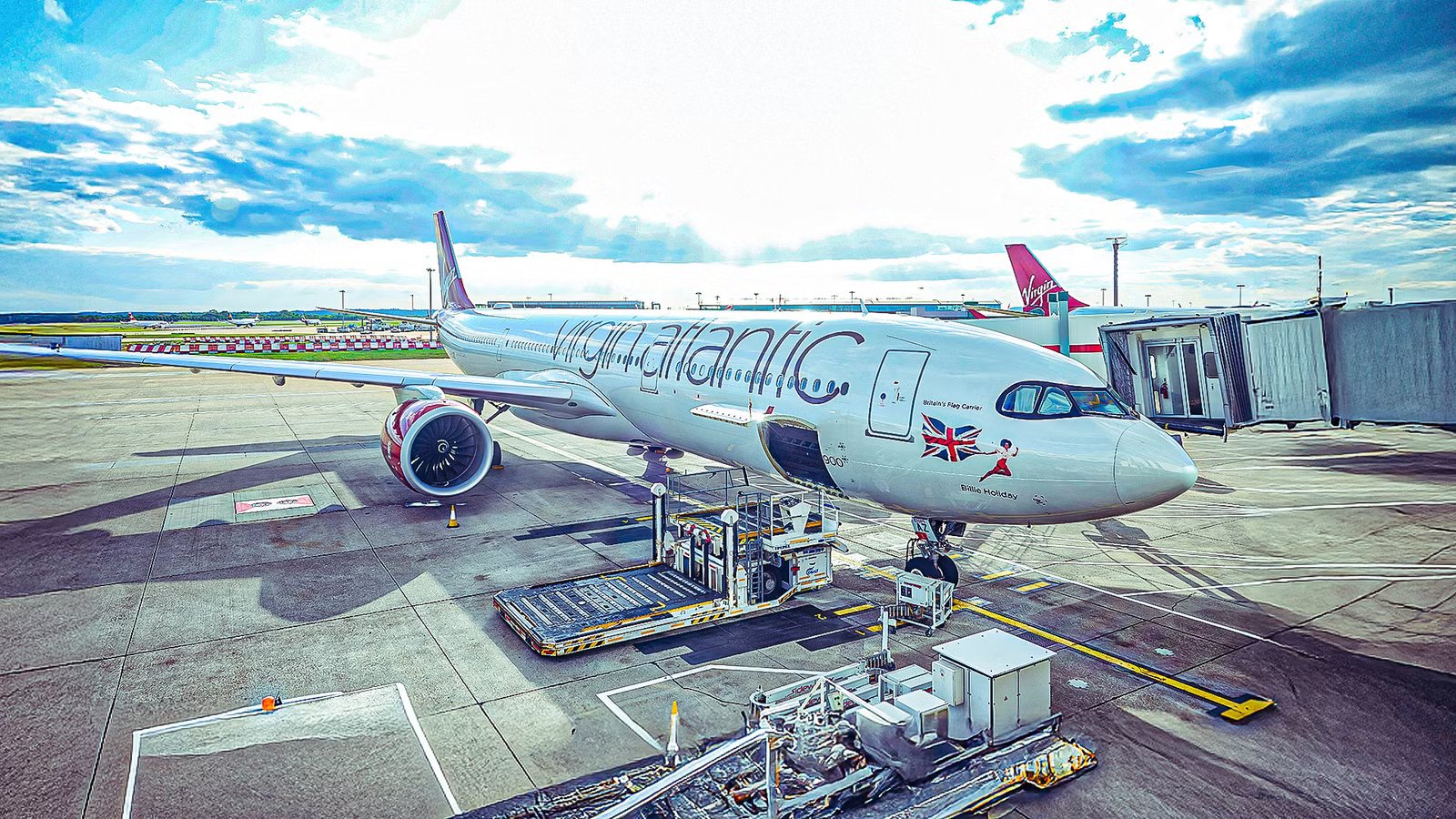
When Virgin Atlantic launched its Heathrow-Riyadh route last year, it was supposed to be a statement route. A daily long-haul link into one of the fastest-growing aviation markets in the Middle East, operated by the airline’s newest Airbus A330-900 aircraft and backed by Saudi growth forecasts, cargo demand, and onward connections over  London Heathrow Airport (LHR).
Instead, less than a year after launch, the route has been pulled from sale, first paused for safety reasons and then folded into a much broader summer 2026 network reshuffle. The route had run into a double problem: war-related disruption across the region, and a market that had become much more crowded just as Virgin had better places to use its widebodies.
The Rise and Fall of Virgin Atlantic’s Riyadh Route

Virgin announced the route to Riyadh Airport (RUH) as part of its summer 2025 expansion, saying that it would support Saudi Vision 2030 growth, rising UK–Saudi trade, and growing demand for travel between the Kingdom and both the UK and North America. The airline highlighted onward connectivity through its SkyTeam partner Saudia, and days later, it doubled down by signing a strategic cooperation agreement with Riyadh Air, framing Riyadh as part of a longer-term Saudi partnership strategy rather than a one-off route launch.
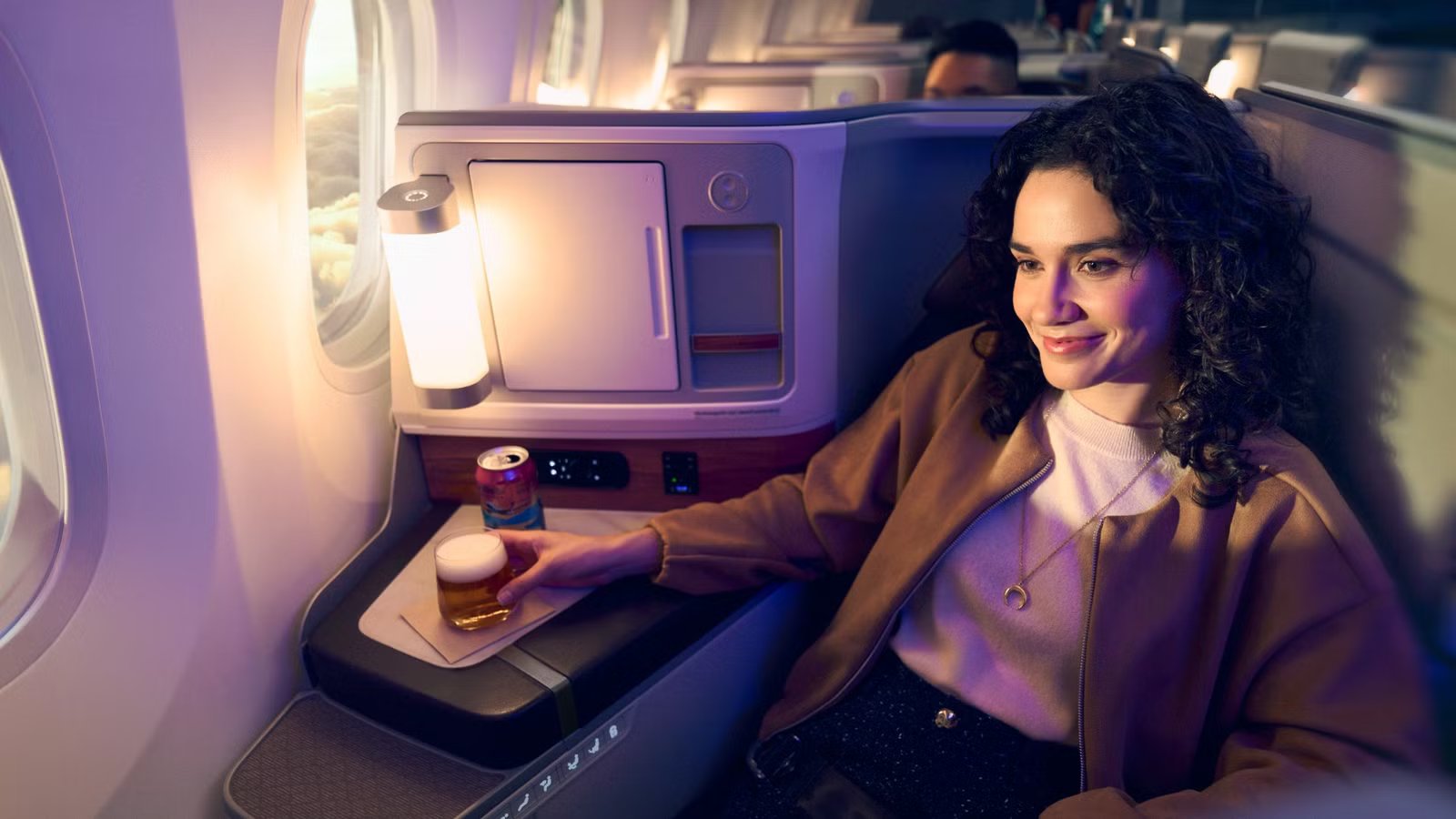
The route itself launched as a daily service on March 30, 2025, operated by Virgin Atlantic’s Airbus A330-900. Virgin currently has eight of the type in service with a further 11 still to be delivered, with all configured in a four-class layout with a total of 262 seats. The aircraft was a premium-heavy choice for the market, with Virgin using its newest long-haul cabin product rather than a lower-spec older widebody.
|
Virgin Atlantic’s A330-900 Configuration |
||||
|---|---|---|---|---|
|
Cabin |
Seats |
Seat Pitch |
Seat Width |
Recline / Bed |
|
Upper Class |
32 |
44 in |
19.2 in |
Fully flat bed, 6 ft 4 in |
|
Premium Economy |
46 |
38 in |
18.5 in |
7″ recliner-style premium seat |
|
Economy Delight |
36 |
34 in |
17.9 in |
5″ |
|
Economy Classic |
148 |
31 in |
17.9 in |
5″ |
The shutdown of the route came in stages. Virgin first canceled selected Riyadh flights in late February during the regional airspace crisis, and then paused the route until March 25. After that came the decisive move: an internal Virgin bulletin said the airline had “taken the difficult decision” to cancel Heathrow–Riyadh from April 7. The carrier cited the “evolving situation in the Middle East” and ongoing assessments “based on the latest intelligence, regulatory guidance, demand, and operating costs.”
That last part is important: even before the outbreak of hostilities in the region, the carrier was struggling with the increasingly competitive route. Dave Geer, chief commercial officer at Virgin Atlantic, indicated when announcing the cancellation that the airline is leaving the flying on the route to its partners:
“We have loved flying to Riyadh and are very sorry for the disappointment this change will cause. We know this route has been important to many of our customers, and we’re truly grateful for their support. We remain committed to the region and will continue to offer connectivity to Saudi Arabia through our partnership with Saudia.”
War Hit Demand, Competition Did The Rest

The immediate trigger was clearly the conflict-driven disruption across the wider region. Virgin said airport and airspace closures in Dubai and Riyadh had forced it to cancel rotations because its internal safety criteria were not met. It was not alone: Reuters reported that  Air France had suspended Riyadh through March 31 and KLM through May 17, while the US Embassy in Saudi Arabia said Lufthansa Group had suspended flights to and from Riyadh through October 24. In other words, Virgin’s Riyadh pause was part of a much wider industry reaction to the regional crisis.
But the commercial reality is that the route has also become far more crowded in recent years. What had long been a market with a daily flight each from  British Airways and Saudia, expanded last year to include Virgin from the spring, and then added
  Riyadh Air when it launched daily Heathrow flights in October 2025 using a Boeing 787-9. In addition, Saudia has increased to three daily departures, meaning that capacity on the route had more than tripled in just over a year, and Virgin was competing against six other daily flights.
|
Airline |
Frequency |
Aircraft |
Competitive takeaway |
|---|---|---|---|
|
British Airways |
2 x daily |
777-200; 787-8 |
The long-standing UK incumbent on the route |
|
Saudia |
3 x daily |
777-300ER |
The schedule heavyweight with the broadest spread of departure times |
|
Riyadh Air |
Daily |
787-9 |
New Saudi premium competition at Heathrow |
|
Virgin Atlantic |
Daily |
A330-900 |
Entered a market that was getting much more crowded |
That is the bigger strategic point. Virgin was not only competing in a weakened market; it was competing for a slice of a route where it was going head-to-head against two strategic partners. When demand weakens and the market gets more crowded, it makes commercial sense to rather sell LHR-RUH flights through its  SkyTeam partner, and redeploy the aircraft somewhere stronger.

Riyadh Air Reveals 15 New Global Routes: See All Flights Now
With 12 of the 15 routes already served by other airlines, Riyadh Air will face an uphill battle to establish itself in the crowded market?
Not A Retreat, A Reallocation

Zoom out, and it becomes clear that Riyadh is part of a broader network reshuffle by Virgin Atlantic. Firstly, the freed-up A330-900 is being re-deployed to more traditional US routes such as  Miami International Airport (MIA) and Tampa International Airport (TPA), where it will undoubtedly obtain higher load factors from sun-seeking leisure travelers.
Beyond that, Virgin is also increasing capacity on a number of core US routes, such as boosting  New York JFK Airport (JFK) to up to seven daily flights and Las Vegas’
  Harry Reid International Airport (LAS) increasing to up to twice-daily. In addition, it is noteworthy that Virgin is increasing capacity to India as well, adding flights to Bangalore and upguaging the aircraft serving Delhi and Mumbai.
|
Virgin Atlantic’s Upcoming Capacity Increases |
||
|---|---|---|
|
Destination |
Increase Type |
Change |
|
Bangalore |
More flights |
7 to 13 weekly from June 1 |
|
Las Vegas |
More flights |
7 to 11 weekly from August 31 |
|
Los Angeles |
More flights |
Increases to daily for the full summer season instead of a shorter peak pattern |
|
New York JFK |
More flights |
Service rises from 42 to 45 weekly by late April |
|
Seoul |
New route |
New daily 787-9 service started March 29 |
|
Delhi |
Larger aircraft |
All flights now A350-1000, replacing some 787-9 flights |
|
Toronto |
Larger aircraft |
A350-1000 replaces 787-9 daily |
|
Mumbai |
Larger aircraft |
A350-1000 replaces 787-9 daily |
|
San Francisco |
Larger aircraft |
A350-1000 replaces 787-9 daily |