dailynewsnblog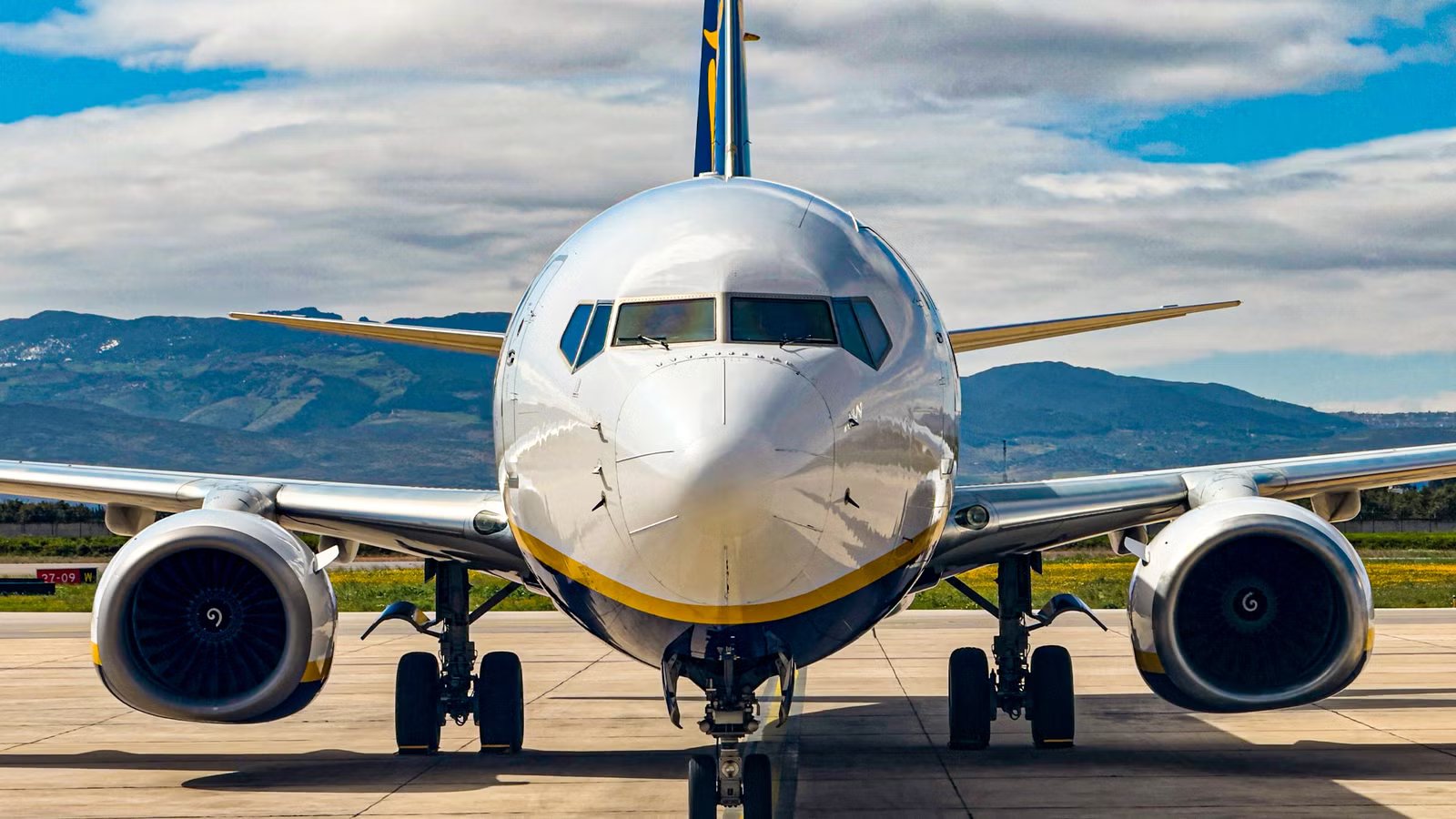
For decades, the  Boeing 737 has been one of the defining aircraft in the short-haul markets, but its operational importance is best understood by the airlines that have built entire network strategies around the type. From Southwest Airlines’ single-type operating model to Ryanair’s ultra-low-cost expansion across Europe, the aircraft has proven itself as a key workhorse for low-cost operators. At the same time, the plane has proven it can be valuable for full-service network carriers as well.
The plane remains central to how many of the world’s biggest carriers schedule flights, manage costs, and move millions of passengers every year. What makes this particularly interesting is the fact that these airlines all use the same jet in very different ways. Some operators rely on the 737 for both simplicity and scale, while others rely on it for frequency and flexibility, and others as one part of a much broader mixed fleet strategy. That ultimately means a look at some of the biggest 737 operators globally is not just a story about fleet size.
Rather, it is about business models, geography, route structure, and airline identity. Here, we aim to examine the five major carriers operating the world’s largest Boeing 737 fleets and explore what those fleets reveal about each airline’s overall network, economics, and long-term operating strategy. All figures in this analysis originate from Planespotters.net.
5
Delta Air Lines
Boeing 737 Fleet Size: 240 Aircraft

The  Delta Air Lines 737 fleet tells a different story from others we will soon discuss because it is concentrated in larger, high-capacity variants rather than spread across many different subtypes. The carrier has no current 737 MAX jets in service, and instead it leans heavily on the 737-900ER as a large domestic narrowbody. That is ultimately very consistent with Delta’s broader fleet strategy, which tends to favor aircraft that can support strong hub flows, dense trunk routes, and solid premium demand without chasing fleet novelty for its own sake.
The 737-800 remains useful, but the 737-900ER is the true heart of Delta’s complex 737 operations. That makes sense because Delta often prefers aircraft gauge when it can get it, especially in major domestic markets where slot constraints, hub banks, or strong demand reward larger aircraft. In practice, the 737 at Delta is not the entire narrowbody story, with Airbus types being deeply important as well.
|
Variant |
Number In Fleet |
|---|---|
|
Boeing 737-800 |
77 |
|
Boeing 737-900ER |
163 |
However, the 737 still plays a major role in giving Delta a dependable and high-capacity lift aircraft across its domestic network. The takeaway is that Delta’s fleet is less about having the widest 737 family and more about using the most commercially useful members of it. This is thus a selective 737 strategy rather than an all-in-one.
4
American Airlines
Boeing 737 Fleet Size: 392 Aircraft

The  American Airlines 737 fleet is more streamlined than some of those that follow, primarily because it is a simple two-fleet story. The airline operates a large group of 737-800 jets and a growing pool of 737 MAX 8s. That overall simplicity is very important, as it ultimately means that American uses the 737 less as a patchwork family and more as a focused domestic and near-international workhorse. The 737-800 does a massive amount of everyday flying for the carrier, especially from major hubs where frequency and seat count both matter.
Meanwhile, the MAX 8 represents the more efficient successor, giving American better overall fuel burn, long-term maintenance benefits, and a younger narrowbody platform without radically changing the operating model. Strategically, this is a very American Airlines kind of fleet. It is large, practical, and aimed at breadth rather than overall novelty. The carrier already has Airbus narrowbodies in bigger numbers, so the 737 does not define the whole airline the way it does at, for example, Southwest Airlines.
|
Variant |
Number In Fleet |
|---|---|
|
Boeing 737-800 |
303 |
|
Boeing 737 MAX 8 |
89 |
However, it is still a core pillar of the domestic system. A key thing to understand is that American’s Boeing 737 fleet is less about overall brand identity and more about scale discipline. This supports hub connectivity, transcontinental demand, and Caribbean or Latin American short-haul flying while giving the airline a relatively straightforward replacement path going forward.
3
Ryanair
Boeing 737 Fleet Size: 620 Aircraft

For budget carrier Ryanair, it is worth noting that the airline operates several subsidiaries, including Malta Air, Buzz, and Ryanair UK. All of these hold completely separate operating certificates, but comprise a single fleet under the wider Ryanair banner. The airline’s Boeing 737 fleet, however, is relatively streamlined as it underpins the entire business model across multiple different fleet subtypes, and it is one of the largest global 737 fleets.
This fleet is also highly standardized. The classic 737-800 remains the massive volume machine that built the network, all while the 737 MAX 8-200 gives the airline a massive advantage in overall seat density, lower fuel burn per seat, and better overall cost efficiency on the same short-haul template. That is a major advantage for a budget carrier whose success depends on squeezing as much productivity as possible out of each aircraft day.
|
Variant |
Number In Fleet |
|---|---|
|
Boeing 737-800 |
410 |
|
Boeing 737 MAX 8-200 |
210 |
The broader point is that Ryanair does not need a complicated fleet to cover its set of European routes. What the airline is looking for, however, is scale, consistency, and the lowest possible unit costs. The 737 is thus ideal for this. The overall move toward more 737 MAX 8-200s is especially important because it lets the airline grow capacity without reinventing its operating model. This is the advantage that comes along with larger gauge, familiar procedures, and lower seat costs, which are exactly what a fare-driven carrier wants.

This Airline Has The World’s Largest Mainline Fleet In 2025
Its US legacy rivals aren’t far behind.
2
United Airlines
Boeing 737 Fleet Size: 674 Aircraft

United’s massive Boeing 737 subfleet could allow it to operate as its own airline entirely. The carrier also holds the distinction of being the operator of the largest number of different 737 family variants. What stands out to analysts is not just the total seat count, but rather the depth of the overall family. United operates older 737NG aircraft, stretched 737-900 variants, and a very large MAX fleet at the same time.
That ultimately gives the airline far more flexibility than a simpler operator. A 737-700 can cover lower-demand flying, and larger variants can handle mainstream domestic routes. The airline can then reserve its MAX 8 and MAX 9 models for routes that demand a modern and fuel-efficient platform. This matters because United’s network is more complex than Southwest’s or Ryanair’s. The airline has managed to feed hubs, manage premium-heavy business routes, serve leisure markets, and maintain frequency at scale.
|
Variant |
Number In Fleet |
|---|---|
|
Boeing 737-700 |
40 |
|
Boeing 737-800 |
141 |
|
Boeing 737-900 |
12 |
|
Boeing 737-900ER |
136 |
|
Boeing 737 MAX 8 |
166 |
|
Boeing 737 MAX 9 |
179 |
The 737 family gives the airline the ability to carefully fine-tune capacity across that system while staying within a broadly common pilot and maintenance ecosystem. The big strategic takeaway is that United’s fleet mix shows transition rather than simplicity. It is moving toward a more MAX-heavy narrowbody future, but it is doing so from a position of enormous installed scale. That makes the 737 not just important to United, but also one of the clearest tools it has for modernization without sacrificing network breadth.
1
Southwest Airlines
Boeing 737 Fleet Size: 798 Aircraft

Southwest Airlines is the most traditional example that you can find of an airline that operates exclusively with the Boeing 737. Unlike most large international network carriers, the airline does not use the aircraft as just one element of a larger and more complex narrowbody fleet. Rather, the plane is the backbone of the entire company. This matters because overall fleet commonality simplified pilot training, maintenance, spare parts, scheduling, and day-to-day operations in a way that few rivals can match.
Even now, as the carrier transitions away from older 737–700 models and leans more heavily into the larger and more efficient 737 MAX 8, the strategic logic is entirely the same. The fleet is kept extremely simple, aircraft utilization is kept high, and operational flexibility across a huge domestic network can be preserved. An interesting point to be made here is that the Southwest operational strategy is not dominated by just one legacy workhorse. The 737 MAX 8 now represents a major share of the fleet,
|
Variant |
Number In Fleet |
|---|---|
|
Boeing 737-700 |
305 |
|
Boeing 737-800 |
198 |
|
Boeing 737 MAX 8 |
300 |
Southwest is slowly rebalancing toward larger aircraft that offer better fuel burn and more seats per departure. That supports overall unit economics, especially as labor and airport costs continue to rise. At the same time, the still-large 737-700 fleet gives Southwest unusual frequency flexibility on thinner routes. The airline’s 737 fleet is not just large, but it is also a central and defining component of how it operates. Southwest is looking to continue modernizing its 737 MAX fleet with MAX 7 and MAX 10 aircraft, for which certification remains pending.