dailynewsnblog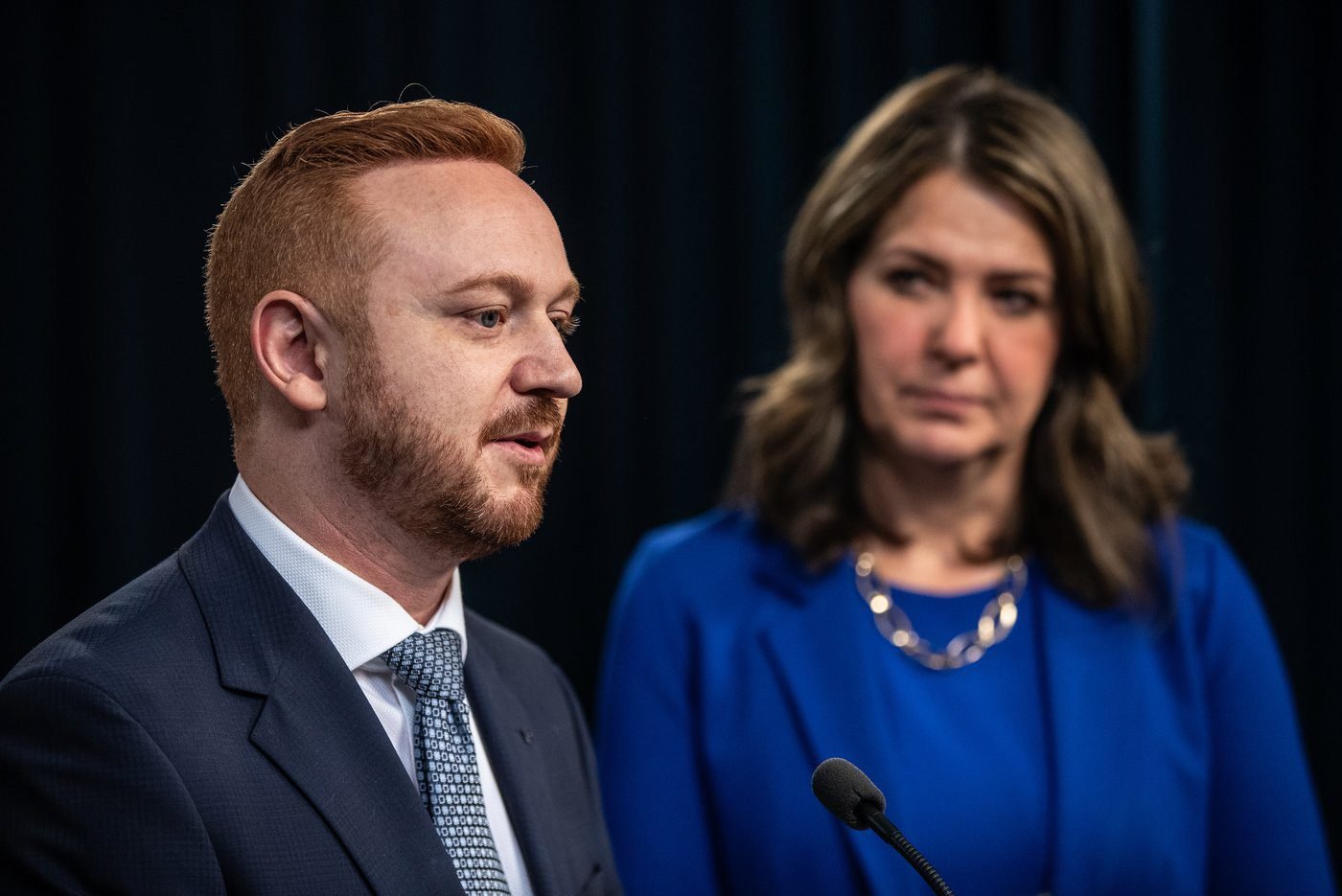
EDMONTON — Alberta Premier Danielle Smith’s government is proposing major changes to its law governing citizen-led petitions for the third time in less than a year.
Justice Minister Mickey Amery introduced Monday a bill that, if passed, would make it impossible to start a petition for a constitutional or policy referendum a year before or a year after a provincial election.
Petitions currently completed or underway wouldn’t be affected by the two-year blackout period, and corresponding deadlines for holding a referendum would be repealed.
Amery told reporters before introducing the changes that they’re about creating a consistent window for those looking to bring proposals forward.
“We want voters to be able to weigh in on election matters during elections without having citizen-led initiatives stand in the way of that,” he said.
He said the United Conservative Party government is continuing to “refine” and improve the process to make it as easy and as streamlined as possible for Albertans.
“I certainly wouldn’t foresee a scenario in which a question would be put aside or held over for 10 years,” he said.
Last year, Smith’s government first dropped a signature threshold and extended signature collection periods by a month for citizens to put referendum questions on a ballot.
In December, the government passed a law clearing legal hurdles faced by those aiming to hold a separatist referendum, and it later changed regulations to increase the application fee to $25,000 from $5,000.
The petition seeking a referendum question on Alberta leaving Canada has until May 2 to collect just under 178,000 signatures.
Three other citizen-led initiative petitions have also kicked off since last June.
A successful one in December aims to make it policy that Alberta won’t leave Canada. It was carried out under previous rules.
Another petition lobbying against public funding for private schools failed in February.
And a petition asking to outlaw new coal mining on the eastern slopes of the Rocky Mountains has until June 10 to collect signatures.
Amery’s new legislation also proposes lowering thresholds for publishing public sector salaries.
That means the provincial Sunshine List would capture those earning $130,000 in base salary per year, rather than a minimum of $133,819 for government employees or $159,676 for those working for broader public sector bodies.
The government would also disclose public sector severance payouts once a year instead of twice. Amery said the move is about cutting red tape.
“It will create less duplication for those that are required to produce two separate reporting requirements and make it one, which I still think captures all of the information that Albertans want and deserve,” he said.
The proposed legislation also aims to ban “misleading” digitally created media of politicians or election officials known as deepfakes.
Elections Alberta would enforce fines of up to $10,000 for individuals and $100,000 for entities who produce or share deepfakes that mislead voters.
“We want to keep our elections fair and honest, and a lot of this is driven by the desire to proactively meet the threats as they come,” Amery said.
He pointed to other legislation in the works under Technology and Innovation Minister Nate Glubish that would allow lawsuits over sharing deepfake intimate images.
This report by The Canadian Press was first published March 30, 2026.
Lisa Johnson, The Canadian Press