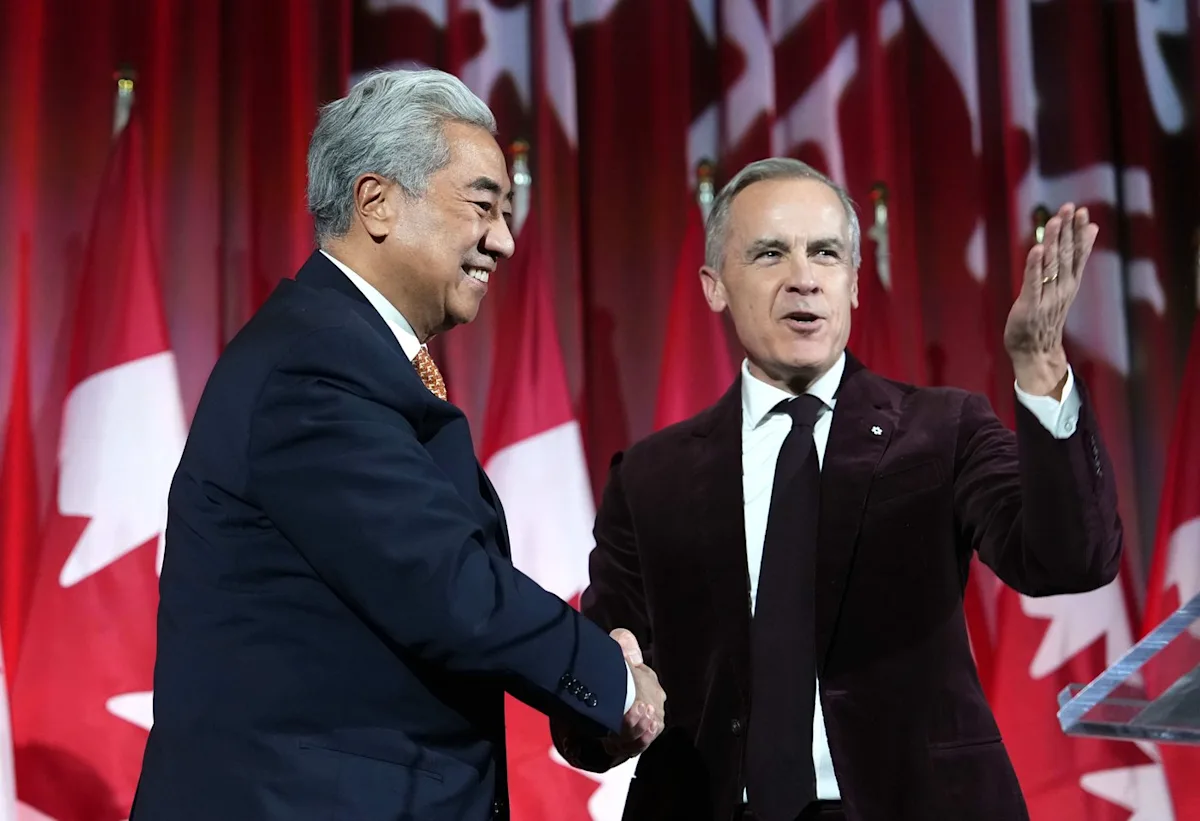
OTTAWA — Prime Minister Mark Carney did not answer directly Monday when asked whether Liberal MP Michael Ma will face consequences for his recent comments about forced labour in China, and sidestepped questions about his thoughts on China’s labour practices.
Carney said Ma had apologized and remains a member of the Liberal caucus.
A Liberal party spokesperson said Carney attended a Liberal fundraising event Monday night in Markham, Ont., co-hosted by Ma. The event was closed to media.
Carney was in Toronto making a housing announcement alongside Ontario Premier Doug Ford and Toronto Mayor Olivia Chow, where he faced several questions for the first time about Ma’s remarks at a House of Commons committee hearing on Thursday.
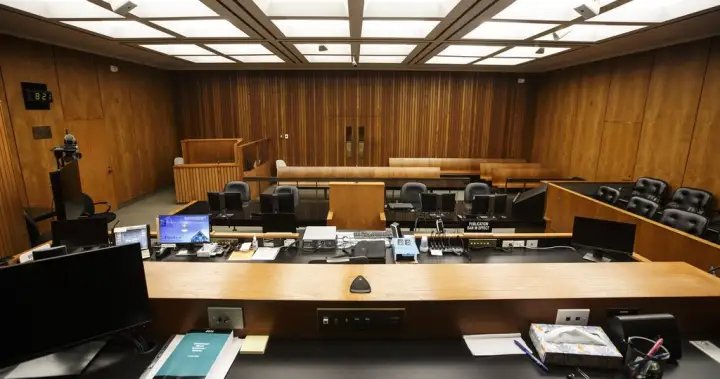
The committee was discussing the decision to lower Canadian restrictions on Chinese electric vehicles when Ma appeared to cast doubt on reports of forced labour in China. He later apologized and said he had been asking about forced labour in Shenzhen, where most of China’s electric vehicle production is located, and not Xinjiang, where the Chinese government has been accused of widespread abuses against Uyghurs.
Ma’s remarks were directed at Margaret McCuaig-Johnston, a senior fellow at the University of Ottawa, who told the committee Chinese vehicles are made with products that come from slave labour performed by members of the Uyghur minority.
During the meeting, Ma asked McCuaig-Johnston if she had personally witnessed forced labour in Shenzhen.
“Mr. Ma has apologized for his comments, as he should have. He’s recognized the seriousness of the issue in that apology,” Carney said, when asked whether Ma will face consequences for his remarks.
Carney also said Ma “apologized directly to Ms. McCuaig-Johnston.”
A spokesperson for the Prime Minister’s Office later clarified to The Canadian Press Carney was referring to Ma’s apology statement, posted to his social media accounts, in which he addressed McCuaig-Johnston.
Reached by phone Monday, McCuaig-Johnston told The Canadian Press she had not received an apology directly from Ma, noting she gave Ma her business card.
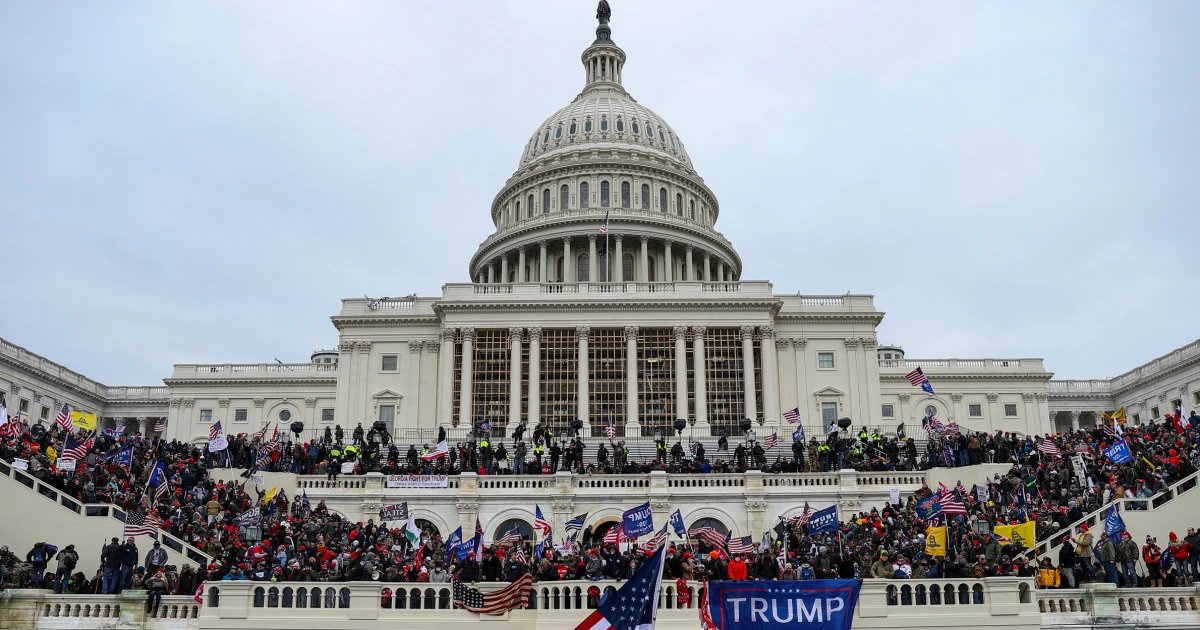
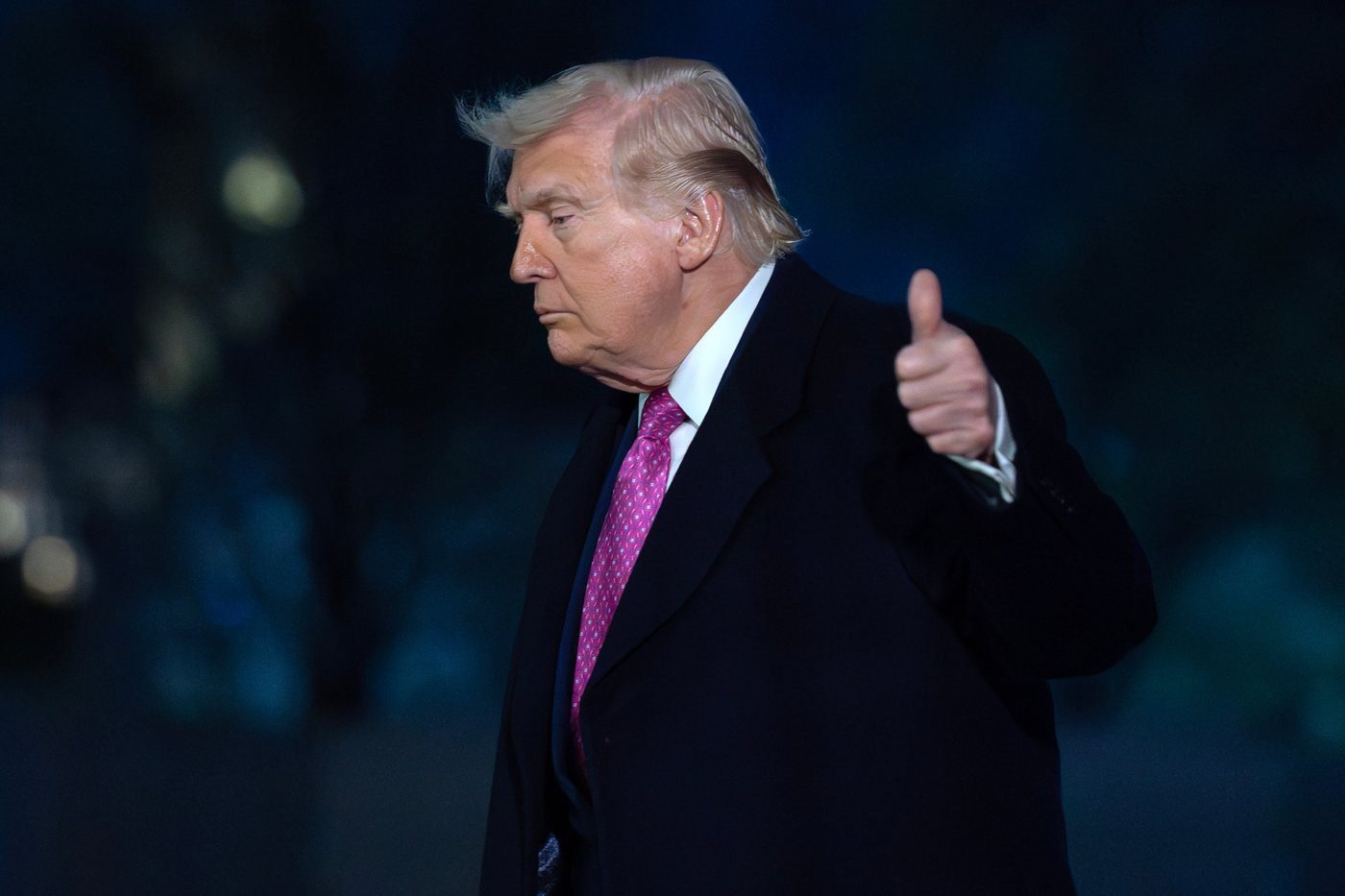
Dominic LeBlanc, the minister responsible for Canada-U.S. trade, told a news conference Monday he does not believe Ma’s comments could suggest to the Donald Trump administration Canada isn’t serious about purging forced labour products from supply chains.
“I’m not worried, in the sense that Mr. Ma properly expressed his regret and apologized for those comments. They do not represent the view of the Government of Canada,” LeBlanc said.
Early in March, the U.S. Trade Representative launched investigations into whether Canada and dozens of other economies are failing to crack down on goods produced with forced labour — a move that could lead to retaliatory tariffs under section 301 of the Trade Act, or more sector‑specific duties.
“We obviously have taken note of the 301 investigation in the United States. We’re confident that Canada, like other countries, is doing what’s necessary to ensure that those goods aren’t imported into Canada,” LeBlanc said.
Asked Monday if he believes there is forced labour in China, Carney avoided addressing China’s practices specifically but acknowledged there are “higher risk” parts of China.
“I’ve followed this issue over the years, in China and elsewhere. And there is evidence of child labour around the world. There’s evidence, and there’s existence, I should say, of child labour and forced labour around the world,” Carney told reporters.
“There are parts of China that are higher risk, and therefore (there) needs to be diligence.”
The United Nations reported in 2022 that China had committed serious human rights violations in Xinjiang against Uyghurs and other Muslim minorities that “may constitute international crimes, in particular crimes against humanity.”
A report issued that same year by Global Affairs Canada found China is “using otherwise legitimate programs for retraining and relocation of unemployed workers as instruments of a broader campaign of oppression, exploitation and indoctrination of the Uyghur Muslim population into Han (majority) Chinese culture.”
Beijing vehemently denies those claims, arguing it has addressed terrorism threats while offering economic opportunities to minority populations.
Canada has repeatedly rejected Beijing’s framing. A June 2021 government response to a committee report decried “the mass, arbitrary detention of Uyghurs and other Turkic Muslims in internment camps” in Xinjiang.
The industry committee, where Ma made his remarks Thursday, is studying Canada’s EV policies.
In January, when Carney was in China, he and Chinese President Xi Jinping announced new trade plans that included China lowering its tariffs on Canadian agriculture products such as canola seed and seafood, and Canada allowing up to 49,000 Chinese-made EVs into the market at a 6.1 per cent tariff rate. That is a heavy discount from the 100 per cent surtax on Chinese EVs the government implemented in 2024.
The issues raised in Thursday’s committee hearing were about whether there is forced labour in China’s EV supply chain.
A 2024 report from Human Rights Watch identified a “risk of exposure to forced labour” through the EV supply chain because of the amount of aluminum produced in Xinjiang. The report said a tenth of the world’s aluminum comes from the region.
Last week, the Chinese Embassy in Canada posted a statement to its X account calling allegations of forced labour in China’s EV supply chain “a blatant lie.”
On Monday, Carney defended Canada’s efforts to ensure nothing imported into Canada comes from forced or child labour in upstream supply chains.
“We take this issue of forced labour, child labour incredibly seriously. Canada has the most rigorous set of engagements on the issue,” Carney said, adding Canada is continuing to review the adequacy of its own laws prohibiting the imports of goods made with forced labour.
McCuaig-Johnston told The Canadian Press on Monday that Canada isn’t doing all it could to keep inputs tainted by child or forced labour out of supply chains.
“We do not have strong legislation and requirements. The scrutiny of CBSA is not as detailed as it could be, or should be,” McCuaig-Johnston told The Canadian Press.
Federal Finance Minister François-Philippe Champagne is scheduled to travel to China this week and Carney said supply chain integrity will be part of his discussions there.
“Issues of supply chain integrity, including forced labour, child labour, and ensuring that those standards are in place, will be part of those discussions, I’m certain,” Carney said, along with “ensuring that we have the adequate transparency for any good from any of our trade partners.”
This report by The Canadian Press was first published March 30, 2026.
— With files from Dylan Robertson and Kyle Duggan
Nick Murray, The Canadian Press


 dailynewsnblog