dailynewsnblog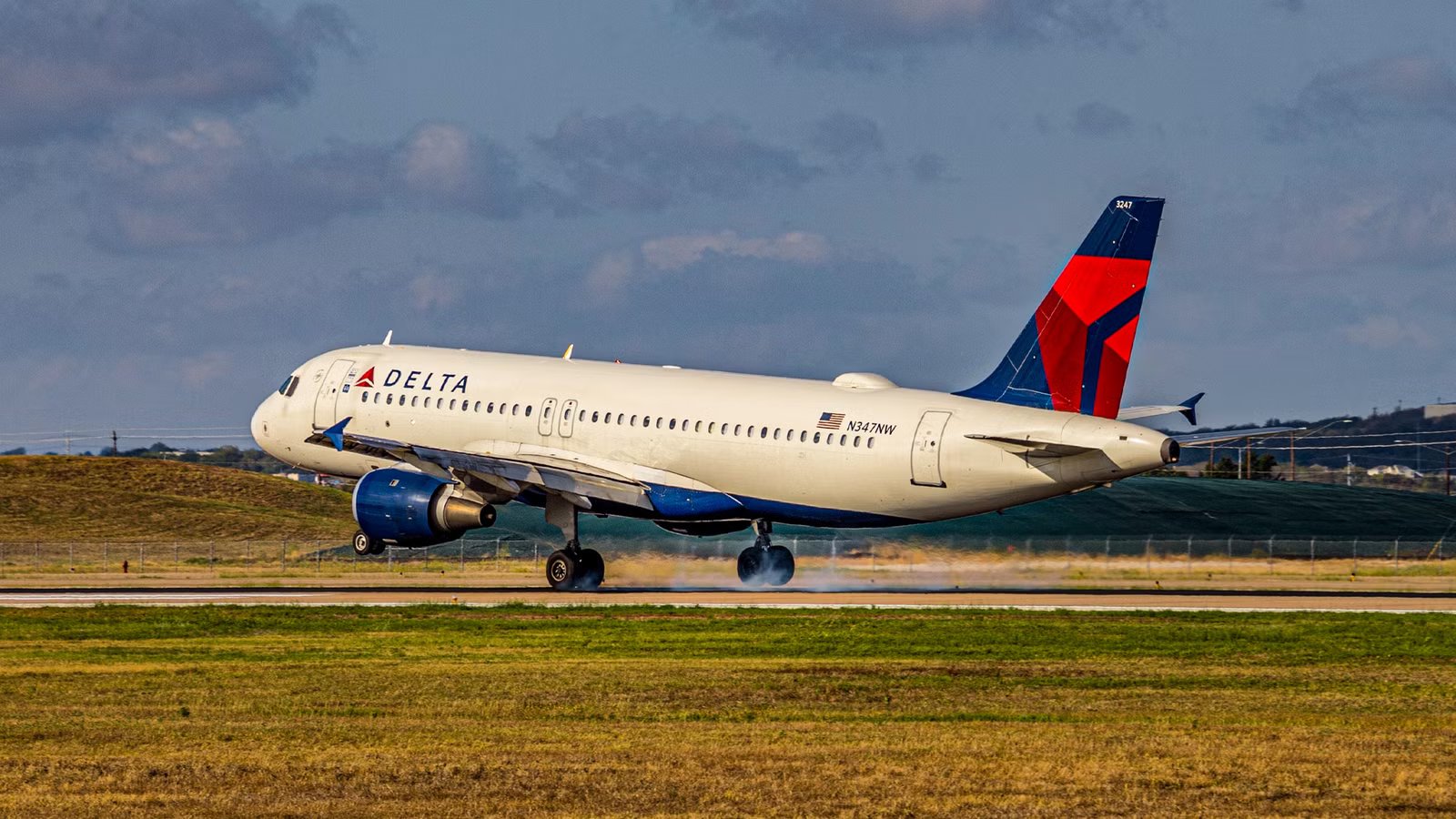
While some industries, like the electronics industry, innovate very rapidly, this is not the case in the commercial airline industry. While a ten-year-old iPhone 7 is almost unusable today, a ten-year-old Airbus A320neo is state-of-the-art. As such, it’s not uncommon to see airlines operating 15, 20, or even 25-year-old aircraft. In the United States, meanwhile, the nation’s largest carriers are notorious for flying planes that are over 30 years old, with little difficulty or fanfare, despite also taking delivery of hundreds of new aircraft in recent years.
Older aircraft burn more fuel than newer aircraft, and maintenance costs tend to increase as planes age. In addition, keeping older planes alongside newer ones can generally increase fleet costs, especially if the two are different types, but even newer examples of the same aircraft type can have some parts differences. Of course, airlines like Delta Air Lines and United Airlines are some of the most profitable in the world, showing that there’s just as much merit to keeping aging planes around as operating new, state-of-the-art airliners.
Why You Might Want To Fly Older Aircraft

A brand new Airbus A320neo is significantly more efficient than a 30-year-old A320-200. In addition, the new plane will be cheaper to maintain, and it’ll be more capable. The major issue with new planes, however, is capital costs, as a new A320neo can set airlines back well over $50 million per unit after standard discounts. Leasing an A320neo, which is often preferred by many airlines seeking short-term solutions, can range from $350,000 per month to over $400,000. In comparison, a 30-year-old A320-200 is a paid-off aircraft.
Airlines often need to use their newest planes as much as possible to maximize their return on investment, given how expensive even smaller aircraft like an A320neo can be to buy or lease, and to fly them on longer segments to maximize the fuel savings. But while a 30-year-old A320-200 may cost more to operate, an airline has more flexibility with how it can be used. The 30-year-old plane can be used on shorter routes where fuel efficiency doesn’t matter, or to open up new, marginal routes that would otherwise be risky to start with a new plane. United and its use of the Boeing 767 is a good example of this.
Perhaps most importantly, however, an airline can simply park an old plane if it doesn’t need it, and reactivate it at will if necessary. Demand in the airline industry varies dramatically, as passengers are sensitive to price and schedule. On days when demand on a given route is higher, the 30-year-old plane can operate an extra flight, and then be parked on days with lower demand. Delta is a good example of this, as it uses its aging Boeing 757 fleet in this exact manner.
Usefulness In An Economic Downturn

Currently, many airlines are using a mix of new aircraft and older aircraft for expansion, in that they’ll keep many aging planes while only replacing those coming up on major maintenance visits. This allows airlines to operate a mix of old and young planes, but this is also enabled because oil prices have generally been on the decline since 2022’s price of over $139 per barrel. This has improved the economics of using older planes, but the other benefit of keeping aging aircraft is that they can be shed if industry conditions worsen.
Going into the 2000s, oil prices were relatively low, and airlines were still flying aircraft like the Boeing 727 or 737-200. After the industry declined following the September 11th attacks, airlines could accelerate the retirement of these planes to cut costs and reduce capacity. As oil prices rose in the mid-to-late 2000s, carriers continued to retire older-generation aircraft, such as Boeing 737 Classics, a move made more necessary by the Great Recession.
These planes are less fuel-efficient and thereby costlier to operate in an environment with high oil prices, but retaining older aircraft also boosts an airline’s ability to respond to industry declines. If passenger demand drops rapidly, the planes can either be parked or retired, and it doesn’t have much of an impact on an airline’s bottom line. Additionally, if demand recovers quickly, as was seen after the COVID-19 pandemic, the parked planes can still be returned to service, and an airline may be able to grow more rapidly than if it were to rely on new aircraft deliveries.

Why Delta Air Lines Is Retiring Its Boeing 767-300ERs
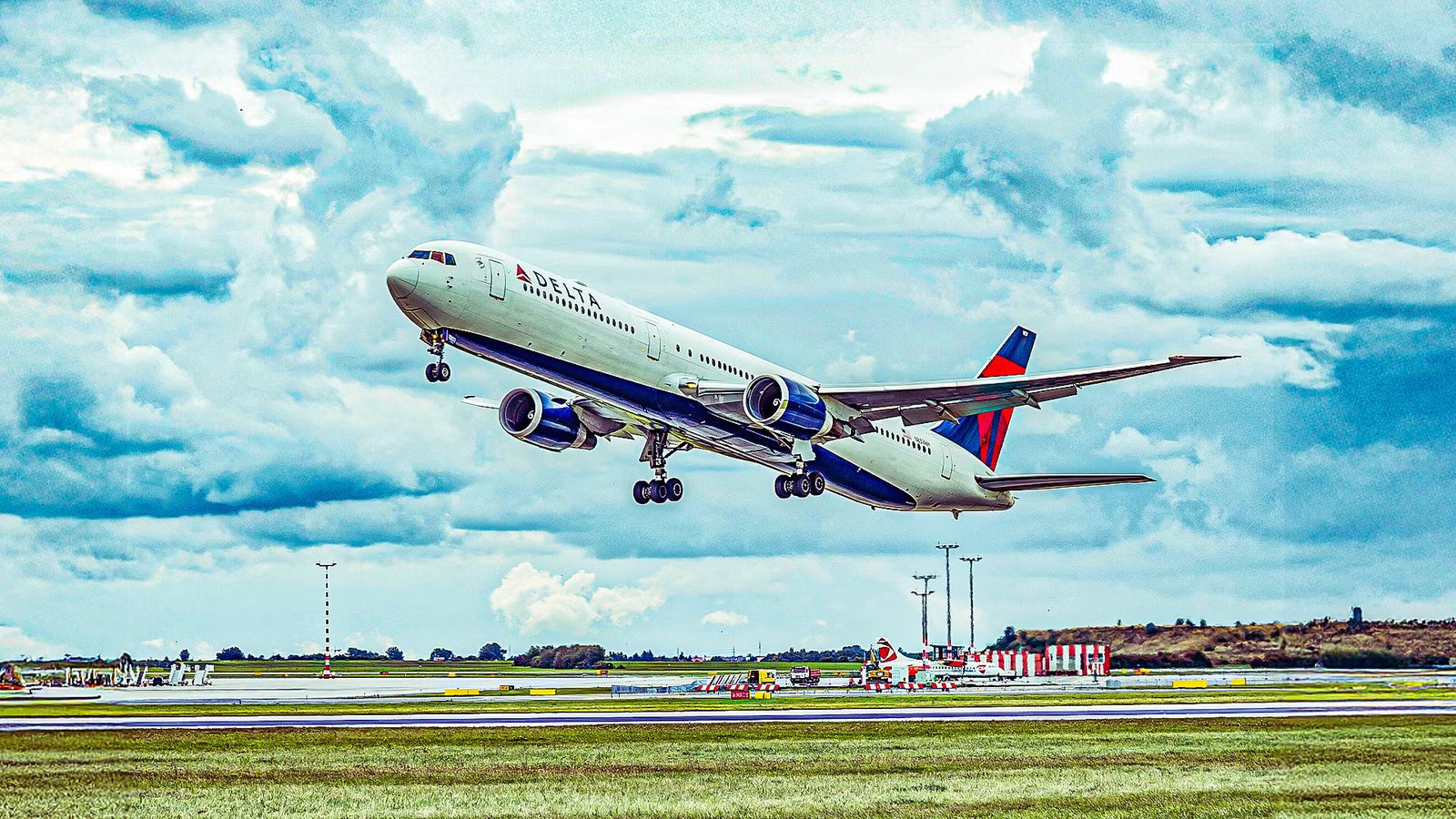
Delta will retire its aging Boeing 767-300ERs by 2030, replacing them with fuel-efficient A350s and A330neos while keeping the 767-400ER flying.
New Vs. Old: COVID-19 Pandemic Fleet Retirements

The COVID-19 pandemic was extremely unusual regarding the airline industry, as it caused possibly the worst travel downturn in the history of the industry, followed by a rapid recovery in the following years. Because of just how severe the decline in passenger traffic was, the day-to-day utilization of aircraft was not dramatically different between newer and older planes, since all aircraft were receiving low utilization. Rather, differences came in the form of long-term fleet strategies.
During the pandemic, American Airlines retired its Airbus A330, Boeing 757, 767, and Embraer E190 fleets. Apart from the A330, all of these fleets were already scheduled to be retired imminently. Delta retired its Boeing 737-700, 777, McDonnell Douglas MD-88, and MD-90 fleets, but the McDonnell Douglas planes were already scheduled to be retired. The aging Boeing 717 and 767-300ER fleets were placed on an accelerated retirement timeline, which was later reversed.
|
American Airlines COVID Retirements |
Number |
Delta Air Lines COVID Retirements |
Number |
United Airlines COVID Retirements |
Number |
|---|---|---|---|---|---|
|
Airbus A330-200 |
15 |
Boeing 737-700 |
Ten |
Boeing 757-200 (Pratt & Whitney-powered) |
12 |
|
Airbus A330-300 |
Nine |
Boeing 777-200ER |
Eight |
||
|
Boeing 757-200 |
34 |
Boeing 777-200LR |
Ten |
||
|
Boeing 767-300ER |
17 |
McDonnell Douglas MD-88 |
47 |
||
|
Embraer E190 |
20 |
McDonnell Douglas MD-90 |
29 |
In both cases, the airlines primarily removed their oldest fleets, while placing other aircraft into low-utilization roles. American’s A330 retirements and Delta’s 737-700/777 retirements are more noteworthy, since these aircraft were relatively young, and were instead removed due to being small, oddball fleets.  United Airlines, meanwhile, only retired its Pratt & Whitney-powered Boeing 757s, while keeping the rest of its fleet. United, therefore, could grow quickly coming out of the pandemic, while Delta and American have had to rely on slow deliveries of new aircraft, along with used aircraft in Delta’s case.
The Fleet Ages Of American, Delta, And United

Data from Planespotters.net shows that United Airlines has the oldest fleet out of the US legacy carriers, with an average age of 15.3 years. Delta Air Lines has an average fleet age of 15 years, while American Airlines has the youngest fleet on average, measuring at 14.5 years. United’s oldest fleet is its Boeing 767s, which are 28.4 years old on average, while Delta’s oldest fleet is its Airbus A320s, at 29.3 years. American Airlines’ oldest fleet is also the A320s, which are 25 years old on average.
The oldest aircraft currently flying for United Airlines is N641UA, a 35-year-old Boeing 767-300ER, while Delta’s oldest aircraft is N649DL, a nearly 37-year-old Boeing 757-200. Delta and United’s Airbus A320, Boeing 757, and Boeing 767 fleets are all over 25 years old on average, while American’s A320 fleet is the only one to reach 25 years old. American doesn’t fly the 757 or 767, while Delta does not fly the Boeing 777. The 777 and 787 are of similar age at American and United.
While all three airlines operate a mix of old and young aircraft, American Airlines’ fleet is notably younger, and it doesn’t operate the Boeing 757 or 767, which are some of its rivals’ oldest aircraft. This is due to fundamental strategic differences at American, but American’s decisions may also be ones that the company now regrets today, as its financials trail behind competitors.

The World’s Largest Airline By Fleet Size
A battle of the giants.
American Airlines’ Difference In Strategy

American’s challenges ever since it retired its Airbus A330, Boeing 757, and Boeing 767 fleets have been heavily documented since the COVID-19 pandemic, when they were removed. American’s widebody fleet is now significantly smaller than that of its competitors, and what’s more, it was unable to respond to rapid increases in demand for long-haul travel. Its competitors kept most, if not all, of their older widebodies and simply decreased their utilization. When demand returned, the older planes were brought back.
The majority of American Airlines’ fleet, however, is narrowbody aircraft. While the average age of American’s narrowbodies is comparable to competitors, the details tell a much different story. Delta, and especially United, are taking delivery of new aircraft today, while gradually retiring older A320-200s and 757s in the case of Delta. In contrast, American took delivery of hundreds of Airbus A321-200s and Boeing 737-800s in the 2010s, meaning that it has more young aircraft with the prior generation of engines than competitors.
|
American Airlines Narrowbodies |
Delivery Batches |
|---|---|
|
Airbus A319-100 |
1998-2000 (54 US Airways), 2005-2006 (38 US Airways), 2013-2015 (32 American Airlines), 2018-2019 (eight used) |
|
Airbus A320-200 |
1995-2005 (26 America West), 1999-2000 (18 US Airways), 2009-2010 (four US Airways) |
|
Airbus A321-200 |
2001-2002 (24 US Airways), 2006-2008 (seven US Airways), 2008-2015 (90 US Airways), 2013-2017 (97 American Airlines) |
|
Airbus A321neo |
2019-Present (86) |
|
Boeing 737-800 |
1999-2001 (75), 2009-2017 (228) |
|
Boeing 737 MAX 8 |
2017-Present (97) |
Delta and United also have hundreds of A320ceo and 737NG aircraft, but many of these are older examples that can be used less. In the case of American’s fleet, some of these planes are not even a decade old and therefore are likely still being paid off. This means that, to generate a full return on investment, American has to use these prior-generation aircraft more than competitors. This has hurt its overall fleet costs, despite  American Airlines having the most simplified narrowbody fleet (with two narrowbody types, versus three for United and five for Delta).