dailynewsnblog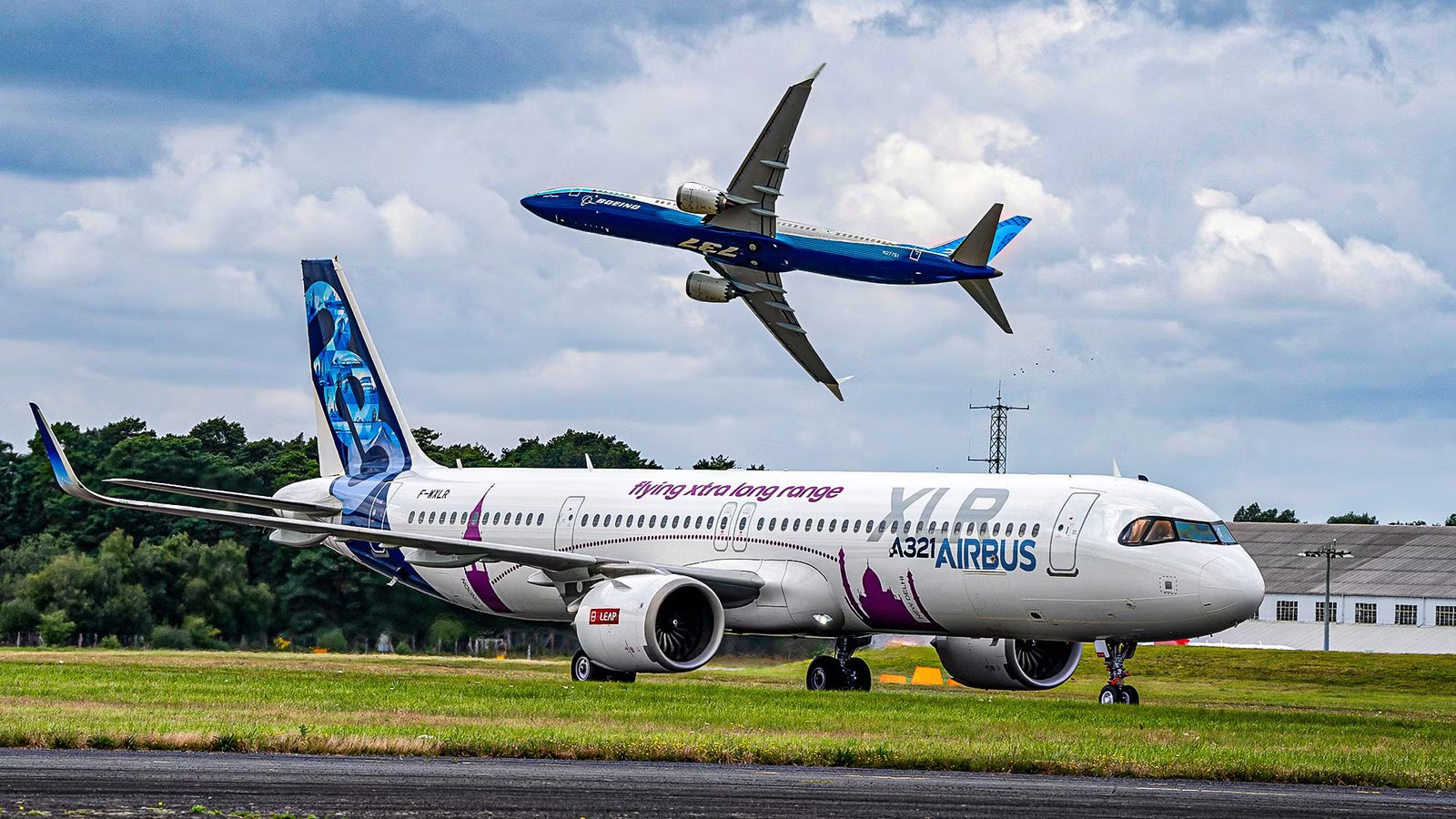
The aviation industry is currently witnessing a major change to how long-haul routes are served, as the traditional reliance on massive widebody jets gives way to highly efficient, stretched narrowbody aircraft. At the forefront of this evolution are the Airbus A321XLR and the Boeing 737 MAX 10, two airframes that represent the absolute pinnacle of size for their respective families. This guide explores the mechanical, aerodynamic, and strategic differences between these two competitors, offering a technical look at how they intend to redefine global connectivity for the next decade.
Both aircraft share the common goal of maximizing seat capacity and fuel efficiency, but they arrive at these targets through vastly different engineering philosophies. The choice between these two platforms often dictates the entire network strategy of a modern carrier, and in markets where high-density regional and international routes are a staple, these aircraft offer a compelling alternative to larger widebodies that were once the standard for global connectivity.
Pushing Narrowbodies To The Limit

A key design basis that the A321XLR and the 737 MAX 10 both share was the need for increased seat capacity within a narrowbody footprint. To achieve this, both manufacturers had to stretch their existing airframes to the absolute physical and aerodynamic limits, creating two of the longest single-aisle aircraft to ever enter commercial service.
Airbus achieved its goal by utilizing the existing A321neo platform and reinforcing the structure to support a higher maximum takeoff weight. The A321XLR can accommodate up to 244 passengers in a high-density layout, though most long-haul operators will opt for a multi-class configuration of approximately 180 to 200 seats to include premium lie-flat cabins. The fuselage length of over 44 meters allows for a spacious feel, but it also necessitates advanced tail-strike protection systems during the rotation phase of takeoff.
 Boeing countered this by stretching the 737 MAX 9 fuselage by 66 inches (168 cm), creating the MAX 10, which stands as the largest 737 ever built. This extension allows for a maximum capacity of 230 passengers, placing it slightly behind the A321XLR in raw seat count but offering superior economics on shorter, high-frequency routes. The challenge for Boeing was maintaining the commonality of the 737 line while adding two extra fuselage plugs, one forward of the wing and one aft. This stretch requires the 737 MAX 10 to use a unique landing gear system to ensure the tail does not hit the runway, a technical hurdle that Airbus managed to avoid through the naturally higher stance of the A320 family.
Two Differing Ideologies

The most profound divergence between these two aircraft lies in their intended purpose, specifically regarding total flight range. The A321XLR was designed from its inception to cross oceans and connect distant city pairs, whereas the Boeing 737 MAX 10 is fundamentally a capacity-driven machine optimized for high-volume, medium-range routes. This difference creates a gap of approximately 1,600 nautical miles in reach, a distance that totally changes the network possibilities for any airline operating them.
To achieve its headline range of 4,700 nautical miles, Airbus developed a permanent rear center tank integrated directly into the aircraft’s fuselage. This tank holds up to 13,100 liters of fuel without sacrificing significant cargo space, allowing the A321XLR to stay airborne for up to 11 hours. In contrast, the Boeing 737 MAX 10 relies on a more traditional fuel configuration, which limits its range to around 3,100 nautical miles. While Boeing has explored auxiliary tanks for other variants, the MAX 10 is hindered by its sheer physical size and the weight of its 230-passenger cabin, making it more limited on where it can fly.
|
Feature |
Airbus A321XLR |
Boeing 737 MAX 10 |
|
Maximum Range |
4,700 nautical miles |
3,100 nautical miles |
|
Fuel Capacity |
32,940 liters |
25,817 liters |
|
Typical Seating |
180–220 seats |
188–230 seats |
|
MTOW |
101 tonnes |
92 tonnes |
|
Service Status |
In Service |
Testing / Uncertified |
This operational divide is particularly evident when looking at the strategic needs of global carriers. The A321XLR could comfortably serve routes from Tokyo to Sydney or Delhi, opening up thin markets that do not yet support a full widebody schedule. For the Boeing 737 MAX 10, which has not yet entered actual commercial service, it is being positioned as the ultimate tool for slot-constrained airports where moving the maximum number of people over a four-hour flight is the priority. As Boeing continues the rigorous certification process for the MAX 10, the industry remains focused on how its superior seat-mile costs on shorter routes might offset its lack of transoceanic reach.

Why Some Airlines Are Switching From Widebodies To Narrowbodies On Long-Haul Routes
Single-aisle jets going the distance.
Inherent Challenges Of Stretching

Both the A321XLR and the 737 MAX 10 are very long for a narrowbody, meaning the margin for error between the tail of the aircraft and the runway surface is razor-thin. To prevent a catastrophic tail strike, the two manufacturers had to develop vastly different mechanical solutions, representing one of the most significant engineering departures between the two families.
Boeing faced a particularly difficult hurdle with the 737 MAX 10 because the original 737 design sits very low to the ground. To accommodate the extra fuselage length without hitting the tail during rotation, Boeing engineered a unique levered main landing gear. This system features a telescoping mechanism that extends the gear by nine and a half inches during the takeoff roll, effectively pushing the pivot point higher and allowing the nose to lift at a steeper angle.
In contrast, the Airbus A321XLR benefits from the naturally taller stance of the A320 family, which was designed with more ground clearance from the beginning. While Airbus did not need to invent a telescoping gear, it did have to significantly reinforce the existing landing gear to support the massive 101-tonne maximum takeoff weight. This reinforcement ensures that the aircraft can handle the stresses of a worst-case scenario: heavy-fuel departure followed by an immediate return to land in the event of an emergency.
Entering New Territory

As has always been the key difference between the two manufacturing giants, the A321XLR represents the ultimate extension of the fly-by-wire concept and the 737 MAX 10 remains rooted in a mechanical heritage that prioritizes direct pilot feedback through a traditional yoke. This divergence dictates how crews interact with the aircraft during complex maneuvers and long-haul fatigue cycles.
The Airbus flight deck is centered around a sidestick controller and a highly automated system that provides flight envelope protection, preventing the pilot from inadvertently exceeding the airframe’s structural limits. This commonality allows pilots already qualified on the A320 family to transition to the A321XLR with minimal additional training, which is a massive cost-saving factor for airlines. In contrast, the MAX 10 utilizes a traditional control column and a flight deck layout that has evolved incrementally since the late 1960s. This design choice ensures that thousands of existing 737 pilots can transition to the new variant, though the introduction of larger display screens and updated software in the MAX series has brought the cockpit closer to modern widebody standards.
Managing pilot workload on a ten-hour flight in a narrowbody cockpit presents unique ergonomic challenges that differ significantly from the spacious flight decks of the A350 or 787. The A321XLR benefits from a pull-out table and a more open floor plan due to the absence of a central yoke, which can be a significant comfort factor during long cruise segments. For the Boeing 737 MAX 10, the challenge is maintaining high levels of situational awareness while navigating the more compact space of the 737 flight deck.

How The Airbus A321XLR Could Seriously Impact Boeing’s Future
The Airbus A321XLR reshapes narrowbody aviation and threatens Boeing’s hold on long-range one-aisle routes by occupying the Boeing 757 niche.
Who Needs A Widebody Anyway?

Ultimately, can a single-aisle aircraft really replace the experience and capability of a widebody on an eight-hour flight? Until now, the answer was a definitive no, as narrowbodies lacked the fuel capacity and cabin amenities to make such journeys viable. However, the arrival of the A321XLR and the 737 MAX 10 has forced a complete re-evaluation of this logic.
The A321XLR is currently the best aircraft in this category for reliably serving year-round, thin-demand transatlantic routes. This capability allows airlines to experiment with new destinations without the financial risk of filling a 300-seat widebody. In contrast, the Boeing 737 MAX 10 is being positioned as a regional option, optimized for high-density markets like the US domestic corridor or intra-European routes, where the primary goal is to maximize seat-mile costs. The MAX 10 may lack the extreme range of its European rival, but its ability to move 230 passengers with modern fuel efficiency makes it an attractive proposition for airlines looking to take advantage of peak demand.
The success of these aircraft also relies heavily on Extended-range Twin-engine Operations Performance Standards, commonly known as ETOPS. For an aircraft like the A321XLR to fly across the Atlantic, it must be certified to operate at significant distances from an alternate airport, a certification process that requires rigorous testing of engine reliability and fire suppression systems. Boeing has a long history of ETOPS excellence with the 737 family, and the MAX 10 is expected to carry this legacy forward, even if its missions remain largely overland or within shorter coastal distances.
Ready For A Green Future

Decarbonization has moved from a corporate talking point to a strict mandate, and both the Airbus A321XLR and the Boeing 737 MAX 10 are at the forefront of this green transition. These aircraft are designed to operate with a significantly lower carbon footprint than the aging Boeing 757 and Boeing 767 fleets they are intended to replace, offering up to a 30 percent reduction in fuel consumption per seat. As the industry moves toward the widespread adoption of sustainable aviation fuel, the engine technology found in the CFM LEAP and Pratt & Whitney GTF families will be reducing the environmental impact of long-distance travel.
The practical takeaway for airlines is that the choice between these two platforms is no longer just about range, but about optimizing the specific economic sweet spot of their network. Carriers that prioritize the ability to open new, thin long-haul routes will continue to lean toward the A321XLR, while those focused on domestic or regional high-density markets will find the seat-mile economics of the Boeing 737 MAX 10 nearly impossible to beat. For passengers, the shift toward these narrowbodies means that the future of flying involves more direct connections to secondary airports, radically changing the hub-and-spoke model that has dominated the skies for the last 50 years.
Looking toward the next decade, these two airframes likely represent the final evolution of the traditional narrowbody before any more changes in propulsion and aerodynamics take hold. Taking into consideration the advances in hydrogen-powered flight or blended-wing designs, the lessons learned from stretching the A321 and 737 to their absolute limits will serve as the technical foundation for the next generation of global aviation.