dailynewsnblog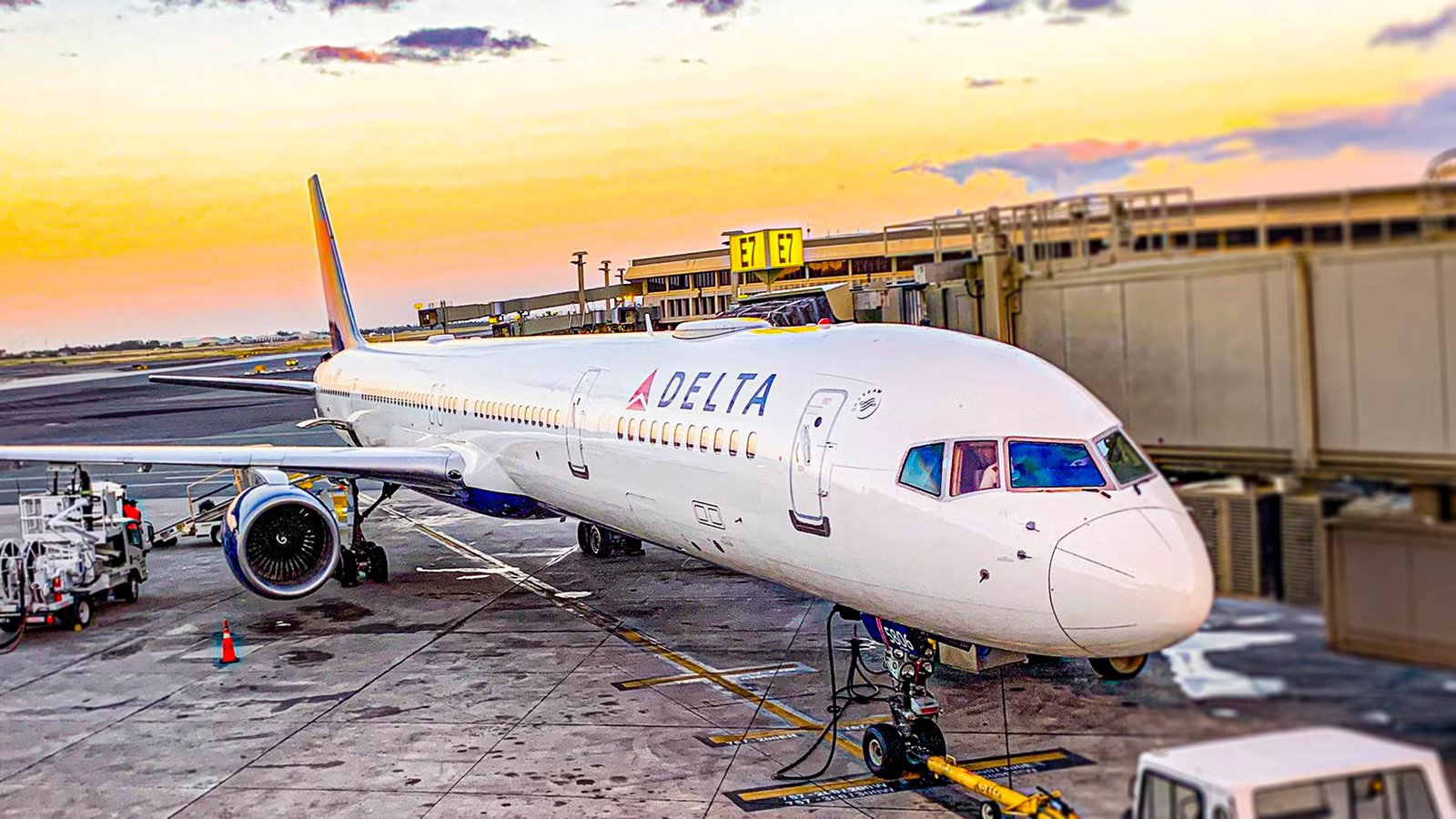
Boeing’s 757 is still widely in use today, despite having made its debut way back in the early 1980s and production subsequently being halted in 2004. Naturally, numbers are increasingly dwindling as the years drag on. However, with 64 -200 variants and a further 16 -300s in  Delta Air Lines’ fleet alone, the iconic aircraft still plays a huge part across key routes for a handful of airlines.
 United Airlines is another still championing the Boeing 757, with a total of 61 in its fleet to place it behind Delta among the largest passenger operators of the aircraft. That is far from the full picture, though, with freighters like FedEx Express and UPS Airlines also boasting dozens of the aircraft to this day. So, well over four decades on, what is it about the 757 that means it remains such a popular choice for various carriers?
Reliable, Versatile, & Even Ahead Of Its Time

Why the 757 is still around is down to a number of factors that have shifted little over the past four decades. Be that reliability, versatility, or the simple fact that Boeing successfully created a beast that was ahead of its time.
At the time of its release, the 757 was among the first to pioneer extended twin-engine operations alongside its larger counterpart, the 767. Some 235 passengers could be crammed in through a single-class layout on the -200, but up to three separate cabins could also be offered. The later -300 variant then took this figure to 289 seats, while also building on the modern technology of the -200, such as its electronic flight deck.
All told, the leap in fuel efficiency and the versatility that the 757 brought with it left it a viable option for airlines to use across a multitude of routes. This saw it feature on transatlantic crossings, but also the likes of European city hops, on the regular. What is more, significant commonality with the larger 767 also improved appetite for the aircraft, alongside factors around short-takeoff capabilities and higher cruising altitudes.
If It Ain’t Broken

Of course, four decades later, the 757’s fuel burn and comfort levels are trumped by newer models rolling off production lines. However, without a definitive replacement for the 757 directly from Boeing itself, the aircraft’s still-impressive characteristics have kept it relevant.
As the old saying goes: If it ain’t broken, don’t fix it. For the likes of Delta and United, that could well just be the thinking behind their decision to keep their 757s around for so long. Per Delta, “you might fly on this aircraft if you are flying between a core hub and a higher-traffic domestic airport”. In this case, the 757’s solid capacity makes it ideal for such in-demand routes.
Largest 757 operators (From most recent respective figures available):
|
Airline |
Number of -200s |
Number of -300s |
Total |
|
FedEx Express |
90 |
– |
90 |
|
Delta Air Lines |
64 |
16 |
80 |
|
UPS Airlines |
75 |
– |
75 |
|
United Airlines |
40 |
21 |
61 |
|
Icelandair |
9 |
2 |
11 |
For freighters, the philosophy is much the same. Both UPS and FedEx operate a variety of aircraft. That said, in UPS’ case, the 757-200 provides a useful option for smaller loads. Featuring 15 container positions and a maximum payload of 86,900 pounds (39,417 kilograms), the 757 is a way off the A300-600 and UPS’ next smallest jet in terms of capacity. For context, this houses a total of 29 container positions and has capacity for 121,730 pounds (55,216 kilograms). UPS’ largest, the 747-8, then has space for 46 containers weighing a hefty 307,600 pounds (139,525 kilograms) in all.

How Many Boeing 757s Are Still Flying In 2026?
Despite a declining operator base, the 757 remains an important part of many airlines’ fleets in 2026.
An Appealing Prospect For Freighters

Freighters do, in fact, typically run older aircraft models. In part, that is because they take advantage of lower acquisition costs as outgoing passenger jets spill onto the market. Why UPS and FedEx are up there as such major operators of the 757 is for this very reason.
In fact, FedEx only introduced the 757 to its fleet in 2008, after Boeing had actually ceased production of the jet. At the time, the courier noted the move was part of a wider bid to modernize. “Investment in the Boeing 757 aircraft is a key component in our plan for a reduced carbon footprint,” FedEx Express Air Operations senior vice president Jim Parker said. These 757s slotted into the place of FedEx’s 727s, a model that itself first flew in the early sixties.
Against the older model, the 757 boasted a 36 percent reduction in fuel burn, alongside a 20 percent increase in capacity, FedEx went on to say. Of course, FedEx has built the likes of its 767F and 777F fleets to open the door for the 757’s eventual phase-out. However, some drag on freighters’ introduction of newer aircraft can always be expected, given the huge cost benefits of buying retired passenger jets second-hand. For FedEx and UPS, then, operating large fleets of the likes of the 757 is nothing more than common practice.
Why The Boeing 757 Has No Direct Replacement

One key reason that the 757 still features so heavily is that a direct replacement never really surfaced, as mentioned above. This never came from Boeing at least, for whatever reason – we all know Boeing has had its own difficulties in recent years. This has left airlines seeking a viable replacement, and it is the Airbus A321XLR that has appeared to prevail.
United Global Network Planning and Alliances Senior Vice President Patrick Quayle noted the airline’s reasoning behind the choice last November. “We use the 757 to fly to smaller markets like Tenerife, Spain, and Reykjavik,” he said. “The 757 is getting a bit uneconomic, but we want to continue flying to these cities, and the A321XLR is longer-ranged and has much better fuel burn and maintenance costs.”
United has a total of 50 A321XLRs on order. These boast a range of 4,700 nautical miles, against the 757-200’s roughly 3,900. However, its auxiliary fuel tanks eat into seating capacity, leaving the 206 passengers able to be carried by the A321XLR somewhat off the 757. Needless to say, the duo are no perfect match, but United’s hand appears to have been forced, leaving it planning to phase out the 757 to make way for the Airbus option from this year.

How Long Will The Boeing 757 Keep Flying?
More than 500 examples of the 757 are in service.
The Aging Shows

Naturally, running a four-decade-plus-old model of aircraft does not come without its challenges. For airlines, this means putting their 757s in for maintenance increasingly frequently. While aircraft are left parked and out of active service for a variety of reasons, this is often due to maintenance.
According to Planespotters.net, eight of United’s 757-200s were parked as of late March. A further four of its -300 variants had also been taken off the airline’s active roster. This meant 12 of its 61 757s were out of action. Again, reasons for this could well vary, but average ages of 29.2 and 23.6 years respectively for the 757-200s and -300s in its fleet offer a pretty clear clue that at least some tender loving care is due.
Airlines have increasingly been phasing out the 757 in recent years for the very reason that it has begun to show its age. Where there were over 500 models still being flown by 47 airlines as of mid 2024, according to Ch-aviation, this had dropped to 436 as of early this year. Dozens of further retirements are planned through 2026, too, in part as the likes of delayed A321XLRs feed through to fleets.
757’s Ultimate Retirement Nearing

So for airlines, the fact of the matter is that the 757 has been difficult to replace. It was impressively versatile, of course, and delivered a real step up against predecessors upon its release. Add in the lack of an equivalent, modern jet from Boeing that bridged the gap between narrow and widebody so well, and the fact dozens of 757s are still about is unsurprising.
The 757 is very much in the final stages of its life cycle though, at least in terms of passenger services, and of the total 1,050 built by Boeing, fewer and fewer remain with every passing month. Take Icelandair, though nowhere near peers in terms of the number of 757s it operates, the carrier is well underway with its phase-out of the aircraft. It still owned 11 variants of the jet as of late 2025, according to its results, but plans to axe these mean time is rapidly running out to catch an Icelandair-branded 757 before it is too late.
United is then set to follow suit, with its retirement plans reportedly placing the 757’s end-date within this year. Delta will inevitably follow, but those hoping to catch the 757 in action in this case can rest assured that the airline’s 757 phase-out is expected to stretch into the 2030s.