dailynewsnblog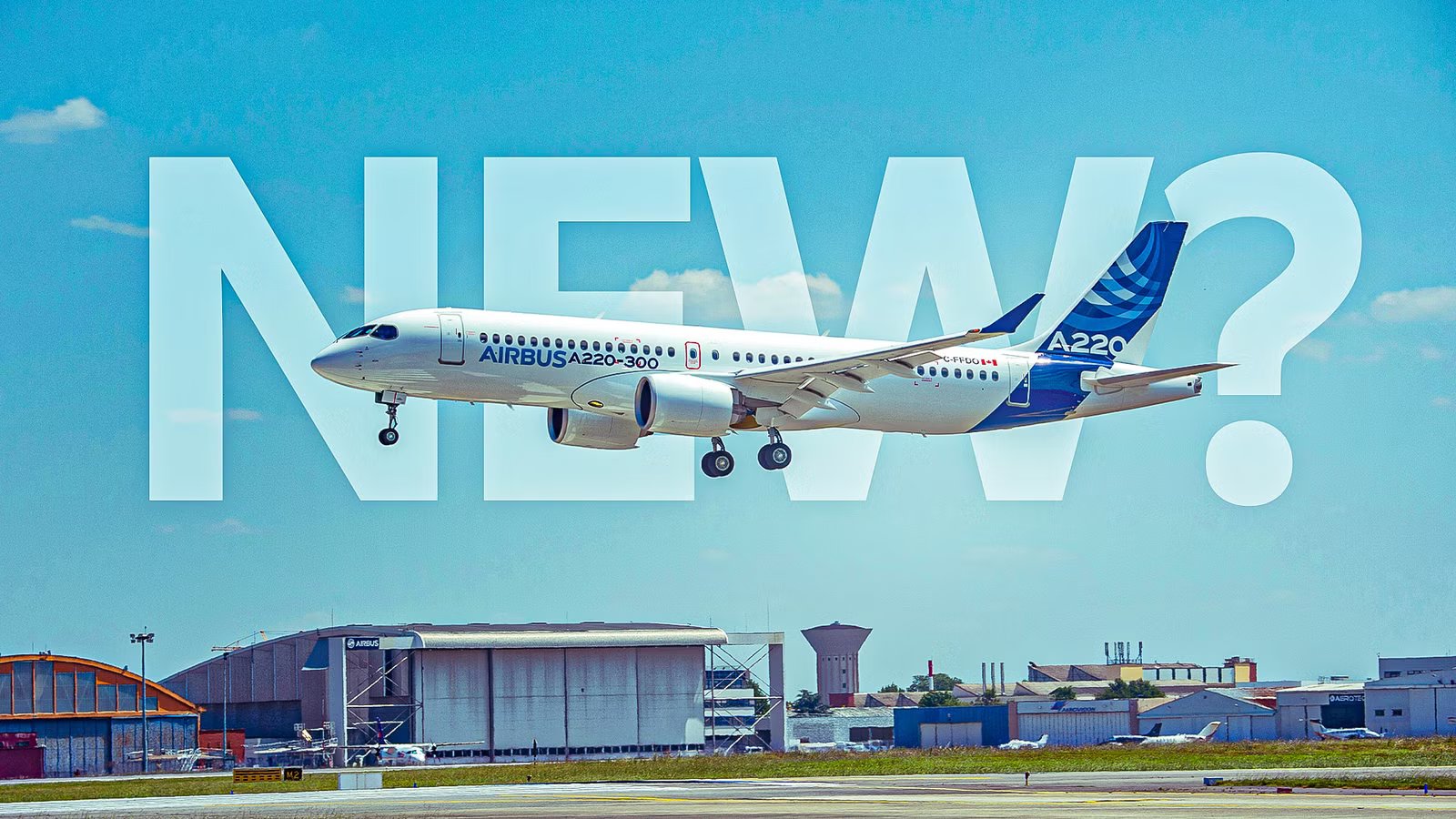
Last year, Airbus confirmed that the passenger-favorite single-aisle Airbus A220 will be getting an interior upgrade with the arrival of Airspace, an award-winning design concept that focuses on delivering an exceptional passenger experience. The upgrade will bring the A220 in line with other modern Airbus aircraft families, such as the A350, A330neo and A320neo, with the package featuring lighter, larger, and simpler storage, and upgraded lighting.
The upgrade is expected to arrive this year, with retrofits being available in the next few years for older A220 aircraft as well. In the same announcement, the manufacturer said that a 160-seat A220-300 would become available in 2027, increasing the number of potential passengers on the variant by 10. Let’s examine why the Airspace upgrade will be a good thing for airlines that fly the A220.
What Is The Airspace Cabin Like?

The Airspace cabin aims to be a relaxing, inspiring, and beautiful space for passengers, enhancing their onboard experience. Simultaneously, it aims to increase functionality and the economic viability of the plane, which is a desirable aspect for airlines. Highly customizable under-bin lights offer airlines a flexible canvas on which to promote their brand. With 16 million LED colors, it is easy to create a comfortable ambiance for passengers throughout the day and night. Per Airbus, the lights have proven to help reduce jet lag by up to four hours.
In the case of the A220, the airplane already has the largest windows in its class, measuring 11 inches by 16 inches: this makes them larger than the windows of the Boeing 777. The Airspace design takes advantage of that, with a tapered wall around each window, like a castle’s arrow-slits. With one or two of these large windows per row, plenty of natural light enters the cabin. The windows are also mounted at eye height for comfortable and convenient viewing of the sky and landscape.
One of the key features is the Airspace XL bins, which are 20% lighter than the original overhead storage compartments and offer a 15% increase in bag capacity. In addition to the saved weight, the new bins have simpler mechanisms and fewer parts for more efficient baggage loading and bin closing, which are expected to have a significant improvement on the aircraft’s turnaround time at the airport.

How Does The Airbus A220 Compare To The Embraer E2 For Regional Airlines?
Do Airbus or Embraer’s narrow-bodied airlines dominate the short-haul and regional market?
All About The Airbus A220

The Airbus A220 was originally known as the Bombardier C Series, being in service for two years before Airbus acquired a majority stake in the project in July 2018, when it was rebranded as the A220. The smaller A220-100 (formerly CS100) first flew in July 2016 with Swiss Global Air Lines, and the larger A220-300 (formerly CS300) entered service with airBaltic in December 2016.
With such a recent introduction to the commercial aviation market, the A220 benefits from many modern technological advancements, which have helped to drastically increase fuel efficiency in recent years. The twinjet features fly-by-wire flight controls, a carbon composite wing, an aluminum and lithium-alloy fuselage, and optimized aerodynamics. With this combination of lightness, efficiency, and power, the A220-100 ends up with a range of 3,600 nautical miles, which is quite impressive for its class.
|
Airbus A220 Specifications (Per Safe Fly Aviation) |
||
|---|---|---|
|
Metric |
A220-100 |
A220-300 |
|
Length |
114 feet, 11 inches (35.0 meters) |
127 feet (38.7 meters) |
|
Wingspan |
115 feet, 1 inch (35.1 meters) |
115 feet, 1 inch (35.1 meters) |
|
Max Takeoff Weight |
139,000 pounds (63.1 tonnes) |
54,000 pounds (69.9 tonnes) |
|
Range |
3,100 Nautical miles (5,740 kilometers) |
3,400 Nautical miles (6,297 kilometers) |
|
Passenger Capacity |
108–133 |
130–160 |
|
Engines |
2 × Pratt & Whitney PW1500G |
2 × Pratt & Whitney PW1500G |
|
Cabin Width |
10 feet, 9 inches (3.28 meters) |
10 feet, 9 inches (3.28 meters) |
|
Fuel Capacity |
20,863 liters |
21,508 liters |
|
Maximum Payload |
29,983 pounds |
35,494 pounds |
The A220 is powered by two high-bypass Pratt & Whitney PW1500G geared turbofan engines, which offer a 25% lower fuel burn per seat when compared to older narrowbody jets, such as the Boeing 737-600. Thanks to its efficiency over medium-haul routes and its fairly dense seating capacity, achieved through its five-abreast economy-only configuration, the narrowbody A220 is ideal for fulfilling domestic, regional, and international demand on routes up to around seven hours in duration.

Air Canada Becomes The A220 Launch Customer For Airbus’ Airspace Cabin
Air Canada’s XL A220 bins will have 20% more volume but 20% less weight.
Uptake Of The A220

Generally, the A220 is regarded well by passengers, but the cabin upgrade is intended to take customer satisfaction to the next level, bringing it in line with the new widebody Airbus aircraft available. Ingo Wuggetzer, Airbus’ VP of Cabin Marketing, said about the Airspace cabin becoming available:
“We’re so pleased to officially welcome the A220 into the Airspace family. This ensures our airline customers can offer the award-winning Airspace experience to their passengers across the full spectrum of Airbus aircraft.”
As of last month, 493 examples of A220 aircraft have been delivered, and according to Safe Fly Aviation, over 30 airlines worldwide operate the A220, with large fleet being operated by  Delta Air Lines in the US. Despite this, 2024 was challenging for Airbus in terms of A220 purchases, as the manufacturer only secured 17 orders throughout the year. Still, Airbus has a healthy backlog of 456 oustanding A220 orders to work through.
Airbus remains optimistic, and its current plans for A220 production are to reach 12 aircraft per month this year, supply chain permitting. According to Reuters, this is down from its previous target of 14. However, with the upgraded cabin, things may start to improve for Airbus regarding A220 orders. Eyes will also be on the new program chief, who will look to scale up operations.

The Airbus A220-500 Is Coming: A Masterstroke Or A Threat To The A320neo?
A new addition to the lineup is in the works.
A Clean Use Of Modern Aviation Technology

As for how the aviation community sees the A220 at the moment, many people, particularly Canadians, lament the disappearance of Bombardier as an independent manufacturer, largely blaming Boeing for this development. However, they are at least happy that the Canadian Mirabel plant, where the A220 is made, has remained open. The plane itself is fairly well regarded as a good use of modern aviation technology, but commenters on a Reddit opinion thread on the plane were not blown away by any standout aspect, saying:
“I think the plane itself is a fine piece of engineering. Nothing particularly revolutionary; just a nice and clean implementation of modern technology.”
Pilots praised the plane for being easy to use and flexible, but some complained about the lackluster climb rates, among other performance metrics. Others, however, did not like the excessive use of technology in the cockpit, noting that:
“It’s a great plane. But from a pilot’s perspective, I think it has crossed the line of being too automated. I think most pilots generally prefer more physical, mechanical cockpits so I think Bombardier have added a few too many screens and automated too much for many peoples’ likings. Depends on the person – and it’s good from a passenger perspective.”
Some passengers were put off by the distinctive sounds made by the engine during taxi, saying that “it’s all good and comfy, but then you hear whale sounds.” Meanwhile, other passengers mentioned that the plane was noisy during the flight due to the engines, aerodynamics, and flaps.

Continuing To Build On A Clean Sheet Design: Improvements Coming To A220 Family
Airbus is investing in the A220 to make it even more competitive. Here’s what’s new and what’s coming in the future for the smallest Airbus.
Will The Airspace Update Help Sales?

Overall, the Airspace cabin update looks like a great thing for passengers and airlines alike. Thanks to the increase in space through the Airspace redesign and the introduction of the 160-seat version of the A220-300, the aircraft is starting to adopt more of the conveniences and design advantages typically seen in widebody aircraft. Offering a ‘widebody feel’ is no easy feat for an aircraft of the A220’s size, and the redesign will enhance that aspect. Jocelyn Gariépy, Airbus Head of A220 Cabin & Cabin Systems Engineering, said:
“The starting point for the ‘clean-sheet’ A220 cabin design was really the passenger. What are their needs? What do they value most? And the answer was quite simple: plenty of space, a lot of natural light, exceptional comfort, a relaxing atmosphere and a variety of on-board services.”
Combined with the already positive aspects of the A220, such as the five-abreast layout and large windows, the cabin looks to be a great offering for a plane of this size, and is likely to enhance order numbers of new A220-300 aircraft in particular once 2027 rolls around. Interior retrofits to existing A220 will also likely be ordered, following the trend of Bombardier planes getting upgraded interiors.