dailynewsnblog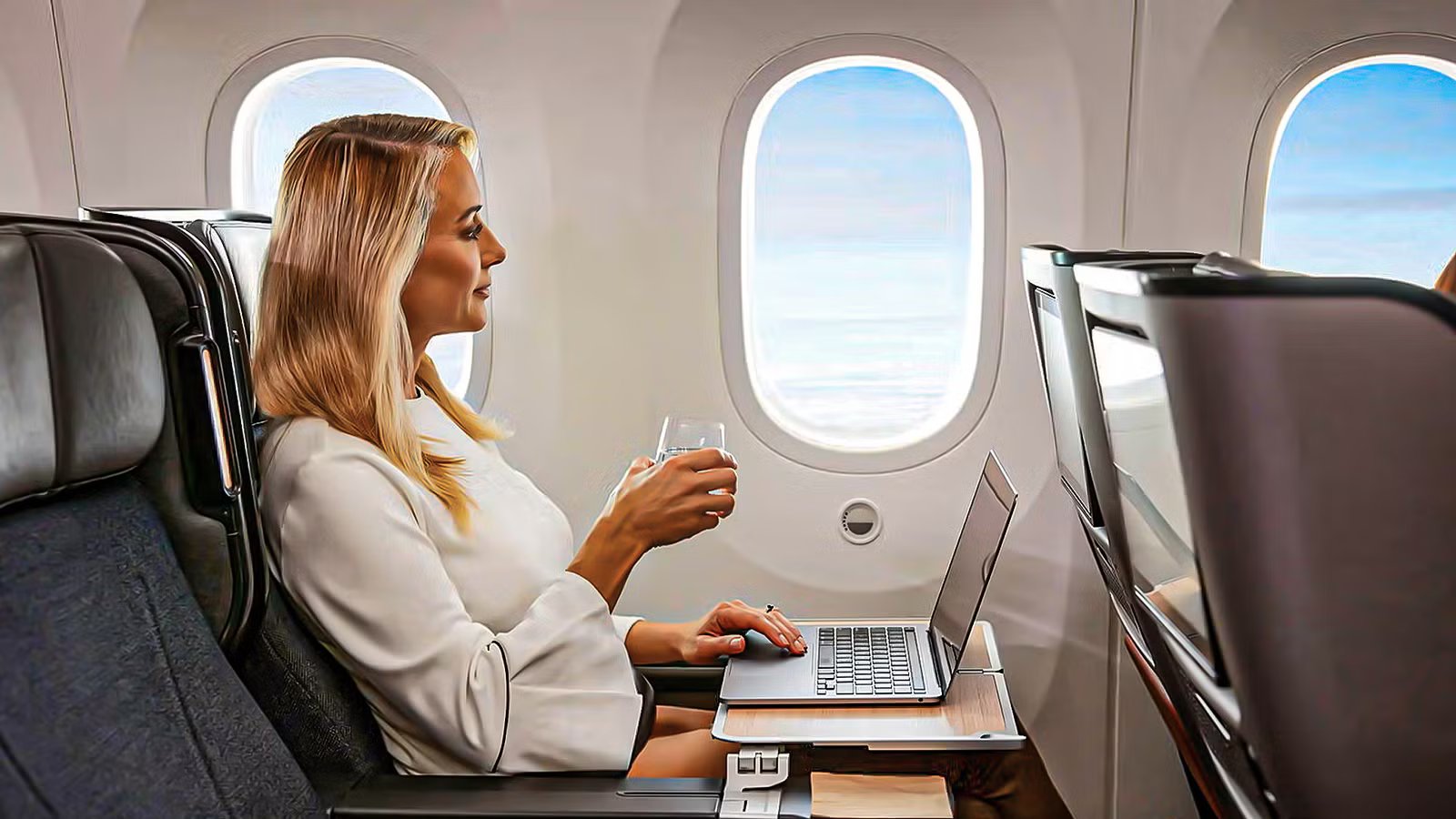
Premium Economy is one of the fastest‑growing products in modern commercial aviation, offering a clear step up from traditional economy without the steep costs of business class. Around the world, airlines from major legacy carriers to boutique operators have added or expanded premium economy cabins to meet increasing traveler demand. These cabins promise an enhanced journey through a combination of upgraded service, seat design, and priority handling, positioning premium economy as the sweet spot between price and comfort.
Despite the marketing that often surrounds premium economy, not all features are equally impactful. While many of the amenities, such as upgraded meals and priority baggage, add value, there is one overriding metric that consistently shapes the lived experience of this cabin class. It is not the welcome drink upon boarding, nor the larger entertainment screen, nor even amenity kits; it is space. We know that the degree to which space is increased directly affects comfort, rest, and overall traveler satisfaction, so let’s take a closer look…
Seat Pitch – The Core of Comfort

Wikimedia Commons | Simple Flying
The defining attribute of premium economy is the additional room offered to passengers compared to economy class. At the center of this is seat pitch, which refers to the measurable distance from a point on one seat to the same point on the seat in front of it. While economy class seats typically offer a pitch in the range of 29-32 inches (73.6-81.3 cm), premium economy seats are designed to provide noticeably greater distance, with many carriers offering around 38 inches (96.5 cm), or sometimes even more.
In practical terms, this difference in pitch translates directly into legroom, which directly defines how freely a passenger can position themselves during hours in the air. Economy class cabins, especially on longer flights, often force passengers into a static posture that can lead to discomfort simply due to restriction of movement, but premium economy disrupts this pattern by creating a space that changes how the body interacts with its environment. In this sense, seat pitch is the most reliable indicator of comfort because it influences every part of the in-flight experience, including eating, working, watching entertainment, and attempting to rest.
Unlike subjective enhancements such as meal presentation or entertainment quality, seat pitch is quantifiable and readily comparable across carriers and aircraft types. That tangibility makes it a valuable benchmark for passengers and analysts alike when judging the real value of a premium economy offering.
Why Legroom Changes Everything

Legroom in premium economy matters for reasons that extend far beyond simple comfort. In economy cabins, passengers often experience cramped posture, pressure on joints, and restricted circulation. Over short flights, these conditions may be tolerable, but on ultra-long‑haul segments, such as  London Heathrow Airport (LHR) to Perth Airport (PER) on Qantas’ Boeing 787-9 aircraft, the physical impact of tight seating compounds, leaving passengers fatigued and sore on arrival.
The extra inches of legroom in premium economy reduce these stresses. A wider pitch means passengers are less likely to feel their knees pressed into the seat in front, less likely to experience a constant need to shift position, and better able to adjust their posture without discomfort. This increased freedom of movement contributes to improved circulation and reduced muscle strain, which are critical factors on long-haul and ultra-long-haul flights that span multiple time zones. This spatial difference also changes how flights are experienced psychologically, as economy class cabins can feel confining, particularly for taller individuals. But a few extra inches in pitch can turn that sensation around by allowing even modest shifts in leg positioning.

The Striking Differences Between Premium Economy & Economy Class In 2026
What secrets lie between these two cabin classes in 2026? The differences may surprise you…
Sleep, Rest, & Micro-Comfort

Rest and recuperation onboard are among the most common reasons passengers consider upgrading to premium economy, and on long overnight flights, the ability to find a comfortable position for sleep can be the difference between arriving refreshed or exhausted. While premium economy seats are not lie‑flat, the increased seat pitch and related ergonomic features, such as deeper recline, leg rests, or adjustable headrests on some carriers, make rest significantly more attainable than in standard economy class.
The distinction here goes beyond sleep alone, and premium economy offers extra comforts that are impossible in the narrow confines of an economy class seat. Even short stretches of uninterrupted rest can accumulate over the duration of a flight, the cumulative effect of which often results in reduced stiffness and fatigue. Many passengers also report that the additional space gives them psychological breathing room, which can make napping or dozing more achievable.
Why Other Features Are Secondary

Premium economy cabins are sometimes marketed on the strength of the soft products, including premium meals served on upgraded tableware, complimentary alcoholic beverages, priority check‑in and boarding, amenity kits, and even access to slightly quieter or more exclusive cabin space. These additions are undeniably part of the package, but in the broader context of in-flight comfort, they remain supplemental to the fundamental question of how much space a passenger actually has.
Meals and drinks may enhance the experience, but they occupy only a fraction of time spent on the flight. Priority boarding and baggage handling are conveniences that improve logistics on the ground, not in‑air comfort, and amenity kits and blankets are appreciated on long flights, but they do not address the physical strain of prolonged sitting. Only one element operates consistently, moment by moment, hour by hour – the physical space around the passenger’s seat.
It is important not to dismiss the value of heightened service or airport perks, but on long-haul flights, passengers’ comfort is directly affected by what affects them continuously. With that in mind, the extra space created thanks to an increased seat pitch and thoughtful seat design, remains the core functional advantage of premium economy over economy.  American Airlines is just one carrier that has taken the decision to increase the size of its premium economy on certain new aircraft deliveries, namely its 787-9 aircraft. Last year, the
 oneworld carrier unveiled its new premium-heavy 787, featuring the following cabin configuration:
|
Cabin |
Capacity |
|---|---|
|
Business class |
51 |
|
Premium economy |
32 |
|
Economy class (extra legroom) |
18 |
|
Economy class |
143 |
|
Total |
244 |

The Most Comfortable US Premium Economy Seats You Can Book Today
A closer look at which US airline offers the most comfortable premium economy seats.
Economics & Airline Variability

Premium economy fares naturally command a higher price than standard economy, sometimes markedly so. The cost difference varies by route, carrier, and season, but on many long-haul flights , the gap can be significant, often reflecting a premium that might be 30% to 100% greater than economy class pricing. Whether that premium is justified depends on how much tangible improvement the product offers, and in many cases, that improvement still circles back to seat pitch and space.
Not all premium economy cabins are identical, as different airlines configure their aircraft differently, meaning that even if two products share the premium economy label, their real‑world experience may vary significantly based on how much additional seat pitch is provided, how seats are arranged, and what extra features are included. Some carriers, for example, incorporate footrests, larger entertainment screens, and more generous recline, while others stick to a more restrained enhancement of the base economy class product. The likes of EVA Air, All Nippon Airways, and Japan Airlines are known for having some of the most generous premium economy seat pitches around, stretching up to 42 inches, while the majority of carriers offer around 38 inches.
This variability reinforces the importance of evaluating premium economy offerings on the basis of actual specifications rather than marketing language alone, and comparing official seat pitch figures and cabin layouts can give clearer insight into whether a premium economy booking genuinely delivers a meaningful improvement in personal space, or if it is more modest in its benefits.

Cathay Pacific Airbus A350-1000 Economy Vs Premium Economy: Features Compared
How to decide whether to splash out on Premium Economy or stick with Economy on Cathay A350 long haul routes.
Long-Term Impact on Trip Quality

The influence of seat space extends beyond the flight itself. How a passenger feels upon arrival – rested, functional, and ready to continue the trip versus sore, stiff, and in need of recovery – often comes down to the physical comfort endured or denied miles earlier. Seat pitch and the additional room it can create play a central role in that overall outcome.
For business passengers with tight schedules, leisure flyers seeking enjoyment instead of fatigue, or anyone spending upwards of six hours or more in the air, the physical reality of aircraft seating matters. While premium economy does not provide the full luxuries of business class, such as lie‑flat beds or dedicated lounge access, it does offer the one upgrade that most consistently improves the human experience of flying long distances.
As airlines continue to refine and expand premium economy products on new aircraft such as the Airbus A350 and the upcoming Boeing 777X in response to passenger demand and competitive pressure, this class will likely remain defined by its spatial advantage. That room to stretch, to breathe, to relax, even just a little, is the one metric that matters most when evaluating the true worth of a premium economy experience.