dailynewsnblog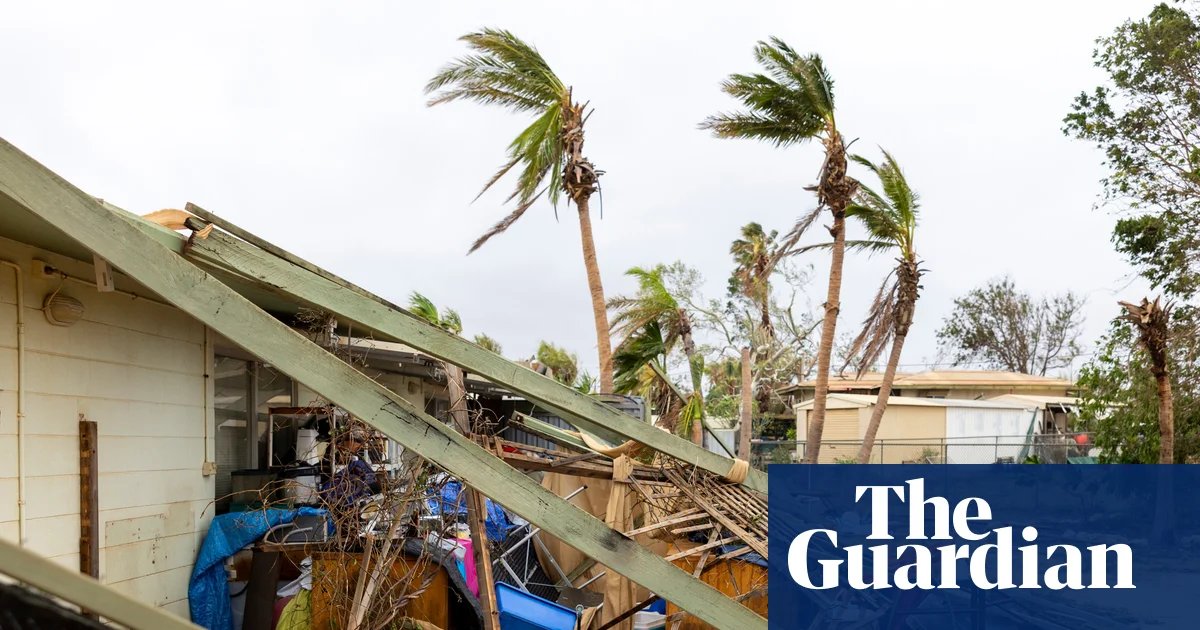
Authorities were still working on Sunday to restore power to communities hit hard by Cyclone Narelle as a popular tourist town remained effectively cut off.
After lashing coastal communities with 250km/h winds and dumping a year’s worth of rain in a day, the now-subtropical low again headed offshore after ripping through parts of Western Australia.
The heavy rainfall brought minor to moderate flooding to the Lyons and Gascoyne river catchments, with water levels expected to keep rising on Sunday in some areas.
Weakening as it cut inland across the Gascoyne region, Narelle moved off the state’s south coast on Saturday evening.
Earlier, it left a trail of destruction in parts of the Pilbara and North West Cape, including Exmouth, a holiday town 1250km north of Perth that remains largely isolated.
“There’s pretty much devastation everywhere you look,” a local man, Craig Kitson, told AAP.
“The town has fundamentally changed.”
Exmouth’s few thousand residents bore the brunt of the system, which first crossed the coast in Queensland more than a week earlier.
Since then, it has cut a path across Australia’s north before tracking down the WA coast.
Roofs were torn off buildings in Exmouth, power was lost, homes were flooded, and about 50 people had to abandon a local evacuation centre when it sustained wind damage.
Authorities and the regional energy provider have been working to restore power to customers in Exmouth and Carnarvon still experiencing outages, with additional workers called out to support local crews on Sunday.
Work is also under way to repair damaged water infrastructure.
The town’s airport was extensively damaged, while the main road into town has been closed due to the impact of flooding.
Although he lost a fence and spent the night under a leaking roof, Kitson counts himself lucky.
“It was definitely a harrowing night there for a lot of people,” he said, adding some homes had been completely destroyed.
“Some people’s lives have been drastically changed.”
Narelle tracked south to Coral Bay and came ashore on Friday evening just south of the tiny town before weakening to a category-three system.
It was downgraded northeast of Kalbarri and Geraldton again before weakening to a tropical low on Saturday morning.
Gusts above 120km/h were recorded in parts of the Gascoyne, alongside rainfall totals of up to 100mm, increasing the risk of flash flooding and road closures.
Narelle also continues to exacerbate the global energy supply crunch, disrupting production at two of Australia’s biggest liquefied natural gas plants run by Chevron and Woodside.
Chevron Australia said it was working to restore production at its Gorgon and Wheatstone facilities after outages.
Located on Barrow Island, north of Exmouth, Gorgon is Australia’s largest liquefied natural gas export facility, producing 15.6m metric tonnes a year.
Wheatstone operates two processing units, producing 8.9 million tonnes annually.
Woodside said a production interruption due to the cyclone continued at its Karratha gas plant, while production was uninterrupted at its Macedon and Pluto facilities.
with Reuters