

 dailynewsnblog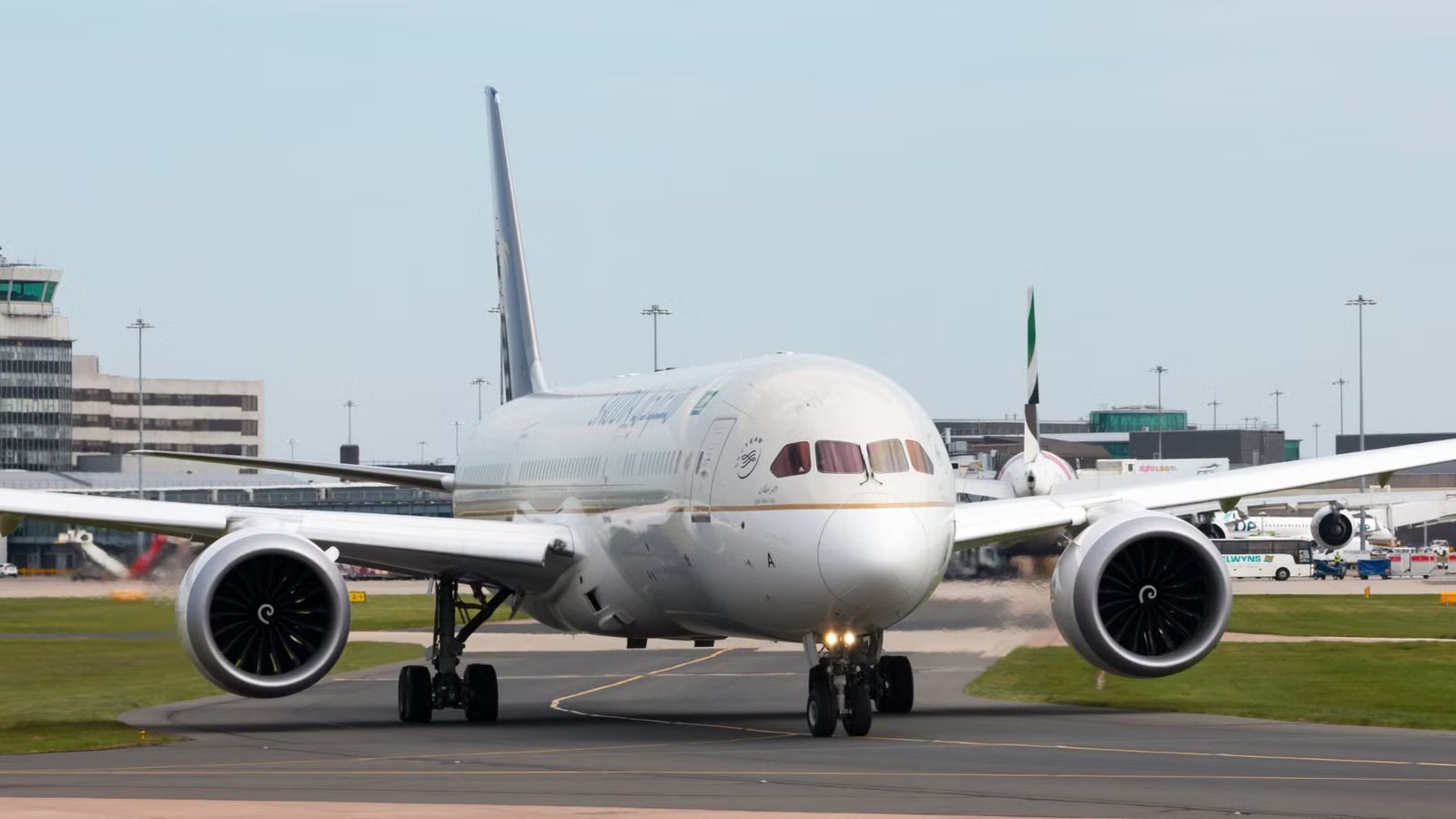
As quickly as its coverage on the route began, Saudia is set to suspend its operations on the route from  London Heathrow Airport (LHR) to King Fahd International Airport (DMM) in the Saudi Arabian city of Dammam. The latter facility is known for consistently ranking among the largest airports in the world by size, but this scale does not appear to have converted into meaningful load factors, with the route’s flights typically only half full.
Saudia’s latest iteration of the Dammam-London Heathrow route only commenced last November, but, when all is said and done, it will have only served the corridor for a little over five months, with these flights set to be withdrawn as of mid-April. Let’s examine this suspension and the underlying numbers behind it.
Ending Next Month

Earlier this week, Aero Routes reported that Saudia had filed a schedule change that indicated that it would be shelving its route from Dammam to London Heathrow as of April 18, 2026. Having previously served this corridor until 2010, both on a nonstop basis and via King Khalid International Airport (RUH) in the Saudi Arabian city of Riyadh, Saudia relaunched its flights between Dammam and London Heathrow Airport in November 2025.
This meant that, alongside Jeddah, Medina, Neom Bay, and Riyadh, Dammam became the fifth Saudi Arabian city to be served from London at the same time, marking a record high. These thrice-weekly flights use widebody twinjet aircraft in the form of the Boeing 787-9 Dreamliner, and have operated three times a week since November 5. Saudia reduced its frequency on the Jeddah-London route in order to free up the needed capacity.
Simple Flying has reached out to Saudia for further information on the suspension of its Dammam-London Heathrow route. We will update our coverage if and when a statement is received.
The Route Suffered From Low Load Factors

Until official confirmation is given by Saudia as to the reasons behind the termination of this route, we can only speculate as to the reasons behind its suspension. However, with that being said, a quick look at data from the CAA suggests that low load factors may have played a role in the route’s withdrawal.
Indeed, according to the CAA, a grand total of just 4,424 passengers used Saudia’s flights between Dammam and London Heathrow Airport (in either direction) in November and December of 2025. This represents an average load factor of just 49.5%, given that, during the same period, 8,940 seats were available on the route, according to Cirium, an aviation analytics company. As such, Saudia will likely have been making a loss from these ops.
As previously mentioned, the carrier flies the Boeing 787-9 Dreamliner on this route. According to present fleet data made available by ch-aviation, the SkyTeam member and Saudi Arabian flag carrier currently has a grand total of 13 of these widebody twinjets at its disposal, with another 18 on order. They are 9.2 years old on average, compared to a fleet-wide mean of 14.6 years, and, have 274 economy and 24 business class seats on board.

Why Are There So Few Flights At The World’s Largest Airport?
Saudi Arabia has overseen a sharp rise in passenger traffic, so things could change in the coming years.
Saudia’s London Capacity Will Be Redeployed To Jeddah

The suspension of its Dammam route leaves Saudia with an additional three weekly slots at London Heathrow Airport. Given how lucrative these are, with the UK’s largest and busiest air hub being heavily constrained by its slot-controlled operations, it is within the best interests of Saudia for the Middle Eastern carrier to keep hold of these. As such, it plans to redeploy the capacity on another route from Heathrow, namely to its Jeddah hub.
As previously mentioned, the Dammam route uses three weekly slots that were freed up for this purpose by reducing capacity between Heathrow and King Abdulaziz International Airport (JED). Now, however, these slots will be given back to the Jeddah route, which will see Saudia’s weekly frequency rise once again from 11 to 14 rotations a week. This works out at two services a day, underlining the importance of Jeddah compared to Dammam.


