dailynewsnblog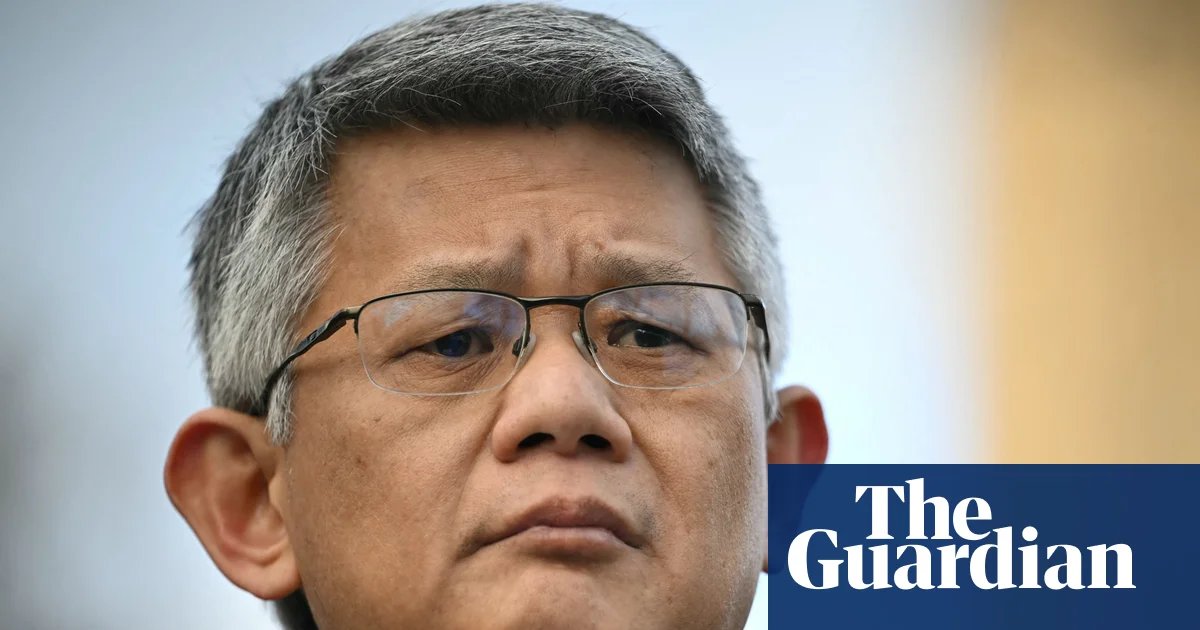
“I didn’t feel safe, even though I’m not based in Hong Kong any more,” said Christopher Mung Siu-tat after getting tax bills from Hong Kong authorities. “The regime can reach me by their long arms wherever I am.”
Siu-tat, the executive director at the Hong Kong Labour Rights Monitor, a UK-based NGO, fled Beijing’s sweeping national security laws years ago. The letters are the latest example of a series of transnational repression (TNR) tactics the 54-year-old has faced in recent years.
“I was not surprised that the Hong Kong police and Chinese agents have been chasing me because of my political advocacy, but I was shocked that the authorities have been weaponising the revenue department as a political tool,” he said.
Two letters claimed that the UK-based trade unionist owed additional income tax and profit tax for the year 2018, as well as tax for a business he had never registered. Siu-tat then received another letter claiming retroactive taxes for the following year.
In 2023 he was one of several exiled dissidents with a bounty placed for his arrest. The same year, his relatives in Hong Kong were questioned. In 2024, Siu-tat’s Hong Kong passport was cancelled, and as recently as October 2025, he was visited by counter-terrorism police to discuss measures to improve his safety in the UK.
The case is one of many highlighted in a new report by the China Strategic Risks Institute on economic transnational repression, analysing how China uses financial levers to coerce dissidents overseas.
Tensions between Beijing and the UK have thawed somewhat since Keir Starmer’s visit to Beijing in January. Further calls to deepen cooperation between the two nations came on Monday, from China’s foreign minister during a meeting with the UK national security adviser, Jonathan Powell, according to reports.
The report by the global thinktank calls on the UK government to define economic TNR, to prevent politically motivated measures such as freezing bank accounts and funds, the revoking of professional qualifications and retrospective tax bills that leave individuals materially worse off.
“The reluctance of financial institutions to deal with economic TNR out of alleged fear that doing so might harm their profits in jurisdictions like China is exactly why the practice needs to be properly defined in legislation,” the report says.
It highlights financial institutions in the UK and Germany facing obligations to uphold Chinese domestic security laws applied extraterritorially. The two nations have signed an agreement to develop working groups with China to tackle money laundering, which the report says is at risk of being used to further economic TNR.
It also points to coercion through Hong Kong’s mandatory provident fund (MPF), in which the average Hongkonger has £26,376 worth of pension savings, according to official figures. Authorities in Hong Kong refuse to acknowledge British national (overseas) passports and BNO visas as valid for withdrawing retirement funds early. In 2023, those who relocated to the UK under BNO visas raised concerns over HMRC sharing personal details with Chinese authorities as part of bilateral trade agreements.
A spokesperson for the Chinese embassy said: “These allegations are purely unfounded and not worth refuting.
“Combating money laundering crimes is a shared responsibility of all countries including China and the UK.”
Xiangui Fang, a former human rights lawyer, says he was forced to give up his licence because he was outspoken of the decline of rule of law in China.
Having worked on politically sensitive cases for a Beijing firm, Fang left China in 2024 upon learning he was under investigation after lobbying human rights concerns at international conferences.
In a 2025 radio interview, he spoke critically of how the rule of law in China had declined under Xi Jinping. After this, he was told that a judicial official in Beijing wanted Fang to apply to cancel his law licence, otherwise those of his entire law firm would be suspended.
In July 2025, he followed through. Now he is without work in the UK, and unable to transfer his qualifications.
“I had no choice,” said Fang. “If the judicial bureau wants to punish lawyers, they should base [it] on a formal complaint,” he said, rather than “just based on political reasons”.