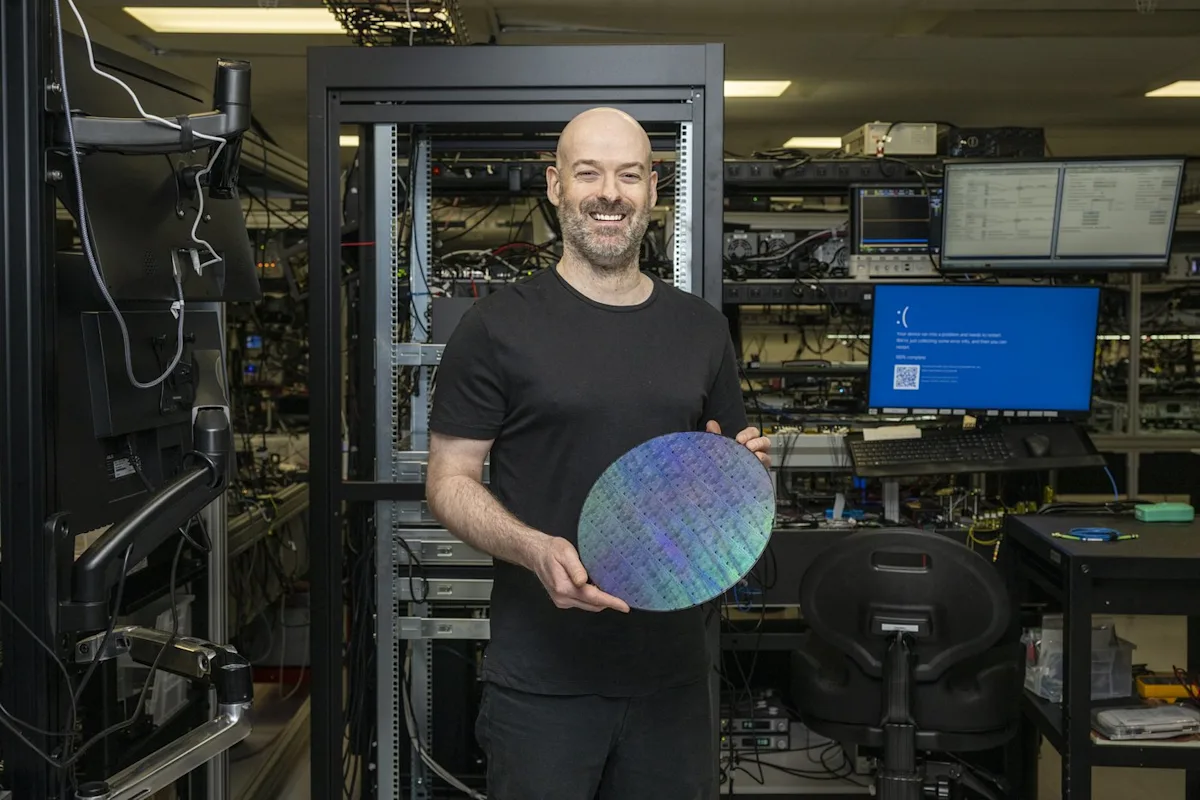
Quantum computing firm Xanadu starts trading on TSX


TORONTO — A Canadian pioneer in quantum computing made its debut on the Toronto Stock Exchange on Friday.

Within a few minutes of trading under the XNDU ticker, Xanadu Quantum Technologies shares were hovering around $14.

Toronto-based Xanadu is known for developing a light-based approach to scale quantum computers at room temperature.

Quantum computing is an emerging science that uses advanced physics to solve problems better and faster than conventional computers. Xanadu has said the technology can aid in the discovery of new drugs and the creation of more powerful batteries.

Xanadu’s market debut was facilitated by a merger with Nasdaq-listed special purpose acquisition company Crane Harbor Acquisition Corp., which was valued at US$3.1 billion. (Crane has bounced between about $8 and roughly $13 since May 19 on the Nasdaq. On Friday, its Nasdaq ticker switched to XNDU.)

The process is called a deSPAC, when a private firm becomes publicly traded after merging with a special purpose acquisition company, in this case Crane Harbor Acquisition Corp.

SPACs are shell companies that raise money under the assumption that they will later merge with another firm and turn the new company public in an alternative to an initial public offering.

SPACs are unpredictable because investors can redeem their shares before the merger to get initial funding back.

If a large number of shareholders opt for redemptions, it can dramatically reduce the cash the new combined company will have and may even put the firm at risk of failing to meet conditions it needs to complete the merger.

In the last few years, SPACs have become more popular but more recently, firms who used the model, including D-Wave Quantum Inc., have seen the downsides because of a high number of redemptions.

The US$302 million Xanadu is expected to make from the go-public process is lower than initial estimates because of redemptions, Antoine Legault, vice-president of equity research at investment management firm Wedbush Securities, pointed out.

The company first estimated US$500 million in gross proceeds, which included US$225 million from Crane Harbor’s trust account, assuming no redemptions by the SPAC’s public stockholders, as well as US$275 million from a group of investors.

But the SPAC is helping Xanadu go to market quickly, avoiding the long road show process, where businesses sell themselves to investors, he said. Legault estimated that road show process can take firms going public in a typical manner more than a year to complete and by the time it is done, market trends may have dramatically shifted.


“Sometimes you might say strike while the iron’s hot,” he said. “If the valuations are high, you see that the space has momentum and you have quantum in your name … then maybe it makes sense to go public when valuations are favourable.”

Kim Bolton, president and portfolio manager at investment firm Black Swan Dexteritas Inc., said Xanadu’s timing might be opportune because quantum computing is “one of the next big themes and trends in the technology area.”

“It may be young, but certainly by the end of this year and the beginning of next year, with all the progress that the scientists and the engineers and so on developers have made, it will be front and centre,” he said.

An investment risk memo his company put together said Xanadu’s revenue is still “limited,” so there’s no assurances customers will pay at scale for its technology, but purchasing its shares are one of the few ways to gain public-market exposure to quantum computing.

Legault counted five other quantum companies that are public and no others are using photonics — a science rooted in light — nor traded on the TSX, “so that will be good for Canada,” he said.

Xanadu was started by Australian immigrant Christian Weedbrook in 2016. Its name is a nod to the 1980 song by the late Olivia Newton John, whose grandfather was Nobel laureate physicist Max Born.

It has an expansive downtown Toronto lab and is behind PennyLane, an open-source software library for quantum computing and application development.

This report by The Canadian Press was first published March 27, 2026.

Companies in this story: (TSX:XNDU)

Tara Deschamps, The Canadian Press


Source link

  • Related Posts

    House Republicans rebel against Senate-passed DHS bill, eye separate funding vote

    WASHINGTON — Speaker Mike Johnson, R-La., told House Republicans on a conference call Friday that he plans to hold a vote on a bill to fund all of the Department…

    Wealthsimple could be bringing predictive trading. Here’s what it means – National

    If you have a Wealthsimple account, you might soon be able to place bets on real-world events as the phenomenon known as prediction trading gains popularity. The Canadian investment and…

    Leave a Reply

    Your email address will not be published. Required fields are marked *

    You Missed

    UFC Fight Night predictions: Israel Adesanya vs. Joe Pfyer fight card, picks, odds

    UFC Fight Night predictions: Israel Adesanya vs. Joe Pfyer fight card, picks, odds

    Nuki’s one-touch retrofit smart lock got its first-ever discount

    Nuki’s one-touch retrofit smart lock got its first-ever discount

    Rooster Breakout Charly Clive on Going Toe to Toe With Steve Carell

    Rooster Breakout Charly Clive on Going Toe to Toe With Steve Carell

    School dinners in England dominated by grab-and-go foods such as pizza and sausage rolls | Schools

    School dinners in England dominated by grab-and-go foods such as pizza and sausage rolls | Schools

    Powerful Missouri Republican who leads House transportation committee joins wave of retirements

    Powerful Missouri Republican who leads House transportation committee joins wave of retirements

    US law enforcement foils plot to assassinate Palestinian American activist | New York

    US law enforcement foils plot to assassinate Palestinian American activist | New York