dailynewsnblog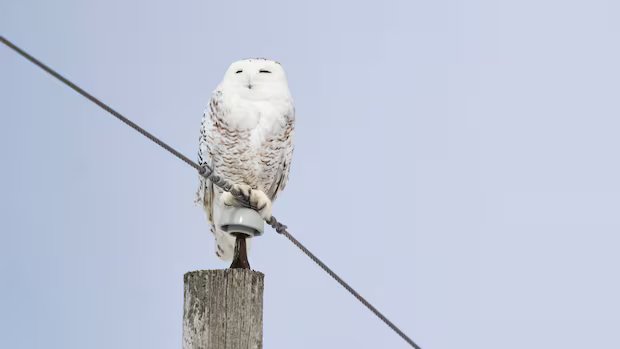
Some of the world’s most recognizable species are part of global talks happening in Brazil discussing whether to give them further protections.
Sharks, giant otters, hyenas and even the snowy owl are all among species proposed to be added to the appendices of the Convention on the Conservation of Migratory Species of Wild Animals (CMS), an envionmental treaty of the United Nations.
What unites them all is that they don’t call one place home, meaning any threats — such as deforestation, climate change and industrial fishing — requires multi-country co-operation to help boost survival.
“They remind us all that [the] natural world is deeply interconnected,” said Elizabeth Maruma Mrema, deputy executive director of the UN Environment Programme, at the opening news conference in Campo Grande, Brazil.
“Their journeys link continents, link oceans, link ecosystems and cultures — and ultimately, all of us.”
CBC News spoke to a few experts about some of these species to find out where they move, what’s threatening them and the potential solutions that may help them survive.

Snowy owls in decline
“It’s a bird that doesn’t need a lot of introduction,” says Jean-François Therrien, senior scientist at Hawk Mountain Sanctuary in Pennsylvania, of the “charismatic” snowy owl.
With its piercing yellow eyes, camouflaging white feathers and dark brown spots (for females), it cuts a striking figure, even among owls. A top predator, its core range is around Canada’s Arctic and the northern United States, but extends to Greenland, Scandinavia and Russia.
“We’re lucky here and in Canada, we still have snowy owl populations that are reproducing well,” Therrien said. “But those countries at the edge of the range for the species, now they’re seeing the species not there anymore or barely there.”

An early uptick in snowy owl sightings in the Great Lakes region have researchers suspecting a potential boom of the rare birds in the Arctic.
Niklas Aronsson, editor of the popular bird science magazine Vår Fågelvärld was recently part of declaring the snowy owl regionally extinct in Sweden.
“Suddenly they’re just gone, vanished,” Aronsson told CBC News from Gothenburg, saying that after 2015, the owls no longer found a key source of food: lemmings.
“So when we evaluated the red list, we found that we should put it on the nationally extinct list,” he said.
The species has been in decline but not near the brink of extinction, by any means. Canada is not a party to the CMS, and the government currently does not recognize the snowy owl as needing protection under the Migratory Birds Conservation Act or the Species at Risk Act. However, the Committee on the Status of Endangered Wildlife in Canada (COSEWIC) recently assessed it as threatened and consultations are ongoing.
At the current CMS meeting, Norway is proposing to put the snowy owl on Appendix II, which would encourage cooperation to help the animals that are not yet facing a level of endangerment.
Both Therrien and Aronsson agree that raising awareness about the threats to this species — including how climate change could be affecting its prey, the lemmings — is important.
“Obviously, it’s not a good sign because if we’re [at this [point] now, it is because snowy owls have been declining,” Therrien said. “But the fact that we’re talking about it is a good step.”

Hunted hammerheads
Hammerhead sharks “are like the white blood cells of the ocean,” according to Dr. Pelayo Salinas de León, marine ecologist with the Charles Darwin Foundation.
“They specialize in feeding on the slow, the weak, and the sick. So they improve the genetic fitness of their prey populations,” he said of the role they play.
Those unmistakable head shapes allow 360-degree vision and enhanced detection of electromagnetic fields from their prey. But they also have another unique quality among sharks: schooling together in what’s known as a shiver.

“Unfortunately, this sort of gregarious behaviour makes it extremely vulnerable to overfishing,” Salinas de León told CBC News from Guayaquil, Ecuador. He explained that their fins and cartilage are highly sought after in food and beauty markets around the world.
Because hammerheads can undertake migrations to reproduce thousands of kilometres away, the government of Ecuador is proposing two critically endangered species be listed on the stricter CMS Appendix I, which encourages full protection measures by member countries.
Salinas de León says it will enable a legal basis for those countries to tackle the problem in their own waters — through approaches like marine protected areas combined with sustainable sisheries management — allowing the shark populations to recover.

Giant otters are losing their homes
“The species is … a sentinel of aquatic quality,” said biologist Caroline Leuchtenberger about the aptly named giant otter.
From thick tail to whiskered nose, this apex predator can measure up to 1.8 metres long as it prowls the rivers of South America. At the top of its food chain, the health of giant otters signals the wellness of everything below, including toxins in the water.
Unlike the snowy owl or hammerhead shark, their migration is more continental — as the wet season expands rivers, they migrate between the countries that share the Amazon. But droughts, deforestation and disconnection of rivers from hydropower projects are huge threats.
“We have what we call viable populations in Brazil, mainly in the Pantanal,” said Leuchtenberger, who is also the founder of the Giant Otter Project. “[But] in some countries like Argentina and Uruguay, this species is considered extinct already.”

She estimates giant otters have lost 40 per cent of their original range. At the conference, the proposal is to include it in both appendices, to really highlight the threats they face.
“We need countries to work together to maintain the connection of rivers … to collaborate, to think on policies together to maintain the aquatic habitats viable for this species,” Leuchtenberger told CBC News from Santa Maria, Brazil.
The conference runs until March 29, with 42 new migratory species proposals being discussed. Parties vote throughout the week on whether to approve the addition of these species to the appendices.