dailynewsnblog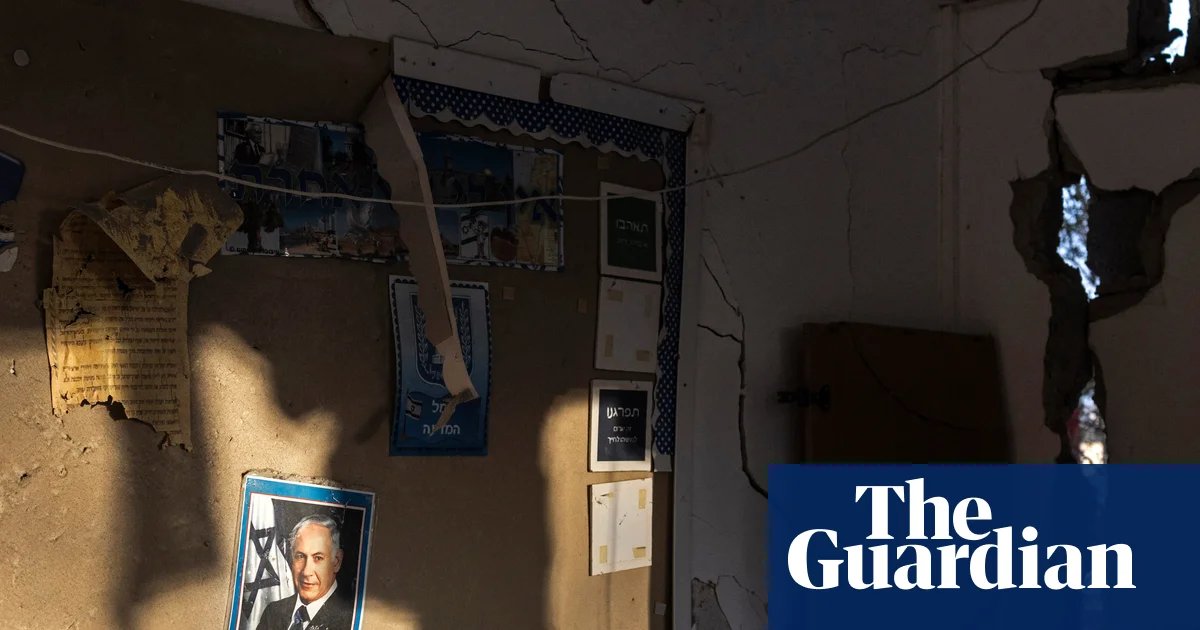
Good morning. Israel may be the only country in the world where there is overwhelming public support for the conflict in Iran. Despite its impact on everyday life in the country – at least 15 people have been killed and hundreds more injured by Iranian missiles since the war started in February, and school closures and missile warnings remain routine – polling puts support for the war at more than 90% among Jewish Israelis.
The contrast with the rest of the world is stark. Nearly a month into the fighting, polling shows that 60% of the US public oppose the war with Iran, and just one in four backed the initial strikes. In the Gulf, Europe and Asia, the conflict is widely unpopular, as severe economic consequences already begin to bite.
For this morning’s newsletter, I asked the Guardian’s chief Middle East correspondent, Emma Graham-Harrison, who is based in Jerusalem, about how the war with Iran is seen inside Israel – and its consequences for prime minister Benjamin Netanyahu. But first, the headlines.
Five big stories
-
Middle East crisis | Iran dismissed a US ceasefire proposal on Wednesday and countered with a negotiation plan of its own as intermediaries sought to keep diplomatic channels between the warring countries open.
-
Media | Matt Brittin, Google’s former top executive in Europe, has been named the BBC’s next director general. Brittin will replace Tim Davie at a crucial time for the corporation.
-
UK politics | Political donations from British citizens living abroad are to be capped at £100,000 a year, in a move that is likely to limit further funding from Reform UK’s Thailand-based mega-donor, Christopher Harborne.
-
UK news | The former justice minister Crispin Blunt has been fined £1,200 for possessing illegal drugs after he told a court he entered the world of chemsex parties to help inform government policy.
-
Housing | People who lost their homes when a tower block in Dagenham burned down say they are being made to pay for the building’s fire safety works after the government demanded its money back.
In depth: ‘There’s a sense in Israel that if you suffer through, you get long-term security’
Since the 7 October massacre in 2023, the bloodiest day for Israeli civilians in the country’s history, many Jewish Israelis see themselves as under siege in a hostile world, says Emma. It is still shaping life today: many Jewish Israelis have concluded that an aggressive security policy is the only way to keep the country and loved ones safe, regardless of the international reaction to Israel’s regional wars.
“I think a lot of people’s support for the Iran war inside Israel is premised on the idea that the short-term suffering is to ensure long-term security, although many security experts say Israel does not have a clear strategy to turn impressive tactical achievements like killing Ali Khamenei into long-term security. At the most extreme, there is death, people are injured, there’s loss and damage to property, kids haven’t been going to school, there’s repeatedly getting up and going to the bomb shelter at night. But there’s a sense in Israel that if you suffer through this, you’ll get long-term security,” Emma says.
Life in Jerusalem is still restricted by the realities of war. Many are working from home, and there are restrictions on opening on everything from cafes to gyms.
“People are very tired because you never know when the next alert is going to be. In Jerusalem, when the sirens go off, you have 90 seconds to get to a shelter. In the north, where the rockets are coming from, people have just a matter of seconds,” she says.
That is if you are lucky enough to have a bomb shelter within reach. Palestinian citizens of Israel are much less likely to have access to a shelter, and are much less likely to support the war than Jewish Israelis. In the West Bank, there are no sirens, even though as an occupying military power Israel has responsibility for the civilian population. Last week, four women were killed in a beauty salon near Hebron.
Netanyahu’s electoral fortunes
The public support for the war with Iran has not translated into a resurgence in the political fortunes of the Israeli prime minister, Benjamin Netanyahu, says Emma. The first general election since 7 October will be held later this year – with Netanyahu currently lagging behind in the polls.
“There is majority support for Netanyahu’s decision to launch this war with Iran and his handling of it, even among people who do not want to give him another term. With Gaza, polls show they didn’t always think he was making decisions for security reasons. They thought his own personal considerations came into it. But on this, they trust him much more,” she says.
“Even so, they still don’t seem to want to bring him back to office. And if his coalition doesn’t get enough seats to return him to power, he’s obviously very worried about it because he’s on trial for corruption, and has asked Donald Trump to intervene by pushing the Israeli president, Isaac Herzog to give him a pre-emptive pardon.”
Too close to Trump
However, some in Israel who support the war in principle are worried that by pushing to attack Iran, Netanyahu has put the country’s most important diplomatic relationship in jeopardy.
“More than one of the Israeli intelligence and military officials who I spoke to about Israel’s war aims said the greatest risk of the war was the long-term damage it might do to the relationship between Israel and America,” Emma says.
Historically, Israel’s foreign policy has been based on cultivating bipartisan ties. Netanyahu has effectively abandoned that to cultivate an extremely close relationship with Trump. US polls were already showing a decline in support for Israel before the attacks on Iran.
If this ends in way which is seen as a failure in the US, the examination of Trump’s decision to go to war is likely to produce a lot more of the rhetoric we saw in the resignation of Joe Kent, the far-right former director of the National Counterterrorism Center.
“If this war creates a situation where future American presidents, whether Democrat or Republican, don’t want such a close relationship with Israel, even significant military gains might end up looking like a pyrrhic victory, because that alliance is so foundational for Israel” says Emma.
Israel’s isolation
“One thing I find striking is that if you look at the history of where Israel has found security on its borders, it reached negotiated agreements with Jordan and Egypt, once considered an existential threat as Iran is now. The unwillingness to look at those examples or even really discuss them as positive things – insisting instead that the only route to security is through military power – is really dangerous and disturbing. But you can see why it brings Trump and Netanyahu together because they want to burn through the old world order and what’s left of international law – with might is right.”
Even so, Emma says that most Israelis are undeterred by international criticism of the conflict, despite the growing economic toll.
“Israel might be the only place in the world where there is broad support for this war. No one else is really happy about it. The Americans certainly aren’t. No one in the Gulf is. For people in Lebanon and Iran, this is horrific. Obviously ordinary Iranians, as much as they hate their government, and risked their lives to protest against it, does not mean they see US and Israeli bombs as a route to a better future. You only have to consider Iraq,” Emma says.
“It is an reflection of how isolated Israel already is, something that seems likely to deepen the longer this conflict continues.”
What else we’ve been reading
-
If you have young kids in your life, you’ve no doubt racked up countless hours of Bluey. But have you ever noticed the Beethoven and Bach floating through its score? Tom Service asks whether everyone’s favourite pup could save classical music. Lucinda Everett, newsletters team
-
The toupee is back. Rebranded as a “hair system”, the new designs have managed to banish the stereotype of a strange looking patch that could blow off in the wind. Patrick
-
As Matt Brittin becomes the BBC’s new director general, Michael Savage takes a look at what the former Google exec has to offer, and what’s in store for him. An insightful, rather-him-than-me read. Lucinda
-
In October last year, the El Fasher massacre marked one of the most brutal chapters of Sudan’s civil war, with tens of thousands of people killed. Mark Townsend has put together the story of those 48 hours. Patrick
-
“This is a time for radical ideas, disruptive ideas, ideas that shift the window.” I enjoyed Jonathan Liew’s sharp column on why Labour must offer a lasting vision for energy security. Lucinda
Sport
Football | Manchester United face an uphill battle to reach the Women’s Champions League semi-finals after being edged out 3-2 by Bayern Munich at Old Trafford on Wednesday.
London Marathon | The London Marathon is in advanced talks about staging a two-day event in 2027, allowing tens of thousands more runners to take part in the iconic race and to raise tens of millions more for charity.
Athletics | Three runners who were led off course in a race that served as a qualifier for the World Road Running Championships have been given entry into the upcoming competition.
The front pages
“Iran rejects US ceasefire proposal amid attempts to keep talks alive” is top story at the Guardian. The FT has “Kremlin bolsters Iran’s war effort by shipping drone, medicines and food”, “Trump flies into rage as Iran rejects peace plan” is the Times splash, while i Paper leads on “Royal Navy forced to borrow warship – from Germany – deepening fears on UK defences”. The Telegraph splashes on “£400m cost of savings scandal” and the Mail says “A.I. bot told teen to use a hammer to kill his mother”. The Mirror headlines on “Do your duty”, in reference to Andrew Mountbatten-Windsor, and the Sun asks “Why isn’t Huw in jail?”
Today in Focus
Is Cuba Trump’s next target?
The journalists Ruaridh Nicoll and Daniel Montero report from Havana as Cuba suffers from a devastating oil blockade imposed by the US.
Cartoon of the day | Ella Baron
The Upside
A bit of good news to remind you that the world’s not all bad
Often overshadowed by the Amazon, few have heard of Gran Chaco, the enormous dry forest that spans parts of Argentina, Bolivia and Paraguay. Although it is home to extraordinary species like the jaguar, the maned wolf and the giant armadillo, it is one of the most threatened ecosystems on the planet. But now, groups of farmers and conservation groups have teamed up to help protect this mass of thorny shrubs and giant quebracho trees from rapidly expanding agricultural frontiers by setting up glamping and kayak tours in El Impenetrable national park in Argentina.
I stayed at one of these glamping sites in 2022 while working a story about jaguar reintroductions for the Guardian. Nestled near the banks of the Bermejito river, it is one of the most magical places I have visited. In the dry season, the shrunken river is one of the best places to see wildlife including tapirs, capybaras and hundreds of bird species.
Sign up here for a weekly roundup of The Upside, sent to you every Sunday
Bored at work?
And finally, the Guardian’s puzzles are here to keep you entertained throughout the day. Until tomorrow.